
• Menu
  • Skip to primary navigation
  • Skip to main content
  • Skip to primary sidebar

Country Life In BC Logo

The agricultural news source in British Columbia since 1915

  • Headlines
  • Calendar
  • Subscribe
  • Advertise
  • About
  • Archives
  • Contact
  • Search
  • Cart
  • Checkout
  • Headlines
  • Calendar
  • Subscribe
  • Advertise
  • About
  • Archives
  • Contact
  • Search
  • Cart
  • Checkout

Primary Sidebar

Current Issue:

NOVEMBER 2026
Vol. 112 Issue 11

Subscribe Now!

Sign up for free weekly FARM NEWS UPDATES

Loading form…

Your information will not be
shared or sold ever

Follow us on Facebook

Comments Box SVG iconsUsed for the like, share, comment, and reaction icons

1 day ago

Today, we remember those who sacrificed their lives or their well-being for our freedom. Lest we forget. ... See MoreSee Less

Today, we remember those who sacrificed their lives or their well-being for our freedom. Lest we forget.
View Comments
  • Likes: 2
  • Shares: 0
  • Comments: 0

Comment on Facebook

5 days ago

... See MoreSee Less

View Comments
  • Likes: 6
  • Shares: 0
  • Comments: 0

Comment on Facebook

5 days ago

Fall chores. Near Oliver, fruit tree and vine grower Chamkaur Gill cleans up the first fall pruning on his cherry trees on November 6. He says the first prune took off new growth, but he'll do a second pruning to try to ensure a better cherry crop on these trees in 2027 than in 202#BCAg#BCAg ... See MoreSee Less

Fall chores. Near Oliver, fruit tree and vine grower Chamkaur Gill cleans up the first fall pruning on his cherry trees on November 6. He says the first prune took off new growth, but hell do a second pruning to try to ensure a better cherry crop on these trees in 2027 than in 2026. 

#BCAg
View Comments
  • Likes: 20
  • Shares: 1
  • Comments: 0

Comment on Facebook

6 days ago

BC has detected this fall's first case of highly pathogenic avian influenza in a commercial poultry flock in Chilliwack. Canadian Food Inspection Agency staff confirmed the detection on November 6, relatively late compared to previous years. However, disease pressure has been high, with 16 cases in wild birds across the Lower Mainland and multiple detections in Manitoba and Alberta since early September. Strong biosecurity protocols are in place to protect the industry, and BC dairy producers are also on alert, with detections in 43 herds south of the border in Eastern Washington this fa#BCAg#BCAg ... See MoreSee Less

BC has detected this falls first case of highly pathogenic avian influenza in a commercial poultry flock in Chilliwack. Canadian Food Inspection Agency staff confirmed the detection on November 6, relatively late compared to previous years. However, disease pressure has been high, with 16 cases in wild birds across the Lower Mainland and multiple detections in Manitoba and Alberta since early September. Strong biosecurity protocols are in place to protect the industry, and BC dairy producers are also on alert, with detections in 43 herds south of the border in Eastern Washington this fall.

#BCAg
View Comments
  • Likes: 28
  • Shares: 18
  • Comments: 48

Comment on Facebook

not from backyard Coops? shocking

No ostriches to kill this year…

Just so everyone knows culling infected birds happens in almost every country around the world. It's standard procedure. Unless you want to get sick or have a pandemic I would stop pooping on CFIA.

So many opinions, so few actual farmers.

Do people realize that it has affected dairy herds in the USA and it is not unheard of it affecting equine?

Chicks are vaxx right after hatching...google it ..

Funny this never happened for all the years I worked chicken barns ..

Avian flu is so bad at our local park in the valley. We stopped counting bodies at 20 (all cackling geese) on a walk this past Wednesday. The infected were all falling down & couldn’t stand very well - it was incredibly heartbreaking. An ACO was there to pick up bodies and goes there each day. He said they’re falling out of the sky. He told us that people need to call Environment Canada when you see infected birds, so they can be made aware of the numbers. Do NOT touch or attempt to rescue them. 😢

🐂💩

CFIA is up to no good once again

Oh of course

Nothing but constantly attacking our food source

I think my cousin's the one that infected them he said he's got bird flu

They really need to thin out the wild water foul in Saskatchewan seen lots of sick and dead geese. Also not much left for deer population. Not sure if its cwd or coyotes maybe wheater what evere it is its kicking the hell out of the deer

Ahhh the good ol bird flu PROPAGANDA rears its ugly head again

The CFIA or any agency should show the proof the Avian Flu actually exists or at the very least the virus has been isolated.

BS

It’s crazy the government can come up with a MRNA vaccine for everything but the bird flu…

Ya ok

On to their next cull

Maybe if they weren't all overcrowded in barns!

Keep feeding them Bio hazardous waste, confined feces ridden or sterile barns-

If we are really serious about bird flu and other zoonotic pandemics like covid-19 and Swine flu then we need to stop this neanderthal habit of ramming animals down our throat three times a day. The source of Highly pathogenic bird flu is factory farmed chickens, and that continues to be their Reservoir. If the H5zmN1 strain mutates so that it can pass human to human, something the World Health Organisation has warned is totally possible, then the resulting carnage will make covid-19 look like a sniffle.

well, that is the absolutely ONLY answer, just keep slaughtering animals - I call BS

Here we go again.

View more comments

1 week ago

With the province signalling no new money for farm water infrastructure, BC producers are turning to collaboration to secure water storage. In the Salmon River watershed, where temporary protection order curtailed forage irrigation again this summer, producers will host a public information session in Salmon Arm on December 9. The BC Wildlife Federation is backing their efforts, saying farmers and conservationists want the same outcomes. For more, see today's Farm News Update from Country Life in BC: [www.countrylifeinbc.com/momentum-builds-for-water-solution#bc

#BC
... See MoreSee Less

With the province signalling no new money for farm water infrastructure, BC producers are turning to collaboration to secure water storage. In the Salmon River watershed, where temporary protection order curtailed forage irrigation again this summer, producers will host a public information session in Salmon Arm on December 9. The BC Wildlife Federation is backing their efforts, saying farmers and conservationists want the same outcomes. For more, see todays Farm News Update from Country Life in BC: [https://www.countrylifeinbc.com/momentum-builds-for-water-solutions/]

#BC
View Comments
  • Likes: 28
  • Shares: 14
  • Comments: 3

Comment on Facebook

Has anyone considered the introduction of analogue beaver dams or possibly beaver families if the sites would support them. there are projects with beavers in lagging watersheds in the States.

I just wish they would also look at Chase Creek (from Pillar Lake to the South Thompson River.......it's a complete mess.

That entire program was just an exercise is harvesting information from producers. There was so few projects approved considering they boasted about having millions upon millions available.

Subscribe | Advertise

The agricultural news source in British Columbia since 1915
  • Email
  • Facebook

Abbotsford Tulip Festival returns

Lakeland Flowers photo

April 19, 2023 bySandra Tretick

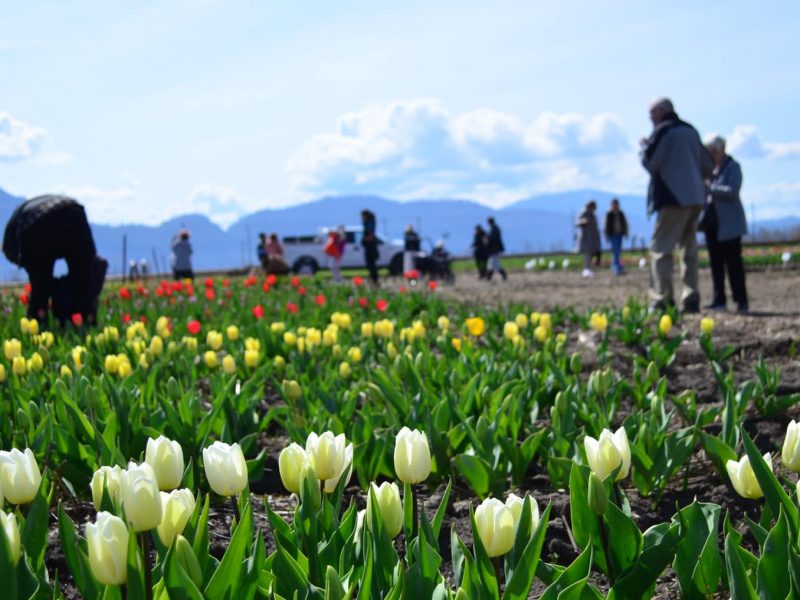
The first tulip festival in Abbotsford since 2019 promises to be bigger than ever as it kicks off a summer of floral festivities in the Fraser Valley.

Spanning 27 acres along Marion Road, Lakeland Flowers will display more than 70 varieties of the spring blossom, including fringe tulips and double tulips, as well as a legacy tulip named after the farm’s founder, Peter Warmerdam, and released in 2018.

The event was the largest tulip festival in Canada when it was last held in 2019, but the pandemic nixed it in 2020 and then founder Alexis Szarek moved to Armstrong in 2021.

Now Szarek’s father, Nick Warmerdam, is reviving it as part of a new emphasis on agritourism following the Sumas floods of November 2021.

Lakeland Flowers was flooded out when the Sumas River breached the nearby dike. Warmerdam has since replanted but the farm’s commercial operation has not rebounded to its pre-flood level because of damage to its greenhouse operations.

Instead, Warmerdam has decided to focus more energy on agritourism.

“Initially, our plans were to host smaller crowds to enjoy the flower fields,” said Warmerdam. “After hearing how the crowds wished that Abbotsford still had a tulip festival, we decided to bring it back.”

The Abbotsford Tulip Festival began April 14 and runs until Mother’s Day. It’s the first of a series of flower festivals the farm will host over the next six months.

In addition to tulips, there are 20 acres of sunflowers and plats ranging in size from five to 10 acres featuring daffodils, blooming cover crops, hydrangea, peonies and lavender. All told, visitors will be able to experience more than 100 acres of flowers from now through Labour Day.

Further up the valley, the 17th annual Chilliwack Tulip Festival features 30 tulip varieties, 16 types of daffodils and five types of hyacinths on 20 acres. After the festival, Onos Greenhouses collects the bulbs and uses them in the farm’s greenhouse operation, which currently supplies 85% of the cut tulips sold in Western Canada.

“My family and I look forward to welcoming visitors to explore the colourful fields,” says Chilliwack festival founder Kate Onos-Gilbert. “Opening the festival each year truly feels like a celebration of spring.”

In Armstrong, Szarek is holding her second annual Bloom Tulip Festival  from May 4 to 27 with 20 varieties of tulips on four acres.


All content on this website is copyrighted, and cannot be republished or reproduced without permission.
Related Posts

You may be interested in these posts from the same category.

Tulip grower makes the shift to agritourism

Previous Post: « Northern vets in short supply
Next Post: Wine industry faces losses »

© 2026 COUNTRY LIFE IN BC - ALL RIGHTS RESERVED