
• Menu
  • Skip to primary navigation
  • Skip to main content
  • Skip to primary sidebar

Country Life In BC Logo

The agricultural news source in British Columbia since 1915

  • Headlines
  • Calendar
  • Subscribe
  • Advertise
  • About
  • Archives
  • Contact
  • Search
  • Cart
  • Checkout
  • Headlines
  • Calendar
  • Subscribe
  • Advertise
  • About
  • Archives
  • Contact
  • Search
  • Cart
  • Checkout

Primary Sidebar

Originally published:

AUGUST 2019
Vol. 105 Issue 8

Subscribe Now!

Sign up for free weekly FARM NEWS UPDATES

Loading form…

Your information will not be
shared or sold ever

Stories In This Edition

Province allows family on farms

Teamwork!

Rain hammers cherry crop

Sidebar: A brief history

Chilcotin ranchers’ hope for hay crop washed away

Editorial: Dog days

Back Forty: Keeping the kids safe down on the farm

Viewpoint: Top-down governance no way to help caribou

Egg board set to get cracking on quota distribution

Get ’em while you can

Feds address labour shortages

Bee healthy!

Marketing board names new entrant winners

BC berry research gets big funding boost

BC hosts International Blueberry Organization

Tour showcases innovation, marketing savvy

Governments agree to national park reserve

BC’s oldest farm seeks new management

Apple dieback investigation underway

Bumper crop for raspberries fails to materialize

Balance key to restoring fire-affected range

Global demand set to buoy cattle prices

A good start helps calves finish in top shape

Ranchers collaborate to preserve grasslands

Rotational grazing pays off year-round

Sidebar: Track costs, see profits

Stock show kicks off summer for 4-H members

Finding new potential for a lost native berry

Sidebar: Others see same benefits

Shuswap tour showcases local producers

Research: Do honeybees spread viruses to wild bees?

Volken Academy breaks ground on new farm

Woodshed: Romance is in the air, for all but the Hendersons

Fourth-generation farmers chart ambitious course

Jude’s Kitchen: In-season produce is king

All content on this website is copyrighted, and cannot be republished or reproduced without permission.

More Headlines

Follow us on Facebook

Comments Box SVG iconsUsed for the like, share, comment, and reaction icons

2 days ago

The committee of MLAs charged with setting priorities for the next provincial budget is recommending regular, annual funding for water storage infrastructure associated with food production, including for engineering inspections, maintenance and upgrades. The recommendation builds on the BC Cattlemen's Association's recommendation of an annual allocation of $5 million for water storage infrastructure related to food production, noting that it could also support resilience in the face of climate-related events. While the province has allocated $120 million for agricultural water infrastructure, agriculture minister Lana Popham told Country Life in BC this week that other ministries and the federal government will need to be involved in funding future p#BCAgts#BCAgCAg

#BCAg
... See MoreSee Less

The committee of MLAs charged with setting priorities for the next provincial budget is recommending regular, annual funding for water storage infrastructure associated with food production, including for engineering inspections, maintenance and upgrades. The recommendation builds on the BC Cattlemens Associations recommendation of an annual allocation of $5 million for water storage infrastructure related to food production, noting that it could also support resilience in the face of climate-related events. While the province has allocated $120 million for agricultural water infrastructure, agriculture minister Lana Popham told Country Life in BC this week that other ministries and the federal government will need to be involved in funding future projects.

#BCAg

#BCAg
View Comments
  • Likes: 24
  • Shares: 6
  • Comments: 3

Comment on Facebook

A typical small-to-medium farming operation featuring a house, main barn, and machine shed generally has around 8,000 to 12,000 square feet of total roof surface. The Okanagan Valley is one of the driest regions in Canada, averaging roughly 300 millimetres (11.8 inches) of annual precipitation. Storing a full year's collected rainwater from those roofs yields roughly 262,500 litres. In the three regional districts that make up the Okanagan valley proper (North Okanagan, Central Okanagan, and Okanagan-Similkameen), the 2021 Statistics Canada Census of Agriculture records roughly 3,100 total farms. Multiply that number by 262,500 litres of harvested rainwater equals 813.75 million litres of water saved per year. Capturing that volume of water across every farm roof in the region would significantly ease peak summer pumping pressure on local groundwater aquifers and Okanagan Lake.

Fantastic!! We will work hard to be involved and do what we can as well as a collective group on the Salmon River!

Absolutely! Long over due and very welcomed. Let's make this happen.

2 days ago

... See MoreSee Less

View Comments
  • Likes: 2
  • Shares: 0
  • Comments: 0

Comment on Facebook

3 days ago

About 40 community members gathered at Silver Creek Community Hall near Salmon Arm last Thursday to discuss ways to improve water availability for both farms and spawning salmon. While the province has since rescinded a fish protection order for the watershed that shut down irrigation, future risks to water access remain top of mind. "We are here because water matters to each of us," says rancher and organizer Trudy Schweb. Farmland Riparian Interface Stewardship Program manager Lee Hesketh outlined the potential for upland water storage while Rob Dinwoodie highlighted cost-shared funding opportunities through the Environmental Farm Plan program for riparian assessments, irrigation efficiency upgrades and other water-related projects available to producers. Photo credit | Facebook/Trudy Schweb

#BCAg
... See MoreSee Less

About 40 community members gathered at Silver Creek Community Hall near Salmon Arm last Thursday to discuss ways to improve water availability for both farms and spawning salmon. While the province has since rescinded a fish protection order for the watershed that shut down irrigation, future risks to water access remain top of mind. We are here because water matters to each of us, says rancher and organizer Trudy Schweb. Farmland Riparian Interface Stewardship Program manager Lee Hesketh outlined the potential for upland water storage while Rob Dinwoodie highlighted cost-shared funding opportunities through the Environmental Farm Plan program for riparian assessments, irrigation efficiency upgrades and other water-related projects available to producers. Photo credit | Facebook/Trudy Schweb

#BCAg
View Comments
  • Likes: 37
  • Shares: 3
  • Comments: 4

Comment on Facebook

Salmon River Watershed Roundtable should be looked into again.

Well done my girl,the voice of Silver Creek ranchers and more

Thanks for covering this🌟

3 days ago

The BC Fruit Growers Association is urging Greater Vernon Water and the Regional District of North Okanagan to halt water shut-offs hitting 2,100+ acres of Okanagan orchards mid-season. With losses potentially topping $250 million, fruit growers say decisions of this scale demand a coordinated plan with farmers and the province — not one-sided cuts. They’re not the only producers affected by this year’s dry conditions.

#BCAg
... See MoreSee Less

Cash Flows

www.countrylifeinbc.com

VERNON – Water restrictions intensified across the southern Interior in late July, with record low stream flows clouding the cash outlook for ranches and orchards. Fourteen agricultural water users...
View Comments
  • Likes: 5
  • Shares: 3
  • Comments: 1

Comment on Facebook

Food should ALWAYS come first. Allow the farmers their water. My grandad watered the apples by flume from the mountain. Let’s get on with AG and get out of the way!

4 days ago

The BC Fruit Growers Association has joined Apples Canada, a new national voice for provincial apple organizations in BC, Ontario, Quebec, New Brunswick and Nova Scotia. Charles Stevens of Ontario chairs the new group, an evolution of the apple working group within Fruit & Vegetable Growers Canada (FVGC), the new group will tackle production, sustainability, research and policy issues as well as advocate for market access in partnership with FVGC. It follows the creation of the Greenhouse Produce Alliance of Canada earlier this year, which replaced the former greenhouse vegetable working group. The berry and field vegetable sectors will continue to maintain working groups with FVGC, while the long-estblished Canadian Potato Council serves the interests of potato growers under the FVGC umbrella.

#BCAg
... See MoreSee Less

The BC Fruit Growers Association has joined Apples Canada, a new national voice for provincial apple organizations in BC, Ontario, Quebec, New Brunswick and Nova Scotia. Charles Stevens of Ontario chairs the new group, an evolution of the apple working group within Fruit & Vegetable Growers Canada (FVGC), the new group will tackle production, sustainability, research and policy issues as well as advocate for market access in partnership with FVGC. It follows the creation of the Greenhouse Produce Alliance of Canada earlier this year, which replaced the former greenhouse vegetable working group. The berry and field vegetable sectors will continue to maintain working groups with FVGC, while the long-estblished Canadian Potato Council serves the interests of potato growers under the FVGC umbrella.

#BCAg
View Comments
  • Likes: 4
  • Shares: 0
  • Comments: 0

Comment on Facebook

Subscribe | Advertise

The agricultural news source in British Columbia since 1915
  • Email
  • Facebook

BC’s oldest farm seeks new management

BC Parks wants Salt Spring’s Ruckle Farm to be self-sustaining

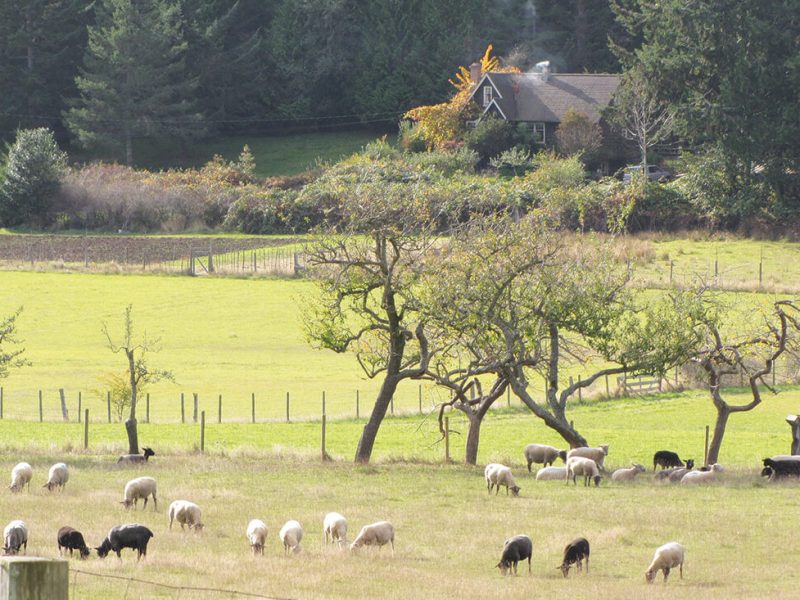
Marjorie Lane photo

August 1, 2019 byBarbara Johnstone Grimmer

SALT SPRING ISLAND—BC Parks is looking for a farm manager for Ruckle Farm on Salt Spring Island through a competitive bid process, after assuming full responsibility for the 200-acre working farm within Ruckle Provincial Park.

The farm was managed privately in a life legacy agreement between BC Parks and the Ruckle family, which sold the 1,200-acre property on Beaver Point to the province in 1972 but retained tenure of the farm until the passing of the last Ruckle family member last year.

For almost 30 years, the farm was managed by Mike Lane for the Ruckle family. Lane maintained the gardens for the houses on the farm, tended the orchards, raised livestock, harvested hay and hosted Ruckle Farm Days, an annual community open house on the property.

Lane continues to operate the farm and live there under a park use permit issued after the life legacy arrangement with the province ended. He’s permitted to stay until the end of 2020. The new farm manager is expected to begin January 1, 2021.

Lane is one of three interested parties considering the farm operator contract.

According to BC Parks, the request for proposal (RFP) process aims to be a fair, open and transparent bidding opportunity per government procurement policies.

The contract term is for 20 years. BC Parks says the length is longer than is typical, but is considered necessary due to the unique nature of the park and the requirements to care for and run it. The 20-year term accommodates necessary investment while allowing for a financially sustainable farm operation that will enhance protection of the park’s heritage value. The only other BC Parks operating contract with a term 20 years in length or greater is Mt. Assiniboine Park.

The Ruckles were well known for their stewardship of the land. Gordon Ruckle has been quoted as saying, “You can’t own the land; you can only preserve it for future generations.” A “gentlemen’s agreement” between the Ruckle family and the province prevented any development that would conflict with farming operations, although the province has long anticipated changes once it acquired full control of the property.

However, BC Parks has indicated an added interest in the economic viability of the operation and is looking for ideas that will not financially depend on the government. These include proposals that “consider new products, experiences, business models and enterprises that allow long-term viability of a profitable operation.”

Ruckle Farm is credited as the oldest working farm in BC operated by the original family. It was begun in the 1870s. According to BC Parks, it is the only farm operating within a BC provincial park. Its appeal has been its beauty and authenticity, following the traditions of farming in the Gulf Islands.

The Salt Spring Island Agricultural Alliance acknowledges the community’s strong relationship with the farm, and its alignment with the Salt Spring area farm plan and the Ruckle Park management plan.

“Mike Lane supported the Ruckle family, which allowed them to live on the farm, including Helen Ruckle in her later years, which allowed her to use her house on the farm and maintain a garden there and to continue to live as they had,” says alliance president Tony Beck.

Lane and his wife Marjorie collaborate with Salt Spring Island Farmers’ Institute on Heritage Day and the fall fair on behalf of Ruckle Farm. Lane has taught sheep raising and condition scoring workshops at the farm for the Salt Spring Island Abattoir Society, and has held farm-to-table lamb dinners as fundraisers for the agricultural alliance.

Lane is also a board member of the abattoir society and mentors young farmers from the Gulf Islands and around the world.

Dan Jason of Salt Spring Seeds has collaborated with Lane to plant heritage beans at Ruckle Farm for the Seed Sanctuary project. Varieties include the Ruckle bean. The beans are also used at bean suppers in the community and the food bank run by Salt Spring Island Community Services.

“Mike Lane has been awesome for all the years he has been there, creating a beautiful, productive farm,” says Jason. “I am not sure what BC Parks wants. It would be a shame if they brought in someone else.”

The closing date for proposals is September 2, and the province hopes to sign an agreement with the new farm manager by October 18.

All content on this website is copyrighted, and cannot be republished or reproduced without permission.

Related Posts

You may be interested in these posts from the same category.

Previous Post: « Province allows family on farms
Next Post: Finding new potential for a lost native berry »

© 2026 COUNTRY LIFE IN BC - ALL RIGHTS RESERVED