• Menu
  • Skip to primary navigation
  • Skip to main content
  • Skip to primary sidebar

Country Life In BC Logo

The agricultural news source in British Columbia since 1915

  • Headlines
  • Calendar
  • Subscribe
  • Advertise
  • About
  • Archives
  • Contact
  • Search
  • Headlines
  • Calendar
  • Subscribe
  • Advertise
  • About
  • Archives
  • Contact
  • Search

Primary Sidebar

Originally published:

JUNE 2022
Vol. 108 Issue 6

Subscribe Now!

Sign up for free weekly FARM NEWS UPDATES

Loading form…

Your information will not be
shared or sold ever

Stories In This Edition

Bird flu in FV

Birds of a feather

BC farm count shrinks

Fast turnaround nabs new grower high praise

Editorial: Growing old quickly

Back 40: War puts perspective on delayed spring in BC

Op-ed: Panel frames a vision for the future of BC ag

Cool spring has delayed crops province-wide

Sidebar: Low termperatures impact fruit

Nicola Valley secures funding for new abattoir

Ranchers feel margin squeeze

IAFBC expands its reach despite challenging year

Good job

Growers must focus on quality to grow market

Task force works to implement UNDRIP goals

Packers say they’ll work together to fix industry

New president aims to motivate farmers institutes

Irrigation shouldn’t be an afterthought

Project provides peace of mind for Oliver growers

Seaweed shows promise as feed additive

Forage field days showcase new tools, concepts

Sidebar: Pest management plot

Women offer ‘cutting-edge’ skills

Irrigation planning critical for hazelnuts

Nip and tuck

Off-season sales boosted by new vending machine

New pest jeopardizes strawberry production

Big expansion plans for Terrace poultry farm

BCAITC celebrates 30 years

Farm Story: There’s always one field that’s “special”

Shape-shifting dahlias drawing in growers

Woodshed Chronicles: Rescue comes for Kenneth

Jude’s Kitchen: Cake to celebrate summer and dads

More Headlines

Follow us on Facebook

Comments Box SVG iconsUsed for the like, share, comment, and reaction icons

2 hours ago

BC Supreme Court has blocked an attempt by remaining BC Tree Fruits Cooperative members to amend a rule that would have excluded former members from receiving their share of the co-op’s remaining assets. In her ruling, Justice Miriam Gropper called the bid to amend Rule 125, which would allow 32% of the surplus to be distributed among former members based on tonnage shipped to the co-op during its last six years of operation, “oppressive and unfairly prejudicial.” The co-op closed in July 2024, and remaining assets are estimated at between $12 and $15 million.

#BCAg
... See MoreSee Less

BC Supreme Court has blocked an attempt by remaining BC Tree Fruits Cooperative members to amend a rule that would have excluded former members from receiving their share of the co-op’s remaining assets. In her ruling, Justice Miriam Gropper called the bid to amend Rule 125, which would allow 32% of the surplus to be distributed among former members based on tonnage shipped to the co-op during its last six years of operation, “oppressive and unfairly prejudicial.” The co-op closed in July 2024, and remaining assets are estimated at between $12 and $15 million.

#BCAg
View Comments
  • Likes: 1
  • Shares: 3
  • Comments: 0

Comment on Facebook

1 day ago

From our Country Life in BC family to yours, HAPPY FAMILY DAY!

Photo by Liz Twan

#BCAg
... See MoreSee Less

From our Country Life in BC family to yours, HAPPY FAMILY DAY!

Photo by Liz Twan

#BCAg
View Comments
  • Likes: 10
  • Shares: 1
  • Comments: 1

Comment on Facebook

🥰🐮🩷

3 days ago

Full-time students employed in BC agriculture during the summer season are eligible to apply for a bursary of up to $3,000. The bursary, administered by the Investment Agriculture Foundation, aims to increase youth and domestic seasonal worker employment in the ag sector. Funding is awarded on a first-come, first-serve basis. More information is available at tinyurl.com/5ef6pe3m

#BCAg IAF
... See MoreSee Less

Full-time students employed in BC agriculture during the summer season are eligible to apply for a bursary of up to $3,000. The bursary, administered by the Investment Agriculture Foundation, aims to increase youth and domestic seasonal worker employment in the ag sector. Funding is awarded on a first-come, first-serve basis. More information is available at https://tinyurl.com/5ef6pe3m

#BCAg IAF
View Comments
  • Likes: 13
  • Shares: 11
  • Comments: 0

Comment on Facebook

4 days ago

BC fruit and vegetable farmers are being asked to share their views on farming technology in a 10-minute survey from Royal Roads University and the University of the Fraser Valley. The survey looks at how fruit and vegetable farmers are adopting emerging farming technologies -- such as digital tools, “controlled environment agriculture systems” (greenhouses) and agri-genomics (DNA analysis) -- to cope with changing climate conditions. The survey takes about 10 minutes to complete, and participants will be eligible to win an assortment of $50-$200 gift cards.

insights.kaianalytics.com/s3/PAS2026
... See MoreSee Less

BC fruit and vegetable farmers are being asked to share their views on farming technology in a 10-minute survey from Royal Roads University and the University of the Fraser Valley. The survey looks at how fruit and vegetable farmers are adopting emerging farming technologies -- such as digital tools, “controlled environment agriculture systems” (greenhouses) and agri-genomics (DNA analysis) -- to cope with changing climate conditions. The survey takes about 10 minutes to complete, and participants will be eligible to win an assortment of $50-$200 gift cards. 

https://insights.kaianalytics.com/s3/PAS2026
View Comments
  • Likes: 5
  • Shares: 1
  • Comments: 0

Comment on Facebook

4 days ago

The District of Coldstream is proposing the creation of farm property tax subclasses to distinguish between small-scale and large-scale farm operations. Currently, all farms are classified as Class 9 regardless of size or infrastructure needs. The district argues larger farms require more municipal services and should be taxed accordingly. It plans to pitch its proposal at the Southern Interior Local Government Association convention in Revelstoke at the end of April. Support there could escalate the discussion to the Union of BC Municipalities convention next September in Vancouver.

#BCAg
... See MoreSee Less

The District of Coldstream is proposing the creation of farm property tax subclasses to distinguish between small-scale and large-scale farm operations. Currently, all farms are classified as Class 9 regardless of size or infrastructure needs. The district argues larger farms require more municipal services and should be taxed accordingly. It plans to pitch its proposal at the  Southern Interior Local Government Association convention in Revelstoke at the end of April. Support there could escalate the discussion to the Union of BC Municipalities convention next September in Vancouver. 

#BCAg
View Comments
  • Likes: 12
  • Shares: 2
  • Comments: 11

Comment on Facebook

Which municipal services do they require more of? Even larger farms typically still have only one or possibly two dwellings. Most have their own well and septic, and I suppose it depends on location, but most rural properties don't have garbage pick up either. And whether 20 driveways or one join the road, the cost to plow that road is the same. I no longer live within a municipality so of course there could be costs I've overlooked that are contributing to the District's proposal.

Large farms put more back into the community too.

The larger farms are the only farms paying wages, allowing people to spend money in their communities, the beauty of a network of small business. Small farms more often then not, is a single transaction, a hobby. Large- buy feed, raise cow, calf is born, sell calf, pay wage(support livlihoods), buy fence posts, buy more feed and so forth. Feeding the community. Small- Buy feed, raise cow, kill cow, eat cow.

And this is why farmers left California. British Columbia is no different

I am not sure how to post the actual Resolution that Council Pat Cochrane put forward but here is the link to the special meeting they are holding to pass the resolution: www.coldstream.ca/government-bylaws/news-alerts/notice-special-council-meeting-3.

Why not find ways to bring in more business's and audit municipal spending and regulate short term rentals (because Coldstream has essentially zero places to stay technically, insane) instead of raising taxes arbitrarily because "bigger costs more"

Attending that meeting, they claimed that “large farms” use more municipal services, yet Cochrane consistently stated he was going after “smaller estate properties not actively farming.” This is not only contradictory but misinformed. It would take him but three door knocks before he learned that the “estate farms” not actively farming are typically leased to a larger conglomerate to maintain farm classification. “Rural living at its finest,” though it seems not a soul on council is well-versed in this wheelhouse. What’s worse is that they somehow don’t think it’s necessary to bring in a single subject expert before blindly tossing around recommendations and solutions to problems that don’t really exist—or at least not as they perceive them. Don’t get me started on their rhetoric comparing the value of class 9 properties to other residential classes, when even my 12 year old understands that the values are drastically different when one property can be subdivided, and an ALR property cannot. Forever to the left of the point.

They want to tax a large farm more? Do people realize that farmers aren't becoming rich. Also, a small or hobby farm isn't contributing much to the local economy or community. This doesn't make sense. If we don't support our farmers. We need them. We can't import all our food.

What bs. I can't do a water and sewer hook up for an agricultural building, (a farm vegie stand) on a 160 acre farm in downtown Kelowna because there is already one at the far end of the lot for the principal residence. What extra infrastructure would they be talking about. Our irrigation is by licensed ground water well put in, powered and serviced by me. Any change in tax code should be on farm estates that do bogus farm gate sales at the minimum requirement, not viable commercial farming enterprizes that employ and contribute economic benefits to so many other businesses

Instead of increasing property taxes on large farms, I think governments need to revise the threshold needed for a property to qualify for farm status. That threshold has not changed in over 20 years and many non farmers are taking advantage of the ridiculously low threshold that was intended for real farmers.

And then you tax the farmers more and wonder why food prices keep going up. Why is it that the only thing government does is find more reasons and ways to tax people?

View more comments

Subscribe | Advertise

The agricultural news source in British Columbia since 1915
  • Email
  • Facebook

Bird flu in FV

H5N1 confirmed in Abbotsford

June 1, 2022 byPeter Mitham

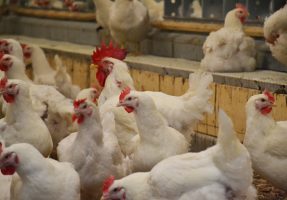
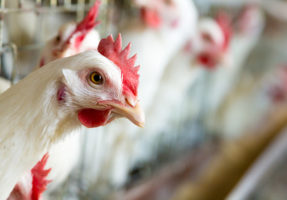
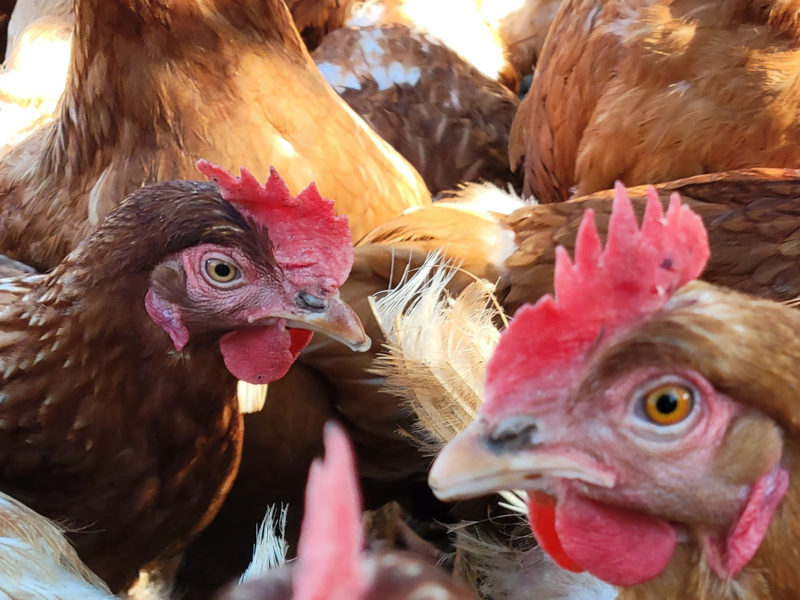
ABBOTSFORD – A control zone was imposed on more than 50 commercial poultry farms in West Abbotsford last month following the discovery of highly pathogenic avian influenza at a local turkey farm, complicating the outlook for producers already under pressure from multiple supply chain issues.
“We’ve been meeting our chicken numbers so far as allocation and utilization numbers, and turkey and eggs are as well,” says Ray Nickel of the BC Poultry Association. “Everything is working, but it doesn’t get easier. It would be nice to have a little relief.”
The Canadian Food Inspection Agency established the zone east of 264 Street and south of Fraser Hwy. By press time, two local farms had tested positive.
The outbreak came just days after the province extended an order requiring commercial flocks to remain indoors until June 13 to protect them against the disease. Strict movement controls were put in place, including permits to ship live birds to market.
“We are still able to move birds to market; we’re still able to place birds. It just adds more layers that make it that much more difficult,” says Nickel. “This will affect hatcheries now, processing plants, feed companies. Everybody requires a movement permit.”
The Fraser Valley is home to 80% of the province’s poultry farms. While producers have followed red-level biosecurity measures since early April to reduce the risk of disease transmission, the federal measures will increase the pressure on producers in the heart of the province’s poultry sector.
“We have our work cut out for us in self-managing some of this movement control stuff, and it will create a significant burden on the industry,” says Nickel.
Controls remain in place until CFIA signs off on the cleaning and disinfection of subject farms and completes post-outbreak testing surveillance. This will not happen for any of the affected premises until early June at the earliest.
There is no known cause for the outbreak in Abbotsford. All birds were kept indoors, and the farm was under quarantine for five days prior to the outbreak announcement.
“[There’s] this ongoing uncertainty as to why this is happening, because we’re following protocols and rules yet we still seem to be getting outbreaks,” says Nickel.
To date, 12 flocks in BC have tested positive with more than 60,000 birds affected. All but three of the flocks are considered small flocks, which are not required to be kept indoors.
Speaking to Country Life in BC, federal agriculture minister Marie-Claude Bibeau emphasized the need of backyard flocks to follow proper biosecurity protocols.
“It’s important to remind those who have these backyard flocks to be extremely careful,” she says. “The big commercial installations know about all these biosecurity measures, but some smaller ones don’t necessarily have these measures in place.”
The ongoing provincial order in BC allows small-lot growers to continue pasturing birds outdoors provided they adhere to biosecurity protocols drafted by the Small-Scale Meat Producers Association.
The province has pointed to migratory birds as key players in the infection of farms. By keeping birds indoors, farmers aim to reduce risk of transmission between wild and domestic flocks.
A wild bird surveillance program tests about 1,200 birds a year and 400 sediment samples, but in extending the provincial order to June 13, the province’s deputy chief veterinarian said additional measures may be required.
“The B.C. Poultry Association (BCPA) has introduced the highest biosecurity ‘code Red’ standards to support producers taking actions in limiting the spread of the virus,” the order states. “In addition to the actions being taken by the BCPA, further government actions to limit direct contact between wild birds and commercial poultry are warranted.”
The original order was meant to extend until the end of the migratory season. While additional outbreaks changed those plans, Nickel welcome the arrival of warm weather at the end of May following a cool, damp spring.
“The good news is it’s warming up, so hopefully this summertime weather will bring some of this to an end,” he says.


Related Posts

You may be interested in these posts from the same category.

Poultry biosecurity notches down

Traceability reprieve for livestock

CFIA reports low honey adulteration

Province funds avian flu upgrades

Red biosecurity remains for poultry

BC distanced from TB concerns

Vet urges dairies to be vigilant against HPAI

Avian flu response keeping pace

Bird flu returns

CFIA nabs Enderby abattoir

AI hit chick placement

BC control zones revoked

Previous Post: « Dairy tops economic impact
Next Post: Recovery fund deadline extended »

Copyright © 2026 Country Life in BC · All Rights Reserved