• Menu
  • Skip to primary navigation
  • Skip to main content
  • Skip to primary sidebar

Country Life In BC Logo

The agricultural news source in British Columbia since 1915

  • Headlines
  • Calendar
  • Subscribe
  • Advertise
  • About
  • Archives
  • Contact
  • Search
  • Headlines
  • Calendar
  • Subscribe
  • Advertise
  • About
  • Archives
  • Contact
  • Search

Primary Sidebar

Originally published:

JUNE 2024
Vol. 110 Issue 6

Subscribe Now!

Sign up for free weekly FARM NEWS UPDATES

Loading form…

Your information will not be
shared or sold ever

Stories In This Edition

Summer plans

FIRB sours dairy plans

Crop insurance claims soar

Saanichton Farm launches Hall of Fame

Editorial: Our home and native land

Back 40: Water is essential for more than hydropower

Viewpoint: COP formula heralds a new era for chicken growers

Illegal dumping surges on Fraser Valley farmland

Truck stop

Ag Briefs: BC Veg puts northern expansion on hold

Ag Briefs: Mink appeals dismissed

Ag Briefs: Shuswap awards watershed grants

CFIA nabs Enderby abattoir for violations

Crushed

Chicken growers welcome new long-term pricing

Change in tone for water management

Better scheduling tools needed for abattoirs

Surrogate cows beef up ranch

Animal activists undermine mental wellness

Sidebar: Common ground impossible

Farmers protest access issues at rail trail opening

Sustainability benchmarks in the works

New raspberries hold promise

Sustainer Series offers insight, community

KPU showcases greenhouse innovations

Cranberries studied for climate resilience

Farm Story: Grease is the way we are feeling

Veganic farm thrives in the Kootenays

Hot solution for better hay comes to Canada

BC farmers seek a match on national TV

Langley broiler farm scales up tech to stay cool

Woodshed: A little soul searching goes a long way

Quesnel leader receives national 4-H award

Jude’s Kitchen: So much to celebrate in June

All content on this website is copyrighted, and cannot be republished or reproduced without permission.
More Headlines

Follow us on Facebook

Comments Box SVG iconsUsed for the like, share, comment, and reaction icons

10 hours ago

A draft update to the Code of Practice for the Care and Handling of Beef Cattle is now open for public comment until June 12. The code, one of 14 animal care codes developed and maintained by the National Farm Animal Care Council, is undergoing a routine 10-year review. "Your feedback will help shape the industry's guide to cattle welfare for the next decade," says Canadian Cattle Association policy manager Jessica Radau, urging producers to weigh in. For more information, visit tinyurl.com/58a3u9fz.

#BCAg
... See MoreSee Less

A draft update to the Code of Practice for the Care and Handling of Beef Cattle is now open for public comment until June 12. The code, one of 14 animal care codes developed and maintained by the National Farm Animal Care Council, is undergoing a routine 10-year review.  Your feedback will help shape the industrys guide to cattle welfare for the next decade, says Canadian Cattle Association policy manager Jessica Radau, urging producers to weigh in. For more information, visit https://tinyurl.com/58a3u9fz.

#BCAg
View Comments
  • Likes: 2
  • Shares: 0
  • Comments: 1

Comment on Facebook

I sat in the webinar yesterday by the Canadian Cattle Association. My initial concern was that this would be another "play" into the government's hands. It has been worked on by people that are actually in the Beef industry from Cow calf to feedlot. The thrust is an update of the 2013 Code of Practice which was reviewed in 2018. The changes are more a move from "left to the producers discretion" to clearer directions regarding pain management, proper transport of animals which are impaired and keeping cattle in in good condition. Much of what is recommended is what producers who care about animal husbandry already do. The important part is to GIVE THEM FEEDBACK good, bad or otherwise. The document is about 60 pages long, and I ran it through CHAT to see what had been changed. It is important to understand that the PUBLIC is invited to comment on the draft not just producers. Think about it... do you really want the public influencing how you manage your cattle. If you think that this is just one of those things, I have been following Bill 22 in Alberta which will grant the SPCA a proactive roll in entering farms and checking on animals. When I asked CHAT how the new bill relates to the Cattle Code, it came back that the Code although not a regulation will be able to be used as a guide by producers for backup in dealing with the SPCA regarding cattle conditions, sick animal handling etc. Take the time.... Go onto the Canadian Cattle Association website and speak to those parts that you wish to input.

1 day ago

According to the BC River Forecast Centre, the Okanagan snowpack stood at just 58% of normal on April 1 — the lowest reading since measurements began in 1980 — raising concerns about drought conditions in the region this summer. The rest of the province sits at 92% of normal.

#BCAg
... See MoreSee Less

According to the BC River Forecast Centre, the Okanagan snowpack stood at just 58% of normal on April 1 — the lowest reading since measurements began in 1980 — raising concerns about drought conditions in the region this summer. The rest of the province sits at 92% of normal.

#BCAg
View Comments
  • Likes: 3
  • Shares: 0
  • Comments: 0

Comment on Facebook

2 days ago

At her first AGM as executive director of BC Meats, held Saturday in Abbotsford, Jennifer Busmann spoke about her strong ties to agriculture and her optimism for the organization's future. Busmann has cattle of her own and came to the role with existing relationships with members and the board of directors that helped her feel integrated from the start. She stepped into the position in Februa#BCAg#BCAg ... See MoreSee Less

At her first AGM as executive director of BC Meats, held Saturday in Abbotsford, Jennifer Busmann spoke about her strong ties to agriculture and her optimism for the organizations future. Busmann has cattle of her own and came to the role with existing relationships with members and the board of directors that helped her feel integrated from the start. She stepped into the position in February.

#BCAg
View Comments
  • Likes: 6
  • Shares: 0
  • Comments: 0

Comment on Facebook

4 days ago

Shannon Wiggins of Headwind Farm in North Saanich is this year's Mary Forstbauer Grant recipient from the BC Association of Farmers Markets. The $500 grant will help Wiggins expand her plot at Sandown Centre for Regenerative Agriculture, growing more storage crops to extend her harvest season. Wiggins credits farmers markets with inspiring her own farming journey and commitment to building community through food. Congratulations!

tinyurl.com/45bdd#BCAg#BCAg
... See MoreSee Less

Shannon Wiggins of Headwind Farm in North Saanich is this years Mary Forstbauer Grant recipient from the BC Association of Farmers Markets. The $500 grant will help Wiggins expand her plot at Sandown Centre for Regenerative Agriculture, growing more storage crops to extend her harvest season. Wiggins credits farmers markets with inspiring her own farming journey and commitment to building community through food. Congratulations!

https://tinyurl.com/45bddtw8

#BCAg
View Comments
  • Likes: 46
  • Shares: 2
  • Comments: 3

Comment on Facebook

Wahoo! Congrats Shannon! I love your produce. Can’t wait for the radishes 🫜

Congratulations!

Well done!! 🩷🩷🩷

6 days ago

New farmers can avoid costly mistakes by learning from those who've been there. At a Young Agrarians mixer in Penticton, five BC farmers shared hard-won lessons on pricing, pivoting, relationships and burnout. From coyote losses to business burnout, their message was clear: set prices that reflect true costs, make decisions quickly and don't let farming define your worth. Myrna Stark Leader's story appears in our April e-edition, now available to view online at: tinyurl#BCAg2uw53vvm

#BCAg
... See MoreSee Less

New farmers can avoid costly mistakes by learning from those whove been there. At a Young Agrarians mixer in Penticton, five BC farmers shared hard-won lessons on pricing, pivoting, relationships and burnout. From coyote losses to business burnout, their message was clear: set prices that reflect true costs, make decisions quickly and dont let farming define your worth. Myrna Stark Leaders story appears in our April e-edition, now available to view online at: https://tinyurl.com/2uw53vvm

#BCAg
View Comments
  • Likes: 15
  • Shares: 0
  • Comments: 0

Comment on Facebook

Subscribe | Advertise

The agricultural news source in British Columbia since 1915
  • Email
  • Facebook

Illegal dumping surges on Fraser Valley farmland

ALC compliance staff grapple with case load

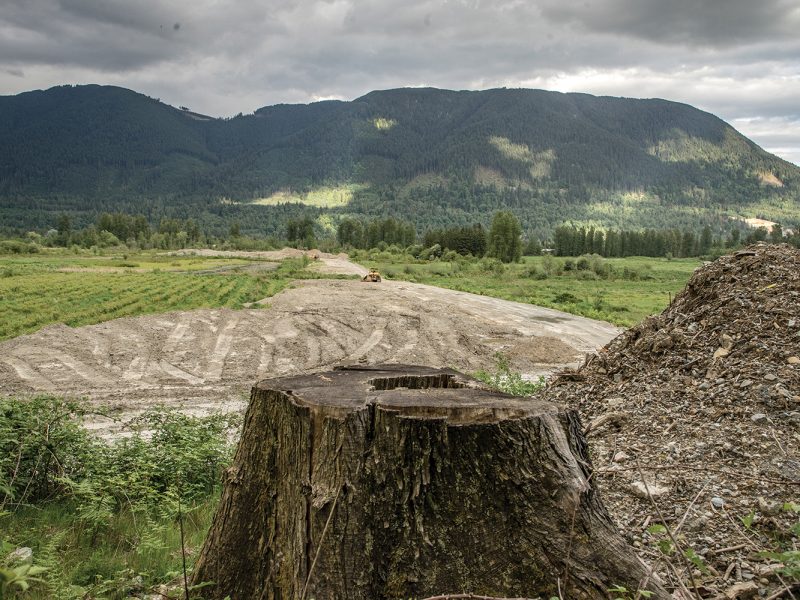
Hundreds of loads of fill cover blueberry bushes at a property off Stave Lake Road in the Hatzic Valley. ANNA KLOCHKO

June 5, 2024 byPeter Mitham

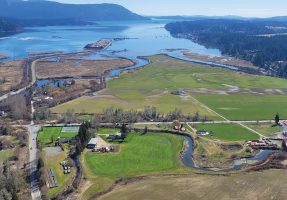
HATZIC – A rocky outcrop on Stave Lake Road east of Mission offers a panoramic view of the Hatzic Valley, the flat land and alluvial soils ideal for blueberries, nurseries, livestock and poultry farms.

But in 2021, the valley also began attracting other kinds of operations. Dozens of trucks hauling fill from across the Lower Mainland began arriving, offering local property owners free fill and contracting with others for ongoing deposits. In some cases, the trucking companies themselves bought properties to deposit fill.

“Two and a half years ago, traffic on our roads increased and everybody noticed all these gravel trucks come in,” says Beata Kunze, a hatching egg producer and president of the Hatzic Valley Community Association. “[This] past year, a couple of trucking companies bought up blueberry farms and started using them as construction fill dumping sites.”

The turnout on Stave Lake Road sits at the entrance to one of those properties. Just over 16 acres in size, it sold at the beginning of April 2023 for $1 million. Thanks to farm class status, its assessed value is just $15,372.

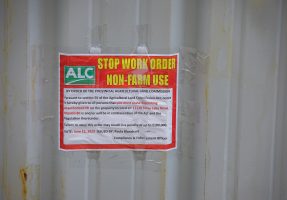
But the rows of berries were soon being filled with a mix of excavation material and construction waste, drawing complaints that prompted the Agricultural Land Commission to issue a stop work order within three months of the property’s sale.

It’s not an isolated incident. Close to 40 stop-work orders have been issued at properties in the Hatzic Valley since 2022 following complaints from neighbours.

Dozens more orders have been issued across the Lower Mainland, with reports of illegal fill coming in from Matsqui Prairie in Abbotsford, the Columbia Valley in Chilliwack as well as within Metro Vancouver, which has historically been a hot spot for fill complaints.

The issues are just up the road from Delta South MLA Ian Paton, agriculture critic for BC United, who says dozens of trucks have been delivering fill to 30 acres that were planted to potatoes until last year prior to a planned greenhouse expansion.

While greenhouses are allowed on agricultural land, Paton is shocked at the kind of fill that’s arriving.

“There’s a dump truck with a trailer behind it every five minutes,” he says. “Why do we have to cover prime agricultural land with three feet of crappy fill material to build a greenhouse?”

Paton has filed a complaint, one of a growing number the Agricultural Land Commission is receiving.

The number of files related to illegal fill in the year ended March 31 was up 44% versus 2021, hitting 476 versus 331 three years ago.

The situation in the Lower Mainland is so dire that the ALC has assigned its six compliance and enforcement officers to the region.

“We want to gain some more compliance with this blatant dumping on agricultural land,” ALC operations director Avtar Sundher told Hatzic Valley residents who gathered for a community meeting on May 13. Representatives of Sran Trucking Ltd., one of the companies involved in the dumping, were also present.

Sundher says additional resources were allocated to address the issue with the premier’s blessing.

“The focus on this valley, it all happened because … the premier, minister, our deputy minister were all involved,” Sundher says. “That allowed us to release resources from other parts of the province and bring them here. And we’re going to continue.”

Property owners that ignore stop-work orders face penalties as well as remediation orders, something that’s happened with the property on Stave Lake Road.

“There’s many more that are going to follow,” Sundher says.

Remediation orders go on a property’s title, compromising the ability to sell the property until the illegal fill is removed and the property is restored to its original agricultural capability or better.

The commission is also speaking with the attorney general and Crown counsel regarding further action.

“We are in conversation with the Civil Forfeiture Office,” Sundher says. “The proceeds of crime also includes the proceeds of regulatory offences. … We can actually hand the file over to that office, and they can look at what gains were made from this illegal activity that they can recover.”

While dumping on farmland is a perennial issue, the dramatic rise in files over the past year is almost certainly linked to the growing cost of soil removal.

Revisions last year to the province’s contaminated sites regulation added tens of thousands of dollars to development costs because it required the characterization of soils from not only Schedule 2 sites (including gas stations and machine shops) but adjacent properties that may have been impacted by Schedule 2 sites.

While the province has allowed greater leeway for professional judgment, the costs remain high and paperwork is also required for sites receiving affected soils.

This has developers seeking cheaper disposal options, something Hatzic Valley residents pointed out.

“When you dig a foundation for a highrise, as of last March the dirt does have to be tested as to where it goes,” one speaker said. “But the problem is no one wants to deal with it, so everybody just puts a blind eye on it.”

A site on Farms Road in Mission that was slapped with a stop-work order May 1 is a case in point, with petrochemical smells reported  at the site. (Sundher confirmed the report, but said he wasn’t aware of any testing conducted as part of BC Ministry of Environment investigations.)

The lack of effective enforcement has made communities in the eastern Fraser Valley a dumping ground, according to speakers at the Hatzic Valley meeting, some of whom formed a working group April 30 to establish their own citizens patrol. They were complemented by members of the Leq’á:mel First Nation, but the arrangement isn’t sustainable for the long-term.

“We can’t patrol our roads 24/7 forever,” Kunze says.

While greater enforcement has meant a reprieve from truck traffic, it doesn’t address the fill that’s been delivered to properties.

This is where remediation is key, says Fraser Valley Regional District director Hugh Davidson, who represents Electoral Area F that includes the Hatzic Valley.

“Without that remediation, at the end of the day for me it’s all a fail,” he says.

Davidson would like to see ALC staff authorized to issue stop-work orders on the spot.

But such changes are not on the books, Sundher says, adding that investigators need to follow due process to ensure any orders they issue are legally defensible.

ALC staff have been told to work within the existing framework, which includes a budget that has increased by increments since the 33% boost delivered by the BC Liberals in 2016.

“We’ve been given the reins to control as much as we can through the resources we have,” Sundher says. “We are committed as staff to use our resources as efficiently as possible, try to find new tools that we can [use] without having legislative changes.”

All content on this website is copyrighted, and cannot be republished or reproduced without permission.
Related Posts

You may be interested in these posts from the same category.

Land Commission lays off staff

Reclassification sparks farm definition debate

ALC rejects Cowichan dike removal

Regulatory hurdles threaten farm income solutions

Landowners push back against rail trail plans

BC boosts agriculture spending

ALC members appointed

Islands Trust turns 50

Premier boosts fill enforcement

ALR policy review shows room for improvement

Carbon tax rebate announced

Surrey ALR inclusion cheered

Previous Post: « Saanichton Farm launches Hall of Fame for Island farmers
Next Post: Mushroom workers unionize »

© 2026 COUNTRY LIFE IN BC - ALL RIGHTS RESERVED