• Menu
  • Skip to primary navigation
  • Skip to main content
  • Skip to primary sidebar

Country Life In BC Logo

The agricultural news source in British Columbia since 1915

  • Headlines
  • Calendar
  • Subscribe
  • Advertise
  • About
  • Archives
  • Contact
  • Search
  • Headlines
  • Calendar
  • Subscribe
  • Advertise
  • About
  • Archives
  • Contact
  • Search

Primary Sidebar

Originally published:

MARCH 2023
Vol. 109 Issue 3

Subscribe Now!

Sign up for free weekly FARM NEWS UPDATES

Select list(s) to subscribe to


By submitting this form, you are consenting to receive marketing emails from: Country Life in BC. You can revoke your consent to receive emails at any time by using the SafeUnsubscribe® link, found at the bottom of every email. Emails are serviced by Constant Contact
Your information will not be
shared or sold ever

Stories In This Edition

The right cut

Health labs to be rebuilt

Kale acreage on fast track

Province makes bid to protect Surrey farmland

Editorial: Collective wisdom

Back 40: Full-time, part-time, or time well spent?

Viewpoint: A lifetime of safe farming is never an accident

Farmers question regenerative ag agenda

Growers flood back to Tradex for ag show

Ag Briefs: Spring bird migration raise fears of AI’s return

Ag Briefs: TJ Schur to lead IAF

Trust lacking between well owners, province

Champions of agriculture

Future uncertain for new varieties council

Here’s looking at you

Council takes delinquent growers to court

Extension service hopes for stronger supports

Blueberry growers focus on qualify

Researchers home in on emerging blueberry viruses

Viticulture show draws record attendance

Butcher hub moves ahead after three years

Snug as bugs

Ducks Unlimited pilot helps ranch manage water

Livestock response unit called into action

Farmland Advantage funding extended

Sidebar: Watershed moment

Soil carbon only part of the green equation

Sidebar: Organic compost a government priority

Filling a market for fresh corn in Chase

On-farm trials address nutrient challenges

Automation is revolutionizing dairy farming

UBC research advances dairy herd health

Farm Story: As winter fades into spring, mud follows

Preparing for a  low-emissions future

Show time

Dead canopies from last year concern growers

Woodshed: Problems stack up for Kenneth at the new farm

BC-made mushroom innovation in the works

Jude’s Kitchen: Irish spring fun in the kitchen

More Headlines

Follow us on Facebook

Comments Box SVG iconsUsed for the like, share, comment, and reaction icons

2 weeks ago

FarmFolk CItyFolk is hosting its biennial BC Seed Gathering in Harrison Hot Springs November 27 and 28. Farmers, gardeners and seed advocates are invited to learn more about seed through topics like growing perennial vegetables for seed, advances in seed breeding for crop resilience, seed production as a whole and much more. David Catzel, BC Seed Security program manager with FF/CF will talk about how the Citizen Seed Trail program is helping advance seed development in BC. Expect newcomers, experts and seed-curious individuals to talk about how seed saving is a necessity for food security. ... See MoreSee Less

Link thumbnail

BC Seed Gathering - FarmFolk CityFolk

farmfolkcityfolk.ca

Save the date for our upcoming 2023 BC Seed Gathering happening this November 3rd and 4th at the Richmond Kwantlen Polytechnic University campus.
View Comments
  • Likes: 1
  • Shares: 0
  • Comments: 0

Comment on Facebook

4 weeks ago

BC has reported its first case of highly pathogenic avian influenza (HPAI) in the eighth wave of the disease since 2021. Canadian Food Inspection Agency officials confirmed October 13 that a premises in Abbotsford tested positive for the disease, the first infected premise in BC during this fall's migration. The farm is the 240th premises infected in BC since the current national outbreak began four years ago with a detection in Newfoundla#BCAg#BCAg ... See MoreSee Less

BC has reported its first case of highly pathogenic avian influenza (HPAI) in the eighth wave of the disease since 2021. Canadian Food Inspection Agency officials confirmed October 13 that a premises in Abbotsford tested positive for the disease, the first infected premise in BC during this falls migration. The farm is the 240th premises infected in BC since the current national outbreak began four years ago with a detection in Newfoundland.

#BCAg
View Comments
  • Likes: 50
  • Shares: 195
  • Comments: 444

Comment on Facebook

But the ostrich’s have the cure ….

I don't believe anything the CfIA says, like saying ostriches are chickens so that's why everything has to get culled.

Who in BC has reported this, not a word in the news. Why are you spreading fear propaganda? If you cannot add a source do not post this crap! It appears your page knows absolutely nothing about COUNTRY LIFE IN BC OR ELSEWHERE!

Just put one-way arrows on the floor of the chicken coop, keep them 6ft apart from each other and stock up on toiletpaper for them. 😉

Source? I can't find anything to corroborate this story.

Perhaps if they had allowed the ostrich to be tested and discovered how they developed antibodies we could quit culling our food supplies. Yes I know ostrich are not chickens

This only made the news to confuse those interested in the ostrich farm, relax, has nothing to do with the ostriches

How convenient that carney has a pocket in this 🤔

The ostriches eggs can save your flock

Weird how it only affects birds we eat. Kinda like how no homeless people got convid.

How convenient. Now it's off to the ostrich farm, right?

Have you went chicken catching for 8 hours all night 36000 birds

My advice take your chickens and run!

Have none of you guys ever seen the hundreds of birds falling from the sky? Ya me nether

Brainwashing if you ask me

just like on people- that mask looks like its doing a lot of nothing on that rooster!

Is it as deadly as monkey pox?? 🐵

Quick kill all the food! Perhaps we should study the ostriches...

Ostriches not chicken and not reproduced for human consumption

The condom is too small for the CO?K

I don't know how you do it, but invest in egg futures RIGHT NOW. The price will be skyrocketing.

So is it the first or the 240th?

240th. So how many birds culled is that now? The stamping out policy is working so well, isn’t it? Maybe cramming millions of stressed birds, receiving no sunlight, into facilities, all within a few kilometres apart (talk about having all your eggs in one basket) is not the brightest idea. Maybe we should scrap the Quito system, allow regular folks to have more than 100 birds and supply their neighbourhoods with meat and eggs. Maybe we should raise more robust birds with better immune systems. Maybe we shouldn’t give birds sunlight, less crowded conditions, and give them a full 24 hours to lay an egg, instead of artificially giving them shorter days, trying to squeeze more eggs out of them. Maybe, without the quota system, instead of a few mega farms, egg producers would again dot the entire province.

Lol are they going to blaim the ostriches

You mean to tell us all, THE CULL isn’t working, maybe, just maybe we should try something just a bit more humanly and have maybe a slight hint of scientific evidence!!!

View more comments

1 month ago

Here we go again!

With no immediate end in sight for the Canada Post strike, we have uploaded the October edition of Country Life in BC to our website. While it's not the preferred way to view the paper for most of our subscribers, we're grateful to have a digital option to share with them during the strike. The October paper is printed and will be mailed soon as CP gets back to work! In the meantime, enjoy!

... See MoreSee Less

Link thumbnail

CLBC October 2025

news.countrylifeinbc.com

CLBC October 2025
View Comments
  • Likes: 7
  • Shares: 4
  • Comments: 2

Comment on Facebook

The 1 person in Canada who contracted avian flu speaks to Rebel.news

STOP SPREADING LIES ABOUT AVIAN FLU NO BIRD GETS THIS

1 month ago

... See MoreSee Less

View Comments
  • Likes: 8
  • Shares: 0
  • Comments: 0

Comment on Facebook

1 month ago

... See MoreSee Less

View Comments
  • Likes: 6
  • Shares: 0
  • Comments: 0

Comment on Facebook

Subscribe | Advertise

The agricultural news source in British Columbia since 1915
  • Email
  • Facebook

Kale acreage on fast track

Fruit and vegetable revenues increase

March 1, 2023 byPeter Mitham

DELTA – Kale was the fastest-growing vegetable in BC by acreage in 2022, according to Statistics Canada data that shows field vegetable acreage in the province is on the decline.

BC growers tended 13,146 acres of vegetables in 2022, according to Statscan’s annual report on fruit and vegetable acreage, released February 16 (potatoes and greenhouse crops are considered separately). This was down 7% from a year earlier and 4% from the five-year average.

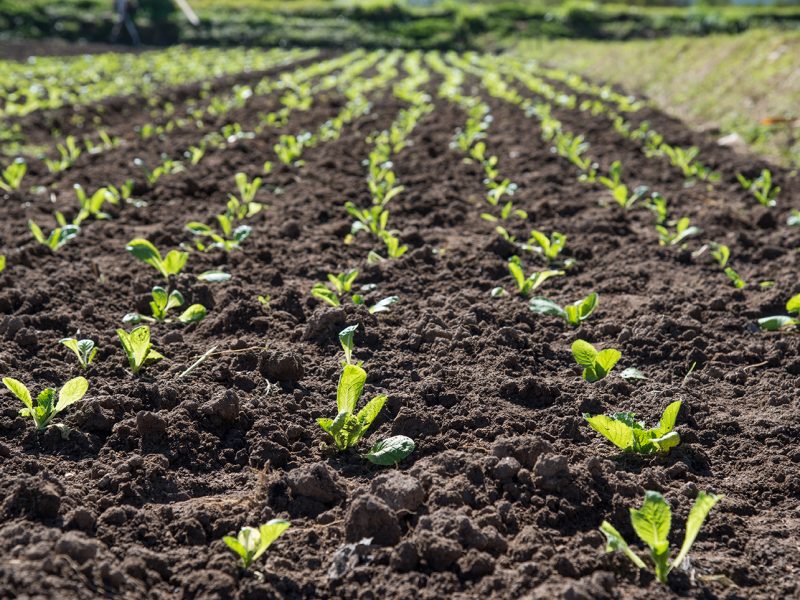
But within those numbers, kale took top-spot as the fastest-growing crop, with acreage rising 55% versus 2021 and 36% over the five-year average to 149 acres.

The rise of kale is part of greater interest in leafy greens, with lettuce ranking second among the fastest-growing vegetables by acreage. Growers devoted 598 acres to lettuce in 2022, up 45% from 2021 and 20% higher than the five-year average.

The strength of leafy greens relates not only to a favourable climate but also market opportunities.

The province’s most lucrative crops on a per-acre basis are spinach, at $28,051 per acre, followed by kale at $21,932 per acre.

Its fast-growing counterpart, lettuce, generated farmgate receipts of nearly $9.5 million for growers last year, or more than $15,855 an acre. This puts it ahead of the top-grossing crop in BC, cabbage, which generated farmgate receipts of $13.6 million last year, or $13,953 per acre.

The appeal has large growers like Quebec-based VegPro expanding lettuce production in the Okanagan to serve regional markets and compete against product from California. Lettuce also commands a premium at farmers markets, prompting many smaller growers to plant what can be a year-round crop in many of the province’s more temperate regions, providing steady cash flow.

But leafy greens remain small potatoes when it comes to the province’s major field vegetables.

Potatoes are large enough to warrant their own report, with 5,200 acres planted last year. Challenging conditions last spring cut seeding by 1,100 acres from a year earlier, and a similar story played out for sweet corn, the second most-planted field vegetable by area with 1,858 acres in 2022. This was down 21% from the five-year average, but nevertheless gave it a dominant position over other veggies.

Peas, primarily a processing crop, ranked second with 1,370 acres, up 16% from a year earlier and 28% over the five-year average.

With few exceptions, growers of all vegetables saw better prices last year, with farmgate receipts totalling $119.9 million, up 10% from a year earlier. This marked a sharp increase from the five-year average, pointing to the effects of higher input costs and inflationary pressures on what growers had to charge.

Higher revenues for fruit

Statscan delivered similarly good news with respect to BC fruit production. All crops except apples and blueberries saw farmgate revenues increase last year, for total receipts of $454.7 million. Blueberries accounted for the largest share, with $156.6 million in sales despite a 1% drop in production. Sweet cherries ranked second, with more than $80 million in sales while grapes came in third with nearly $75 million in sales despite a 7% decrease in tonnage.

But the fastest-growing crops were raspberries and pears, crops that have both seen significant investment in recent years geared towards renewal and greater efficiencies.

Raspberries saw marketed production rise 45% to 5,290 tons for a 50% increase in farmgate receipts to $17.2 million. In a promising sign, revenues were up 9% over the five-year average even as production remained 14% below the five-year average. This points to plenty of room for the sector to catch up as provincial replant funding supports the ongoing renewal of fields following years of poor weather and discouraging returns.

Kelowna-based Day’s Century Growers investment in a state-of-the-art packing line in 2019 gave it the capacity to handle all the pears grown in BC, and Statscan’s numbers point to a parallel increase of pear production in the province.

Pear tonnage increased 17% last year to 5,107 tons. While this was down 3% from the five-year average, farmgate revenues rose 25% to $5.95 million, indicating a higher price per ton.

Despite strong revenue growth, just two crops saw a significant increase in bearing acreage last year. Sweet cherries increased 7% to 5,623 acres, and raspberries increased 6% to 1,925 acres.


Related Posts

You may be interested in these posts from the same category.

Food prices outpace income

Building boom ahead

Census of Agriculture launches

BC organic growers flourish

Previous Post: « AgriStability deadline extended
Next Post: Province doubles vet seats »

Copyright © 2025 Country Life in BC · All Rights Reserved