
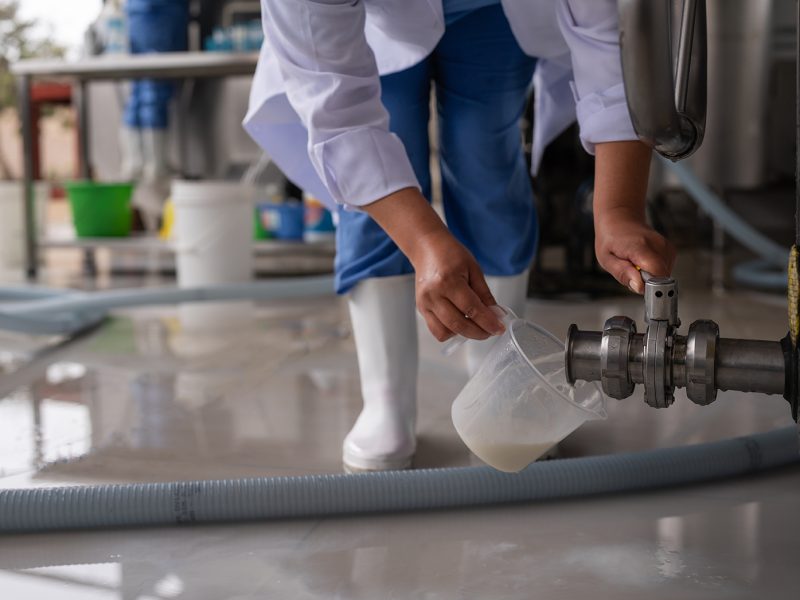
One month after voting in favour of strike action, unionized milk testers in BC remain on strike.
Testers, employed by Lactanet and represented by the BC General Employees Union (BCGEU), voted 89% in favour of strike action on November 18.
A 72-hour strike notice was served on November 21, and testers walked off the job on November 25, leaving 175 farms without their services, which provide essential information on milk composition and, in turn, support the price farmers receive for their milk.
Testers have been working without a contract since September 30, 2023, despite 20 months of bargaining.
A key issue is mileage, which is currently set at $0.41 per kilometre versus the Canada Revenue Agency standard of $0.72 per kilometre for work travel using personal vehicles.
Most testers use their own vehicles, typically SUVs and trucks, to carry equipment and supplies. Besides fuel, testers must carry business-type insurance and cover expenses related to tires, maintenance, depreciation and repairs.
“Pretty much everybody has to get good snow tires, because we get up at 3:30, 4 in the morning when most of the roads aren’t ploughed yet,” said Jack van Dongen of Enderby, a milk tester, former dairy farmer and chair of the workers’ bargaining committee.
While vehicle expenses have increased, mileage remains stuck in the range van Dongen was receiving when he was coaching junior hockey in the early 2000s.
Lactanet is offering to boost mileage by two cents to $0.43 per kilometre, but testers are asking for a 15-cent increase.
“We’re asking 56 cents for the coming year, and 58 for the following year. And we’re not getting any back pay for the 26 months since our contract ended,” van Dongen says.
Testers know that other divisions of Lactanet pay more for mileage than what BC testers receive.
The irony is that Lactanet is a farmer-led organization, and testers provide information critical to herd improvement. Without test results, farmers will be less informed about milk quality and the components that determine what they’re paid for their milk.
Lactanet has been nonplussed by the strike action, but van Dongen says some farmers are becoming impatient.
“If they don’t know what their butterfat is, it’s going to affect the bottom line,” he says. “So, there’s some farmers that want this resolved as quickly as possible.”
All content on this website is copyrighted, and cannot be republished or reproduced without permission.
 CFIA reports low honey adulteration