• Menu
  • Skip to primary navigation
  • Skip to main content
  • Skip to primary sidebar

Country Life In BC Logo

The agricultural news source in British Columbia since 1915

  • Headlines
  • Calendar
  • Subscribe
  • Advertise
  • About
  • Archives
  • Contact
  • Search
  • Headlines
  • Calendar
  • Subscribe
  • Advertise
  • About
  • Archives
  • Contact
  • Search

Primary Sidebar

Originally published:

OCTOBER 2019
Vol. 105 Issue 10

Subscribe Now!

Sign up for free weekly FARM NEWS UPDATES

Loading form…

Your information will not be
shared or sold ever

Stories In This Edition

ALC cracks down

Pat Jasper …

Bill will rein in activists

BC considers making premises ID mandatory

Bin there, done that

Unsung heroes

The Back Forty: It’s time government changed its narrative

Viewpoint: Banning plastic bags ignores reality

New round of changes coming to land reserve

Hullcar farmers file first NMP plans under new code

Classy champion

Most farmers support Daylight Savings Time

South Vancouver food hub to connect farmers

Egg-splaining

Dunn leaps to dairy sector

UBCO study looks at context for climate change

City Beet harvests profits from urban gardens

Forage trial presents options for producers

Growers step up to continue corn silage trials

Density key to efficient, healthy silage storage

Weather affecting corn trials

Bumper crop pushes down blueberry prices

Valley has protential to be an agritech hub

Ministry working on land use inventory

Join initiatives a priority for feeders

Best of the best

Canadian beef herd sinks to 30-year low

Familiar challenges face fourth-generation rancher

No-till seeding showcased at field day

Market Musings: Grass-fed cattle come to market with big gains

Blight-resistant trees focus of hazelnut field day

Replant, pest support for hazelnut growers

Bright berries

New packing line can handle BC’s pear crop

Mission Hilll aims to be fully organic by 2021

Research: Clean cud promotes dental health in ruminants

Remote market supports growth of local growers

Farm groups exploring food hub opportunities

Zoom! Zoom!

Chilliwack farms hopping with insects

Livestock still a main attraction at annual fair

PNE agriculture auction keeps on giving

4-H skills still key despite changes in farming

Thousands converge on Westham Island

Woodshed: Vacation time invites all kinds of cover-ups

Kootenay grower shoots forward with microgreens

Jude’s Kitchen: Harvest local

All content on this website is copyrighted, and cannot be republished or reproduced without permission.
More Headlines

Follow us on Facebook

Comments Box SVG iconsUsed for the like, share, comment, and reaction icons

6 hours ago

A draft update to the Code of Practice for the Care and Handling of Beef Cattle is now open for public comment until June 12. The code, one of 14 animal care codes developed and maintained by the National Farm Animal Care Council, is undergoing a routine 10-year review. "Your feedback will help shape the industry's guide to cattle welfare for the next decade," says Canadian Cattle Association policy manager Jessica Radau, urging producers to weigh in. For more information, visit tinyurl.com/58a3u9fz.

#BCAg
... See MoreSee Less

A draft update to the Code of Practice for the Care and Handling of Beef Cattle is now open for public comment until June 12. The code, one of 14 animal care codes developed and maintained by the National Farm Animal Care Council, is undergoing a routine 10-year review.  Your feedback will help shape the industrys guide to cattle welfare for the next decade, says Canadian Cattle Association policy manager Jessica Radau, urging producers to weigh in. For more information, visit https://tinyurl.com/58a3u9fz.

#BCAg
View Comments
  • Likes: 2
  • Shares: 0
  • Comments: 1

Comment on Facebook

I sat in the webinar yesterday by the Canadian Cattle Association. My initial concern was that this would be another "play" into the government's hands. It has been worked on by people that are actually in the Beef industry from Cow calf to feedlot. The thrust is an update of the 2013 Code of Practice which was reviewed in 2018. The changes are more a move from "left to the producers discretion" to clearer directions regarding pain management, proper transport of animals which are impaired and keeping cattle in in good condition. Much of what is recommended is what producers who care about animal husbandry already do. The important part is to GIVE THEM FEEDBACK good, bad or otherwise. The document is about 60 pages long, and I ran it through CHAT to see what had been changed. It is important to understand that the PUBLIC is invited to comment on the draft not just producers. Think about it... do you really want the public influencing how you manage your cattle. If you think that this is just one of those things, I have been following Bill 22 in Alberta which will grant the SPCA a proactive roll in entering farms and checking on animals. When I asked CHAT how the new bill relates to the Cattle Code, it came back that the Code although not a regulation will be able to be used as a guide by producers for backup in dealing with the SPCA regarding cattle conditions, sick animal handling etc. Take the time.... Go onto the Canadian Cattle Association website and speak to those parts that you wish to input.

1 day ago

According to the BC River Forecast Centre, the Okanagan snowpack stood at just 58% of normal on April 1 — the lowest reading since measurements began in 1980 — raising concerns about drought conditions in the region this summer. The rest of the province sits at 92% of normal.

#BCAg
... See MoreSee Less

According to the BC River Forecast Centre, the Okanagan snowpack stood at just 58% of normal on April 1 — the lowest reading since measurements began in 1980 — raising concerns about drought conditions in the region this summer. The rest of the province sits at 92% of normal.

#BCAg
View Comments
  • Likes: 3
  • Shares: 0
  • Comments: 0

Comment on Facebook

2 days ago

At her first AGM as executive director of BC Meats, held Saturday in Abbotsford, Jennifer Busmann spoke about her strong ties to agriculture and her optimism for the organization's future. Busmann has cattle of her own and came to the role with existing relationships with members and the board of directors that helped her feel integrated from the start. She stepped into the position in Februa#BCAg#BCAg ... See MoreSee Less

At her first AGM as executive director of BC Meats, held Saturday in Abbotsford, Jennifer Busmann spoke about her strong ties to agriculture and her optimism for the organizations future. Busmann has cattle of her own and came to the role with existing relationships with members and the board of directors that helped her feel integrated from the start. She stepped into the position in February.

#BCAg
View Comments
  • Likes: 6
  • Shares: 0
  • Comments: 0

Comment on Facebook

4 days ago

Shannon Wiggins of Headwind Farm in North Saanich is this year's Mary Forstbauer Grant recipient from the BC Association of Farmers Markets. The $500 grant will help Wiggins expand her plot at Sandown Centre for Regenerative Agriculture, growing more storage crops to extend her harvest season. Wiggins credits farmers markets with inspiring her own farming journey and commitment to building community through food. Congratulations!

tinyurl.com/45bdd#BCAg#BCAg
... See MoreSee Less

Shannon Wiggins of Headwind Farm in North Saanich is this years Mary Forstbauer Grant recipient from the BC Association of Farmers Markets. The $500 grant will help Wiggins expand her plot at Sandown Centre for Regenerative Agriculture, growing more storage crops to extend her harvest season. Wiggins credits farmers markets with inspiring her own farming journey and commitment to building community through food. Congratulations!

https://tinyurl.com/45bddtw8

#BCAg
View Comments
  • Likes: 46
  • Shares: 2
  • Comments: 3

Comment on Facebook

Wahoo! Congrats Shannon! I love your produce. Can’t wait for the radishes 🫜

Congratulations!

Well done!! 🩷🩷🩷

6 days ago

New farmers can avoid costly mistakes by learning from those who've been there. At a Young Agrarians mixer in Penticton, five BC farmers shared hard-won lessons on pricing, pivoting, relationships and burnout. From coyote losses to business burnout, their message was clear: set prices that reflect true costs, make decisions quickly and don't let farming define your worth. Myrna Stark Leader's story appears in our April e-edition, now available to view online at: tinyurl#BCAg2uw53vvm

#BCAg
... See MoreSee Less

New farmers can avoid costly mistakes by learning from those whove been there. At a Young Agrarians mixer in Penticton, five BC farmers shared hard-won lessons on pricing, pivoting, relationships and burnout. From coyote losses to business burnout, their message was clear: set prices that reflect true costs, make decisions quickly and dont let farming define your worth. Myrna Stark Leaders story appears in our April e-edition, now available to view online at: https://tinyurl.com/2uw53vvm

#BCAg
View Comments
  • Likes: 15
  • Shares: 0
  • Comments: 0

Comment on Facebook

Subscribe | Advertise

The agricultural news source in British Columbia since 1915
  • Email
  • Facebook

Most farmers support Daylight Savings Time

People and livestock will adapt, but safety could be at risk

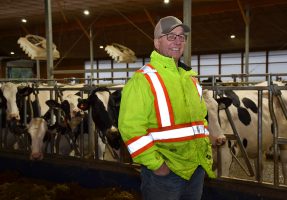
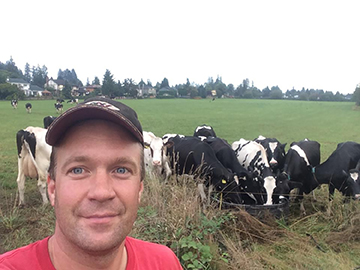
Cows adjust quickly to the seasonal time change, says Matt Laity. SUBMITTED PHOTO

October 2, 2019 byRonda Payne

DELTA—Spring ahead? Fall back? Or just skip the whole thing?

According to a provincial survey of public opinion, nearly 92% of farmers favour a proposal to put the province on Daylight Savings Time year-round.

That’s slightly less than the provincial average, which saw more than 93% of the 223,273 respondents speak out in favour of the proposed change. Just 4% of respondents were farmers, fishers, foresters or hunters.

There’s no timeline for the change, and it’s not a burning issue for Jack Bates of Tecarte Farms in Delta and chair of the BC Blueberry Council.

“It doesn’t matter to me one way or another,” he says. “It might make a difference to farming in that there’s only so many daylight hours. In the north, it might change the start of working times because it might not be light until 9:30 or later.”

People will work with the light they’ve got, says Bates, and it certainly won’t matter to the livestock.

“Let’s face it, everybody gets up in the morning and goes to work and if it’s not light until 8:30, I guess we get more light at the end of the day,” he says. “The cows don’t know the difference, but it does screw them up when you change, so as far as dairy farmers go, it may be a good thing.”

George Martins at Delmar Dairy in Chilliwack thinks doing away with seasonal time changes is a great idea.

“I love it,” he says. “It would probably make things better – an extra hour in the evening for finishing the different chores.”

He isn’t concerned about sunrise coming later at certain times of the year and says it won’t make a difference to farmers like him who get up at 4 am, anyway.

Katie Leek, manager of Emma Lea Farms in Delta, doesn’t see much of an impact one way or the other, though she admits it requires a bit of a shift with livestock when the time springs ahead or falls back. Emma Lea Farms has beef cattle as well as a few chickens and domestic farm animals.

“For our animals, shifting an hour for them is not as complicated as it would be for other livestock farmers,” she says. “I don’t really have an opinion on it; I can see both sides.”

Some dairy farmers, like Matt Laity of Brookfield Farm in Maple Ridge, think the current system should remain.

“It is a hassle, yes, but the option we’re looking at is an after-9 am sunrise in the winter,” he says. “We still live far enough north where the [difference of] summer to winter daylight is significant versus California, where the days are almost always the same.”

He explains that while the cows do need to adjust, it only takes two or three days.

“I give them the two or three days that I need to adjust myself,” he explains. “If I start too early or too late, they look at me funny.”

Bates points out that safety is an issue that’s often overlooked in the debate.

“On those dark dreary days in December and into January, it might not be light until 9:30, so it might be dark when kids are going to school. It might be a safety issue,” he says. “There’s a reason why it changed and everyone’s forgotten that.”

Nevertheless, a majority of survey respondents feel greater daylight in the evening will enhance their evening commute (53%) while 39% noted “other safety concerns” as a reason for supporting the permanent adoption of DST.

All content on this website is copyrighted, and cannot be republished or reproduced without permission.

Related Posts

You may be interested in these posts from the same category.

Greater interest in dairy

Vet urges dairies to be vigilant against HPAI

Westgen looks beyond challenges

Western dairy groups streamline

New Zealand follows US challenge

Dairy compensation fund opens

Fraser Valley flooding continues

Catastrophic flooding hits Fraser Valley

Cedar Valley footage released

Promotions help secure markets

Quick action on allegations

Cheesemakers felt the heat this summer

Previous Post: « Going solo
Next Post: Auction raises relief funds »

© 2026 COUNTRY LIFE IN BC - ALL RIGHTS RESERVED