
• Menu
  • Skip to primary navigation
  • Skip to main content
  • Skip to primary sidebar

Country Life In BC Logo

The agricultural news source in British Columbia since 1915

  • Headlines
  • Calendar
  • Subscribe
  • Advertise
  • About
  • Archives
  • Contact
  • Search
  • Headlines
  • Calendar
  • Subscribe
  • Advertise
  • About
  • Archives
  • Contact
  • Search

Primary Sidebar

Originally published:

JANUARY 2023
Vol. 109 Issue 1

Subscribe Now!

Sign up for free weekly FARM NEWS UPDATES

Loading form…

Your information will not be
shared or sold ever

Stories In This Edition

BC leads AI case count

Winter harvest

Eby appoints new ag minister

Generational change in BC potato busienss

Editorial: Good news, bad news

Back 40: Give us this day our daily bread

Viewpoint: Changing the playing field for farmers

Popham ends terms with strong ambitions

Higher food prices make little difference to farmers

Growers fail to block co-op consolidation

Sidebar: Co-op nomination process sidelines critics

Ag Briefs: Former BCFGA president, co-op chair dies

Ag Briefs: New chairs announced

Ag Briefs: COVID-19 response reviewed

BC loses a champion of agriculture

Canadian diary sector positioned well for growth

Honoured

Dairy producers raise alarm on costs

Flower growers shutter auction gallery

Sidebar: Talking turkey about flower sales

Risk management plans make safety sense

Biodynamic workshops receive funding

Producers reflect on past, plan for future

Pacific Agriculture Show on track for 2023

Sidebar: Stand up for the BCAC gala

Provincial priorities in focus at ag show

Berried treasure …

Islands farm show gears up for next month in Duncan

New opportunities but little progress for meat capacity

Roll call

Sidebar: Hub money

Meat producers need to focus on cost management

Greenhouse extends growing season, sales

Plant physiologist heads up BC grape research

Work-life balance is a fallacy for farmers

Pilot helps UBCO’s Feed BC initiative grow

Sidebar: Other factors at play

Drones provide a high-level view of scorch

Farm Story: Mum’s the word on fellow farmers

Bees better kept at a distance

Sidebar: Survey says

Woodshed: Kenneth’s MacGyver moment fails him

Climate, food secuirty motivate change

Jude’s Kitchen: Adventure with your new kitchen gadgets

All content on this website is copyrighted, and cannot be republished or reproduced without permission.
More Headlines

Follow us on Facebook

Comments Box SVG iconsUsed for the like, share, comment, and reaction icons

4 hours ago

A draft update to the Code of Practice for the Care and Handling of Beef Cattle is now open for public comment until June 12. The code, one of 14 animal care codes developed and maintained by the National Farm Animal Care Council, is undergoing a routine 10-year review. "Your feedback will help shape the industry's guide to cattle welfare for the next decade," says Canadian Cattle Association policy manager Jessica Radau, urging producers to weigh in. For more information, visit tinyurl.com/58a3u9fz.

#BCAg
... See MoreSee Less

A draft update to the Code of Practice for the Care and Handling of Beef Cattle is now open for public comment until June 12. The code, one of 14 animal care codes developed and maintained by the National Farm Animal Care Council, is undergoing a routine 10-year review.  Your feedback will help shape the industrys guide to cattle welfare for the next decade, says Canadian Cattle Association policy manager Jessica Radau, urging producers to weigh in. For more information, visit https://tinyurl.com/58a3u9fz.

#BCAg
View Comments
  • Likes: 2
  • Shares: 0
  • Comments: 1

Comment on Facebook

I sat in the webinar yesterday by the Canadian Cattle Association. My initial concern was that this would be another "play" into the government's hands. It has been worked on by people that are actually in the Beef industry from Cow calf to feedlot. The thrust is an update of the 2013 Code of Practice which was reviewed in 2018. The changes are more a move from "left to the producers discretion" to clearer directions regarding pain management, proper transport of animals which are impaired and keeping cattle in in good condition. Much of what is recommended is what producers who care about animal husbandry already do. The important part is to GIVE THEM FEEDBACK good, bad or otherwise. The document is about 60 pages long, and I ran it through CHAT to see what had been changed. It is important to understand that the PUBLIC is invited to comment on the draft not just producers. Think about it... do you really want the public influencing how you manage your cattle. If you think that this is just one of those things, I have been following Bill 22 in Alberta which will grant the SPCA a proactive roll in entering farms and checking on animals. When I asked CHAT how the new bill relates to the Cattle Code, it came back that the Code although not a regulation will be able to be used as a guide by producers for backup in dealing with the SPCA regarding cattle conditions, sick animal handling etc. Take the time.... Go onto the Canadian Cattle Association website and speak to those parts that you wish to input.

1 day ago

According to the BC River Forecast Centre, the Okanagan snowpack stood at just 58% of normal on April 1 — the lowest reading since measurements began in 1980 — raising concerns about drought conditions in the region this summer. The rest of the province sits at 92% of normal.

#BCAg
... See MoreSee Less

According to the BC River Forecast Centre, the Okanagan snowpack stood at just 58% of normal on April 1 — the lowest reading since measurements began in 1980 — raising concerns about drought conditions in the region this summer. The rest of the province sits at 92% of normal.

#BCAg
View Comments
  • Likes: 3
  • Shares: 0
  • Comments: 0

Comment on Facebook

2 days ago

At her first AGM as executive director of BC Meats, held Saturday in Abbotsford, Jennifer Busmann spoke about her strong ties to agriculture and her optimism for the organization's future. Busmann has cattle of her own and came to the role with existing relationships with members and the board of directors that helped her feel integrated from the start. She stepped into the position in Februa#BCAg#BCAg ... See MoreSee Less

At her first AGM as executive director of BC Meats, held Saturday in Abbotsford, Jennifer Busmann spoke about her strong ties to agriculture and her optimism for the organizations future. Busmann has cattle of her own and came to the role with existing relationships with members and the board of directors that helped her feel integrated from the start. She stepped into the position in February.

#BCAg
View Comments
  • Likes: 6
  • Shares: 0
  • Comments: 0

Comment on Facebook

4 days ago

Shannon Wiggins of Headwind Farm in North Saanich is this year's Mary Forstbauer Grant recipient from the BC Association of Farmers Markets. The $500 grant will help Wiggins expand her plot at Sandown Centre for Regenerative Agriculture, growing more storage crops to extend her harvest season. Wiggins credits farmers markets with inspiring her own farming journey and commitment to building community through food. Congratulations!

tinyurl.com/45bdd#BCAg#BCAg
... See MoreSee Less

Shannon Wiggins of Headwind Farm in North Saanich is this years Mary Forstbauer Grant recipient from the BC Association of Farmers Markets. The $500 grant will help Wiggins expand her plot at Sandown Centre for Regenerative Agriculture, growing more storage crops to extend her harvest season. Wiggins credits farmers markets with inspiring her own farming journey and commitment to building community through food. Congratulations!

https://tinyurl.com/45bddtw8

#BCAg
View Comments
  • Likes: 46
  • Shares: 2
  • Comments: 3

Comment on Facebook

Wahoo! Congrats Shannon! I love your produce. Can’t wait for the radishes 🫜

Congratulations!

Well done!! 🩷🩷🩷

6 days ago

New farmers can avoid costly mistakes by learning from those who've been there. At a Young Agrarians mixer in Penticton, five BC farmers shared hard-won lessons on pricing, pivoting, relationships and burnout. From coyote losses to business burnout, their message was clear: set prices that reflect true costs, make decisions quickly and don't let farming define your worth. Myrna Stark Leader's story appears in our April e-edition, now available to view online at: tinyurl#BCAg2uw53vvm

#BCAg
... See MoreSee Less

New farmers can avoid costly mistakes by learning from those whove been there. At a Young Agrarians mixer in Penticton, five BC farmers shared hard-won lessons on pricing, pivoting, relationships and burnout. From coyote losses to business burnout, their message was clear: set prices that reflect true costs, make decisions quickly and dont let farming define your worth. Myrna Stark Leaders story appears in our April e-edition, now available to view online at: https://tinyurl.com/2uw53vvm

#BCAg
View Comments
  • Likes: 15
  • Shares: 0
  • Comments: 0

Comment on Facebook

Subscribe | Advertise

The agricultural news source in British Columbia since 1915
  • Email
  • Facebook

Pilot helps UBCO’s Feed BC initiative grow

Aggregation creates opportunities for more suppliers

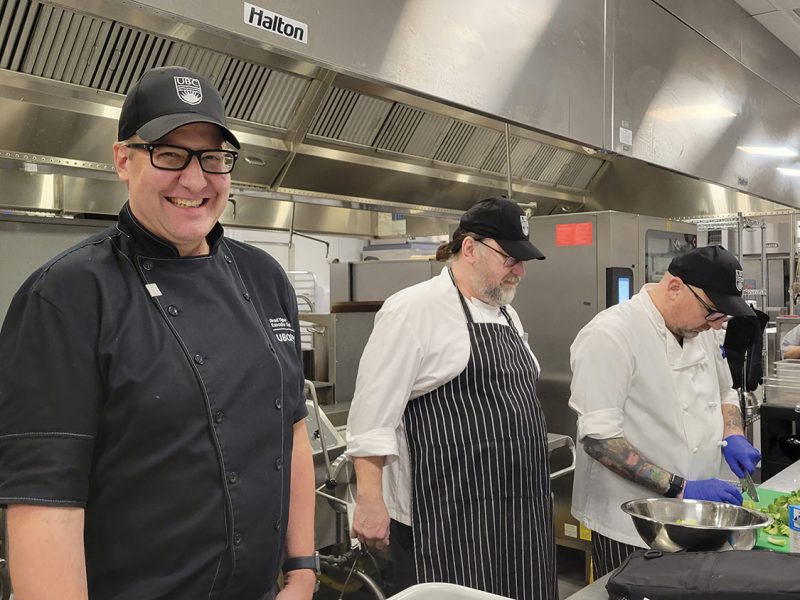
UBC Okanagan executive chef Brad Vigue is working hard to source more locally produced food as part of UBCO’s participation in Feed BC and a pilot program with the North Okanagan Land to Table Network. MYRNA STARK LEADER

January 1, 2023 byMyrna Stark Leader

KELOWNA – A year-old pilot program at UBC Okanagan is showing that providing more locally sourced foods for students takes resources well as commitment.

Since September 2021, UBC has been working with the North Okanagan Land to Table Network to bring more local food to campus.

A participant in the province’s Feed BC program, which aims to increase local purchasing by provincially-funded institutions, the school currently sources between 30% and 35% of its produce from local suppliers, a marginal increase from 2021. However, there is potential for growth given that a typical UBCO student with a meal plan eats about 720 times during the school year.

“Some of the best product in the world grows within 30 kilometres of Kelowna so I’m always exploring,” says UBCO executive chef Brad Vigue, who grew up in Salmon Arm. “My goal is 50% of produce purchased locally by 2024.”

One of the first partnerships under the pilot was with Shuswap Organics in Enderby, which supplies UBCO with almost all of its potatoes, carrots, cabbage, and Brussels sprouts.

“In 2022, because our catering program ran over summer, we started buying from Shuswap in mid-July and can do so as long as products keep in storage, which can be February or March, depending on the item,” says Vigue.

Shuswap Organics owners Owen Madden and Emily Jubenvill have been farming about five years. To meet UBCO’s needs, they also started aggregating produce from other growers, including Mara Valley Produce in Grindrod, Loveland Acres in Salmon Arm, Pilgrim’s Produce in Armstrong, Wild Flight Farm in Mara, and Green Croft Gardens in Grindrod.

By working together, smaller local growers are able to meet UBCO’s needs while avoiding a series of small deliveries that can be logistically impractical and too labour-intensive for UBCO.

“Farms we’re aggregating from are in the one to 15-acre range,” says Jubenvill. “There’s lots of room to grow the amount of product sold. The university has real purchasing power and every dollar made at the farm is staying here in the community.”

Jubenvill says working with UBCO is an example of how small to medium-sized farmers who want to work with large facilities can do so.

“It’s possible to source locally, not only in our short growing season, but also by expanding capacity for winter storage enabling produce year-round. If we can grow the marketplace pie, it makes it viable for new farmers to start up,” she notes.

Partnership instrumental

Vigue says the school’s partnership with NOLTN, founded to help small to medium-sized farmers move beyond direct sales and farmers markets, has been instrumental in making connections with local suppliers.

NOLTN director Liz Blakeway says the developing relationships between UBCO and local producers are a big step towards regaining the infrastructure needed for local sourcing.

“There’s been a long-term de-investment in local food supply, supply chains and processing, which is a very real challenge,” she says. “We’ve largely lost local food infrastructure.”

UBCO has also partnered with Curlew Orchard in Vernon for organic apples grown on six acres. They also worked intermittently with

D Dutchmen Dairy Ltd. in Sicamous and Kyla King of Rad Jamz in West Kelowna for jams and jellies, as well as with a few local cured meat producers for charcuterie.

But meat supplies are an issue, especially for niche products like halal-certified meat – an integral component of butter chicken, which creates the longest line at UBCO’s dining hall when it’s on the menu.

“We are sourcing chicken from Vancouver because we want our poultry to be halal,” says Vigue. “While there’s really good high-volume poultry producers in the Okanagan, they aren’t halal.”

It’s the type of barrier he feels the university could help change.

“Local providers are motivated to find a way to work together. It’s in our shared best interests. I would rather buy from the farm that’s close than shipped from Vancouver, especially when we saw the impact of last winter’s road shutdowns disrupting supply chain routes. The more local we are, the more resilient,” says Vigue.

But keeping students who want more meal variety and more internationally influenced foods means food items and volumes required change when UBCO’s menus change. Gathering potential farm and food partners takes time, and a lack of staff to seek out suppliers and make arrangements complicates the task.

“The Okanagan produces beautiful pears available summer through the following spring. We should be buying them. We have farms within 10 kilometres, but it takes time to figure out aggregation, delivery and storage,” says Vigue.

While sourcing locally takes more effort, Vigue knows it’s worth it.

“When we got the first delivery of Shuswap product,

I was like a kid in a candy store running around with handfuls of carrots going, ‘Just try them. Don’t ask any questions. Just taste this. This is why we buy local,’” he says.

All content on this website is copyrighted, and cannot be republished or reproduced without permission.

Related Posts

You may be interested in these posts from the same category.

Plan drafted for BX Ranchlands

BC leads food price increases

Previous Post: « Generational change for finances
Next Post: BC vine damage discussed »

© 2026 COUNTRY LIFE IN BC - ALL RIGHTS RESERVED