• Menu
  • Skip to primary navigation
  • Skip to main content
  • Skip to primary sidebar

Country Life In BC Logo

The agricultural news source in British Columbia since 1915

  • Headlines
  • Calendar
  • Subscribe
  • Advertise
  • About
  • Archives
  • Contact
  • Search
  • Headlines
  • Calendar
  • Subscribe
  • Advertise
  • About
  • Archives
  • Contact
  • Search

Primary Sidebar

Originally published:

September 2023
Vol. 109 Issue 9

Subscribe Now!

Sign up for free weekly FARM NEWS UPDATES

Loading form…

Your information will not be
shared or sold ever

Stories In This Edition

Breaking point

Summer lovin’

International exports climb

Moon shines among BC grape growers

Exodus

Back 40: The line of fire raises burning questions

Viewpoint: Targeted grazing could help FireSmart communities

Water curtailments squeeze forage production

Committee report recommends apple commission

Ag Briefs: BC Tree CEO takes leave of absence

Ag Briefs: Hargreaves to lead cranberries

Ag Briefs: New federal minister

Starling control program meets expectations

New society looks to protect property rights

Marketing board chooses new entrant finalists

New funding for First Nations agriculture

Grape growers strategize for recovery

Nex gen’ hops for today’s brewers

Grasslands take carbon storage underground

Farm Story: Crop flops admid potato perfection

Off-the-grid organic farm thrives on efficiency

XY Ranch celebrates 100 years in Peace

Too close for comfort

Ranchers get the backstory on public perception

Sidebar: Build on the public’s trust, not its criticism

Small-scale goat, sheep dairies approved

Wytincks honoured at national show

Sidebar: Best in Show goes to BC producer

Sustainable practices attract a following

Fungicide resistance of botrytis studied

Farmers urge a coordinated drought response

Peary-y nice

Woodshed: Water finds its level for Gladdie, and Kenneth

Cidery harvest opportunity from old orchard

New flavours for fall

All content on this website is copyrighted, and cannot be republished or reproduced without permission.
More Headlines

Follow us on Facebook

Comments Box SVG iconsUsed for the like, share, comment, and reaction icons

14 hours ago

A draft update to the Code of Practice for the Care and Handling of Beef Cattle is now open for public comment until June 12. The code, one of 14 animal care codes developed and maintained by the National Farm Animal Care Council, is undergoing a routine 10-year review. "Your feedback will help shape the industry's guide to cattle welfare for the next decade," says Canadian Cattle Association policy manager Jessica Radau, urging producers to weigh in. For more information, visit tinyurl.com/58a3u9fz.

#BCAg
... See MoreSee Less

A draft update to the Code of Practice for the Care and Handling of Beef Cattle is now open for public comment until June 12. The code, one of 14 animal care codes developed and maintained by the National Farm Animal Care Council, is undergoing a routine 10-year review.  Your feedback will help shape the industrys guide to cattle welfare for the next decade, says Canadian Cattle Association policy manager Jessica Radau, urging producers to weigh in. For more information, visit https://tinyurl.com/58a3u9fz.

#BCAg
View Comments
  • Likes: 3
  • Shares: 0
  • Comments: 1

Comment on Facebook

I sat in the webinar yesterday by the Canadian Cattle Association. My initial concern was that this would be another "play" into the government's hands. It has been worked on by people that are actually in the Beef industry from Cow calf to feedlot. The thrust is an update of the 2013 Code of Practice which was reviewed in 2018. The changes are more a move from "left to the producers discretion" to clearer directions regarding pain management, proper transport of animals which are impaired and keeping cattle in in good condition. Much of what is recommended is what producers who care about animal husbandry already do. The important part is to GIVE THEM FEEDBACK good, bad or otherwise. The document is about 60 pages long, and I ran it through CHAT to see what had been changed. It is important to understand that the PUBLIC is invited to comment on the draft not just producers. Think about it... do you really want the public influencing how you manage your cattle. If you think that this is just one of those things, I have been following Bill 22 in Alberta which will grant the SPCA a proactive roll in entering farms and checking on animals. When I asked CHAT how the new bill relates to the Cattle Code, it came back that the Code although not a regulation will be able to be used as a guide by producers for backup in dealing with the SPCA regarding cattle conditions, sick animal handling etc. Take the time.... Go onto the Canadian Cattle Association website and speak to those parts that you wish to input.

2 days ago

According to the BC River Forecast Centre, the Okanagan snowpack stood at just 58% of normal on April 1 — the lowest reading since measurements began in 1980 — raising concerns about drought conditions in the region this summer. The rest of the province sits at 92% of normal.

#BCAg
... See MoreSee Less

According to the BC River Forecast Centre, the Okanagan snowpack stood at just 58% of normal on April 1 — the lowest reading since measurements began in 1980 — raising concerns about drought conditions in the region this summer. The rest of the province sits at 92% of normal.

#BCAg
View Comments
  • Likes: 3
  • Shares: 0
  • Comments: 0

Comment on Facebook

3 days ago

At her first AGM as executive director of BC Meats, held Saturday in Abbotsford, Jennifer Busmann spoke about her strong ties to agriculture and her optimism for the organization's future. Busmann has cattle of her own and came to the role with existing relationships with members and the board of directors that helped her feel integrated from the start. She stepped into the position in Februa#BCAg#BCAg ... See MoreSee Less

At her first AGM as executive director of BC Meats, held Saturday in Abbotsford, Jennifer Busmann spoke about her strong ties to agriculture and her optimism for the organizations future. Busmann has cattle of her own and came to the role with existing relationships with members and the board of directors that helped her feel integrated from the start. She stepped into the position in February.

#BCAg
View Comments
  • Likes: 6
  • Shares: 0
  • Comments: 0

Comment on Facebook

5 days ago

Shannon Wiggins of Headwind Farm in North Saanich is this year's Mary Forstbauer Grant recipient from the BC Association of Farmers Markets. The $500 grant will help Wiggins expand her plot at Sandown Centre for Regenerative Agriculture, growing more storage crops to extend her harvest season. Wiggins credits farmers markets with inspiring her own farming journey and commitment to building community through food. Congratulations!

tinyurl.com/45bdd#BCAg#BCAg
... See MoreSee Less

Shannon Wiggins of Headwind Farm in North Saanich is this years Mary Forstbauer Grant recipient from the BC Association of Farmers Markets. The $500 grant will help Wiggins expand her plot at Sandown Centre for Regenerative Agriculture, growing more storage crops to extend her harvest season. Wiggins credits farmers markets with inspiring her own farming journey and commitment to building community through food. Congratulations!

https://tinyurl.com/45bddtw8

#BCAg
View Comments
  • Likes: 47
  • Shares: 2
  • Comments: 3

Comment on Facebook

Wahoo! Congrats Shannon! I love your produce. Can’t wait for the radishes 🫜

Congratulations!

Well done!! 🩷🩷🩷

6 days ago

New farmers can avoid costly mistakes by learning from those who've been there. At a Young Agrarians mixer in Penticton, five BC farmers shared hard-won lessons on pricing, pivoting, relationships and burnout. From coyote losses to business burnout, their message was clear: set prices that reflect true costs, make decisions quickly and don't let farming define your worth. Myrna Stark Leader's story appears in our April e-edition, now available to view online at: tinyurl#BCAg2uw53vvm

#BCAg
... See MoreSee Less

New farmers can avoid costly mistakes by learning from those whove been there. At a Young Agrarians mixer in Penticton, five BC farmers shared hard-won lessons on pricing, pivoting, relationships and burnout. From coyote losses to business burnout, their message was clear: set prices that reflect true costs, make decisions quickly and dont let farming define your worth. Myrna Stark Leaders story appears in our April e-edition, now available to view online at: https://tinyurl.com/2uw53vvm

#BCAg
View Comments
  • Likes: 15
  • Shares: 0
  • Comments: 0

Comment on Facebook

Subscribe | Advertise

The agricultural news source in British Columbia since 1915
  • Email
  • Facebook

Ranchers get the backstory on public perception

Industry team spins good PR for Canada’s beef sector

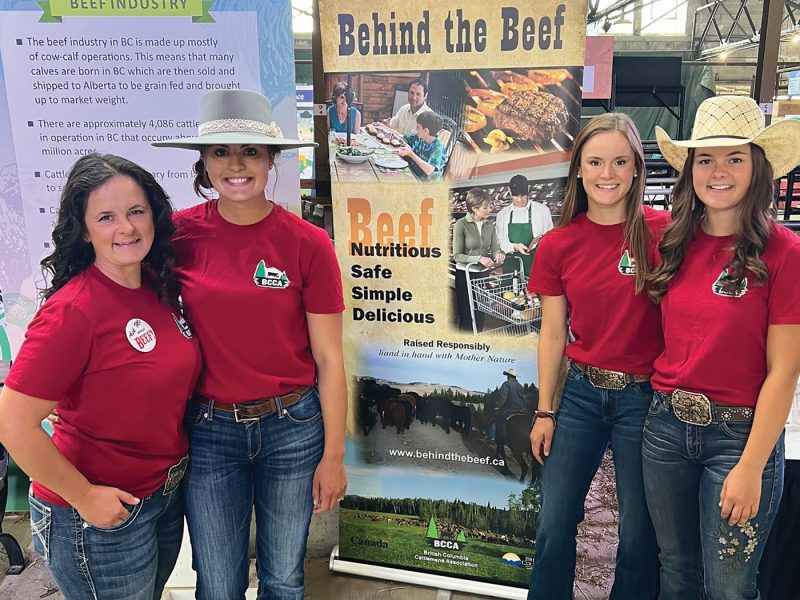
This year's Beef Zone at the PNE in Vancouver was a hit as volunteers including, left to right, Erika Fossen and her daughters Adele, Reine and Jade of Bar 7 Ranch in Rock Creek shared their love of beef and ranching with fairgoers. Highlights of this year's display included the roping station and the newly released Guardians of the Grasslands video game. BC CATTLEMEN’S ASSOCIATION

September 13, 2023 byTom Walker

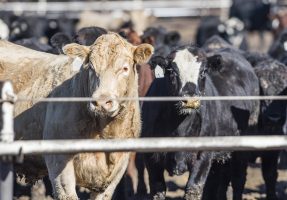
VERNON – Ranchers might be concerned about how the public sees their industry, but a producer-funded team at the Canadian Cattle Association has their back.

Amy Peck, manager of the Canadian Cattle Association’s public and stakeholder engagement program, gave an overview of her team’s work on behalf of the industry at the BC Cattlemen’s Association annual convention in Vernon in May.

“My team focuses on public perception of beef and the beef industry,” Peck says. “We work to build public trust in the way cattle are raised in Canada.”

Peck’s team, funded by the Canadian Beef Cattle Check-Off, was behind the award-winning Guardians of the Grasslands movie. This spring, it released the Alberta edition of the new Guardians of the Grasslands game, with the BC edition set to launch this fall.

Peck’s team also conducts on-going research into public perceptions and issues, as well as conducting advocacy work for the industry.

“Our research gives us a feel of how Canadians think about agriculture and beef production, and we can use that information in our future work,” she explains.

Peck says Canadians have a very positive impression of the cattle industry overall. Her team sees a lot of public trust from Canadians in ranchers’ ability to produce quality food and to have a positive economic impact, particularly in rural Canada.

“There is lots of trust in the people and the product,” she says. “But somewhat less trust in how we produce it, whether that is using innovation, being good stewards, limiting our carbon footprint and treating animals well. And that is because they don’t understand what happens on farms and ranches.”

But there is a lot of affinity for beef among Canadian consumers, with 80% to 90% considering beef a good source of protein.

“They love the taste and think that it is a safe, high quality and healthy food,” Peck says.

The program also considers other research, such as the Canadian Centre for Food Integrity’s annual report on public trust and perception of the food system.

The top five issues CCFI identified in its latest survey were the cost of food, inflation, the cost of energy, keeping healthy food affordable and the Canadian economy, Peck says.

“We are seeing that environmental concerns are not in the top 10,” she says.  “If you are concerned about being able to afford to feed your family, the environment becomes less important.”

Peck also shared research from Agriculture and Agri-food Canada.

AAFC has found the differences in how consumers view Canadian farmers isn’t based on a particular practice, as few are able to reference one.

“The difference is not a statistic; it’s not something they have read along the way, it is how they feel about farmers,” she says. “So the average Canadian is not saying we want you to do more cover cropping or rotational grazing or no till. They simply don’t know enough about them.”

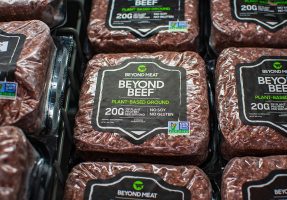
Millennials, Peck says, are more sceptical. They’re less positive about ranchers’ environmental impact and their humane treatment of animals than the rest of the population. They are also more likely to eat plant-based meat alternatives than beef.

“Part of that is that millennials are further removed from food production than the older generation,” she says. “So we focus on 35-year-old moms who are making the majority of food purchasing decisions. That’s who Guardians of the Grasslands was created for. That is why it is so emotional. It’s to reach these people.”

Part of the advocacy work Peck undertakes is an on-going presence in national media.

“We write letters to the editor and then invite local producers to author them so that they come from a primary producer, but we save time,” she explains.

They also compose op-eds such as a recent one they credited to Ann Wasko about how reducing beef consumption would actually be worse for achieving Canada’s climate goals.

“That was all about the loss of native grasslands,” Peck says.

Submitting op-eds costs nothing, Peck points out.

“And this particular one ran in six different publications, with a reach of close to six million views,” she says.

Peck’s team targets TV as well, often picking an event such as Canada’s Agriculture Day in February and pitching TV producers to interview local farmers.

“We had Melissa Atchison from the Manitoba Beef Producers talking about wildlife habitat on Manitoba ranches on CTV News Winnipeg,” she says.

Social media is also included.

“We organized an influencers’ tour last summer inviting them to come out and meet a local ranching family and hear their story,” explains Peck.

One of them was celebrity chef Antonio Park of Park Restaurant in Montreal who avows a love of beef but had never been on a cattle ranch.

“We took him to Brylee Farm who were the 2021 Quebec Cattle Producers Environmental Stewardship award winners. They have formed a lifelong friendship and Park is able to share the rancher’s story,” says Peck.

The ultimate aim of the public and stakeholder engagement team is to build public trust and maintain the industry’s social licence.

“The good thing is that Canadians, and millennials in particular, are very interested in learning more about beef, and that is an opportunity for us,” she says.

All content on this website is copyrighted, and cannot be republished or reproduced without permission.
Related Posts

You may be interested in these posts from the same category.

Fossens recognized for innovative practices

Young ranchers head to Penticton

Beef export markets grow

BC farmers have public trust

High confidence, high prices

Canada recognizes agriculture

Where’s the beef?

Tour builds trust between foodies, farmers

Farmers must take lead in building public trust

Previous Post: « Federal funding for AI response
Next Post: Moon shines among BC grape growers »

© 2026 COUNTRY LIFE IN BC - ALL RIGHTS RESERVED