• Menu
  • Skip to primary navigation
  • Skip to main content
  • Skip to primary sidebar

Country Life In BC Logo

The agricultural news source in British Columbia since 1915

  • Headlines
  • Calendar
  • Subscribe
  • Advertise
  • About
  • Archives
  • Contact
  • Search
  • Headlines
  • Calendar
  • Subscribe
  • Advertise
  • About
  • Archives
  • Contact
  • Search

Primary Sidebar

Originally published:

AUGUST 2021
Vol. 107 Issue 8

Subscribe Now!

Sign up for free weekly FARM NEWS UPDATES

Loading form…

Your information will not be
shared or sold ever

Stories In This Edition

Heat Wave

Night moves

Record temps kill poultry

High heat, low moisture vexes ranchers

Editorial: Unprecedented

Back forty: Summer means being prepared for wildfires

Viewpoint: Overheated markets make farming harder

Province allows secondary homes in the ALR

National farm building code set for update

Grain producers refocus on advocacy, research

Ag Briefs: BC Blueberry Council gets new chair

Ag Briefs: Islands Trust defers policy statement

Ag Briefs: BCAC’s consumer research yields four key findings

Provincial meat licensing overhaul effective October

Farm fresh

New tech could build a better cattle fence

Buchler recognized for practices, generosity

First certified sustainable wine makes debut

Ag targetted to reduce emissions in Clean Air Plan

Helping cattle keep their cool in the heat

Free recycling of ag plastics for northern BC

Pesiticide colleciton returns to the southern interior

Indigienous farms plow new ground with funding

It’s easy being green

Flower farm meets growing demand

New resources support small-lot pork producers

BC going full boar against feral pigs

Cannabis grower has the ‘happiest worms’

AEMCoP updates take effect

Forging new successes with the family farm

Cutworm study looks at damage below ground

Beet growers see red over leaf miner

Armyworm pressure low

Research: Research explores scrapie resistance in goats

Sidebar: Scrapie eradication tips

Woodshed: Graduation plans sworn to secrecy

Cherry grower diversifies as orchard declines

Jude’s Kitchen: Eats for a hot summer day

Farm Story: Reaping more by sowing elss makes perfect sense

More Headlines

Follow us on Facebook

Comments Box SVG iconsUsed for the like, share, comment, and reaction icons

2 hours ago

BC Supreme Court has blocked an attempt by remaining BC Tree Fruits Cooperative members to amend a rule that would have excluded former members from receiving their share of the co-op’s remaining assets. In her ruling, Justice Miriam Gropper called the bid to amend Rule 125, which would allow 32% of the surplus to be distributed among former members based on tonnage shipped to the co-op during its last six years of operation, “oppressive and unfairly prejudicial.” The co-op closed in July 2024, and remaining assets are estimated at between $12 and $15 million.

#BCAg
... See MoreSee Less

BC Supreme Court has blocked an attempt by remaining BC Tree Fruits Cooperative members to amend a rule that would have excluded former members from receiving their share of the co-op’s remaining assets. In her ruling, Justice Miriam Gropper called the bid to amend Rule 125, which would allow 32% of the surplus to be distributed among former members based on tonnage shipped to the co-op during its last six years of operation, “oppressive and unfairly prejudicial.” The co-op closed in July 2024, and remaining assets are estimated at between $12 and $15 million.

#BCAg
View Comments
  • Likes: 2
  • Shares: 4
  • Comments: 0

Comment on Facebook

1 day ago

From our Country Life in BC family to yours, HAPPY FAMILY DAY!

Photo by Liz Twan

#BCAg
... See MoreSee Less

From our Country Life in BC family to yours, HAPPY FAMILY DAY!

Photo by Liz Twan

#BCAg
View Comments
  • Likes: 10
  • Shares: 1
  • Comments: 1

Comment on Facebook

🥰🐮🩷

3 days ago

Full-time students employed in BC agriculture during the summer season are eligible to apply for a bursary of up to $3,000. The bursary, administered by the Investment Agriculture Foundation, aims to increase youth and domestic seasonal worker employment in the ag sector. Funding is awarded on a first-come, first-serve basis. More information is available at tinyurl.com/5ef6pe3m

#BCAg IAF
... See MoreSee Less

Full-time students employed in BC agriculture during the summer season are eligible to apply for a bursary of up to $3,000. The bursary, administered by the Investment Agriculture Foundation, aims to increase youth and domestic seasonal worker employment in the ag sector. Funding is awarded on a first-come, first-serve basis. More information is available at https://tinyurl.com/5ef6pe3m

#BCAg IAF
View Comments
  • Likes: 13
  • Shares: 11
  • Comments: 0

Comment on Facebook

4 days ago

BC fruit and vegetable farmers are being asked to share their views on farming technology in a 10-minute survey from Royal Roads University and the University of the Fraser Valley. The survey looks at how fruit and vegetable farmers are adopting emerging farming technologies -- such as digital tools, “controlled environment agriculture systems” (greenhouses) and agri-genomics (DNA analysis) -- to cope with changing climate conditions. The survey takes about 10 minutes to complete, and participants will be eligible to win an assortment of $50-$200 gift cards.

insights.kaianalytics.com/s3/PAS2026
... See MoreSee Less

BC fruit and vegetable farmers are being asked to share their views on farming technology in a 10-minute survey from Royal Roads University and the University of the Fraser Valley. The survey looks at how fruit and vegetable farmers are adopting emerging farming technologies -- such as digital tools, “controlled environment agriculture systems” (greenhouses) and agri-genomics (DNA analysis) -- to cope with changing climate conditions. The survey takes about 10 minutes to complete, and participants will be eligible to win an assortment of $50-$200 gift cards. 

https://insights.kaianalytics.com/s3/PAS2026
View Comments
  • Likes: 5
  • Shares: 1
  • Comments: 0

Comment on Facebook

4 days ago

The District of Coldstream is proposing the creation of farm property tax subclasses to distinguish between small-scale and large-scale farm operations. Currently, all farms are classified as Class 9 regardless of size or infrastructure needs. The district argues larger farms require more municipal services and should be taxed accordingly. It plans to pitch its proposal at the Southern Interior Local Government Association convention in Revelstoke at the end of April. Support there could escalate the discussion to the Union of BC Municipalities convention next September in Vancouver.

#BCAg
... See MoreSee Less

The District of Coldstream is proposing the creation of farm property tax subclasses to distinguish between small-scale and large-scale farm operations. Currently, all farms are classified as Class 9 regardless of size or infrastructure needs. The district argues larger farms require more municipal services and should be taxed accordingly. It plans to pitch its proposal at the  Southern Interior Local Government Association convention in Revelstoke at the end of April. Support there could escalate the discussion to the Union of BC Municipalities convention next September in Vancouver. 

#BCAg
View Comments
  • Likes: 12
  • Shares: 2
  • Comments: 11

Comment on Facebook

Which municipal services do they require more of? Even larger farms typically still have only one or possibly two dwellings. Most have their own well and septic, and I suppose it depends on location, but most rural properties don't have garbage pick up either. And whether 20 driveways or one join the road, the cost to plow that road is the same. I no longer live within a municipality so of course there could be costs I've overlooked that are contributing to the District's proposal.

Large farms put more back into the community too.

The larger farms are the only farms paying wages, allowing people to spend money in their communities, the beauty of a network of small business. Small farms more often then not, is a single transaction, a hobby. Large- buy feed, raise cow, calf is born, sell calf, pay wage(support livlihoods), buy fence posts, buy more feed and so forth. Feeding the community. Small- Buy feed, raise cow, kill cow, eat cow.

And this is why farmers left California. British Columbia is no different

I am not sure how to post the actual Resolution that Council Pat Cochrane put forward but here is the link to the special meeting they are holding to pass the resolution: www.coldstream.ca/government-bylaws/news-alerts/notice-special-council-meeting-3.

Why not find ways to bring in more business's and audit municipal spending and regulate short term rentals (because Coldstream has essentially zero places to stay technically, insane) instead of raising taxes arbitrarily because "bigger costs more"

Attending that meeting, they claimed that “large farms” use more municipal services, yet Cochrane consistently stated he was going after “smaller estate properties not actively farming.” This is not only contradictory but misinformed. It would take him but three door knocks before he learned that the “estate farms” not actively farming are typically leased to a larger conglomerate to maintain farm classification. “Rural living at its finest,” though it seems not a soul on council is well-versed in this wheelhouse. What’s worse is that they somehow don’t think it’s necessary to bring in a single subject expert before blindly tossing around recommendations and solutions to problems that don’t really exist—or at least not as they perceive them. Don’t get me started on their rhetoric comparing the value of class 9 properties to other residential classes, when even my 12 year old understands that the values are drastically different when one property can be subdivided, and an ALR property cannot. Forever to the left of the point.

They want to tax a large farm more? Do people realize that farmers aren't becoming rich. Also, a small or hobby farm isn't contributing much to the local economy or community. This doesn't make sense. If we don't support our farmers. We need them. We can't import all our food.

What bs. I can't do a water and sewer hook up for an agricultural building, (a farm vegie stand) on a 160 acre farm in downtown Kelowna because there is already one at the far end of the lot for the principal residence. What extra infrastructure would they be talking about. Our irrigation is by licensed ground water well put in, powered and serviced by me. Any change in tax code should be on farm estates that do bogus farm gate sales at the minimum requirement, not viable commercial farming enterprizes that employ and contribute economic benefits to so many other businesses

Instead of increasing property taxes on large farms, I think governments need to revise the threshold needed for a property to qualify for farm status. That threshold has not changed in over 20 years and many non farmers are taking advantage of the ridiculously low threshold that was intended for real farmers.

And then you tax the farmers more and wonder why food prices keep going up. Why is it that the only thing government does is find more reasons and ways to tax people?

View more comments

Subscribe | Advertise

The agricultural news source in British Columbia since 1915
  • Email
  • Facebook

Record temps kill poultry

Cattle fare better, but production down all-round

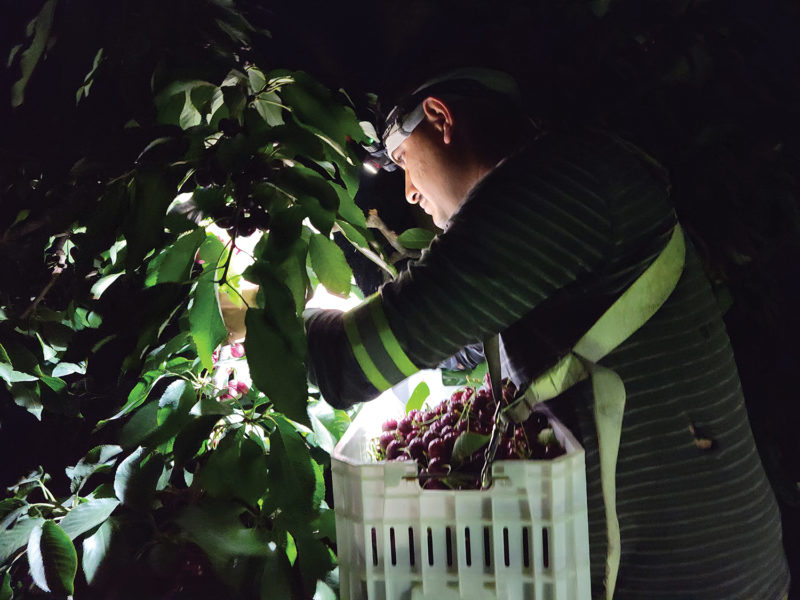
NIGHT MOVES: Temperatures creeping up to the low 30s and smoke from neighbouring wildfires prompted Jealous Fruits to pick their cherries in the relative comfort of dark beginning July 16. Using a headlamp to light his way, Eduardo Vaca Castro was one of a crew of 125 pickers whose shift started at midnight when temperatures had cooled to the low 20s. MYRNA STARK LEADER

August 1, 2021 byKate Ayers & Peter Mitham

SURREY – Three days of record-setting temperatures at the end of June made for sweat-soaked chores for many farmers, but cattle and poultry producers also faced the challenge of keeping their animals cool, too.

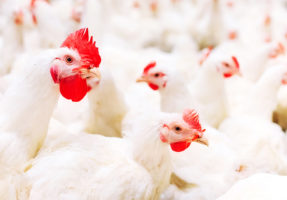
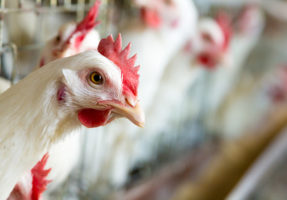
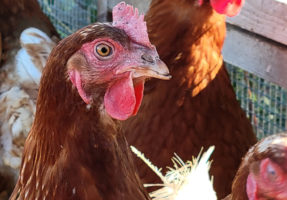
Poultry producers were especially vulnerable, as birds don’t sweat, meaning they can’t cool down.

Broiler producers in the Fraser Valley lost approximately 400,000 birds, or about 20% of the week’s production.

“It’s very, very bad and devastating for the growers that lost them,” says Bill Vanderspek, executive director of the BC Chicken Marketing Board.

While breeders, egg producers and turkey growers also saw losses from the heat wave, Vanderspek said broiler birds are more vulnerable because they tend to be younger and grow quickly.

BC Egg Marketing Board executive director Katie Lowe said about 4% of BC laying hens fell victim to the heat, primarily in the Fraser Valley and on Vancouver Island. This amounts to more than 130,000 birds.

“The one thing we have going for us is new facilities with tunnel ventilation,” said Lowe. “Those systems seem to do very well.”

Growers with ventilation systems to protect their flocks can obtain heat prostration insurance, Vanderspek says. Many of his growers who lost birds will be filing claims.

Smaller producers also saw losses.

TJ Walkem of 60 Ranch in Spences Bridge lost half his chickens to the heat, in sharp contrast to his beef cattle. The ranch’s herd of 265 animals were able to find cool spots during the day.

Agassiz dairy farmer Julaine Treur of Creekside Dairy said the heat was tough on her animals, with production down significantly. But at least they could sleep under fans at night.

“They’re not off feed, and they’re still chewing their cud while relaxing under the huge barn fans,” she said. “They spend their nights on pasture where it’s slightly cooler.”

Wool coats – the last thing most people want in a heat wave – was also no picnic for sheep.

BC Sheep Federation president Barbara Ydenberg of Wind’s Reach Farm in Langley said her flock sought out shade but those locations are also coyote-friendly nooks. This meant some producers were forced to watch over their herds by day, leaving shepherds vulnerable to the extreme heat.

Some unshorn sheep suffered acute discomfort.

While shearing a heat-stressed sheep isn’t something Ydenberg recommends, she said one producer had no choice. A black sheep was hand-shorn during the heat wave, cooling it down and saving it from a traumatic death.

Related Posts

You may be interested in these posts from the same category.

Wildfires rip through Southern Interior

AI response in spotlight

Ministers discuss avian influenza

Poultry gatherings banned

Wildfire threat remains high

Ranchers facing rangeland losses

Second high-path AI case

Ranchers face rangeland losses

BC Chicken picks Siemens

Wildfire 2021: ‘They keep locals in the dark. That is really problematic.’

Don’t blame the wildfires

Wildfire state of emergency ends

Previous Post: « Fruit growers face hard choices
Next Post: Provincial meat licensing overhaul effective October »

Copyright © 2026 Country Life in BC · All Rights Reserved