• Menu
  • Skip to primary navigation
  • Skip to main content
  • Skip to primary sidebar

Country Life In BC Logo

The agricultural news source in British Columbia since 1915

  • Headlines
  • Calendar
  • Subscribe
  • Advertise
  • About
  • Archives
  • Contact
  • Search
  • Cart
  • Checkout
  • Headlines
  • Calendar
  • Subscribe
  • Advertise
  • About
  • Archives
  • Contact
  • Search
  • Cart
  • Checkout

Primary Sidebar

Originally published:

OCTOBER 2020
Vol. 106 Issue 10

Subscribe Now!

Sign up for free weekly FARM NEWS UPDATES

Loading form…

Your information will not be
shared or sold ever

Stories In This Edition

BC Beef set to launch

All in the Family

Peace leads farmland sales

Second residences allowed in ALR until July 2021

Ready for the season

Editorial: Turkey run

Back 40: Some things about farming never change

Viewpoint: Growing craft beer sector built on community connections

BC Tree Fruits prepares to sell assets, apples

Sidebar: No quick fix

Cherry growers slammed by record losses

Pickers – and choosers

Animal rights activists land in court

Meat producers frustrated by consultations

A2 milk launch aimed at lactose-intolerant

Ag Briefs: Northern Health signs on with FeedBC

Ag Briefs: Cranberry outlook brightens

Ag Briefs: Agriculture nabs recovery funding

Ag Briefs: North Okanagan reaches farmers

Pandemic delays review of anti-dumping order

Potato field day showcases new varieties

Province tightens rules for employers

Peace grain growers gather bitter harvest

Learning to do

Vancouver Island grain harvest looks promising

Slaughter waste receives fresh funding

Ranchers threaten litigation over treaty negotiations

Sweet sale

Sidebar: Rancers seek compensation for Chilcotin land losses

Ardill Ranch receives Century Farm award

Sidebar: The long haul

Research: Regenerative ranching counters climate change

A new generation keeps the family greenhouse growing

Hazelnut growers on the lookout for invasive stink bug

New president for BC Hazelnut

First-gen farmers plot a vision for success

New research director puts people first

Reflective tarps piloted in FV blubeberries

Speciality mushroom growers come into their own

Seeking insights

Dairy success is about attention to detail

Woodshed: To Rocky’s end, and flirting with danger

Green bean trials target large grower needs

Farm Story: There’s plenty to put the dynamite in the family dynamic

AITC rolls out virtual options for teachers

Jude’s Kitchen: Brunch for a bunch

All content on this website is copyrighted, and cannot be republished or reproduced without permission.

More Headlines

Follow us on Facebook

Comments Box SVG iconsUsed for the like, share, comment, and reaction icons

1 day ago

Complex, curious and compassionate, and above all a contributor to his family, his community and the dairy industry is how family, friends and colleagues remembered Dave Janssens this morning at a memorial service in Surrey following his untimely passing July 21 while cycling through the Peace region. A standing-room-only congregation attended as Janssens' life and decades of service were honoured. An elected member of both the BC Milk Marketing Board and the BC Dairy Association, Janssens represented the industry at the provincial and national level and was recognized for his clear thinking and willingness to entertain diverse perspectives. He retired last year following six years as a director of the BC Milk Marketing Board. His absence from industry discussions will be miss#BCAg##BCDairyDairy ... See MoreSee Less

Complex, curious and compassionate, and above all a contributor to his family, his community and the dairy industry is how family, friends and colleagues remembered Dave Janssens this morning at a memorial service in Surrey following his untimely passing July 21 while cycling through the Peace region. A standing-room-only congregation attended as Janssens  life and decades of service were honoured. An elected member of both the BC Milk Marketing Board and the BC Dairy Association, Janssens represented the industry at the provincial and national level and was recognized for his clear thinking and willingness to entertain diverse perspectives. He retired last year following six years as a director of the BC Milk Marketing Board. His absence from industry discussions will be missed.

#BCAg #BCDairy
View Comments
  • Likes: 24
  • Shares: 0
  • Comments: 2

Comment on Facebook

Our Sincere Condolences to the family and all who had the pleasure of knowing David, he left his mark, Rest in Peace David 🙏🏼

A significant contributor in so many ways, sorry for your loss!

4 days ago

The committee of MLAs charged with setting priorities for the next provincial budget is recommending regular, annual funding for water storage infrastructure associated with food production, including for engineering inspections, maintenance and upgrades. The recommendation builds on the BC Cattlemen's Association's recommendation of an annual allocation of $5 million for water storage infrastructure related to food production, noting that it could also support resilience in the face of climate-related events. While the province has allocated $120 million for agricultural water infrastructure, agriculture minister Lana Popham told Country Life in BC this week that other ministries and the federal government will need to be involved in funding future p#BCAgts#BCAgCAg

#BCAg
... See MoreSee Less

The committee of MLAs charged with setting priorities for the next provincial budget is recommending regular, annual funding for water storage infrastructure associated with food production, including for engineering inspections, maintenance and upgrades. The recommendation builds on the BC Cattlemens Associations recommendation of an annual allocation of $5 million for water storage infrastructure related to food production, noting that it could also support resilience in the face of climate-related events. While the province has allocated $120 million for agricultural water infrastructure, agriculture minister Lana Popham told Country Life in BC this week that other ministries and the federal government will need to be involved in funding future projects.

#BCAg

#BCAg
View Comments
  • Likes: 28
  • Shares: 6
  • Comments: 3

Comment on Facebook

A typical small-to-medium farming operation featuring a house, main barn, and machine shed generally has around 8,000 to 12,000 square feet of total roof surface. The Okanagan Valley is one of the driest regions in Canada, averaging roughly 300 millimetres (11.8 inches) of annual precipitation. Storing a full year's collected rainwater from those roofs yields roughly 262,500 litres. In the three regional districts that make up the Okanagan valley proper (North Okanagan, Central Okanagan, and Okanagan-Similkameen), the 2021 Statistics Canada Census of Agriculture records roughly 3,100 total farms. Multiply that number by 262,500 litres of harvested rainwater equals 813.75 million litres of water saved per year. Capturing that volume of water across every farm roof in the region would significantly ease peak summer pumping pressure on local groundwater aquifers and Okanagan Lake.

Fantastic!! We will work hard to be involved and do what we can as well as a collective group on the Salmon River!

Absolutely! Long over due and very welcomed. Let's make this happen.

4 days ago

... See MoreSee Less

View Comments
  • Likes: 2
  • Shares: 0
  • Comments: 0

Comment on Facebook

4 days ago

About 40 community members gathered at Silver Creek Community Hall near Salmon Arm last Thursday to discuss ways to improve water availability for both farms and spawning salmon. While the province has since rescinded a fish protection order for the watershed that shut down irrigation, future risks to water access remain top of mind. "We are here because water matters to each of us," says rancher and organizer Trudy Schweb. Farmland Riparian Interface Stewardship Program manager Lee Hesketh outlined the potential for upland water storage while Rob Dinwoodie highlighted cost-shared funding opportunities through the Environmental Farm Plan program for riparian assessments, irrigation efficiency upgrades and other water-related projects available to producers. Photo credit | Facebook/Trudy Schweb

#BCAg
... See MoreSee Less

About 40 community members gathered at Silver Creek Community Hall near Salmon Arm last Thursday to discuss ways to improve water availability for both farms and spawning salmon. While the province has since rescinded a fish protection order for the watershed that shut down irrigation, future risks to water access remain top of mind. We are here because water matters to each of us, says rancher and organizer Trudy Schweb. Farmland Riparian Interface Stewardship Program manager Lee Hesketh outlined the potential for upland water storage while Rob Dinwoodie highlighted cost-shared funding opportunities through the Environmental Farm Plan program for riparian assessments, irrigation efficiency upgrades and other water-related projects available to producers. Photo credit | Facebook/Trudy Schweb

#BCAg
View Comments
  • Likes: 42
  • Shares: 4
  • Comments: 6

Comment on Facebook

Salmon River Watershed Roundtable should be looked into again.

Glad folks are talking and looking for collaborative solutions.

Well done my girl,the voice of Silver Creek ranchers and more

Thanks for covering this🌟

Have a look at allowing beavers back into the system. Many jurisdictions are finding them useful engineers for storing water and releasing it slowly. To stop flooding inexpensive 'Pond Levelers" can be installed. Upward salmon migrations can be facilitated with fish ladders or making notches in the dams a just the right time to let the fish through. The ponds also provide habitat for a whole variety of species and rearing habitat for juvenile salmon. www.workingwithbeavers.ca/coexist_level.php A contact I have who is supportive and knowledgeable on allowing beavers to help us is : Kurt Frei, MSc., R.P.Bio. Regional Aquatic Ecologist Resource Stewardship Division Kurt.Frei@gov.bc.ca Ph: 778.362.4730

View more comments

5 days ago

The BC Fruit Growers Association is urging Greater Vernon Water and the Regional District of North Okanagan to halt water shut-offs hitting 2,100+ acres of Okanagan orchards mid-season. With losses potentially topping $250 million, fruit growers say decisions of this scale demand a coordinated plan with farmers and the province — not one-sided cuts. They’re not the only producers affected by this year’s dry conditions.

#BCAg
... See MoreSee Less

Cash Flows

www.countrylifeinbc.com

VERNON – Water restrictions intensified across the southern Interior in late July, with record low stream flows clouding the cash outlook for ranches and orchards. Fourteen agricultural water users...
View Comments
  • Likes: 5
  • Shares: 3
  • Comments: 1

Comment on Facebook

Food should ALWAYS come first. Allow the farmers their water. My grandad watered the apples by flume from the mountain. Let’s get on with AG and get out of the way!

Subscribe | Advertise

The agricultural news source in British Columbia since 1915
  • Email
  • Facebook

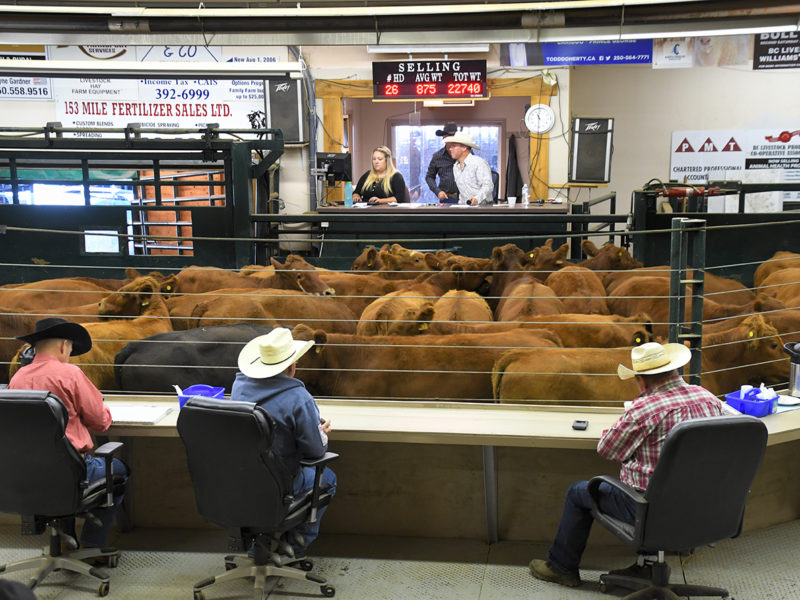
BC Beef set to launch

Project aims to boost returns to cattle producers

FILE PHOTO / LIZ TWAN

October 1, 2020 byTom Walker

WESTWOLD – A made-in-BC beef brand is finally within sight after five years of work on the part of ranchers.

“We will be signing a lease for October 1 with the KML federal processing plant just west of Falkland, and at that point we will have control of the plant to go in and start processing,” says Kevin Boon, general manager of the BC Cattlemen’s Association.

Boon is a key member of the industry steering committee that has been working on the project, which aims to put more cash in the pockets of BC producers by processing and selling beef locally.

But the project also promised to cost a lot of cash. Building a plant from scratch was pegged up to $8 million, and extensive operating funds would have been required for the first several years before it ever turned a profit.

Studies indicated that a new plant would also require about 500 animals a week to be viable. While there are a number of backgrounding operations in the province, a full-scale finishing industry capable of supplying that number of animals would also need to be developed, not to mention a supply chain to feed those cattle. Workers would need to be hired and trained and an extensive marketing program would be required to move the end product.

The steering committee determined that leasing an existing plant, starting small and sourcing animals at hand was the preferred way to begin building a BC Beef brand. It also allows everyone in the cattle sector – dairy operators as well as ranchers – to contribute to its development.

“We will be sourcing cull cows and processing them into hamburger,” he says. “That will allow everyone in the industry to participate.”

While BC Cattlemen’s has facilitated the development of the program, it was never the intention that the association would own the plant.

“A new company has been formed called the BC Beef Producers,” Boon explains. “This will be a producer-owned corporation and they will give direction to the chief operating officer who will develop the expertise for the operation.”

Mark Ishoy, a retired plant manager who served as president of Eastern Meat Solutions Inc. in Ontario, will manage the plant.

“[He] will help us get rolling,” says Boon. “He is very interested and very supportive of the concept we are doing because it is so new and unique. His experience will be a huge asset.”

The corporation will be run under the BC Securities Act and have a new and unique structure, Boon explains. Each share purchased in the corporation will come with the requirement to deliver one animal a year and if the shareholder does not deliver the animal, they could have their share revoked. Producers will be paid market price based on both quality and delivery season, as the plant will need animals year-round. Shares will entitle the producer to a portion of any profits from the corporation in the form of a dividend.

The lack of a consistent supply of animals is a common source of failure of producer-owned meat processing co-ops, Boon says, and the structure of BC Beef Producers aims to overcome that.

“If you think you are going to get a better price somewhere else and you jump there you will lose your hooks,” he says. “Because a lot of plant failures are caused by not being able to get supply.”

Interest from producers has been strong, Boon says, and the steering committee is keen to get the details of share ownership out to ranchers.

KML will retain the right to process and market a percentage of cattle under its own brand.

“KML has been really good to work with,” says Boon. “They will be able to process and market their own cattle so it is a win-win for all.”

The rural location of the plant, approximately half-way between Vernon and Kamloops, could  be a bonus for hiring workers, adds Boon.

“COVID … has made workers look for work outside of the main centres, so there is an attraction in that,” he says.

Boon is happy to see it all come together.

“I’m very excited about the prospects of it for BC producers,” he says. “I think this is a huge opportunity for them. We will never get a better chance at a more reasonable buy-in than we are getting right now.”

All content on this website is copyrighted, and cannot be republished or reproduced without permission.
Related Posts

You may be interested in these posts from the same category.

Drought forces Salmon River farmers to act

BC Cattlemen’s urges water storage

BC Cattlemen’s joins DRIPA challenge

Traceability reprieve for livestock

Lawsuits drive ranchers’ call for DRIPA’s repeal

Breathing new life into historic ranches

Province lacks reconciliation roadmap: ranchers

Sheep commission considered

Cowichan title decision creates uncertainty

Crown land conflicts reveal policy gaps

Beef herd drops

Feed available but stocks low

Previous Post: « A new generation keeps the family greenhouse growing
Next Post: Agrilyze Builds Software for Precision Agriculture »

© 2026 COUNTRY LIFE IN BC - ALL RIGHTS RESERVED