
• Menu
  • Skip to primary navigation
  • Skip to main content
  • Skip to primary sidebar

Country Life In BC Logo

The agricultural news source in British Columbia since 1915

  • Headlines
  • Calendar
  • Subscribe
  • Advertise
  • About
  • Archives
  • Contact
  • Search
  • Headlines
  • Calendar
  • Subscribe
  • Advertise
  • About
  • Archives
  • Contact
  • Search

Primary Sidebar

Originally published:

April 2019
Vol. 105 Issue 4

Subscribe Now!

Sign up for free weekly FARM NEWS UPDATES

Select list(s) to subscribe to


By submitting this form, you are consenting to receive marketing emails from: Country Life in BC. You can revoke your consent to receive emails at any time by using the SafeUnsubscribe® link, found at the bottom of every email. Emails are serviced by Constant Contact
Your information will not be
shared or sold ever

Stories In This Edition

One province, one panel

Groundwater deadline extended

Happy as a pig!

Sidebar: Still waiting

Feds pour millions into tree fruit research

Sidebar: Will local procurement help?>

Editorial: Confined spaces

Back Forty: BC farmers need more than a land bank

Island Good campaign drives local sales

Poultry industry seeks to stop infighting

Good egg!

Egg farmers to receive biggest quota boost ever

New entrant focus

Decision day looms for chicken pricing appeal

Producers look to CanadaGAP for certification

Organic sector undertakes core review

Hopping to it!

Island couple named Outstanding Young Farmers

Turkey consumption continues to decline

BC potato growers enjoy a strong footing

Sudden tree fruit dieback a growing concern

Late season BC cherries in global demand

Farmers’ markets aim to be local food hubs

Field trial hopes to reduce phosphorus levels

Future looking bright for BC dairy producers

BC could benefit from US trade battles

Saputo puts its Courtenay plant out to pasture

The land of milk and salmon

Sidebar: Farming for the future

Out of the hands of BC farmers

Codes of practice need producer input

Preparation essential for wildfire response

Sidebar: Relief announced for drought, fire

Sidebar: Be FireSmart with these tips

New traceability regs to track movement

Agriculture a notable threat to species at risk

Improper pesticide use threatens access

Threat to neonics spurs scare in spud growers

Orchard presses forward with diversification

Climate-smart growing

Staying on top of soil health is key to sound farming

No small potatoes

Farm families need to have affairs in order

Rotary parlours go upscale at two FV dairies

Study compares organic, conventional diets

Advisory service foresees growing demand

Sidebar: Tree fruit cutbacks a concern

Island dairy producers hone first aid skills

Woodshed: And that’s how rumours get their teeth

Research farm showcases small projects

Jude’s Kitchen: Shooting stars of spring


More Headlines

Follow us on Facebook

Comments Box SVG iconsUsed for the like, share, comment, and reaction icons

6 days ago

... See MoreSee Less

View Comments
  • Likes: 4
  • Shares: 0
  • Comments: 0

Comment on Facebook

7 days ago

On the last day of the BC Organic Conference, Thursday, Molly Thurston of Pearl Agricultural Consulting helped growers learn how to manage bugs such as codling moth, wireworm, and rootworm in organic growing systems. Her talk alongside Renee Prasad included hands-on activities in which participants checked out various traps and examined pests under microscopes. Be sure to look for more upcoming ag events on our online calendar at www.countrylifeinbc.com/calendar/

#BCAg
... See MoreSee Less

On the last day of the BC Organic Conference, Thursday, Molly Thurston of Pearl Agricultural Consulting helped growers learn how to manage bugs such as codling moth, wireworm, and rootworm in organic growing systems. Her talk alongside Renee Prasad included hands-on activities in which participants checked out various traps and examined pests under microscopes. Be sure to look for more upcoming ag events on our online calendar at www.countrylifeinbc.com/calendar/

#BCAg
View Comments
  • Likes: 15
  • Shares: 0
  • Comments: 0

Comment on Facebook

1 week ago

Well-known organic farmer and podcaster Jordan Marr gets interviewed by Country Life in BC’s own columnist and potato mavin Anna Helmer during the opening session of the BC Organic Conference at Harrison Hot Springs yesterday. Sessions run today (Wednesday) and Thursday and include organic and regenerative growing practices and expanding and advocating for the organic sector, all under the background of the newly launched Organic BC banner.

#BCAg
... See MoreSee Less

Well-known organic farmer and podcaster Jordan Marr gets interviewed by Country Life in BC’s own columnist and potato mavin Anna Helmer during the opening session of the BC Organic Conference at Harrison Hot Springs yesterday. Sessions run today (Wednesday) and Thursday and include organic and regenerative growing practices and expanding and advocating for the organic sector, all under the background of the newly launched Organic BC banner.

#BCAg
View Comments
  • Likes: 37
  • Shares: 2
  • Comments: 1

Comment on Facebook

Interested in finding out more about this

3 weeks ago

Today, we remember those who sacrificed their lives or their well-being for our freedom. Lest we forget. ... See MoreSee Less

Today, we remember those who sacrificed their lives or their well-being for our freedom. Lest we forget.
View Comments
  • Likes: 8
  • Shares: 0
  • Comments: 0

Comment on Facebook

1 month ago

FarmFolk CItyFolk is hosting its biennial BC Seed Gathering in Harrison Hot Springs November 27 and 28. Farmers, gardeners and seed advocates are invited to learn more about seed through topics like growing perennial vegetables for seed, advances in seed breeding for crop resilience, seed production as a whole and much more. David Catzel, BC Seed Security program manager with FF/CF will talk about how the Citizen Seed Trail program is helping advance seed development in BC. Expect newcomers, experts and seed-curious individuals to talk about how seed saving is a necessity for food security. ... See MoreSee Less

Link thumbnail

BC Seed Gathering - FarmFolk CityFolk

farmfolkcityfolk.ca

Save the date for our upcoming 2023 BC Seed Gathering happening this November 3rd and 4th at the Richmond Kwantlen Polytechnic University campus.
View Comments
  • Likes: 1
  • Shares: 0
  • Comments: 0

Comment on Facebook

Subscribe | Advertise

The agricultural news source in British Columbia since 1915
  • Email
  • Facebook

BC farmers need more than a landbank

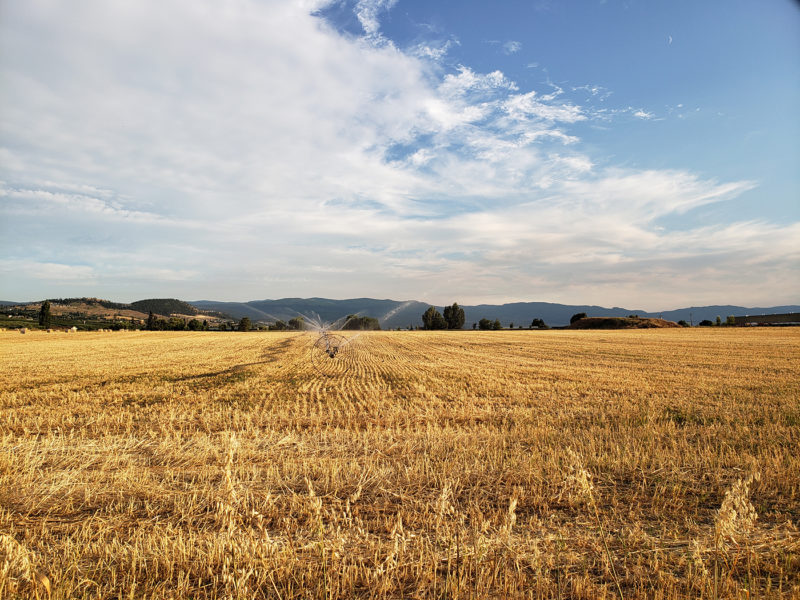
PHOTO / MYRNA STARK LEADER

April 1, 2019 byBob Collins

A conversation I overheard recently in a schoolyard while waiting to pick up my granddaughter seems to sum up a big part of the dilemma facing the Agricultural Land Commission and the production it is expected to foster within the Agricultural Land Reserve. One 30-something parent was excitedly telling another about a rural property they had just purchased.

The gist of the conversation concerned a plan to subdivide into one or two-acre lots. The property owner lamented that the small lots might be derailed by the land’s ALR status and in a worst-case scenario they might have to settle for five-acre lots. The ALR was the only reference to agriculture and though extensive farming plans may have gone unmentioned, I couldn’t help but feel there is a generous measure of disappointment looming on this particular rural horizon.

This is by no means an isolated circumstance. It was once very forcefully proposed to me: a lot line adjustment was the equivalent of a Get Out of Jail card in Monopoly that could be invoked to force the ALC to allow a subdivision of farmland.

How to circumvent ALR regulations always seems to be a hot topic of conversation with people thinking of moving to the country. Conversely, trying to craft an agricultural business model that will function within ALR regulations is an ever-present consideration for many who are already there. Particularly small-lot landowners.

Provincial legislation tightened the regulation of activities in the ALR last fall with an eye to embracing the “agriculture first” criterion proposed by the ALR advisory committee. This is all fine and good from a policy perspective but what does it offer the 110,000 parcels of ALR land that are under 4 ha. (10 acres) in size?

According to Statistics Canada figures from 2016, BC had 17,528 farms. More than 40% of them generated less than $10,000 in annual gross income.

There are many small-parcel success stories but their number will pale in comparison to their overall number. What business model does the government see that will allow small-lot producers escape what has been termed the “$10,000 ghetto?” The current small farm orthodoxy embraces unpaid labour, often in the guise of an apprenticeship. Presumably, the apprentices learn they, too, will have to find apprentices when they strike out on their own, and those apprentices will learn the same, and on it goes like some sort of agricultural Ponzi scheme. Eventually, no one signs on to work for free and the jig is up.

Putting agriculture first on most small farms means investing enormous amounts of time and money, fiscal stress, often family and relationship stress, and convincing yourself that the outcome of the endeavour has so little value that the work involved must be done for free. Top it off with another job (or two) to subsidize the whole enterprise.

The issue is fraught with problems for all concerned. The ALR has been in place for more than 45 years. The broad social objective of saving arable land for food production is hard to argue with and putting agriculture first seems like a natural fit, but how does that work without someone to do the farming?

When it was enacted, the ALR legislation included income insurance and cost-of-production schemes. Those initiatives fell by the wayside long ago and while we have legislation placing land in what amounts to a public trust for agricultural purposes, there is no countervailing legislation requiring the public to purchase any of the resulting production.

If the goal is to save the 110,000 small parcels in the ALR and have someone put them to agricultural use, a more enlightened food policy is necessary. Simply handcuffing producers with tighter regulations and expecting them finance the ALR’s objective with off-farm income and free labour isn’t fair or reasonable.

Such a situation simply guarantees another seismic shift for the ALR when the inevitable change of government comes.

Related Posts

You may be interested in these posts from the same category.

Previous Post: « Cranberry outlook brightens
Next Post: No peace, no order »

Copyright © 2025 Country Life in BC · All Rights Reserved