
• Menu
  • Skip to primary navigation
  • Skip to main content
  • Skip to primary sidebar

Country Life In BC Logo

The agricultural news source in British Columbia since 1915

  • Headlines
  • Calendar
  • Subscribe
  • Advertise
  • About
  • Archives
  • Contact
  • Search
  • Headlines
  • Calendar
  • Subscribe
  • Advertise
  • About
  • Archives
  • Contact
  • Search

Primary Sidebar

Originally published:

MARCH 2026
Vol. 112 Issue 3

Subscribe Now!

Sign up for free weekly FARM NEWS UPDATES

Loading form…

Your information will not be
shared or sold ever

Stories In This Edition

Bare hills

Farms face scrutiny

Budget heralds funding freeze

Flower grower named top young farmer

Editorial: Plowing forward

Back 40: Running for office in House of Commonsense

Viewpoint: Tough times call for good troublemakers

Title concerns add uncertainty to land deals

Joining hands

Dairy producers brace for blend price changes

Ag Briefs: Province closes deal for new laboratry site

Ag Briefs: Organic BC seeks funding

Ag Briefs: BCPVGA gets new GM

Ag Briefs: Cherry growers focus on labour

UFV expands livestock research capacity

BC Tree Fruits members told to play by the rules

FCC economist flags labour, trade risk

Market outlook depends on better blueberries

Province cuts compensation rates for wildlife damage

Bumper snowpack brings hopt to parched Peace

Water woes: groundwater under pressure

Forestry roads, clearcuts amplify flood risk

Cattle prices raise the roof at Kamloops auction

Board finds overgrazing rules unenforceable

Tour spotlights top Fraser Valley dairy herds

Restaurant connections fuel farm’s growth

Organic pioneer honoured for contributions

Islands ag show

Hot pollen spells trouble for blueberries

Cull cherries get second life as powder

Farm Story: Outside jobs are calling

Woodshed: Time travel comes to Gladdie’s birthday picnic

Growers turn surplus into solutions

Jude’s Kitchen: Perk up leftovers with spring greens

All content on this website is copyrighted, and cannot be republished or reproduced without permission.
More Headlines

Follow us on Facebook

Comments Box SVG iconsUsed for the like, share, comment, and reaction icons

1 week ago

Canada's mushroom growers will have to post countervailing duties next week following a US Department of Commerce determination that Canada's tax regime effectively subsidized growers, allowing them to cause "material injury" to US growers through their exports. Canada is a major exporter of mushrooms to the US, with the countries effectively operating as a single value chain thanks in part to one of the largest mushroom producers, South Mill Champs, headquartered in Pennsylvania.

#BCAg
... See MoreSee Less

Canadas mushroom growers will have to post countervailing duties next week following a US Department of Commerce determination that Canadas tax regime effectively subsidized growers, allowing them to cause material injury to US growers through their exports. Canada is a major exporter of mushrooms to the US, with the countries effectively operating as a single value chain thanks in part to one of the largest mushroom producers, South Mill Champs, headquartered in Pennsylvania.

#BCAg
View Comments
  • Likes: 2
  • Shares: 2
  • Comments: 0

Comment on Facebook

1 week ago

... See MoreSee Less

View Comments
  • Likes: 6
  • Shares: 0
  • Comments: 0

Comment on Facebook

1 week ago

The Jura Ranch near Princeton sold for nearly $5.3 million on May 12, the largest online ranch sale in BC in months, according to CLHBid.com, which handled the sale. The buyer was not named. Formerly owned by Rob and Kelly Lamoureux, which developed the successful Jura Grassfed brand, the ranch includes 2,625 deeded acres and a grazing licence totalling 83,698 acres. Originally offered at $4.2 million, the competitive bidding process delivered a higher value than the current market would suggest. Farm Credit Canada’s latest farmland value survey pointed to 1.7% decline in BC last year, which observers have attributed to tight margins and uncertainties related to Crown tenure.

#BCAg
... See MoreSee Less

The Jura Ranch near Princeton sold for nearly $5.3 million on May 12, the largest online ranch sale in BC in months, according to CLHBid.com, which handled the sale. The buyer was not named. Formerly owned by Rob and Kelly Lamoureux, which developed the successful Jura Grassfed brand, the ranch includes 2,625 deeded acres and a grazing licence totalling 83,698 acres. Originally offered at $4.2 million, the competitive bidding process delivered a higher value than the current market would suggest. Farm Credit Canada’s latest farmland value survey pointed to 1.7% decline in BC last year, which observers have attributed to tight margins and uncertainties related to Crown tenure.

#BCAg
View Comments
  • Likes: 40
  • Shares: 10
  • Comments: 4

Comment on Facebook

I sure hope it remains as farm land rather than a wind or solar installation.

Great grassland

yeah, who bought it? where are the checks and balances that ensure a ranch can continue being a ranch?

Uncertainty about crown land, aka native land grabs and unceded land claims being tossed around like it wasn't meant to destabilize the country?

1 week ago

American businessmen have quietly accumulated nearly 4,000 acres of farmland in the Robson Valley community of Dunster, sparking calls for restrictions on foreign and corporate agricultural land ownership in BC. Residents say the buy-up has driven population decline and priced out young farmers. MLAs from both parties and a UNBC professor are pointing to Quebec's new farmland protection legislation as a model BC should follo#BCAg#BCAg ... See MoreSee Less

Link thumbnail

Foreign land buyers hollow out Dunster

www.countrylifeinbc.com

DUNSTER – Purchases of swathes of farmland in the Robson Valley by wealthy American businessmen have some in BC demanding restrictions on foreign and corporate ownership of agricultural land.
View Comments
  • Likes: 26
  • Shares: 3
  • Comments: 1

Comment on Facebook

This is a serious issue in Dunster and one that has impacts for wildlife and human neighbours.

1 week ago

Representatives from Quail's Gate Winery Estate Winery in West Kelowna were panellists during the Okanagan Cultivates event held at Okanagan College's Kelowna campus on May 7. The college has been hosting events like this to help elevate conversations in the community about what's grown locally and its impact on the region's food, wine and tourism industry. The Quail's Gate panel, which included Ben Stewart, discussed the long history of grape growing and winemaking in front of a large crowd who came to listen, learn and taste products from a number of local wineries and restaurants. A new $48.8M food, wine and tourism centre is now under construction at the college to open in fall 2027. The building will have modern food labs, a student-led restaurant and café and specialized training spaces for culinary, viticultu#BCAgd tourism studies.

#BCAg
... See MoreSee Less

Representatives from Quails Gate Winery Estate Winery in West Kelowna were panellists during the Okanagan Cultivates event held at Okanagan Colleges Kelowna campus on May 7. The college has been hosting events like this to help elevate conversations in the community about whats grown locally and its impact on the regions food, wine and tourism industry. The Quails Gate panel, which included Ben Stewart, discussed the long history of grape growing and winemaking in front of a large crowd who came to listen, learn and taste products from a number of local wineries and restaurants. A new $48.8M food, wine and tourism centre is now under construction at the college to open in fall 2027. The building will have modern food labs, a student-led restaurant and café and specialized training spaces for culinary, viticulture and tourism studies.

#BCAg
View Comments
  • Likes: 8
  • Shares: 0
  • Comments: 0

Comment on Facebook

Subscribe | Advertise

The agricultural news source in British Columbia since 1915
  • Email
  • Facebook

Title concerns add uncertainty to land deals

Strong interest reported as auction deadline extends

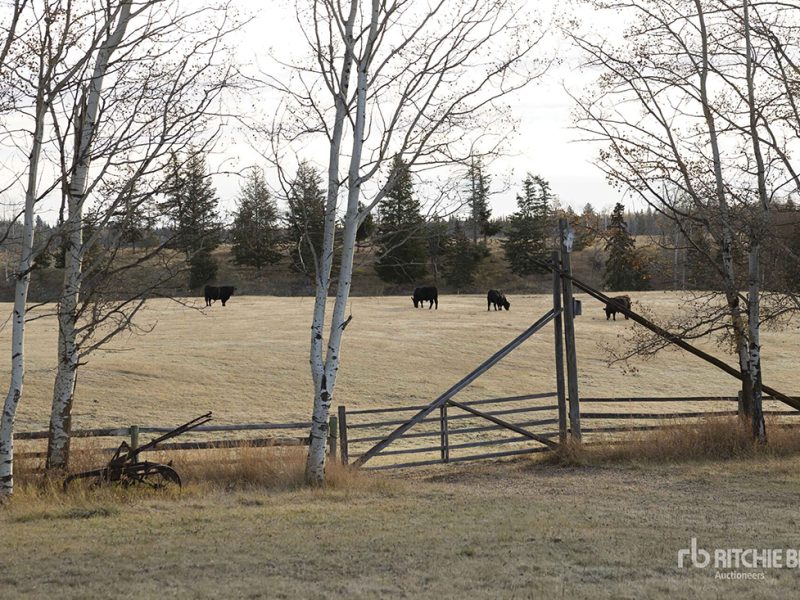
Home Ranch at 70 Mile House is among 12 Monette Farms properties totalling more than 45,000 acres listed for sale in BC's interior. Photo | RBAuction.com

March 1, 2026 byRiley Donovan

WILLIAMS LAKE – An initial offering of 12 ranches totalling more than 45,000 acres by Monette Farms, one of Canada’s largest farm operators, ended without bids – a sign, according to industry sources, that uncertainty surrounding Aboriginal title is scaring off buyers.

The offering of the properties last November through Ritchie Bros. Auctioneers Inc. was billed as “a once-in-a-lifetime opportunity to own prime ranch land,” with a Facebook video featuring drone footage of sweeping vistas in the BC interior.

Monette says it is open to a leaseback arrangement with the new owners, which would allow it to keep working the properties.

Despite the hype, Ritchie Bros. did not sell any of the properties by the initial January 9 deadline, and the properties entered a “tender by auction” process with a March 3 deadline.

Clare Furman, senior public relations manager with Ritchie Bros., says that despite the lack of sales, there has been significant interest.

“Ritchie Bros. does not typically comment on specific bid activity or negotiations during an active sales process. That said, we’ve had a lot of interest in the properties thus far and are utilizing multiple Ritchie Bros. platforms throughout the sale,” she says.

As for whether discussion and rumours surrounding Aboriginal title in BC might be spooking the market, Furman says buyers consider various factors.

“As with any real estate investment, buyers consider a range of factors, including land use, operating models and long-term stewardship,” says Furman.

However, one ranch deal is already known to have fallen through after local Indigenous groups told the prospective buyer, whose offer on the property had been accepted, that they would not endorse the transfer of the Crown licences needed to support the operation.

Under the province’s seven-year-old Declaration on the Rights of Indigenous Peoples Act, the province has a duty to consult Indigenous governments on such matters, which critics argue effectively gives them a veto in the decision-making process.

BC lawyer Thomas Isaac, a recognized authority in Aboriginal law, says it is obvious that the BC Supreme Court decision in Cowichan Tribes v. Canada, which found that Cowichan Nation has Aboriginal title over more than 700 acres of land in Richmond, has introduced great uncertainty to BC’s investment landscape.

“The fact that we now have uncertainty around indefeasible title, obviously, is not helpful to investment, given that in order to have a free market economy, you have to have the concept of indefeasible title,” says Isaac.

Isaac argues that an important feature of the Cowichan decision is that it explicitly claims to set a precedent, which he says is a highly unusual move from a lower court.

He refers to a detail in the decision that says fee-simple property does not extinguish Aboriginal title, and that core provisions of the Land Title Act (LTA) “do not apply to Aboriginal title.”

“A precedent that will follow from this case is that provincial Crown grants of fee simple interest do not extinguish nor permanently displace Aboriginal title, and ss. 23 and 25 of the LTA do not apply to Aboriginal title,” reads the last sentence in paragraph 3551 of the decision.

Isaac says the ramifications of the Cowichan decision extend well beyond Richmond.

He notes that BC is home to roughly a third of all First Nations in Canada, most of whom have not signed treaties extinguishing Aboriginal title.

This means that “about 85%” of the total area of the province not covered by treaties may be subject to Aboriginal title claims, he says.

“Pretty much every city in the province has got an assertion or an actual claim on it,” says Isaac.

The Secwépemc Nation is seeking its own declaration of Aboriginal title over its traditional territory, which includes the City of Kamloops, other municipalities and Sun Peaks resort.

In December 2025, a joint statement from Tk̓emlúps te Secwépemc and the City of Kamloops urged “calm and patience” and maintained that “the fundamentals of property ownership in Kamloops remain unchanged and day-to-day life continues as normal”.

In January, BC Cattlemen’s Association assistant general manager Elaine Russell told Country Life in BC that cattlemen hold some 200 Crown tenures within the claim area.

Another First Nation is drawing on the Cowichan decision for a new claim that encompasses private land.

In a suit filed on January 26, the Dzawada’enuxw First Nation on BC’s central coast is claiming ownership of 650 hectares around Kingcome Inlet. Most of that land is privately held by lumber producer Interfor Corp. and the Nature Trust of BC.

The Cowichan court decision recognized Aboriginal title over about 300 acres of land owned by Montrose Properties, a major Richmond landowner.

In February, Montrose asked BC Supreme Court to reopen the case, arguing that it should have been a party to the original trial.

In its application to the court, Montrose Properties stated that after the Cowichan Aboriginal title decision, it “can no longer confirm clear title to its land as required by lenders.”

Montrose noted that multiple projects had fallen through as a result of uncertainty created by Aboriginal title, including a lender backing out of a “shovel-ready” plan to build a warehouse.

It remains to be seen how the uncertainty surrounding Aboriginal title in BC will impact Monette’s attempt to sell its ranches.

The BC ranch selloff comes as Monette Farms is also seeking to offload numerous properties in the Prairies and even the US.

Monette Farms is seeking offers on 15 properties through its website. At first, Monette was soliciting bids discreetly – now, listings are visible to anyone who registers on the website.

The listings add up to roughly 129,000 acres in Saskatchewan, 49,000 acres in Manitoba, and 54,000 acres in Montana. The bidding deadline is March 2.

It is unclear how this large-scale selloff of land will impact Monette Farm’s longstanding goal of producing enough food to feed a vast portion of the world’s population.

The “About Us” section of the Monette Produce website still proclaims that “Our vision is to feed a billion people through sustainable agriculture.” Monette Produce’s LinkedIn page even attaches a date to the goal: “Join us on our path to feed One Billion people by 2030!”

Monette Farms did not reply to multiple requests from Country Life in BC for comment.

All content on this website is copyrighted, and cannot be republished or reproduced without permission.
Related Posts

You may be interested in these posts from the same category.

Monette Farms wins creditor protection

Monette Farms sale extended

Cowichan title decision creates uncertainty

Previous Post: « Farm finds resilience going with the grain
Next Post: Pacific Time decision creates issues »

© 2026 COUNTRY LIFE IN BC - ALL RIGHTS RESERVED