• Menu
  • Skip to primary navigation
  • Skip to main content
  • Skip to primary sidebar

Country Life In BC Logo

The agricultural news source in British Columbia since 1915

  • Headlines
  • Calendar
  • Subscribe
  • Advertise
  • About
  • Archives
  • Contact
  • Search
  • Headlines
  • Calendar
  • Subscribe
  • Advertise
  • About
  • Archives
  • Contact
  • Search

Primary Sidebar

Originally published:

JANUARY 2026
Vol. 112 Issue 1

Subscribe Now!

Sign up for free weekly FARM NEWS UPDATES

Select list(s) to subscribe to


By submitting this form, you are consenting to receive marketing emails from: Country Life in BC. You can revoke your consent to receive emails at any time by using the SafeUnsubscribe® link, found at the bottom of every email. Emails are serviced by Constant Contact
Your information will not be
shared or sold ever

Stories In This Edition

Sumas floods again

Winter blues

Biosecurity holds line against HPAI

Task force presents blueprint for growth

Soaking it up

Editorial: Next year is here

Back 40: What a difference a year can make

Viewpoint: Collaboration key to shaping the future of ag

Different year, similar flood

BC milk testers on strike over mileage

Ag Briefs: Co-op windup delayed by legal wrangling

Ag Briefs: Shuswap watershed funding available

Ag Briefs: CFIA reports low honey adulterations

Collaboration takes centre stage at dairy meetings

Lawsuits drive ranchers call for DRIPA’s repeal

Ranchers face off against BC Hydro

Monette properties on the auction block

Preview: Pacific Ag Show tackles farming challenges

Preview: Growing knowledge

Islands Ag Show builds resilience for farmers

Organic BC launches with sector conference

Sidebar: Organic industry awards

Irrigation set to play a larger role in BC

BC blueberry growers set council priorities

Farm Story: January farm planning: all talk, no change

BC women break barriers in agriculture

Proper tools enhance worker safety, well-being

Woodshed: Sparks fly as Christopher and Astrid meet

BC 4-H scores hat treick at the Royal Winter Fair

Jude’s Kitchen: Make January fun with new foods, flavours

More Headlines

Follow us on Facebook

Comments Box SVG iconsUsed for the like, share, comment, and reaction icons

3 weeks ago

The Canadian Food Inspection Agency is preparing to implement changes to its livestock traceability rules that will include mandatory computer reporting within seven days on movement of animals for veterinary appointments, community pastures, exhibitions, carcass and on-farm disposal and the births and deaths of every animal on your farm. Writer Tom Walker first brought these changes to the attention of our readers back in June 2023. We've posted his story to our website:

www.countrylifeinbc.com/cfia-proposes-traceability-updat#BCAg#BCag
... See MoreSee Less

The Canadian Food Inspection Agency is preparing to implement changes to its livestock traceability rules that will include mandatory computer reporting within seven days on movement of animals for veterinary appointments, community pastures, exhibitions, carcass and on-farm disposal and the births and deaths of every animal on your farm. Writer Tom Walker first brought these changes to the attention of our readers back in June 2023. Weve posted his story to our website: 

https://www.countrylifeinbc.com/cfia-proposes-traceability-updates/

#BCag
View Comments
  • Likes: 11
  • Shares: 21
  • Comments: 15

Comment on Facebook

I love hpw the cow in the picture hasn't even got a RFID tag in it but I digress. We can not read the link, it says "we are not permitted to read drafts". Please post again with the correct link.

Dairy farmers having been doing this several years. The app we use has become quite simple to use

Including equine?

Premise ID was slowly rolled through the country, voluntary then mandatory. Transparency and 'Consultation' has been light. Those who tried to bring this for discussion a couple years ago, because of forseen overreach, were quite often labeled conspiracy theorists and that it wasnt meant to be so heavily regulated and controlled. Gardens and seeds will be next. "Invasive species" reporting, check out the plants medicinal properties. Read the BC intentions papers. The premise ID that already heavy regulated commodities have claims to be treated different in the intentions papers on page 8. www2.gov.bc.ca/assets/gov/farming-natural-resources-and-industry/agriculture-and-seafood/food-saf...

Says i am "not allowed to preview draft".

Also concerning is the part on compliance...they can 'stumble onto' any farm and if you're not complying there are consequences.

When the CFIA stumbles into the wrong place compliance will be met with civil engagement

Says I can't preview draft

This is government overreach - Do Not Comply!

Do not comply

Fu

As if the price of beef isn't bad enough for consumers,,,,,be prepared to be gouged some more now

Ridiculous!!

Let's hold up on the beef exports tell we can get our own house in order... we need to deregulated, cheapen up the supply chain back into a 5 buck a pound rage so the good people canada can eat healthy food.. fuck your bean diets, that's retarded

This, along with the majority of new legislation pertaining to any type of farm, is a blatant squeeze on any sort of small, alternative agricultural venture. I am a massive believer in working together and sharing resources and costs and solutions - do not get me wrong - but this and the water registration among others, is an overreach (at most generous) and an absolute killer to smaller, local initiatives that LITERALLY save lives during extreme events. There is ONE ROAD into and out of my community. We don’t need or want some sort of backlogged government response when shit goes sideways. We want the ability AND SUPPORT to provide for our communities without penalty when things go badly. We want to produce sustainability for our communities. We live here, we work here, we want to STAY HERE. Stop making it harder.

View more comments

4 weeks ago

BC's minimum piece rates for 15 hand-harvested crops increased 2.6% on December 31. Crops include peaches, apricots, brussels sprouts, daffodils, mushrooms, apples, beans, blueberries, cherries, grapes, pears, peas, prune plums, raspberries and strawberries. Farm-worker piece rates in BC were increased by 11.5% in January 2019 and 6.9% in December 2024. BC’s current minimum wage sits at $17.85 per hour.

#BCAg
... See MoreSee Less

BCs minimum piece rates for 15 hand-harvested crops increased 2.6% on December 31. Crops include peaches, apricots, brussels sprouts, daffodils, mushrooms, apples, beans, blueberries, cherries, grapes, pears, peas, prune plums, raspberries and strawberries. Farm-worker piece rates in BC were increased by 11.5% in January 2019 and 6.9% in December 2024. BC’s current minimum wage sits at $17.85 per hour. 

#BCAg
View Comments
  • Likes: 9
  • Shares: 0
  • Comments: 2

Comment on Facebook

I'm not sure what they're telling us. Did peace rates have to increase so that Farm workers could make minimum wage?

They deserve it, but the general public will be whining about increased prices in the stores. Will need to make more information average to the g.p.

1 month ago

... See MoreSee Less

View Comments
  • Likes: 14
  • Shares: 0
  • Comments: 1

Comment on Facebook

105 Mile Ranch

1 month ago

... See MoreSee Less

View Comments
  • Likes: 7
  • Shares: 0
  • Comments: 0

Comment on Facebook

2 months ago

Water volumes from the Nooksack River are at levels similar to 1990 and 2021, but the province says flows should peak at 10pm tonight. The shorter duration, as well as conditions in other watercourses within the watershed and performance of flood protection infrastructure should avoid a catastrophe on the scale of 2021. However, several landslides mean road closures have once again effectively isolated the Lower Mainland from the rest of the province.

#BCAg
... See MoreSee Less

Water volumes from the Nooksack River are at levels similar to 1990 and 2021, but the province says flows should peak at 10pm tonight. The shorter duration, as well as conditions in other watercourses within the watershed and performance of flood protection infrastructure should avoid a catastrophe on the scale of 2021. However, several landslides mean road closures have once again effectively isolated the Lower Mainland from the rest of the province.

#BCAg
View Comments
  • Likes: 9
  • Shares: 3
  • Comments: 1

Comment on Facebook

Family living in Sumas WA say it's very much like '21. They have the same amount of water in their house as last time.

Subscribe | Advertise

The agricultural news source in British Columbia since 1915
  • Email
  • Facebook

BC women break barriers in agriculture

Leadership and ag-adjacent roles are opportunities for women

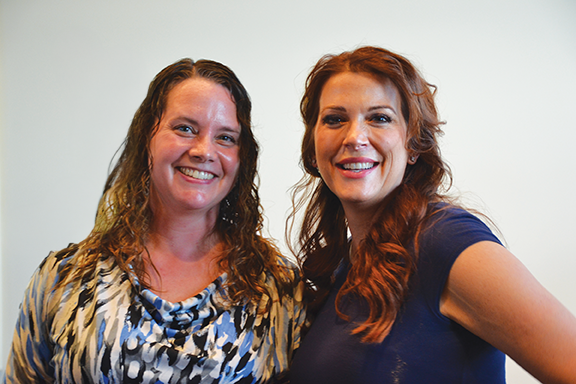
Katie Lowe, left, executive director of the BC Egg Marketing Board, and Stephanie Nelson, right, executive director of the BC Broiler Hatching Egg Commission, co-founded the BC Ag Women's Network in 2018 to support women in agriculture. Photo | Ronda Payne

January 1, 2026 byRonda Payne

ABBOTSFORD – The Canadian Agricultural Human Resource Council (CAHRC) wants to see more women assume roles in agriculture, not only to achieve gender parity throughout the industry, but also to help reduce labour and skills shortages.

The organization’s March 2025 report, From the Field to the Boardroom: Women Driving Change in Agriculture, cites Statistics Canada data that indicates 31% of on-farm agriculture workers, both farm operators and employees, were women in 2024.

BC is a leader of women in agriculture, with 46.5% of on-farm workers being female.

But national data indicates that women’s increasing share of the sector is due primarily to men leaving agriculture, rather than more women joining.

With the overall BC agricultural workforce declining 40% from 2020 to 2024, bringing more women into the industry at all levels is important.

“I think there is some intentionality in terms of women leadership,” says Stephanie Nelson, executive director of the BC Broiler Hatching Egg Commission (BCBHC) and chair of the BC Cranberry Marketing Commission.

Nelson is also a co-founder of the BC Ag Women’s Network, established in 2018. The network has been on hold for a little more than a year as Nelson and committee members look to determine the needs of the women who are “already busy in ag,” she says.

CAHRC’s report also mentions the National Women in Agriculture and Agri-Food Network project, which has a goal of ensuring at least 30% of leadership roles are occupied by women.

When Nelson started with BCBHC in 2008, she was the only woman executive director among the province’s poultry organizations. Today, the situation is reversed, with just one man.

“We are definitely seeing more women take part in the farming itself,” says Katie Lowe, another co-founder of BC Ag Women’s Network and executive director of BC Egg Marketing Board.

While the organization has an all-male board, it has had women members in the past, and Lowe is more concerned about the lack of women in non-primary agriculture roles such as feed sales and research.

CAHRC’s report noted that although 60% of agriculture degree holders are women, young women report more barriers than older women in areas like “breaking into the ‘old boys’ club,’” “preconceived notions of capability” and “balancing career and family.”

Its research identified these and other challenges, as well as potential solutions, and then CAHRC created an action plan that included training, networking and other events, which attracted 900 women.

Chilliwack egg producer Juschka Clarke, owner of Hazelsprings Farm, received a head start from her mother, her sole female mentor.

“This farm was passed down to me by my mom, so we have a long history of strong women in our family,” she says. “I’m excited about watching our young generation of women farmers rise to the occasion.”

Clarke’s daughter Emily now farms with her, continuing the legacy left by Clarke’s mother, who died two years ago.

Clarke believes women in agriculture create space for more women to enter the field.

“We’re actively involved in day-to-day operations,” Clarke says. “Even in families where it’s couples, women are involved in the day-to-day operations. Many of them can take over at the drop of a hat, and they do.”

While Clarke is making decisions about her commercial operation, just as her mother did as a hobby farmer, national data show that women are less likely than men to be the farm’s sole decision-maker.

Yet, compared with the rest of Canada, women in BC are twice as likely to be a sole operator as in the rest of Canada. This doesn’t mean it’s easy.

Pat Hanson of Andtbaka Farm, a 30-acre mixed farming operation in Powell River, has been farming for 46 years. She manages a market garden, three greenhouses, poultry, sheep, ducks, geese and some dairy and beef cattle.

But even with her decades of experience, Hanson has seen challenges as a female operator.

“As a woman [with one income], you kind of have to buy the second or third-hand [equipment] that someone has to fix,” she says. “I took a mechanics class, so I’m okay.”

She hopes things will be different for the next generation of women.

“I’d like to see way more women take a vested interest in agriculture,” she says. “To see more courses offered – even in the high school curriculum. I’d like to see more opportunities for young women to be exposed to it.”

In Langley, Tammy Rose sees different perspectives of agriculture in her primary business as an agent with Royal LePage Wolstencroft Realty and as operator of Green Tractor Farm, where she raises registered Babydoll sheep.

Rose sells hay, breeds and sells sheep and sells eggs with her eight-year-old son Aiden. They usually have six sheep at a time.

She doesn’t consider agriculture unique in the dominance of male operators.

“I grew up in a road construction family, so you’re kind of used to things like that,” she says. “The same as in real estate. You just need to adjust and approach it differently when you’re faced with those situations.”

Like Clarke and Hanson, she’s seeing women sharing more with each other and helping new farmers succeed, building the community and making sure the next generation is involved and “not just sitting on the sidelines.”

“In the ag industry, I think it’s really important for women to be involved in committees and the industry outside of the farm as well, as it keeps us visible and connected,” she says. “I think women can soften this industry quite a bit as well. We’re all here to help each other, in my opinion. Nobody wants to see anybody fail.”

Related Posts

You may be interested in these posts from the same category.

Farm compensation benchmarks set

Domestic labour gap grows

Industry looks to move needle on labour shortage

Farm workforce shortfall

Previous Post: « Chilliwack grower named BC-Yukon OYF

Copyright © 2026 Country Life in BC · All Rights Reserved