• Menu
  • Skip to primary navigation
  • Skip to main content
  • Skip to primary sidebar

Country Life In BC Logo

The agricultural news source in British Columbia since 1915

  • Headlines
  • Calendar
  • Subscribe
  • Advertise
  • About
  • Archives
  • Contact
  • Search
  • Headlines
  • Calendar
  • Subscribe
  • Advertise
  • About
  • Archives
  • Contact
  • Search

Primary Sidebar

Originally published:

JULY 2021
Vol. 107 Issue 7

Subscribe Now!

Sign up for free weekly FARM NEWS UPDATES

Loading form…

Your information will not be
shared or sold ever

Stories In This Edition

BCAC shifts to advocacy

Farms keep tax status

Hot stuff

Too much red tape leaves farmers frustrated

Editorial O’Canada

Back 40: High land prices limit farming opportunities

Viewpoint: Agriculture should be more than seasonal work

Farmers struggle to get insurance coverage

New milk board chair

$12 million allocated to fight invasive species

Ag Briefs: Pitt Meadows mitigation proposal by CP Rail

Ag Briefs: Agassiz land exlclusion refused

Ag Briefs: BC Ag Expo resumes

Letters: No place for farmed salmon

Farmers say new policy statement devalues ag

Farm status elusive for regenerative agriculture

Maple Ridge farmers feel unsupported

Water, land issues remain a priority for BC ranchers

A moo-ving experience

Water licensing process needs streamlining

Canada ‘negligible risk’ for BSE

Grizzly bear encounters on the increase

Cherry crop coming on strong across BC

BC Tree Fruits relaunches field service

GHG emissions twice as high as estimates

Group EFPs protect sensitive ecological areas

Flower growers see sky-high demand

Tulips in bloom

Grant helps local project establish provincial targets

Programs add value to Kootenay agriculture

Growers hit hard by blueberry scorch virus

Research: Genetic research may help manage pig virus

Squaring off against the carrot rust fly

Farm Story: Bike-riding sightseers are hitting the road again

Written plans set the tone for farm families, workers

Woodshed Chronicles: Eunice plans a graduation to remember

Kettle Valley farmers get more time to grow

Jude’s Kitchen: Mid-summer barbecues make cooking easy


More Headlines

Follow us on Facebook

Comments Box SVG iconsUsed for the like, share, comment, and reaction icons

2 days ago

Full-time students employed in BC agriculture during the summer season are eligible to apply for a bursary of up to $3,000. The bursary, administered by the Investment Agriculture Foundation, aims to increase youth and domestic seasonal worker employment in the ag sector. Funding is awarded on a first-come, first-serve basis. More information is available at tinyurl.com/5ef6pe3m

#BCAg IAF
... See MoreSee Less

Full-time students employed in BC agriculture during the summer season are eligible to apply for a bursary of up to $3,000. The bursary, administered by the Investment Agriculture Foundation, aims to increase youth and domestic seasonal worker employment in the ag sector. Funding is awarded on a first-come, first-serve basis. More information is available at https://tinyurl.com/5ef6pe3m

#BCAg IAF
View Comments
  • Likes: 13
  • Shares: 11
  • Comments: 0

Comment on Facebook

3 days ago

BC fruit and vegetable farmers are being asked to share their views on farming technology in a 10-minute survey from Royal Roads University and the University of the Fraser Valley. The survey looks at how fruit and vegetable farmers are adopting emerging farming technologies -- such as digital tools, “controlled environment agriculture systems” (greenhouses) and agri-genomics (DNA analysis) -- to cope with changing climate conditions. The survey takes about 10 minutes to complete, and participants will be eligible to win an assortment of $50-$200 gift cards.

insights.kaianalytics.com/s3/PAS2026
... See MoreSee Less

BC fruit and vegetable farmers are being asked to share their views on farming technology in a 10-minute survey from Royal Roads University and the University of the Fraser Valley. The survey looks at how fruit and vegetable farmers are adopting emerging farming technologies -- such as digital tools, “controlled environment agriculture systems” (greenhouses) and agri-genomics (DNA analysis) -- to cope with changing climate conditions. The survey takes about 10 minutes to complete, and participants will be eligible to win an assortment of $50-$200 gift cards. 

https://insights.kaianalytics.com/s3/PAS2026
View Comments
  • Likes: 5
  • Shares: 1
  • Comments: 0

Comment on Facebook

3 days ago

The District of Coldstream is proposing the creation of farm property tax subclasses to distinguish between small-scale and large-scale farm operations. Currently, all farms are classified as Class 9 regardless of size or infrastructure needs. The district argues larger farms require more municipal services and should be taxed accordingly. It plans to pitch its proposal at the Southern Interior Local Government Association convention in Revelstoke at the end of April. Support there could escalate the discussion to the Union of BC Municipalities convention next September in Vancouver.

#BCAg
... See MoreSee Less

The District of Coldstream is proposing the creation of farm property tax subclasses to distinguish between small-scale and large-scale farm operations. Currently, all farms are classified as Class 9 regardless of size or infrastructure needs. The district argues larger farms require more municipal services and should be taxed accordingly. It plans to pitch its proposal at the  Southern Interior Local Government Association convention in Revelstoke at the end of April. Support there could escalate the discussion to the Union of BC Municipalities convention next September in Vancouver. 

#BCAg
View Comments
  • Likes: 12
  • Shares: 2
  • Comments: 11

Comment on Facebook

Which municipal services do they require more of? Even larger farms typically still have only one or possibly two dwellings. Most have their own well and septic, and I suppose it depends on location, but most rural properties don't have garbage pick up either. And whether 20 driveways or one join the road, the cost to plow that road is the same. I no longer live within a municipality so of course there could be costs I've overlooked that are contributing to the District's proposal.

Large farms put more back into the community too.

The larger farms are the only farms paying wages, allowing people to spend money in their communities, the beauty of a network of small business. Small farms more often then not, is a single transaction, a hobby. Large- buy feed, raise cow, calf is born, sell calf, pay wage(support livlihoods), buy fence posts, buy more feed and so forth. Feeding the community. Small- Buy feed, raise cow, kill cow, eat cow.

And this is why farmers left California. British Columbia is no different

I am not sure how to post the actual Resolution that Council Pat Cochrane put forward but here is the link to the special meeting they are holding to pass the resolution: www.coldstream.ca/government-bylaws/news-alerts/notice-special-council-meeting-3.

Why not find ways to bring in more business's and audit municipal spending and regulate short term rentals (because Coldstream has essentially zero places to stay technically, insane) instead of raising taxes arbitrarily because "bigger costs more"

Attending that meeting, they claimed that “large farms” use more municipal services, yet Cochrane consistently stated he was going after “smaller estate properties not actively farming.” This is not only contradictory but misinformed. It would take him but three door knocks before he learned that the “estate farms” not actively farming are typically leased to a larger conglomerate to maintain farm classification. “Rural living at its finest,” though it seems not a soul on council is well-versed in this wheelhouse. What’s worse is that they somehow don’t think it’s necessary to bring in a single subject expert before blindly tossing around recommendations and solutions to problems that don’t really exist—or at least not as they perceive them. Don’t get me started on their rhetoric comparing the value of class 9 properties to other residential classes, when even my 12 year old understands that the values are drastically different when one property can be subdivided, and an ALR property cannot. Forever to the left of the point.

They want to tax a large farm more? Do people realize that farmers aren't becoming rich. Also, a small or hobby farm isn't contributing much to the local economy or community. This doesn't make sense. If we don't support our farmers. We need them. We can't import all our food.

What bs. I can't do a water and sewer hook up for an agricultural building, (a farm vegie stand) on a 160 acre farm in downtown Kelowna because there is already one at the far end of the lot for the principal residence. What extra infrastructure would they be talking about. Our irrigation is by licensed ground water well put in, powered and serviced by me. Any change in tax code should be on farm estates that do bogus farm gate sales at the minimum requirement, not viable commercial farming enterprizes that employ and contribute economic benefits to so many other businesses

Instead of increasing property taxes on large farms, I think governments need to revise the threshold needed for a property to qualify for farm status. That threshold has not changed in over 20 years and many non farmers are taking advantage of the ridiculously low threshold that was intended for real farmers.

And then you tax the farmers more and wonder why food prices keep going up. Why is it that the only thing government does is find more reasons and ways to tax people?

View more comments

4 days ago

The Township of Langley Farm and Ranch Exhibition Society is hosting a public open house this evening to gather input on plans to transform the historic Belmont Farm into an agricultural exhibition, education and heritage hub. Farmers, ranchers, and community members are invited to share their feedback. The open house is at the George Preston Rec Centre, 6-8 pm.

Township of Langley Farm and Ranch Exhibition Society
#BCAg
... See MoreSee Less

The Township of Langley Farm and Ranch Exhibition Society is hosting a public open house this evening to gather input on plans to transform the historic Belmont Farm into an agricultural exhibition, education and heritage hub. Farmers, ranchers, and community members are invited to share their feedback. The open house is at the George Preston Rec Centre, 6-8 pm. 

Township of Langley Farm and Ranch Exhibition Society 
#BCAg
View Comments
  • Likes: 23
  • Shares: 0
  • Comments: 2

Comment on Facebook

Me too :(

Shucks, would have liked to attend but just seeing this now.

4 days ago

The sold-out Southern Interior Horticulture show continues today. Education sessions range from rodent control to new tree fruit varieties, with the afternoon devoted to improving spraying techniques for orchardists and vineyard managers. When not listening to speakers, producers are checking the trade show.

#BCAg
... See MoreSee Less

The sold-out Southern Interior Horticulture show continues today. Education sessions range from rodent control to new tree fruit varieties, with the afternoon devoted to improving spraying techniques for orchardists and vineyard managers. When not listening to speakers, producers are checking the trade show.

#BCAg
View Comments
  • Likes: 9
  • Shares: 0
  • Comments: 0

Comment on Facebook

Subscribe | Advertise

The agricultural news source in British Columbia since 1915
  • Email
  • Facebook

BCAC shifts to advocacy

Council stepping back from program delivery

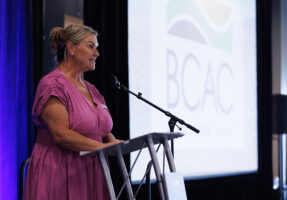
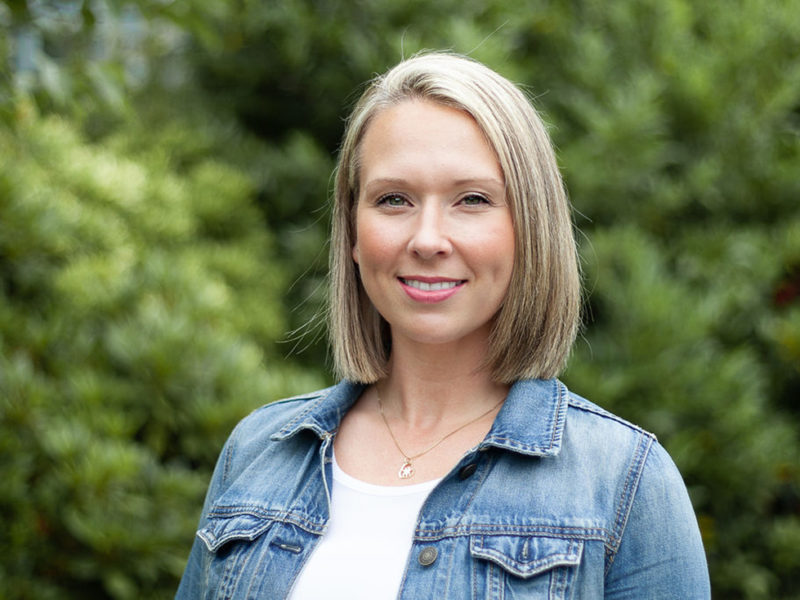
BC Agriculture Council executive director Danielle Synotte

July 1, 2021 byPeter Mitham

ABBOTSFORD – One of the biggest organizational shifts in BC agriculture since the 1990s will see the BC Agriculture Council focus on being an advocate for industry and exit the business of program delivery.

“BCAC’s core role is that of an advocacy organization,” says Reg Ens, who will be stepping down as executive director of BCAC at the end of this month as part of the shift. “How do we use the resources that the industry has invested in us to best help the industry? That’s back to being the voice for the industry – an advocate for the industry.”

BCAC represents 28 farm organizations in the province, filling the void left by the collapse of the BC Federation of Agriculture in 1997. However, through ARDCorp (BC Agriculture Research & Development Corp.), it has also administered government funding for the Environmental Farm Plan program and BC Agriculture and Food Climate Action Initiative.

Program delivery also traces its roots back to the late 1990s, when governments saw the value in industry-led organizations delivering funding on their behalf. Rather than a handout, it was seen as a hand up, with farm organizations trusted to allocate the money wisely. Now, an emphasis on accountability means program delivery contracts have tighter terms.

“Historically, there was some value governments saw in supporting associations, farm organizations, to have that capacity,” says Ens of program delivery. “Some of that spinoff value just isn’t what it used to be.”

The result is a refocusing of the council’s energy on advocacy for farmers, while program delivery will move to a dedicated third-party organization. BCAC has recommended the Investment Agriculture Foundation of BC for the role.

“We would like to transition those over to IAF, with the teams intact,” explains Ens. “They have the structure. They’re set up for program delivery.”

Indeed, investments over the past 18 months have allowed IAF to handle a record volume of funding in 2020. It has been actively seeking to expand its offerings, and chair Jack De Wit believes taking over ARDCorp’s responsibilities makes sense.

“We made some major changes in technology so I think we’re very capable of taking on the business,” he says, noting that IAF – unlike BCAC – is not an advocacy organization. “We don’t lobby government. … It makes sense for BCAC to focus on advocacy and not on programs.”

ARDCorp will continue to exist in the event it’s needed to run programs on an ad hoc basis, but BCAC will refocus its efforts on advocating for good programs rather than delivering them.

New leadership

Ens, for his part, will hand the reins of BCAC to Danielle Synotte, currently the council’s director of communications and stakeholder engagement. The two will work closely in the coming weeks and months to ensure a seamless transition of leadership.

One of Synotte’s first major projects will be overseeing development of a new five-year strategic plan for BCAC. Development of the plan was a catalyst for Ens’ decision to step down after 12 years as executive director.

“I realized I didn’t see myself being here in three to five years, so then the next question is, if I’m not going to be here for the next five years, do I help steer the strategic plan or do I make room for the next person to lead the strategic plan?” he explains. “I decided on the latter.”

Ens won’t be going far away, however. He’ll be stepping into a newly created position with another BCAC subsidiary, the Western Agriculture Labour Initiative.

Ens says the new role with WALI will refocus him on business management. This was an area in which he was actively engaged while at MNP, where he spent 12 years prior to joining BCAC. It’s also something the farm labour file needs more than ever.

An action plan will be developed over the next nine months that will allow WALI to expand from not only being a first point of call for farm labour issues but also a source of support with respect to both foreign and domestic labour.

“We have to invest some serious time in that to help the industry, help farmers, help employers, help workers, too,” he says.

The aim is for WALI to do primary triage on all labour issues in the farm sector, including analysis of issues. This will ensure labour issues receive focused attention while supporting BCAC’s efforts to advocate on specific files.

“If we can move all the labour issues into a single desk, that should free up  [Danielle’s] role a little bit more,” says Ens. “When it gets to the point where we need someone to advocate for industry, that would get handed over to BCAC and they would do the advocacy work.”

Synotte looks forward to the simpler, more focused mandate for BCAC. With a background in business administration, she spent eight years with the City of Abbotsford, eventually serving as economic development coordinator. She joined BCAC in 2017 and looks forward to advancing its voice for members both within BC and nationally as a member of the Canadian Federation of Agriculture.

“We really want to focus on that value proposition to our membership, that BCAC is advocating effectively,” she says.

Related Posts

You may be interested in these posts from the same category.

Task force presents blueprint for growth

Ag Days foregrounds sector priorities

Council calls for review of farm classification rules

BCAC holds AGM

Ag leaders honoured at gala

BC farm income plummets

Budget recognizes climate risks

Orchardists seek frost assistance

BCAC lobbying event positive

Federal minister visits BC

Province consults on agritech

Foreign worker consultation planned

Previous Post: « Heatwave stresses livestock
Next Post: Farmers struggle to get insurance coverage Insurance »

Copyright © 2026 Country Life in BC · All Rights Reserved