
• Menu
  • Skip to primary navigation
  • Skip to main content
  • Skip to primary sidebar

Country Life In BC Logo

The agricultural news source in British Columbia since 1915

  • Headlines
  • Calendar
  • Subscribe
  • Advertise
  • About
  • Archives
  • Contact
  • Search
  • Headlines
  • Calendar
  • Subscribe
  • Advertise
  • About
  • Archives
  • Contact
  • Search

Primary Sidebar

Current Issue:

DECEMBER 2025
Vol. 111 Issue 11

Subscribe Now!

Sign up for free weekly FARM NEWS UPDATES

Select list(s) to subscribe to


By submitting this form, you are consenting to receive marketing emails from: Country Life in BC. You can revoke your consent to receive emails at any time by using the SafeUnsubscribe® link, found at the bottom of every email. Emails are serviced by Constant Contact
Your information will not be
shared or sold ever

Follow us on Facebook

Comments Box SVG iconsUsed for the like, share, comment, and reaction icons

6 days ago

... See MoreSee Less

View Comments
  • Likes: 4
  • Shares: 0
  • Comments: 0

Comment on Facebook

6 days ago

On the last day of the BC Organic Conference, Thursday, Molly Thurston of Pearl Agricultural Consulting helped growers learn how to manage bugs such as codling moth, wireworm, and rootworm in organic growing systems. Her talk alongside Renee Prasad included hands-on activities in which participants checked out various traps and examined pests under microscopes. Be sure to look for more upcoming ag events on our online calendar at www.countrylifeinbc.com/calendar/

#BCAg
... See MoreSee Less

On the last day of the BC Organic Conference, Thursday, Molly Thurston of Pearl Agricultural Consulting helped growers learn how to manage bugs such as codling moth, wireworm, and rootworm in organic growing systems. Her talk alongside Renee Prasad included hands-on activities in which participants checked out various traps and examined pests under microscopes. Be sure to look for more upcoming ag events on our online calendar at www.countrylifeinbc.com/calendar/

#BCAg
View Comments
  • Likes: 15
  • Shares: 0
  • Comments: 0

Comment on Facebook

1 week ago

Well-known organic farmer and podcaster Jordan Marr gets interviewed by Country Life in BC’s own columnist and potato mavin Anna Helmer during the opening session of the BC Organic Conference at Harrison Hot Springs yesterday. Sessions run today (Wednesday) and Thursday and include organic and regenerative growing practices and expanding and advocating for the organic sector, all under the background of the newly launched Organic BC banner.

#BCAg
... See MoreSee Less

Well-known organic farmer and podcaster Jordan Marr gets interviewed by Country Life in BC’s own columnist and potato mavin Anna Helmer during the opening session of the BC Organic Conference at Harrison Hot Springs yesterday. Sessions run today (Wednesday) and Thursday and include organic and regenerative growing practices and expanding and advocating for the organic sector, all under the background of the newly launched Organic BC banner.

#BCAg
View Comments
  • Likes: 37
  • Shares: 2
  • Comments: 1

Comment on Facebook

Interested in finding out more about this

3 weeks ago

Today, we remember those who sacrificed their lives or their well-being for our freedom. Lest we forget. ... See MoreSee Less

Today, we remember those who sacrificed their lives or their well-being for our freedom. Lest we forget.
View Comments
  • Likes: 8
  • Shares: 0
  • Comments: 0

Comment on Facebook

1 month ago

FarmFolk CItyFolk is hosting its biennial BC Seed Gathering in Harrison Hot Springs November 27 and 28. Farmers, gardeners and seed advocates are invited to learn more about seed through topics like growing perennial vegetables for seed, advances in seed breeding for crop resilience, seed production as a whole and much more. David Catzel, BC Seed Security program manager with FF/CF will talk about how the Citizen Seed Trail program is helping advance seed development in BC. Expect newcomers, experts and seed-curious individuals to talk about how seed saving is a necessity for food security. ... See MoreSee Less

Link thumbnail

BC Seed Gathering - FarmFolk CityFolk

farmfolkcityfolk.ca

Save the date for our upcoming 2023 BC Seed Gathering happening this November 3rd and 4th at the Richmond Kwantlen Polytechnic University campus.
View Comments
  • Likes: 1
  • Shares: 0
  • Comments: 0

Comment on Facebook

Subscribe | Advertise

The agricultural news source in British Columbia since 1915
  • Email
  • Facebook

Broader tolerance for culls

March 23, 2022 byPeter Mitham

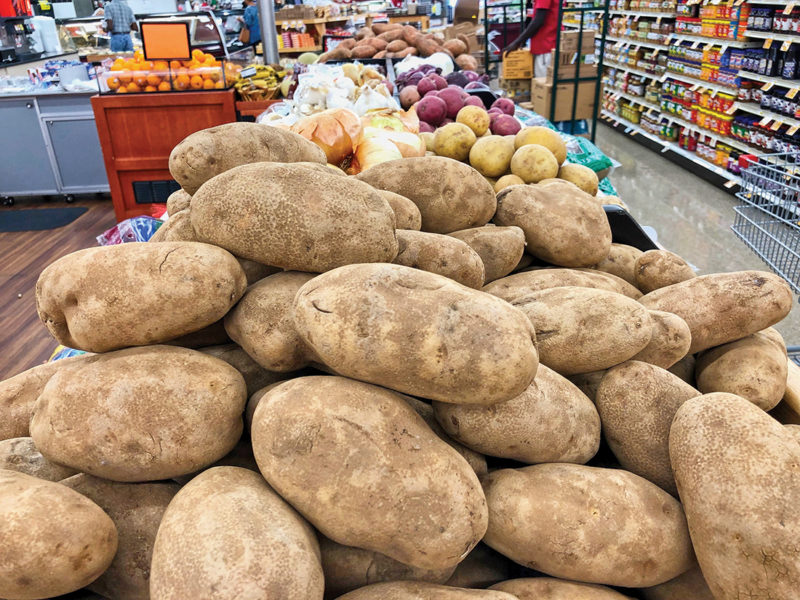
Potatoes will be included in the next phase of a federal review of grading standards for fresh fruits and vegetables, and industry representatives at the Canadian Spud Congress this week think consumers are willing to be a bit more forgiving of imperfections.

“There’s a lot more acceptance for whatever the farmer grows when you’re in a farmers market,” notes Shelly Harris of Fraserland Organics Ltd. in Delta. “When we have to get on a grocery store shelf, everything has to be a certain size, we have to meet the [Canadian Food Inspection Agency] standard.”

Fraserland sells its misshapen potatoes under the Pugly name for approximately 70% of its top-grade spuds, but even then plenty don’t make the cut.

“I look at how much perfectly good food I have to send to a dairy cow to eat, or somewhere else,” she says. “It’s frustrating to waste that much food.”

Pointing to consumer acceptance of misshapen items at farmers markets, Ohio State University professor and Ohio State Food Waste Collaborative director Brian Roe thinks there’s room to increase grading tolerances at retail.

Pointing to his team’s research, he said says consumers don’t mind one or two odd-shaped carrots as part of a bunch; but they don’t want the whole bunch to be misshapen. A couple don’t diminish the value, and may even vouch for the product’s authenticity.

“Perhaps we might be able to up the tolerance rate for large lots, and maybe that would be another way to incorporate more culls and misshapen items into standard marketing,” he says. “Right now 5% or 10% are allowed; maybe we could push that up to 10% or 15%, without really diminishing the perceived value by consumers. … Inching them up a bit would just be a great way to incorporate that perfectly nutritious food into the regular food supply.”

Harris says that during a visit to the Netherlands last week, she saw several processed potato products that made use of culls in prepared formats. This is another option for making good use of produce that doesn’t look right.

CFIA’s consultation on grading standards for fresh produce is proceeding in five phases. The second phase ended February 11. The next phase will review changes to standards for beets, carrots, onions, cabbage, parsnips, potatoes and rutabagas. The dates have not been announced.

Related Posts

You may be interested in these posts from the same category.

Previous Post: « Vet shortage persists
Next Post: New farm building codes »

Copyright © 2025 Country Life in BC · All Rights Reserved