
• Menu
  • Skip to primary navigation
  • Skip to main content
  • Skip to primary sidebar

Country Life In BC Logo

The agricultural news source in British Columbia since 1915

  • Headlines
  • Calendar
  • Subscribe
  • Advertise
  • About
  • Archives
  • Contact
  • Search
  • Headlines
  • Calendar
  • Subscribe
  • Advertise
  • About
  • Archives
  • Contact
  • Search

Primary Sidebar

Current Issue:

APRIL 2026
Vol. 112 Issue 4

Subscribe Now!

Sign up for free weekly FARM NEWS UPDATES

Loading form…

Your information will not be
shared or sold ever

Follow us on Facebook

Comments Box SVG iconsUsed for the like, share, comment, and reaction icons

23 hours ago

According to the BC River Forecast Centre, the Okanagan snowpack stood at just 58% of normal on April 1 — the lowest reading since measurements began in 1980 — raising concerns about drought conditions in the region this summer. The rest of the province sits at 92% of normal.

#BCAg
... See MoreSee Less

According to the BC River Forecast Centre, the Okanagan snowpack stood at just 58% of normal on April 1 — the lowest reading since measurements began in 1980 — raising concerns about drought conditions in the region this summer. The rest of the province sits at 92% of normal.

#BCAg
View Comments
  • Likes: 3
  • Shares: 0
  • Comments: 0

Comment on Facebook

2 days ago

At her first AGM as executive director of BC Meats, held Saturday in Abbotsford, Jennifer Busmann spoke about her strong ties to agriculture and her optimism for the organization's future. Busmann has cattle of her own and came to the role with existing relationships with members and the board of directors that helped her feel integrated from the start. She stepped into the position in Februa#BCAg#BCAg ... See MoreSee Less

At her first AGM as executive director of BC Meats, held Saturday in Abbotsford, Jennifer Busmann spoke about her strong ties to agriculture and her optimism for the organizations future. Busmann has cattle of her own and came to the role with existing relationships with members and the board of directors that helped her feel integrated from the start. She stepped into the position in February.

#BCAg
View Comments
  • Likes: 6
  • Shares: 0
  • Comments: 0

Comment on Facebook

4 days ago

Shannon Wiggins of Headwind Farm in North Saanich is this year's Mary Forstbauer Grant recipient from the BC Association of Farmers Markets. The $500 grant will help Wiggins expand her plot at Sandown Centre for Regenerative Agriculture, growing more storage crops to extend her harvest season. Wiggins credits farmers markets with inspiring her own farming journey and commitment to building community through food. Congratulations!

tinyurl.com/45bdd#BCAg#BCAg
... See MoreSee Less

Shannon Wiggins of Headwind Farm in North Saanich is this years Mary Forstbauer Grant recipient from the BC Association of Farmers Markets. The $500 grant will help Wiggins expand her plot at Sandown Centre for Regenerative Agriculture, growing more storage crops to extend her harvest season. Wiggins credits farmers markets with inspiring her own farming journey and commitment to building community through food. Congratulations!

https://tinyurl.com/45bddtw8

#BCAg
View Comments
  • Likes: 46
  • Shares: 2
  • Comments: 3

Comment on Facebook

Wahoo! Congrats Shannon! I love your produce. Can’t wait for the radishes 🫜

Congratulations!

Well done!! 🩷🩷🩷

5 days ago

New farmers can avoid costly mistakes by learning from those who've been there. At a Young Agrarians mixer in Penticton, five BC farmers shared hard-won lessons on pricing, pivoting, relationships and burnout. From coyote losses to business burnout, their message was clear: set prices that reflect true costs, make decisions quickly and don't let farming define your worth. Myrna Stark Leader's story appears in our April e-edition, now available to view online at: tinyurl#BCAg2uw53vvm

#BCAg
... See MoreSee Less

New farmers can avoid costly mistakes by learning from those whove been there. At a Young Agrarians mixer in Penticton, five BC farmers shared hard-won lessons on pricing, pivoting, relationships and burnout. From coyote losses to business burnout, their message was clear: set prices that reflect true costs, make decisions quickly and dont let farming define your worth. Myrna Stark Leaders story appears in our April e-edition, now available to view online at: https://tinyurl.com/2uw53vvm

#BCAg
View Comments
  • Likes: 15
  • Shares: 0
  • Comments: 0

Comment on Facebook

7 days ago

War in the Middle East is delivering a generational shock to BC farm input costs, with nitrogen fertilizer prices already 60% above pre-pandemic levels and rising fast. Okanagan Fertilizer president Ken Clancy says supply shortfalls are expected as Strait of Hormuz shipping disruptions tighten global supplies and demand surges. BCAC says it's monitoring the situation and ready to advocate for government relief measur#BCAg#BCAg ... See MoreSee Less

Link thumbnail

Fertilizer, fuel costs soar amid Iran conflict

www.countrylifeinbc.com

ENDERBY – War in the Middle East has delivered a generational shock to energy prices, meaning BC farmers can expect a prolonged period of higher costs, not just for fuel but also for fertilizer.
View Comments
  • Likes: 1
  • Shares: 1
  • Comments: 0

Comment on Facebook

Subscribe | Advertise

The agricultural news source in British Columbia since 1915
  • Email
  • Facebook

Broader tolerance for culls

March 23, 2022 byPeter Mitham

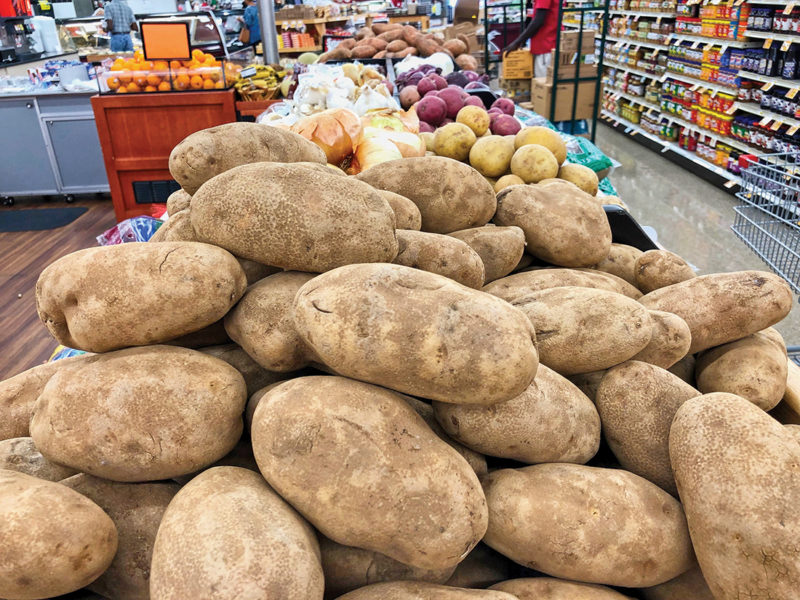
Potatoes will be included in the next phase of a federal review of grading standards for fresh fruits and vegetables, and industry representatives at the Canadian Spud Congress this week think consumers are willing to be a bit more forgiving of imperfections.

“There’s a lot more acceptance for whatever the farmer grows when you’re in a farmers market,” notes Shelly Harris of Fraserland Organics Ltd. in Delta. “When we have to get on a grocery store shelf, everything has to be a certain size, we have to meet the [Canadian Food Inspection Agency] standard.”

Fraserland sells its misshapen potatoes under the Pugly name for approximately 70% of its top-grade spuds, but even then plenty don’t make the cut.

“I look at how much perfectly good food I have to send to a dairy cow to eat, or somewhere else,” she says. “It’s frustrating to waste that much food.”

Pointing to consumer acceptance of misshapen items at farmers markets, Ohio State University professor and Ohio State Food Waste Collaborative director Brian Roe thinks there’s room to increase grading tolerances at retail.

Pointing to his team’s research, he said says consumers don’t mind one or two odd-shaped carrots as part of a bunch; but they don’t want the whole bunch to be misshapen. A couple don’t diminish the value, and may even vouch for the product’s authenticity.

“Perhaps we might be able to up the tolerance rate for large lots, and maybe that would be another way to incorporate more culls and misshapen items into standard marketing,” he says. “Right now 5% or 10% are allowed; maybe we could push that up to 10% or 15%, without really diminishing the perceived value by consumers. … Inching them up a bit would just be a great way to incorporate that perfectly nutritious food into the regular food supply.”

Harris says that during a visit to the Netherlands last week, she saw several processed potato products that made use of culls in prepared formats. This is another option for making good use of produce that doesn’t look right.

CFIA’s consultation on grading standards for fresh produce is proceeding in five phases. The second phase ended February 11. The next phase will review changes to standards for beets, carrots, onions, cabbage, parsnips, potatoes and rutabagas. The dates have not been announced.

All content on this website is copyrighted, and cannot be republished or reproduced without permission.

Related Posts

You may be interested in these posts from the same category.

Previous Post: « Vet shortage persists
Next Post: New farm building codes »

© 2026 COUNTRY LIFE IN BC - ALL RIGHTS RESERVED