
• Menu
  • Skip to primary navigation
  • Skip to main content
  • Skip to primary sidebar

Country Life In BC Logo

The agricultural news source in British Columbia since 1915

  • Headlines
  • Calendar
  • Subscribe
  • Advertise
  • About
  • Archives
  • Contact
  • Search
  • Headlines
  • Calendar
  • Subscribe
  • Advertise
  • About
  • Archives
  • Contact
  • Search

Primary Sidebar

Current Issue:

JANUARY 2026
Vol. 112 Issue 1

Subscribe Now!

Sign up for free weekly FARM NEWS UPDATES

Select list(s) to subscribe to


By submitting this form, you are consenting to receive marketing emails from: Country Life in BC. You can revoke your consent to receive emails at any time by using the SafeUnsubscribe® link, found at the bottom of every email. Emails are serviced by Constant Contact
Your information will not be
shared or sold ever

Follow us on Facebook

Comments Box SVG iconsUsed for the like, share, comment, and reaction icons

6 hours ago

BC's minimum piece rates for 15 hand-harvested crops increased 2.6% on December 31. Crops include peaches, apricots, brussels sprouts, daffodils, mushrooms, apples, beans, blueberries, cherries, grapes, pears, peas, prune plums, raspberries and strawberries. Farm-worker piece rates in BC were increased by 11.5% in January 2019 and 6.9% in December 2024. BC’s current minimum wage sits at $17.85 per hour.

#BCAg
... See MoreSee Less

BCs minimum piece rates for 15 hand-harvested crops increased 2.6% on December 31. Crops include peaches, apricots, brussels sprouts, daffodils, mushrooms, apples, beans, blueberries, cherries, grapes, pears, peas, prune plums, raspberries and strawberries. Farm-worker piece rates in BC were increased by 11.5% in January 2019 and 6.9% in December 2024. BC’s current minimum wage sits at $17.85 per hour. 

#BCAg
View Comments
  • Likes: 5
  • Shares: 0
  • Comments: 1

Comment on Facebook

They deserve it, but the general public will be whining about increased prices in the stores. Will need to make more information average to the g.p.

2 days ago

... See MoreSee Less

View Comments
  • Likes: 9
  • Shares: 0
  • Comments: 0

Comment on Facebook

1 week ago

... See MoreSee Less

View Comments
  • Likes: 7
  • Shares: 0
  • Comments: 0

Comment on Facebook

3 weeks ago

Water volumes from the Nooksack River are at levels similar to 1990 and 2021, but the province says flows should peak at 10pm tonight. The shorter duration, as well as conditions in other watercourses within the watershed and performance of flood protection infrastructure should avoid a catastrophe on the scale of 2021. However, several landslides mean road closures have once again effectively isolated the Lower Mainland from the rest of the province.

#BCag
... See MoreSee Less

Water volumes from the Nooksack River are at levels similar to 1990 and 2021, but the province says flows should peak at 10pm tonight. The shorter duration, as well as conditions in other watercourses within the watershed and performance of flood protection infrastructure should avoid a catastrophe on the scale of 2021. However, several landslides mean road closures have once again effectively isolated the Lower Mainland from the rest of the province.

#BCAg
View Comments
  • Likes: 9
  • Shares: 3
  • Comments: 1

Comment on Facebook

Family living in Sumas WA say it's very much like '21. They have the same amount of water in their house as last time.

1 month ago

... See MoreSee Less

View Comments
  • Likes: 4
  • Shares: 0
  • Comments: 0

Comment on Facebook

Subscribe | Advertise

The agricultural news source in British Columbia since 1915
  • Email
  • Facebook

Flood recovery in hand

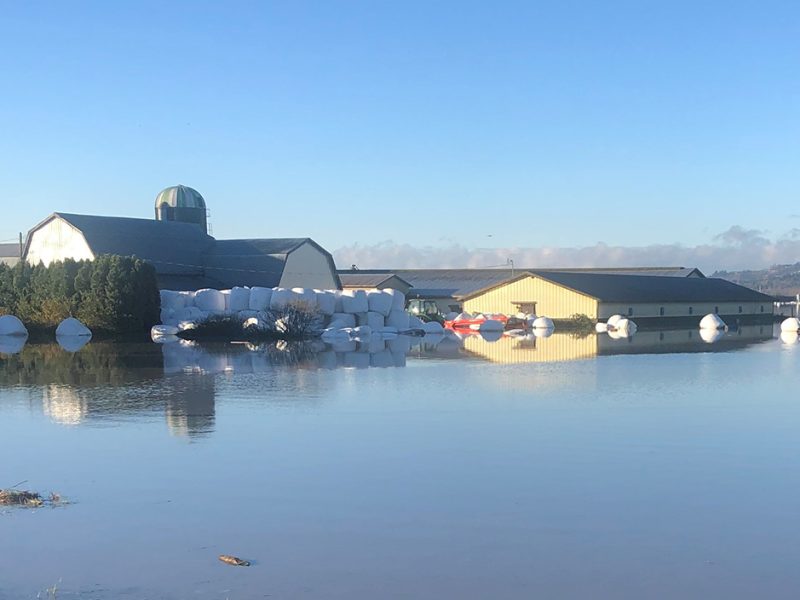
A series of roundtables have pegged “extraordinary” losses to agriculture – those not covered by insurance or industry supports – at $285 million during the catastrophic flooding of 2017. Photo / Ben Brandsema

November 22, 2023 byKate Ayers

Two years after the atmospheric rivers of November 2021 led to catastrophic flooding and landslides across southern BC, cutting off farms and communities for weeks, those hit hardest continue to be grateful for the support that helped them get back into production.

A series of roundtables ultimately pegged “extraordinary” losses to agriculture – those not covered by insurance or industry supports – at $285 million. The federal and provincial governments stepped up in February 2022 with the historic $228 million Canada-BC Flood Recovery Program for Food Security.

The federal-provincial program leveraged the federal government’s AgriRecovery framework and Disaster Financial Assistance Arrangements (DFA), accelerating the recovery of the Fraser Valley farms that were among those hit hardest by the storms.

“I’ve been treated royally by these people,” says Sumas Prairie pork producer John Guliker.“Once we figured out the ownership structures of our farms and as far as like the eligibility side of it, I’ve been I think I’ve been treated more than fair.”

Guliker has received $2 million in payments to date, supporting his recovery after a devastating loss of livestock as well as his barns and property.

While the provisions of DFA could seem to treat homeowners better than farmers, Ben Brandsema of Nature Glen Dairy in Glen Valley said AgriRecovery helped get his barns back into production and provided $175,000 to reseed his pasture, something he didn’t have the resources to do himself at the time.

“The provincial government treated us very well, getting my barns back into shape, and my land,” he says. “All the land got back into production ASAP.”

This offset the frustrating aspects of DFA, but Brandsema and other producers hope a provincial review of legislation related to emergency preparedness and response will result in a more responsive program when the next disaster strikes.
Related Posts

You may be interested in these posts from the same category.

Previous Post: « Cherry growers weigh trade complaint
Next Post: BC agriculture loses a champion »

Copyright © 2026 Country Life in BC · All Rights Reserved