• Menu
  • Skip to primary navigation
  • Skip to main content
  • Skip to primary sidebar

Country Life In BC Logo

The agricultural news source in British Columbia since 1915

  • Headlines
  • Calendar
  • Subscribe
  • Advertise
  • About
  • Archives
  • Contact
  • Search
  • Cart
  • Checkout
  • Headlines
  • Calendar
  • Subscribe
  • Advertise
  • About
  • Archives
  • Contact
  • Search
  • Cart
  • Checkout

Primary Sidebar

Current Issue:

AUGUST 2026
Vol. 112 Issue 8

Subscribe Now!

Sign up for free weekly FARM NEWS UPDATES

Loading form…

Your information will not be
shared or sold ever

Follow us on Facebook

Comments Box SVG iconsUsed for the like, share, comment, and reaction icons

2 days ago

Kwantlen Polytechnic University has established a one-acre research hopyard at Molson Coors' Chilliwack plant, housing 10 experimental selections and 40 heritage varieties. The multi-year partnership supports new hop variety development and breeding decisions for BC growers, building on Chilliwack's history as Canada's former largest hop-producing region. www.countrylifeinbc.com/kpu-sets-up-rese#BCAgh#kwantlenpolytechnicuniversityc#MolsonCoorsty #MolsonCoors ... See MoreSee Less

Kwantlen Polytechnic University has established a one-acre research hopyard at Molson Coors Chilliwack plant, housing 10 experimental selections and 40 heritage varieties. The multi-year partnership supports new hop variety development and breeding decisions for BC growers, building on Chilliwacks history as Canadas former largest hop-producing region. https://www.countrylifeinbc.com/kpu-sets-up-research-hopyard/

#BCAg #kwantlenpolytechnicuniversity #MolsonCoors
View Comments
  • Likes: 21
  • Shares: 2
  • Comments: 1

Comment on Facebook

What is old is new again in Chilliwack.

5 days ago

Complex, curious and compassionate, and above all a contributor to his family, his community and the dairy industry is how family, friends and colleagues remembered Dave Janssens this morning at a memorial service in Surrey following his untimely passing July 21 while cycling through the Peace region. A standing-room-only congregation attended as Janssens' life and decades of service were honoured. An elected member of both the BC Milk Marketing Board and the BC Dairy Association, Janssens represented the industry at the provincial and national level and was recognized for his clear thinking and willingness to entertain diverse perspectives. He retired last year following six years as a director of the BC Milk Marketing Board. His absence from industry discussions will be miss#BCAg##BCDairyDairy ... See MoreSee Less

Complex, curious and compassionate, and above all a contributor to his family, his community and the dairy industry is how family, friends and colleagues remembered Dave Janssens this morning at a memorial service in Surrey following his untimely passing July 21 while cycling through the Peace region. A standing-room-only congregation attended as Janssens  life and decades of service were honoured. An elected member of both the BC Milk Marketing Board and the BC Dairy Association, Janssens represented the industry at the provincial and national level and was recognized for his clear thinking and willingness to entertain diverse perspectives. He retired last year following six years as a director of the BC Milk Marketing Board. His absence from industry discussions will be missed.

#BCAg #BCDairy
View Comments
  • Likes: 27
  • Shares: 0
  • Comments: 2

Comment on Facebook

Our Sincere Condolences to the family and all who had the pleasure of knowing David, he left his mark, Rest in Peace David 🙏🏼

A significant contributor in so many ways, sorry for your loss!

7 days ago

The committee of MLAs charged with setting priorities for the next provincial budget is recommending regular, annual funding for water storage infrastructure associated with food production, including for engineering inspections, maintenance and upgrades. The recommendation builds on the BC Cattlemen's Association's recommendation of an annual allocation of $5 million for water storage infrastructure related to food production, noting that it could also support resilience in the face of climate-related events. While the province has allocated $120 million for agricultural water infrastructure, agriculture minister Lana Popham told Country Life in BC this week that other ministries and the federal government will need to be involved in funding future p#BCAgts#BCAgCAg

#BCAg
... See MoreSee Less

The committee of MLAs charged with setting priorities for the next provincial budget is recommending regular, annual funding for water storage infrastructure associated with food production, including for engineering inspections, maintenance and upgrades. The recommendation builds on the BC Cattlemens Associations recommendation of an annual allocation of $5 million for water storage infrastructure related to food production, noting that it could also support resilience in the face of climate-related events. While the province has allocated $120 million for agricultural water infrastructure, agriculture minister Lana Popham told Country Life in BC this week that other ministries and the federal government will need to be involved in funding future projects.

#BCAg

#BCAg
View Comments
  • Likes: 32
  • Shares: 17
  • Comments: 4

Comment on Facebook

A typical small-to-medium farming operation featuring a house, main barn, and machine shed generally has around 8,000 to 12,000 square feet of total roof surface. The Okanagan Valley is one of the driest regions in Canada, averaging roughly 300 millimetres (11.8 inches) of annual precipitation. Storing a full year's collected rainwater from those roofs yields roughly 262,500 litres. In the three regional districts that make up the Okanagan valley proper (North Okanagan, Central Okanagan, and Okanagan-Similkameen), the 2021 Statistics Canada Census of Agriculture records roughly 3,100 total farms. Multiply that number by 262,500 litres of harvested rainwater equals 813.75 million litres of water saved per year. Capturing that volume of water across every farm roof in the region would significantly ease peak summer pumping pressure on local groundwater aquifers and Okanagan Lake.

Fantastic!! We will work hard to be involved and do what we can as well as a collective group on the Salmon River!

Absolutely! Long over due and very welcomed. Let's make this happen.

It isn't enough that cattle open graze on crown land now govt to create water storage, come on cattle ranchers enough subsidizing for a resource half of us can't afford to consume

7 days ago

... See MoreSee Less

View Comments
  • Likes: 2
  • Shares: 0
  • Comments: 0

Comment on Facebook

1 week ago

About 40 community members gathered at Silver Creek Community Hall near Salmon Arm last Thursday to discuss ways to improve water availability for both farms and spawning salmon. While the province has since rescinded a fish protection order for the watershed that shut down irrigation, future risks to water access remain top of mind. "We are here because water matters to each of us," says rancher and organizer Trudy Schweb. Farmland Riparian Interface Stewardship Program manager Lee Hesketh outlined the potential for upland water storage while Rob Dinwoodie highlighted cost-shared funding opportunities through the Environmental Farm Plan program for riparian assessments, irrigation efficiency upgrades and other water-related projects available to producers. Photo credit | Facebook/Trudy Schweb

#BCAg
... See MoreSee Less

About 40 community members gathered at Silver Creek Community Hall near Salmon Arm last Thursday to discuss ways to improve water availability for both farms and spawning salmon. While the province has since rescinded a fish protection order for the watershed that shut down irrigation, future risks to water access remain top of mind. We are here because water matters to each of us, says rancher and organizer Trudy Schweb. Farmland Riparian Interface Stewardship Program manager Lee Hesketh outlined the potential for upland water storage while Rob Dinwoodie highlighted cost-shared funding opportunities through the Environmental Farm Plan program for riparian assessments, irrigation efficiency upgrades and other water-related projects available to producers. Photo credit | Facebook/Trudy Schweb

#BCAg
View Comments
  • Likes: 45
  • Shares: 3
  • Comments: 6

Comment on Facebook

Salmon River Watershed Roundtable should be looked into again.

Well done my girl,the voice of Silver Creek ranchers and more

Thanks for covering this🌟

Glad folks are talking and looking for collaborative solutions.

Have a look at allowing beavers back into the system. Many jurisdictions are finding them useful engineers for storing water and releasing it slowly. To stop flooding inexpensive 'Pond Levelers" can be installed. Upward salmon migrations can be facilitated with fish ladders or making notches in the dams a just the right time to let the fish through. The ponds also provide habitat for a whole variety of species and rearing habitat for juvenile salmon. www.workingwithbeavers.ca/coexist_level.php A contact I have who is supportive and knowledgeable on allowing beavers to help us is : Kurt Frei, MSc., R.P.Bio. Regional Aquatic Ecologist Resource Stewardship Division Kurt.Frei@gov.bc.ca Ph: 778.362.4730

View more comments

Subscribe | Advertise

The agricultural news source in British Columbia since 1915
  • Email
  • Facebook

Hurry up and wait

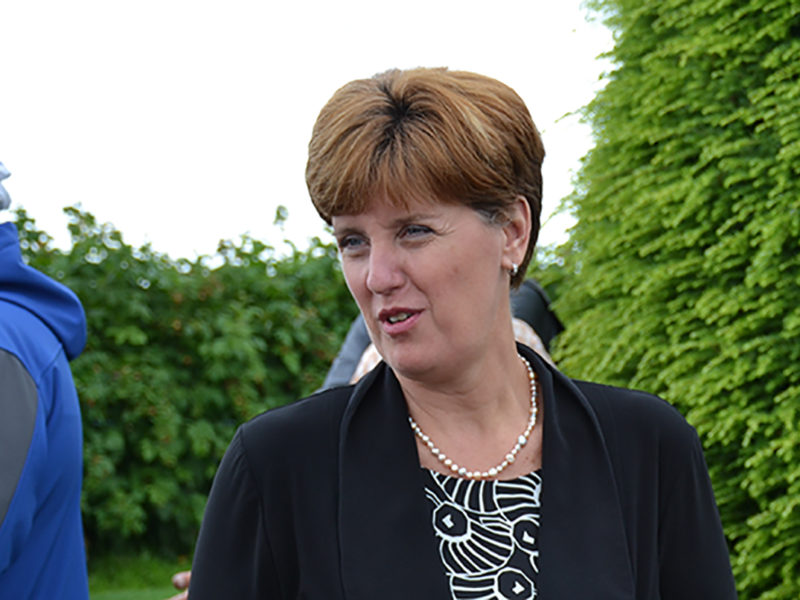
Agriculture and Agri-Food Canada minister Marie-Claude Bibeau

June 10, 2020 byPeter Mitham

Ottawa isn’t in a rush to disclose details on various programs designed to support the agriculture sector as it responds to the COVID-19 pandemic.

The federal finance department’s latest bi-weekly report on emergency response measures indicates that $453 million in direct support to the farm sector will be available “shortly.” This includes $77.5 million for an emergency processing fund, $50 million for a surplus food purchase program and funding under business risk management programs.

Speaking to media this week, federal agriculture minister Marie-Claude Bibeau promised that details of the food purchase program will be available in the coming days, while funding to support livestock producers “depends on the provinces.” BC has not announced the allocation of funds to match federal funding, which aims to support producers who have been unable to send animals for processing.

Bibeau said a meeting of federal, provincial and territorial agriculture ministers has been deferred until October. Plans for a “Buy Canadian” program under the Food Policy for Canadians announced last summer have been put on hold.

The finance department’s report details $523 million in direct support for the farm sector. This is a miniscule amount of the $152.8 billion in direct support programs Ottawa has announced to date to address COVID-19.

The Canadian Federation of Agriculture, which represents the BC Agriculture Council at the national level, has asked for at least $2.6 billion.

All told, the federal government has earmarked $686.5 billion for direct and indirect measures to address the impacts of COVID-19.

All content on this website is copyrighted, and cannot be republished or reproduced without permission.
Related Posts

You may be interested in these posts from the same category.

COVID-19 response reviewed

Disaster preparedness lacking

Federal election call

Province pledges emergency funding

Farmers struggle to get insurance coverage Insurance

Farmers market returns

Sector events start growing

WorkSafeBC increases inspections

Sunrise Poultry COVID outbreak

Flight ban strands workers

Travel restrictions raise concerns

Foreign worker vaccination prioritized

Previous Post: « Record nutrition coupon funding
Next Post: Province boosts online grants »

© 2026 COUNTRY LIFE IN BC - ALL RIGHTS RESERVED