
While significant effort is being put into diversifying Canada’s agricultural exports away from the US, domestic markets continue to rely on imported fruit.
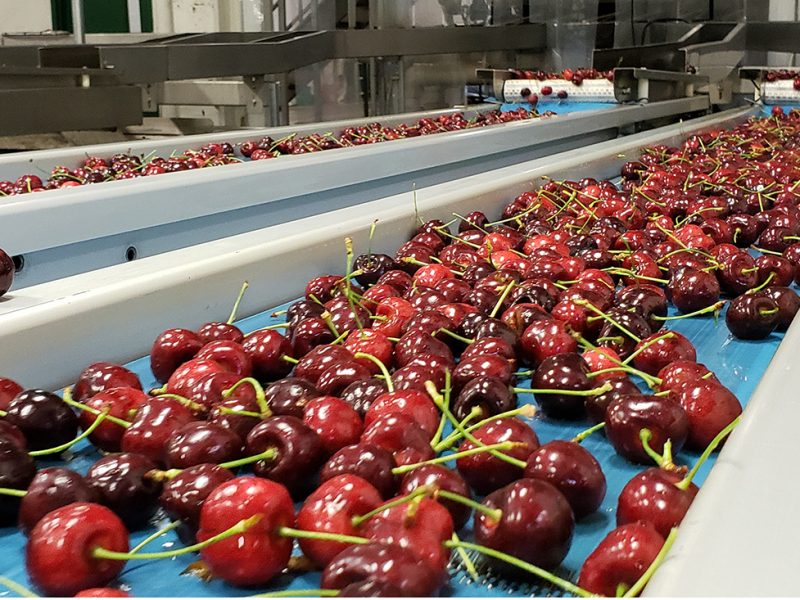
The latest tree fruit production report from the BC Ministry of Agriculture and Food, released in October, notes that the problem is particularly acute for sweet cherries.
While growers export cherries to a diverse range of countries, with approximately half going to the US over the long term, they face an influx of imported product in June, July and August – the same period when their own fruit is entering the market. And the competition is stiff, with 90% of imports occurring during these three months. The value peaks in June at about $17 million.
BC apple growers, by contrast, export primarily to the US and Vietnam, according to the report, while imports remain steady throughout the year and increase in late winter when domestic product is less available.
Yet the value of imports relative to domestic revenue is significant, the production report notes, underscoring the missed opportunity for growers.
“Because BC is unable to meet in-province demand, the province imports around $250 million worth of tree fruit each year,” the report states.
This compares to the $163 million worth of fruit BC growers sold in 2025.
The situation is similar to what producers of blueberries, honey and other crops face.
While blueberries are BC’s most valuable fruit export, with $196 million shipped overseas in 2025, organic growers have noted that the province imports four and a half times as many berries each year as it exports.
Similarly, the Canadian Honey Council notes that Canada exports 9 million kilograms of honey annually to the US and Japan while importing 10 million kilograms from countries whose quality assurance standards do not match Canada’s.
While domestic marketing campaigns such as BC Apple Month – shifted from February to coincide with harvest – help raise the profile of local product, imports show that demand isn’t a problem.
What matters is production, a more challenging issue to resolve.
While the production report notes that insured acreage has increased by 1,600 acres over the past decade to 14,250 acres in 2025, the increase is entirely attributable to sweet cherries, while every other tree fruit crop has held steady or posted sharp declines.
All content on this website is copyrighted, and cannot be republished or reproduced without permission.



 Dairy quota boost spurs expansion interest
