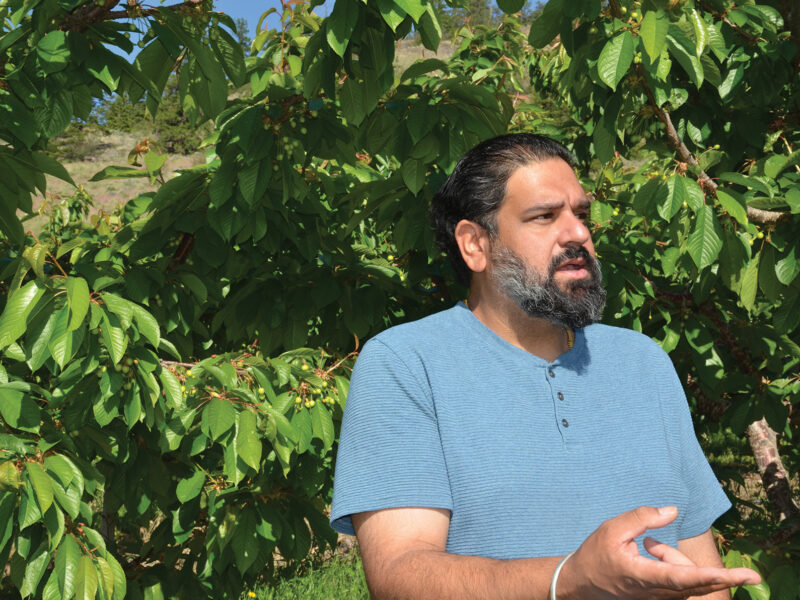
CAWSTON – Aaron Godard won’t lie – it’s so tough being a farmer in BC that he sometimes thinks about quitting.
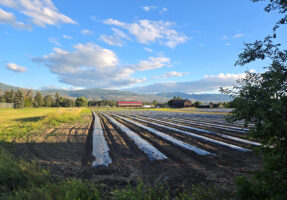
Natural disasters, coupled with the cost, time and daily struggles of running a farm, are constant stressors for the co-owner of family-run Snowy Mountain Farm. This year alone, 70% of Godard’s orchards were affected by an early spring frost. A hailstorm – with the biggest hail he’s ever seen – took out the rest of the fruit this summer. In the past five years, Godard has also faced winter freezes, mudslides, floods and wildfire smoke.
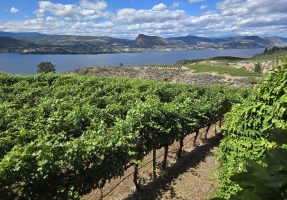
“When we’re feeling cheeky, we joke that we’ve filled out most of the natural disaster bingo cards,” says Godard, who produces 70 varieties of tree fruit and wine grapes on 12 acres in the Similkameen Valley. “It feels depressing, but at the same time, we have to stay as positive as we can.”
Farming remains one of Canada’s most demanding occupations. Financial volatility, geographic isolation, unpredictable weather and the emotional weight of caring for land and livestock are compounding mental health pressures, according to Farm Credit Canada (FCC).
A national survey of farmers and ranchers by the University of Guelph in collaboration with the Canadian Centre for Agricultural Wellbeing in 2021 found that one in four participants reported thinking their life wasn’t worth living, wishing they were dead, or having thoughts of taking their own life in the previous 12 months.
The partners are undertaking a new study to update the previous numbers, inviting farmers and ranchers from all commodities and regions to share their experiences related to stress, anxiety, depression, burnout and resilience.
The issues are top of mind for Godard and other BC fruit growers hit hard by extreme weather, wildfire and the ongoing financial pressures dogging the industry. Many are at the breaking point.
Lots of calls
“I get a lot of calls,” says BC Fruit Growers Association (BCFGA) president Deep Brar of Brarstar Orchards in Summerland. “We used to say, ‘We’ve always got next year.’ But you’ve got a certain subset [of older farmers] saying, ‘We’re going to try to sell or lease it out. We’re done with this.’ Some of the new entrants are also second-guessing their decisions on becoming a farmer or being looped into this whole crazy world that is tree fruits and wine grapes.”
To ensure its members have the support they need, BCFGA lobbied to have the eight-session cap on the AgLife Connector program removed.
A suicide prevention and life promotion initiative developed by AgSafe BC in partnership with the Canadian Mental Health Association of BC (CMHA BC), the service offers free one-hour counselling sessions to those in the agricultural sector.
Trained volunteers interact closely with farmers, producers, growers and ranchers through their work or community to identify farmers and other agricultural workers who may be struggling with their mental wellness and connect them with professional help.
Brar himself has used the counselling service at certain points, and says it can make a difference. While there’s a stigma associated with seeking counselling, Brar came away with a better perspective on the specific challenges he was facing.
“I was getting fed up like some of the guys are now. You’re not making money, so why am I doing this?” he says. “It just helps get things off your mind. It was difficult to walk in at first, but once I did, I could talk about the issues and problems. It’s okay not to be okay. We’re not all perfect.”
But the sector’s persistent challenges demand long-term support, and “eight sessions doesn’t do anything for anybody.”
AgSafe BC safety advisor TJ Garcha says the program has seen an uptick in clients since 2021, with counsellors continually booked. With so many natural catastrophes in BC, farmers are constantly watching weather forecasts and preparing for the worst. Lack of access to insurance and loss of livestock are adding to their worries.
Counsellors trained in agriculture and virtual sessions mean the program is more accessible to farmers who don’t have time to drive hundreds of miles to access services, he says. The program has also expanded to include more information on the website and via social media to help people be more prepared.
“I know people need it out there. We’re trying to make it a path of least resistance for them,” says Brar.
Godard hasn’t used the counselling services but acknowledges the struggle is real. When he and his wife bought their farm in 2021, they had to learn how to run the farm from all angles. They wanted to grow a diverse range of crops, including the orchard and wine grapes, but he admits, “maybe we bit off more than we can chew.”
Still, he is willing to keep going as long as he can. His parents have retired to the farm to help, and he has found solace talking with other farmers in his community going through the same thing.
“Without that community, we wouldn’t be able to continue with this mentally, for sure,” he says. “You hope you get more average years, but every time these disasters happen it’s a huge setback.”
He says he’s been having conversations with other farmers about the financial feasibility of running small farms.
“We all want to provide food affordably to people and yet our costs are so high,” Godard says. “We just don’t have a lot of margin. That alone is the single largest form of stress. We’re all very aware it’s hard work, and it can also be rewarding, but if it’s not financially feasible … sometimes it feels like we’re just one disaster away from bankruptcy. It adds to this cloud over what you’re doing.”
Godard says he believes the issues can be solved through policy and more safety nets for small farmers.
“The reason we’re here is we love farming; we love feeding people,” he says. “We just wish it could be more possible without taking a toll mentally and financially.”
All content on this website is copyrighted, and cannot be republished or reproduced without permission.