• Menu
  • Skip to primary navigation
  • Skip to main content
  • Skip to primary sidebar

Country Life In BC Logo

The agricultural news source in British Columbia since 1915

  • Headlines
  • Calendar
  • Subscribe
  • Advertise
  • About
  • Archives
  • Contact
  • Search
  • Headlines
  • Calendar
  • Subscribe
  • Advertise
  • About
  • Archives
  • Contact
  • Search

Primary Sidebar

Originally published:

SEPTEMBER 2021
Vol. 107 Issue 9

Subscribe Now!

Sign up for free weekly FARM NEWS UPDATES

Loading form…

Your information will not be
shared or sold ever

Stories In This Edition

Wildfire response improves

Bad timing for election call

Hay there!

Food sales still reeling from the pandemic

Editorial: Restart, regenerate

Back 40: Anti-vax rhetoric is far worse than the cure

Viewpoint: Organic practices key to our collective well-being

Producers face unannounced welfare checks

Livestock feel the heat as forage dries up

Farmers take issue with water restrictions

Ag Briefs: Grape growers optimistic as harvest approaches

Ag Briefs: Greenhouse nursery specialist named

Feed BC connects producers with opportunities

Sidebar: Nutrition program continues

Growers welcome grocer code of conduct

Chicken growers address heat stress

Greenhouse growers undertake strategic plan

Turning manure into renewable energy

Sidebar: Biogas gets a boost with changes to regulations

Blueberry growers welcome higher berry prices

Ranchers, farmers on the wildfire frontlines

Sidebar: Water and fans keep cattle cool

Province halts livestock watering reg update

BC farm sales sets new monthly record

Mental wellness resources meet a growing need

Sidebar: Mental health resources

Saving the farm business hinges on planning

Hot potatoes

Farmers produce crops, and loads of plastic

Barnston Island farmers face uncertain future

Market garden rises from battle of the weeds

Sidebar: Oostenbrink’s tips for no-till vegetables

Research: Bumblebee declines not as dire as study states

A non-family succession plan that worked

Living plants are revolutionizing herb sales

Food hub readies for fall opening

Farm Story: Good help at the right time

Small-scale abattoir in the works for Island

Breeding better tasting beets

Woodshed Chronicles: Plans unfold for the ride of a lifetime

Young entrepreneur weaves new use for twine

Jude’s Kitchen: Simpler eats for a new, normal September

All content on this website is copyrighted, and cannot be republished or reproduced without permission.


More Headlines

Follow us on Facebook

Comments Box SVG iconsUsed for the like, share, comment, and reaction icons

4 hours ago

A draft update to the Code of Practice for the Care and Handling of Beef Cattle is now open for public comment until June 12. The code, one of 14 animal care codes developed and maintained by the National Farm Animal Care Council, is undergoing a routine 10-year review. "Your feedback will help shape the industry's guide to cattle welfare for the next decade," says Canadian Cattle Association policy manager Jessica Radau, urging producers to weigh in. For more information, visit tinyurl.com/58a3u9fz.

#BCAg
... See MoreSee Less

A draft update to the Code of Practice for the Care and Handling of Beef Cattle is now open for public comment until June 12. The code, one of 14 animal care codes developed and maintained by the National Farm Animal Care Council, is undergoing a routine 10-year review.  Your feedback will help shape the industrys guide to cattle welfare for the next decade, says Canadian Cattle Association policy manager Jessica Radau, urging producers to weigh in. For more information, visit https://tinyurl.com/58a3u9fz.

#BCAg
View Comments
  • Likes: 2
  • Shares: 0
  • Comments: 1

Comment on Facebook

I sat in the webinar yesterday by the Canadian Cattle Association. My initial concern was that this would be another "play" into the government's hands. It has been worked on by people that are actually in the Beef industry from Cow calf to feedlot. The thrust is an update of the 2013 Code of Practice which was reviewed in 2018. The changes are more a move from "left to the producers discretion" to clearer directions regarding pain management, proper transport of animals which are impaired and keeping cattle in in good condition. Much of what is recommended is what producers who care about animal husbandry already do. The important part is to GIVE THEM FEEDBACK good, bad or otherwise. The document is about 60 pages long, and I ran it through CHAT to see what had been changed. It is important to understand that the PUBLIC is invited to comment on the draft not just producers. Think about it... do you really want the public influencing how you manage your cattle. If you think that this is just one of those things, I have been following Bill 22 in Alberta which will grant the SPCA a proactive roll in entering farms and checking on animals. When I asked CHAT how the new bill relates to the Cattle Code, it came back that the Code although not a regulation will be able to be used as a guide by producers for backup in dealing with the SPCA regarding cattle conditions, sick animal handling etc. Take the time.... Go onto the Canadian Cattle Association website and speak to those parts that you wish to input.

1 day ago

According to the BC River Forecast Centre, the Okanagan snowpack stood at just 58% of normal on April 1 — the lowest reading since measurements began in 1980 — raising concerns about drought conditions in the region this summer. The rest of the province sits at 92% of normal.

#BCAg
... See MoreSee Less

According to the BC River Forecast Centre, the Okanagan snowpack stood at just 58% of normal on April 1 — the lowest reading since measurements began in 1980 — raising concerns about drought conditions in the region this summer. The rest of the province sits at 92% of normal.

#BCAg
View Comments
  • Likes: 3
  • Shares: 0
  • Comments: 0

Comment on Facebook

2 days ago

At her first AGM as executive director of BC Meats, held Saturday in Abbotsford, Jennifer Busmann spoke about her strong ties to agriculture and her optimism for the organization's future. Busmann has cattle of her own and came to the role with existing relationships with members and the board of directors that helped her feel integrated from the start. She stepped into the position in Februa#BCAg#BCAg ... See MoreSee Less

At her first AGM as executive director of BC Meats, held Saturday in Abbotsford, Jennifer Busmann spoke about her strong ties to agriculture and her optimism for the organizations future. Busmann has cattle of her own and came to the role with existing relationships with members and the board of directors that helped her feel integrated from the start. She stepped into the position in February.

#BCAg
View Comments
  • Likes: 6
  • Shares: 0
  • Comments: 0

Comment on Facebook

4 days ago

Shannon Wiggins of Headwind Farm in North Saanich is this year's Mary Forstbauer Grant recipient from the BC Association of Farmers Markets. The $500 grant will help Wiggins expand her plot at Sandown Centre for Regenerative Agriculture, growing more storage crops to extend her harvest season. Wiggins credits farmers markets with inspiring her own farming journey and commitment to building community through food. Congratulations!

tinyurl.com/45bdd#BCAg#BCAg
... See MoreSee Less

Shannon Wiggins of Headwind Farm in North Saanich is this years Mary Forstbauer Grant recipient from the BC Association of Farmers Markets. The $500 grant will help Wiggins expand her plot at Sandown Centre for Regenerative Agriculture, growing more storage crops to extend her harvest season. Wiggins credits farmers markets with inspiring her own farming journey and commitment to building community through food. Congratulations!

https://tinyurl.com/45bddtw8

#BCAg
View Comments
  • Likes: 46
  • Shares: 2
  • Comments: 3

Comment on Facebook

Wahoo! Congrats Shannon! I love your produce. Can’t wait for the radishes 🫜

Congratulations!

Well done!! 🩷🩷🩷

6 days ago

New farmers can avoid costly mistakes by learning from those who've been there. At a Young Agrarians mixer in Penticton, five BC farmers shared hard-won lessons on pricing, pivoting, relationships and burnout. From coyote losses to business burnout, their message was clear: set prices that reflect true costs, make decisions quickly and don't let farming define your worth. Myrna Stark Leader's story appears in our April e-edition, now available to view online at: tinyurl#BCAg2uw53vvm

#BCAg
... See MoreSee Less

New farmers can avoid costly mistakes by learning from those whove been there. At a Young Agrarians mixer in Penticton, five BC farmers shared hard-won lessons on pricing, pivoting, relationships and burnout. From coyote losses to business burnout, their message was clear: set prices that reflect true costs, make decisions quickly and dont let farming define your worth. Myrna Stark Leaders story appears in our April e-edition, now available to view online at: https://tinyurl.com/2uw53vvm

#BCAg
View Comments
  • Likes: 15
  • Shares: 0
  • Comments: 0

Comment on Facebook

Subscribe | Advertise

The agricultural news source in British Columbia since 1915
  • Email
  • Facebook

Mental wellness resources meet a growing need

AgSafe prepares to launch new tools and resources

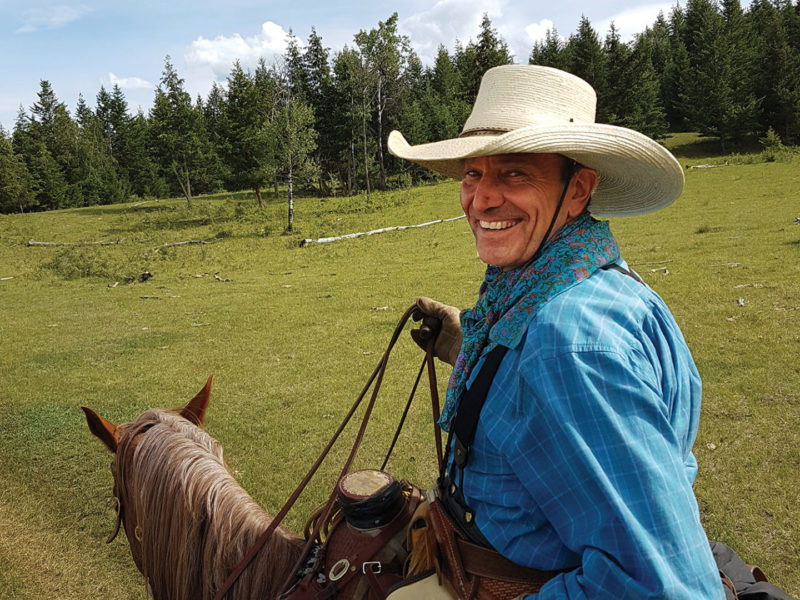
AgSafe's superintendent of field operations and ranching safety consultant Reg Steward believes mental health is a vital part of health and safety on BC farms and ranches. SUBMITTED

September 1, 2021 bySandra Tretick

WILLIAMS LAKE – Growing crops and raising livestock are not only physically demanding, the seemingly endless uncertainties that go along with the work can take a toll on mental health. Between wildfires, drought (or floods), extreme heat, crop and livestock losses, financial concerns, changing regulations, COVID-19 and family expectations, there’s a lot that could keep you awake at night.

“There’s a tremendous amount of stress right now,” says AgSafe superintendent of field operations and ranching safety consultant Reg Steward. “A lot of uncertainty, fear, anxiety, frustration and anger.”

Where do you turn if you reach the tipping point in your ability to cope? Google lists page after page of links to programs, resources and studies offered by a wide variety of organizations. On the plus side, it shows that mental health is finally something people are talking about. On the downside, few of those links provide access to immediate help.

Farm Management Canada (FMC) executive director Heather Watson says farmers are more likely to participate in mental health support programs offered by providers familiar with agriculture and the unique needs of farmers.

“Lack of access to mental health support in rural Canada remains a critical gap in supporting public health,” says Watson.

Healthy Minds, Healthy Farms, a 2020 study by FMC, indicated that 76% of Canadian farmers reported mid to high stress levels. The leading causes were unpredictability, workload pressures and finances.

AgSafe has just wrapped up its own evaluation of the situation in BC as part of the first phase of a project to study available programs and support for farmer mental health and welfare. This included a review and comparison of existing programs and interviews with industry to identify which models would work best for primary producers in BC. In-person events and digital resources scored highly.

The second phase of the project is now underway and will establish a mental health strategy for BC farmers. AgSafe also piloted a series of half-day mental health workshops in May and June called In the Know, developed by the University of Guelph. These workshops will likely be offered again in the future, but AgSafe is considering a different format to better fit producers’ schedules.

Steward says the project is built around four pillars: creating awareness of the situation, reducing the stigma, providing self-help tools and providing access to available resources.

While industry associations are much more aware of the urgency of the situation than they used to be, the stigma issue still remains.

“There’s a lot of reluctance to identify that I am struggling with this, or I am stressed, or I am frustrated, or I am angry,” says Steward, who admits that he’s also fallen into the “Suck it up, buttercup” mentality. “We tend to, in industry as a whole, see these things manifest themselves but not be articulated. If I had a damaged body part, I wouldn’t hesitate to find a person to help me deal with that, and we need to reduce the stigma so that we have that same comfort level that says it’s okay to have that conversation [about our mental health].”

Stigma is a topic that BC Grain Producers Association vice-president Jennifer Critcher echoes.

“There’s been this stigma that you just deal with it, you don’t talk about it,” says Critcher, who was part of the first phase of the AgSafe project. “I’m glad there’s more discussion about it for sure now, going forward. But when there’s so many things out of your control and you’re working so hard every day, it makes it really disheartening.”

Bulkley Valley Dairy Association president Lindsay Heer, also a director of the BC Dairy Association, says summer is always challenging for dairy farmers. They’re spending long hours in the field while trying to balance business and family demands.

“Burnout isn’t spoken widely about, but it’s present in the farming community, especially during this season,” says Heer. “On top of all that, recent weather has added a layer of uncertainty. Extreme heat, drought and wildfires are contributing an extra layer of stress.”

Livestock producers are especially susceptible to burnout because there is no downtime. Even when dairy farmers have bad days, they still have to get up to tend to their animals.

The dairy and grain associations have both offered mental health workshops for their members, and the Bulkley Valley Dairy Association had a mental health speaker at its annual general meeting last year. Canadian Cattlemen’s Association scheduled a virtual mental wellness event for its members in late August.

“We need to meet farmers where they are,” says Heer. “Some are comfortable attending a seminar with their peers, and others prefer to take in a webinar on their own time.”

At the weekly Talk it Out sessions put on by Saskatchewan’s Do More Foundation, common concerns are drought, weather, supporting someone struggling and stigma. These sessions, offered on Zoom, Instagram Live and Twitter, are open to any farmer across the country.

For Critcher, financial stress is the elephant in the room.

“Financial stress is the No. 1 stressor because it’s something that can basically crush you,” says Critcher. “Farmers don’t shy away from a heavy physical workload; it’s the financial stresses that seem to be the most burdening on their mental health because it’s something that weighs on them a lot.”

FMC recommends developing a farm business plan as a means to create some peace of mind. It’s not about predicting the future; it’s about planning for it. The BC Ministry of Agriculture, Food and Fisheries points to the suite of business risk management programs under the Canadian Agriculture Partnership that farmers and ranchers can access. These include AgriStability, AgriInvest and AgriInsurance.

In the growing field of mental health, you can expect to see new tools cropping up for BC farmers from time to time. There are a couple already in the works.

The Do More Foundation is currently fundraising to launch a national 24/7 agriculture-specific support line. Its community fund will accept applications beginning in September to bring its half-day mental health workshop, Talk Ask Listen, to rural communities across Canada for free.

AgSafe is set to launch a mobile app this fall called Avail that is a social media-style platform that will include mental health checks, links to resources and networking.

“It’s not like building a safe work practice for a round baler, where pretty much once that’s dialed in it doesn’t change very much,” says Steward. “This is an ever changing field. There are improvements and new resources all the time.”

Steward says the agriculture industry is a family that wants everybody to succeed.

“We are in this together,” he says. “There are producers facing the same kinds of challenges and dilemmas. You never have to walk alone.”


All content on this website is copyrighted, and cannot be republished or reproduced without permission.
Related Posts

You may be interested in these posts from the same category.

Bringing mental wellness forward

Ag leaders honoured at gala

Peace producers break ground

Producers struggle to talk about mental health

Province funds feed access

CFIA proposes traceability updates

Cowboys honoured

New child worker rules

Peace producers engage in on-farm research

Grain sector receive funding

Mental health in the spotlight

Peace whipped by wild winds

Previous Post: « Turning manure into renewable energy
Next Post: Market garden rises from battle of the weeds »

© 2026 COUNTRY LIFE IN BC - ALL RIGHTS RESERVED