• Menu
  • Skip to primary navigation
  • Skip to main content
  • Skip to primary sidebar

Country Life In BC Logo

The agricultural news source in British Columbia since 1915

  • Headlines
  • Calendar
  • Subscribe
  • Advertise
  • About
  • Archives
  • Contact
  • Search
  • Headlines
  • Calendar
  • Subscribe
  • Advertise
  • About
  • Archives
  • Contact
  • Search

Primary Sidebar

Originally published:

SEPTEMBER 2019
Vol. 105 Issue 9

Subscribe Now!

Sign up for free weekly FARM NEWS UPDATES

Loading form…

Your information will not be
shared or sold ever

Stories In This Edition

Livestock groups ramp up security

Gaurav Maan

EU tightens shipping rules

New waste control rules kick in October 1

Dibs on ribs

Nip the buds

Climate woes are everyone’s responsibility

Viewpoint: Weighing in on the battle of the burgers

Ag counil defendes cannabis sector on odour

Feds announce compensation package for dairy

Potato harvest looks promising for BC growers

Motor Vehicle Act covers tractors

Province urges armyworm precautions

Feast for the eyes

Funding helps cherry growers court new buyers

Oregon hazelnut optimism inspires BC growers

Dairy tour showcases innovative farming

Minimize the risk of corn silage fires

Teachers receive valuable lessons about farming

Climate change concerns grapegrowers

Canada eyes clean vines network

Province extends deadline for meat consultation

Top seller

Winery upstart banks on ranch’s rich history

Sidebar: Room to grow

Market Musings: Rain creates haying challenges

Nechako win

Forage council ready for a changing climate

Armyworm warning

Soda Creek social highlights land-matching

Research: The symbiotic relationship in pregnancy

Sheep farmers have high hopes for cooperative

PNE lamb

AAFC seeks volunteer weather reporters

Land commission orders Gleaners off ALR

Tour highlights adaption

Maan Farms keeps the focus on family

Ceadrow Farm tops Chilliwack sheep show

Island Holstein show and sale reflects quality

4-H sale saves the bacon for ranching student

4-H sale at the PNE is the best part of summer

Success is in the bag for barley entrepreneurs

Simple steps help to overcome gas exposure

Blueberries find a home in wine at Baccata

Woodshed: Henderson backs off while Frank closes in

Volunteers harvest for FV charities

Nutritious autumn eats

More Headlines

Follow us on Facebook

Comments Box SVG iconsUsed for the like, share, comment, and reaction icons

14 hours ago

Berryhill Foods Inc. is expanding into fresh berries by acquiring Driediger Farms' main Langley processing plant and 78-acre property for $23.3 million. The frozen berry processor will operate the farm and build on the Driediger legacy. Rhonda Driediger, whose family has farmed the property since 1959, will support the new owners during the first year before pursuing other ventur#BCAg#BCAg ... See MoreSee Less

Berryhill Foods Inc. is expanding into fresh berries by acquiring Driediger Farms main Langley processing plant and 78-acre property for $23.3 million. The frozen berry processor will operate the farm and build on the Driediger legacy. Rhonda Driediger, whose family has farmed the property since 1959, will support the new owners during the first year before pursuing other ventures.

#BCAg
View Comments
  • Likes: 53
  • Shares: 2
  • Comments: 2

Comment on Facebook

Good to hear👏

Does that mean fresh strawberries this year? Dredigers are the best.

2 days ago

The BC Peace River Grain Industry Development Council is seeking nominations to fill two positions on its board. The council is responsible for disbursing $350,000 in levies collected annually for field crop production projects and research in BC’s Peace region. Nomination deadline is March 1; election will take place at the council’s agm in early summer.

#BCAg
... See MoreSee Less

The BC Peace River Grain Industry Development Council is seeking nominations  to fill two positions on its board. The council is responsible for disbursing $350,000 in levies collected annually for field crop production projects and research in BC’s Peace region. Nomination deadline is March 1; election will take place at the council’s agm in early summer.

#BCAg
View Comments
  • Likes: 2
  • Shares: 1
  • Comments: 0

Comment on Facebook

3 days ago

BC Blueberry Council executive director Sudeshna Nambiar says trust in agricultural organizations is built on transparency and accountability. Growers facing rising costs and uncertainty want straight answers about how decisions are made and realistic results, not just promises. Practical, grower-led programming and clear communication about what works—and what doesn't—build credibility and strengthen agriculture's voice beyond the farm gate. She penned our Viewpoint in this month’s edition of Country Life in BC. We found it refreshing.

BC Blueberries
#BCAg
... See MoreSee Less

BC Blueberry Council executive director Sudeshna Nambiar says trust in agricultural organizations is built on transparency and accountability. Growers facing rising costs and uncertainty want straight answers about how decisions are made and realistic results, not just promises. Practical, grower-led programming and clear communication about what works—and what doesnt—build credibility and strengthen agricultures voice beyond the farm gate. She penned our Viewpoint in this month’s edition of Country Life in BC. We found it refreshing.

BC Blueberries 
#BCAg
View Comments
  • Likes: 9
  • Shares: 0
  • Comments: 0

Comment on Facebook

4 days ago

Do you have what it takes to build the new province’s new Plant and Animal Health Centre in Abbotsford? The province is inviting candidates to submit qualifications via BC Bid by April 13, with a short list of builders set for release in June. An integrated design-build process will construct the lab, which is expected to cost no more than $400 million. The BC Ministry of Infrastructure is leading the project, which is set to break ground in 2027 and take four years to build. The province purchased the site of the new lab on January 29 for $27.8 million.

#BCAg
... See MoreSee Less

Do you have what it takes to build the new province’s new Plant and Animal Health Centre in Abbotsford? The province is inviting candidates to submit qualifications via BC Bid by April 13, with a short list of builders set for release in June. An integrated design-build process will construct the lab, which is expected to cost no more than $400 million. The BC Ministry of Infrastructure is leading the project, which is set to break ground in 2027 and take four years to build. The province purchased the site of the new lab on January 29 for $27.8 million.

#BCAg
View Comments
  • Likes: 7
  • Shares: 0
  • Comments: 2

Comment on Facebook

27 million could have started alot of small scale and infrastructure for local food producers.

now those who complained about the lack of increase in the agricultural portion of the latest provincial budget should understand just where some of their taxpauers $$$ are going.

6 days ago

Cultivating good employees requires the same attention as other farm tasks, business coach Trevor Throness told Mainland Milk Producers at their annual general meeting last month. He outlined four worker categories based on attitude and productivity, with "brilliant jerks" – highly productive but disruptive employees – posing unique challenges. Good workers are attracted to the best workplace cultures, he told producers, not recruited. It’s a cool take on the labour challenges facing BC’s agricultural sector and it appears in the print edition of Country Life in BC this month.

#BCAgriculture
... See MoreSee Less

Cultivating good employees requires the same attention as other farm tasks, business coach Trevor Throness told Mainland Milk Producers at their annual general meeting last month. He outlined four worker categories based on attitude and productivity, with brilliant jerks – highly productive but disruptive employees – posing unique challenges. Good workers are attracted to the best workplace cultures, he told producers, not recruited. It’s a cool take on the labour challenges facing BC’s agricultural sector and it appears in the print edition of Country Life in BC this month.

#BCAgriculture
View Comments
  • Likes: 15
  • Shares: 0
  • Comments: 0

Comment on Facebook

Subscribe | Advertise

The agricultural news source in British Columbia since 1915
  • Email
  • Facebook

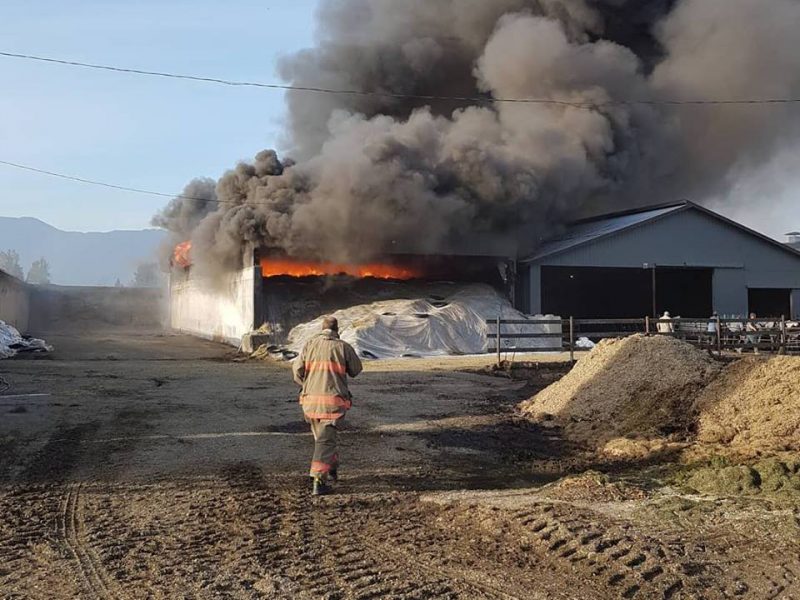
Minimize the risk of corn silage fires

Fraser Valley bunker fires spark warnings

September 1, 2019 byJackie Pearase

ENDERBY—AgSafeBC urges farmers to inform themselves on the risks of corn silage fires.

The organization is working with the BC Ministry of Agriculture, BC Dairy Association, WorkSafeBC and relevant fire departments to determine the reasons behind five incidents of smouldering corn silage in the eastern Fraser Valley in September 2018.

Two of those episodes were full-scale fires resulting in the loss of structures.

Based on information gleaned so far, AgSafeBC safety advisor Tadgh O’Leary discussed how to reduce the risk of fire in corn silage at the 2019 North Okanagan Dairy Tour hosted by the Kamloops Okanagan Dairymen’s Association on August 13.

O’Leary says timing is key for producers.

“It’s the first 48 hours post-harvest; that is the real critical phase for these fires, we observed,” he says. “A lot of the heat is generated at that time with fresh silage so closely monitor your bunker this year in the first 48 hours post-harvest.”

Silage density is also important.

“What we do know … packing is one of the key features. If we get the packing right, we reduce the oxygen in the bunker,” says O’Leary.

A properly dense silage pile is packed in layers of four to six inches throughout the harvest with a weight of 800 pounds per ton of crop delivered per hour, he explains. Stressed, non-uniform, stunted or immature crops need to be packed more aggressively because the suboptimal condition of such crops can alter the ensiling process and associated timing.

Oxygen exposure can also be reduced by always keeping tarps and covers tight, and by taking extra attention with packing along the edges and sides to maintain good density.

He says silage should be stored in uncovered, non-flammable structures.

The silage bunker should have no available fuel sources such as plywood siding. Hay should not be used to weigh down the forage.

“Some bunkers have plywood for food-quality issues and over time that has become eroded and dried out and that can be a fuel source,” O’Leary notes.

Mixing old silage with new silage is also suspect as the dryness of the old silage could act as a fuel source.

Work continues to fully determine the cause of the corn silage incidents.

“The group will continue to monitor and review new information throughout the upcoming 2019 corn harvest season,” notes O’Leary.

Related Posts

You may be interested in these posts from the same category.

BC farms embrace safety

CTV PHOTO

Vehicle violations rise

Previous Post: « Oregon hazelnut optimism inspires BC growers
Next Post: Province extends deadline for meat consultation »

Copyright © 2026 Country Life in BC · All Rights Reserved