
• Menu
  • Skip to primary navigation
  • Skip to main content
  • Skip to primary sidebar

Country Life In BC Logo

The agricultural news source in British Columbia since 1915

  • Headlines
  • Calendar
  • Subscribe
  • Advertise
  • About
  • Archives
  • Contact
  • Search
  • Headlines
  • Calendar
  • Subscribe
  • Advertise
  • About
  • Archives
  • Contact
  • Search

Primary Sidebar

Originally published:

FEBRUARY 2024
Vol. 110 Issue 2

Subscribe Now!

Sign up for free weekly FARM NEWS UPDATES

Select list(s) to subscribe to


By submitting this form, you are consenting to receive marketing emails from: Country Life in BC. You can revoke your consent to receive emails at any time by using the SafeUnsubscribe® link, found at the bottom of every email. Emails are serviced by Constant Contact
Your information will not be
shared or sold ever

Stories In This Edition

Green is gold

Water fines upped

Farm class numbers drop

Snowpack lows raise grower fears for summer

Editorial: Abundance and well-being

Back 40: An economy adrift in troubled waters

Viewpoint: There has to be a better way to manage water

Pitt Meadows ag strategy is action-based

Tesche take over as GM for fruit growers

Ag Briefs: BC potato harvest up 10% versus 2022

Ag Briefs: PRFA president brings fresh outlook

Ag Briefs: Nanaimo farm saved

Fruit sector has two years to take the reins

BC Fruit Works labour-matching tool paused

Okanagan grapes hit hard by Arctic outflow

Corn rootworm requires diligence and control

Population trends create new opportunities

Telus dials in new safety tools for agriculture

Living Wage’ certification out of reach for many

Cariboo potato a case study in local resilience

Arrow Lakes project revitalizing agriculture

Silvopasture a new frontier with deep roots

Getting through winter when feed is short

Details count

Salt Spring couple presses on with olive dream

Metchosin farm transitions to new owners

Farm Story: No crying over spilt spuds

Woodshed Chronicles: Henderson (finally) takes time for soul-searching

Cosmopolitan flavours lead chef to farming

Steak and potatoes, dressed up for fare

More Headlines

Follow us on Facebook

Comments Box SVG iconsUsed for the like, share, comment, and reaction icons

2 weeks ago

The Canadian Food Inspection Agency is preparing to implement changes to its livestock traceability rules that will include mandatory computer reporting within seven days on movement of animals for veterinary appointments, community pastures, exhibitions, carcass and on-farm disposal and the births and deaths of every animal on your farm. Writer Tom Walker first brought these changes to the attention of our readers back in June 2023. We've posted his story to our website:

www.countrylifeinbc.com/cfia-proposes-traceability-updat#BCAg#BCag
... See MoreSee Less

The Canadian Food Inspection Agency is preparing to implement changes to its livestock traceability rules that will include mandatory computer reporting within seven days on movement of animals for veterinary appointments, community pastures, exhibitions, carcass and on-farm disposal and the births and deaths of every animal on your farm. Writer Tom Walker first brought these changes to the attention of our readers back in June 2023. Weve posted his story to our website: 

https://www.countrylifeinbc.com/cfia-proposes-traceability-updates/

#BCag
View Comments
  • Likes: 11
  • Shares: 21
  • Comments: 15

Comment on Facebook

I love hpw the cow in the picture hasn't even got a RFID tag in it but I digress. We can not read the link, it says "we are not permitted to read drafts". Please post again with the correct link.

Dairy farmers having been doing this several years. The app we use has become quite simple to use

Including equine?

Premise ID was slowly rolled through the country, voluntary then mandatory. Transparency and 'Consultation' has been light. Those who tried to bring this for discussion a couple years ago, because of forseen overreach, were quite often labeled conspiracy theorists and that it wasnt meant to be so heavily regulated and controlled. Gardens and seeds will be next. "Invasive species" reporting, check out the plants medicinal properties. Read the BC intentions papers. The premise ID that already heavy regulated commodities have claims to be treated different in the intentions papers on page 8. www2.gov.bc.ca/assets/gov/farming-natural-resources-and-industry/agriculture-and-seafood/food-saf...

Says i am "not allowed to preview draft".

Also concerning is the part on compliance...they can 'stumble onto' any farm and if you're not complying there are consequences.

When the CFIA stumbles into the wrong place compliance will be met with civil engagement

Says I can't preview draft

This is government overreach - Do Not Comply!

Do not comply

Fu

As if the price of beef isn't bad enough for consumers,,,,,be prepared to be gouged some more now

Ridiculous!!

Let's hold up on the beef exports tell we can get our own house in order... we need to deregulated, cheapen up the supply chain back into a 5 buck a pound rage so the good people canada can eat healthy food.. fuck your bean diets, that's retarded

This, along with the majority of new legislation pertaining to any type of farm, is a blatant squeeze on any sort of small, alternative agricultural venture. I am a massive believer in working together and sharing resources and costs and solutions - do not get me wrong - but this and the water registration among others, is an overreach (at most generous) and an absolute killer to smaller, local initiatives that LITERALLY save lives during extreme events. There is ONE ROAD into and out of my community. We don’t need or want some sort of backlogged government response when shit goes sideways. We want the ability AND SUPPORT to provide for our communities without penalty when things go badly. We want to produce sustainability for our communities. We live here, we work here, we want to STAY HERE. Stop making it harder.

View more comments

3 weeks ago

BC's minimum piece rates for 15 hand-harvested crops increased 2.6% on December 31. Crops include peaches, apricots, brussels sprouts, daffodils, mushrooms, apples, beans, blueberries, cherries, grapes, pears, peas, prune plums, raspberries and strawberries. Farm-worker piece rates in BC were increased by 11.5% in January 2019 and 6.9% in December 2024. BC’s current minimum wage sits at $17.85 per hour.

#BCAg
... See MoreSee Less

BCs minimum piece rates for 15 hand-harvested crops increased 2.6% on December 31. Crops include peaches, apricots, brussels sprouts, daffodils, mushrooms, apples, beans, blueberries, cherries, grapes, pears, peas, prune plums, raspberries and strawberries. Farm-worker piece rates in BC were increased by 11.5% in January 2019 and 6.9% in December 2024. BC’s current minimum wage sits at $17.85 per hour. 

#BCAg
View Comments
  • Likes: 10
  • Shares: 0
  • Comments: 2

Comment on Facebook

I'm not sure what they're telling us. Did peace rates have to increase so that Farm workers could make minimum wage?

They deserve it, but the general public will be whining about increased prices in the stores. Will need to make more information average to the g.p.

3 weeks ago

... See MoreSee Less

View Comments
  • Likes: 14
  • Shares: 0
  • Comments: 1

Comment on Facebook

105 Mile Ranch

4 weeks ago

... See MoreSee Less

View Comments
  • Likes: 7
  • Shares: 0
  • Comments: 0

Comment on Facebook

1 month ago

Water volumes from the Nooksack River are at levels similar to 1990 and 2021, but the province says flows should peak at 10pm tonight. The shorter duration, as well as conditions in other watercourses within the watershed and performance of flood protection infrastructure should avoid a catastrophe on the scale of 2021. However, several landslides mean road closures have once again effectively isolated the Lower Mainland from the rest of the province.

#BCAg
... See MoreSee Less

Water volumes from the Nooksack River are at levels similar to 1990 and 2021, but the province says flows should peak at 10pm tonight. The shorter duration, as well as conditions in other watercourses within the watershed and performance of flood protection infrastructure should avoid a catastrophe on the scale of 2021. However, several landslides mean road closures have once again effectively isolated the Lower Mainland from the rest of the province.

#BCAg
View Comments
  • Likes: 9
  • Shares: 3
  • Comments: 1

Comment on Facebook

Family living in Sumas WA say it's very much like '21. They have the same amount of water in their house as last time.

Subscribe | Advertise

The agricultural news source in British Columbia since 1915
  • Email
  • Facebook

Pitt Meadows ag strategy is action-based

City's previous plan was adopted at turn of the century

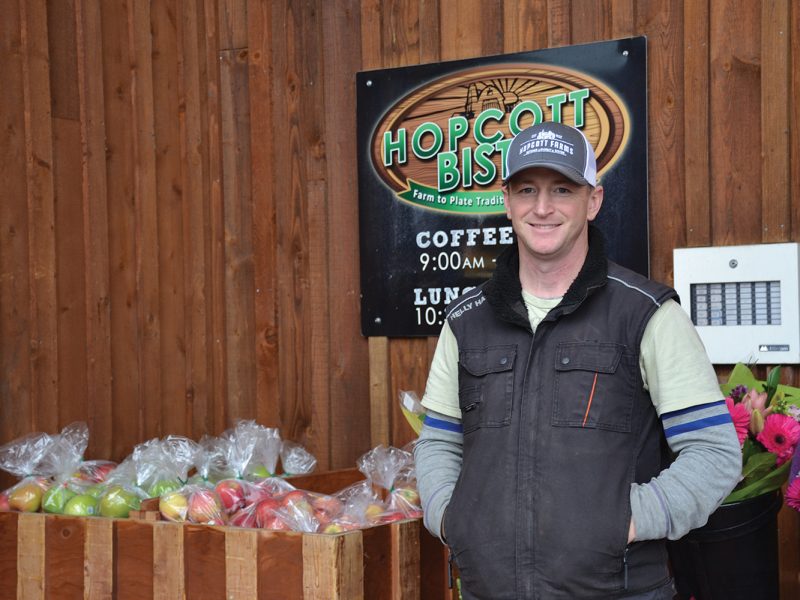
Travis Hopcott was part of the agricultural advisory committee that helped update Pitt Meadows' Agriculture Viability Strategy. RONDA PAYNE

January 29, 2024 byRonda Payne

PITT MEADOWS – A new Agriculture Viability Strategy is giving Pitt Meadows a renewed focus on actions benefiting farmers and agriculture.

Travis Hopcott, co-owner of Hopcott Farms and a member of the Pitt Meadows Agricultural Advisory Committee, praises the strategy, which applies to the city’s 6,900 hectares located in the Agricultural Land Reserve.

Hopcott played an active part in the plan’s creation and update of the previous plan adopted in 2000. The work took nine months.

“I was present for a couple of the drafts and then they used our store location as an opportunity to get feedback from those that live in Pitt Meadows,” he says. “They had a big display there, and questionnaires.”

Committee members like Hopcott contributed seven in-depth agriculture-based interviews that helped drive the strategy. There were also written surveys for those in agriculture and a different version of the survey for others in the community. The Agricultural Land Commission and the BC Ministry of Agriculture and Food provided input on the draft plan.

While most of the farms in Pitt Meadows are large-scale commercial operations, the study represents all agriculture sectors, including small, mixed-use farms.

Hopcott believes the new strategy will help connect the municipality with farmers in a more direct and meaningful way.

Upland Agriculture Consulting principal Ione Smith was lead consultant on the project and agrees.

“Pitt Meadows was already leaps and bounds ahead of some of the other municipalities that we’ve worked with,” she says. “[It] was really fantastic to have that level of support at the outset.”

A major part of the support was the city’s project manager for agriculture and environment, Michelle Baski.

“Our last agricultural plan is from the year 2000,” Baski explains. “It needed to be updated because of the changing agricultural sector in Pitt Meadows and the changing environment.”

The strategy is intended to guide the community’s relation to agriculture for the next five to 10 years. It outlines five goals, including protect farmland for farming; plan and manage infrastructure assets; support economic viability; help agriculture adapt to challenges and “help the community support and be proud of agriculture in Pitt Meadows.”

Baski says each of the goals have strategies and recommended actions and these cascade to specific recommended actions. When looking at infrastructure, for example, one of the strategies is to create an agriculture water study.

“We are looking to do a water study this year,” she says, noting that Pitt Meadows has secured funding for the project from the Investment Agriculture Foundation of BC. “That would be an example of an action that would support that goal.”

Each strategy includes a timeline of short (one to two years), medium (three to five years) or long (six to 10 years) in terms of implementation.

The document also recognizes existing ongoing activities in the community that back agriculture, such as supporting the Agricultural Advisory Committee and ensuring it continues to serve as an advisory board for the city.

“We leaned heavily on our Agricultural Advisory Committee in creating this,” says Baski. “We’re hoping that it will serve them well and that it will serve the community well.”

She recognizes that no community is in a silo when it comes to the agricultural needs municipal governments must address. This was considered in the strategy’s creation.

“A lot of the issues that we’re hoping to tackle are applicable to many other cities across the province,” she says. “We’re hoping that some of these actions can benefit the province as a whole.”

When actionable items fall outside of Pitt Meadows’ jurisdiction, the city will be an advocate to ensure the community’s agriculture sector has the support it needs.

Smith says some of the work is simply about ensuring agriculture is included actively rather than governments waiting for farmers to put their hands up.

“A lot of it is about creating that seat at the table,” she says. “Making sure agriculture isn’t neglected. Because the agriculture community is so busy, they don’t necessarily sign up.”

Farmers know that non-farmers generally don’t understand the challenges they face. Hopcott says he wasn’t surprised by how little the public knew.

“How we grow things and some of the challenges involved in producing a product or growing a product … there’s a lot of work that needs to be done with regards to awareness,” he says.

From a selfish perspective, he hopes the strategy will create more opportunities around agritourism, “to connect individuals with how the food is grown.”

“People love that type of experience so that’s what, personally, we’re looking forward to,” he says.

Hopcott also found some city staff were ignorant about farming practices and needs.

“We do have a water licence and we’ve had it for decades. But staff understanding about water, how much water [the farm uses] … there was a bit of a disconnect with infrastructure in that regard,” he says. “This whole process just gave everyone, including the farmers, a better understanding of agriculture in the city.”

Even without all the actionable activities, Hopcott sees the strategy as strengthening that important connection with the city.

“At the very minimum, the huge benefit is allowing the municipality an understanding of how important agriculture is,” he says. “It just connects the two different parties.”

Related Posts

You may be interested in these posts from the same category.

Hopcotts take OYF title

Previous Post: « Pacific Agriculture Show kicks off
Next Post: Orchardists seek frost assistance »

Copyright © 2026 Country Life in BC · All Rights Reserved