• Menu
  • Skip to primary navigation
  • Skip to main content
  • Skip to primary sidebar

Country Life In BC Logo

The agricultural news source in British Columbia since 1915

  • Headlines
  • Calendar
  • Subscribe
  • Advertise
  • About
  • Archives
  • Contact
  • Search
  • Headlines
  • Calendar
  • Subscribe
  • Advertise
  • About
  • Archives
  • Contact
  • Search

Primary Sidebar

Originally published:

December 2017
Vol. 103 Issue 12

Subscribe Now!

Sign up for free weekly FARM NEWS UPDATES

Loading form…

Your information will not be
shared or sold ever

Stories In This Edition

Body cams are out

Turkey allocation reviewed

Meet ‘n’ Greet

Producers take concerns to Victoria

Editorial: Double standard

Back Forty: Perception is in the eyes of the beholder

Viewpoint: Trade negotiations creating uncertainty

Cattlemen speak out about groundwater licensing debacle

Sweet reward

WorkSafeBC set to lower most rates

Salmon farm debate raises concern for range tenures

Sidebar: Good relationships on the range

Breweries allowed

FIRB’s quota review is taking too long

Dairy farming under the microscope

Technology key to the fortunes of dairies of all sizes

BC Tree Fruit election may prompt legal action

Disease control worries honey producers

Beekeepers risk dumping charge

Honey in the house

Crop insurnace claims up

Stockmen receive update on wildfire recovery

Property assessments set for major shift after fires

Water access for range cattle

Compensation possible in Island sheep kills

Fall at its finest

Protection program has helped ranchers

Fair boards encouraged to sign up for Premises ID

Meadow Valley meats eyes new slaughterhouse

Potential for termination of Site C cause for hope

Jack Frost nips crops on heels of hot summer

Six-digit cattle attract deep-pocketed ownership teams

Kelowna seeks input on the future of local water management

West Kelowna pursues bylaw for worker housing

Sidebar: Taking the next step

Agri-tourism regulation has little impact on farmers

Privacy, conflict of interest need good protocols

Sidebar: Field media requests with confidence

Vernon orchardists develop award winning orchard

Seed growers find support at gathering

Photo bomb

Cleaner water promises greener greenhouses

4-H BC on the move

Entrepeneurs squeeze a profit from pressed fruit

Research: Heritage turkeys add a touch of nostalgia

4-H Canada’s top scholarship awarded to BC member

Woodshed: Awkward moments abound as date night nears

Langley meadery finds the sweet spot

Entertaining tidbits

All content on this website is copyrighted, and cannot be republished or reproduced without permission.
More Headlines

Follow us on Facebook

Comments Box SVG iconsUsed for the like, share, comment, and reaction icons

3 days ago

KPU researcher Naomi Robert is partnering with Oregon State University's Dry Farming Collaborative to test drought-resilient growing practices across Vancouver Island and the Gulf Islands. Working with three market gardeners, the study found tomatoes and zucchini thrived without irrigation. With droughts intensifying across the Pacific Northwest, dry farming offers BC growers practical tools to adapt to a changing climate. The full story appears in our April edition. tinyurl.com/d2fzs#BCAg#BCAg ... See MoreSee Less

KPU researcher Naomi Robert is partnering with Oregon State Universitys Dry Farming Collaborative to test drought-resilient growing practices across Vancouver Island and the Gulf Islands. Working with three market gardeners, the study found tomatoes and zucchini thrived without irrigation. With droughts intensifying across the Pacific Northwest, dry farming offers BC growers practical tools to adapt to a changing climate. The full story appears in our April edition. https://tinyurl.com/d2fzs9x6

#BCAg
View Comments
  • Likes: 20
  • Shares: 5
  • Comments: 0

Comment on Facebook

4 days ago

A Maple Ridge dairy producer has been fined $7,512, had his licence suspended for three months, and faces quota restrictions for two years after an undercover investigation confirmed raw milk was sold directly from the farm on three separate occasions.

#BCAg
... See MoreSee Less

Link thumbnail

Maple Ridge farm fined for raw milk sales

www.countrylifeinbc.com

Raw milk remains off the table for dairy producers, with the BC Milk Marketing Board (BCMMB) taking action against a Maple Ridge producer for illicit sales. An undercover investigation of Maple Ridge...
View Comments
  • Likes: 56
  • Shares: 90
  • Comments: 221

Comment on Facebook

Unpasteurized milk is sold in Europe. It's the only milk certain cheeses can be made from.

Europeans used raw milk to make cheese for millenia, the farmer should sue them back on cultural grounds and a charter violation.

A person can shoot up government drugs in a playground but milk is the issue. 🙄

Is there a go fund me?

Raised on raw milk and I wouldn’t have had it any other way. My immune system is top notch compared to all others raised on corn syrup baby formula. Make it make sense!

When i was on the farm we would drink milk right from the cow in a bottle then drink and never got sick.

Ohh the milk moffia at it again I see

So whose the rat? lol one of the ppl who bought the raw milk? 🤦🏻‍♀️

I grew up in the 60’s with raw milk, cream and butter the farm shipped cream. One day the cream was rejected do too much bacteria. It wasn’t kept cool enough. That was the first of government control I experienced. Ok so the cream went back to the farm and made the best sourdough bread, ice cream and the cats came from heavens green acres for a treat of stale bread soaked in that very cream.

If the farmer sold shares in his farm so all these people owned part of the farm. Then it’s their milk . And don’t have to buy anything

Yet the government can supply cigarettes, alcohol, weed and hard drugs. Makes sense. 🙄

leave him the hell alone! if someone wants to buy raw milk at their own risk, let them. At least they can see where the milk came from

I would love my own cow so I could get raw milk

I love the back in the day story’s . Please remember those stories were of grandpa drinking his own cow’s milk. You still have the right to buy cows and drink their milk raw. Go ahead and do it….

As the government sells alcohol and cigarettes 🤡

Free drugs good raw milk bad 🤣

Guy up the road sells milk raw here too

Raised on our own milk, so were my kids. Got told my kids would not be as Intelegent because of it 😂 they are adults and doing very well. The problem lays in the consumer handling of product after pick up. when milking at home its in a stainless steel pail, sifted, into glass containers, then in fridge to cool down. People picking up, put jn car drive off for an hour or more, then in fridge. This is the problem, bactia grows in the heat. Then they drink that evening when still warm, get sick, blame farm milk. Go to grocery store buy a jug, it last 2weeks after due date ...yummy. ( tested this therory) Id rather have fresh milk and properly handle it. Everything is so regulated,

I have mixed opinions here. I think that people should be able to get unpasteurized milk( I was raised on it and raised my own family with our own milk cow..) However in this day and age people are so inclined to sue for most anything it seems like the dairy farmers need some kind of protection against that? They could lose their businesses over legal procedures. Maybe that is a positive thing about the milk boards…

Some comments seem to be missing the point of the article. NO ONE was sick from the milk. It’s all about money. “By selling milk outside the regulated system, where revenues are pooled, the board claimed Stuyt had cost producers as a whole $195,185 and ordered him to repay this amount. It also ordered Stuyt to pay $33,266 to cover the cost of BCMMB’s investigation and hearings into the matter. The BC Dairy Association, which stood as an intervenor in the appeal before FIRB, said illicit raw milk sales are a direct threat to supply management.”

Just identify as first nations and say it's a cultural thing . Then it becomes legal

Communist Canada. If people want raw milk they should be able to buy raw milk. It’s all about control ….

That's just sad, but drugs are fine

You mean sold real milk, unadulterated, whole milk

To each their own. If people want to buy resh milk im sure they know the consequences involved. Maybe the people take it home, seperate the cream and pasturize it them selves. We drank milk at my aunts house off the cow but it was heated to 72’ (Pasturized )

View more comments

6 days ago

A draft update to the Code of Practice for the Care and Handling of Beef Cattle is now open for public comment until June 12. The code, one of 14 animal care codes developed and maintained by the National Farm Animal Care Council, is undergoing a routine 10-year review. "Your feedback will help shape the industry's guide to cattle welfare for the next decade," says Canadian Cattle Association policy manager Jessica Radau, urging producers to weigh in. For more information, visit tinyurl.com/58a3u9fz.

#BCAg
... See MoreSee Less

A draft update to the Code of Practice for the Care and Handling of Beef Cattle is now open for public comment until June 12. The code, one of 14 animal care codes developed and maintained by the National Farm Animal Care Council, is undergoing a routine 10-year review.  Your feedback will help shape the industrys guide to cattle welfare for the next decade, says Canadian Cattle Association policy manager Jessica Radau, urging producers to weigh in. For more information, visit https://tinyurl.com/58a3u9fz.

#BCAg
View Comments
  • Likes: 4
  • Shares: 4
  • Comments: 1

Comment on Facebook

I sat in the webinar yesterday by the Canadian Cattle Association. My initial concern was that this would be another "play" into the government's hands. It has been worked on by people that are actually in the Beef industry from Cow calf to feedlot. The thrust is an update of the 2013 Code of Practice which was reviewed in 2018. The changes are more a move from "left to the producers discretion" to clearer directions regarding pain management, proper transport of animals which are impaired and keeping cattle in in good condition. Much of what is recommended is what producers who care about animal husbandry already do. The important part is to GIVE THEM FEEDBACK good, bad or otherwise. The document is about 60 pages long, and I ran it through CHAT to see what had been changed. It is important to understand that the PUBLIC is invited to comment on the draft not just producers. Think about it... do you really want the public influencing how you manage your cattle. If you think that this is just one of those things, I have been following Bill 22 in Alberta which will grant the SPCA a proactive roll in entering farms and checking on animals. When I asked CHAT how the new bill relates to the Cattle Code, it came back that the Code although not a regulation will be able to be used as a guide by producers for backup in dealing with the SPCA regarding cattle conditions, sick animal handling etc. Take the time.... Go onto the Canadian Cattle Association website and speak to those parts that you wish to input.

7 days ago

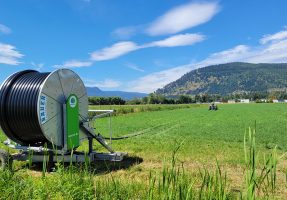
According to the BC River Forecast Centre, the Okanagan snowpack stood at just 58% of normal on April 1 — the lowest reading since measurements began in 1980 — raising concerns about drought conditions in the region this summer. The rest of the province sits at 92% of normal.

#BCAg
... See MoreSee Less

According to the BC River Forecast Centre, the Okanagan snowpack stood at just 58% of normal on April 1 — the lowest reading since measurements began in 1980 — raising concerns about drought conditions in the region this summer. The rest of the province sits at 92% of normal.

#BCAg
View Comments
  • Likes: 3
  • Shares: 0
  • Comments: 0

Comment on Facebook

1 week ago

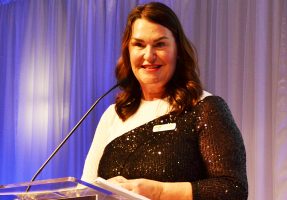
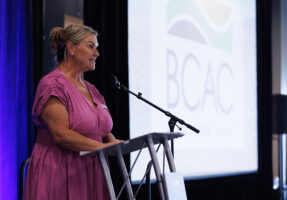
At her first AGM as executive director of BC Meats, held Saturday in Abbotsford, Jennifer Busmann spoke about her strong ties to agriculture and her optimism for the organization's future. Busmann has cattle of her own and came to the role with existing relationships with members and the board of directors that helped her feel integrated from the start. She stepped into the position in Februa#BCAg#BCAg ... See MoreSee Less

At her first AGM as executive director of BC Meats, held Saturday in Abbotsford, Jennifer Busmann spoke about her strong ties to agriculture and her optimism for the organizations future. Busmann has cattle of her own and came to the role with existing relationships with members and the board of directors that helped her feel integrated from the start. She stepped into the position in February.

#BCAg
View Comments
  • Likes: 6
  • Shares: 0
  • Comments: 0

Comment on Facebook

Subscribe | Advertise

The agricultural news source in British Columbia since 1915
  • Email
  • Facebook

Producers take concerns to Victoria

December 1, 2017 byPeter Mitham

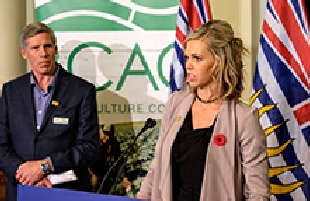
VICTORIA – Keeping farm operations environmentally and financially sustainable were key to the case farm leaders made for the industry when they met with government officials in Victoria at the beginning of November.

Big enough now to span two days, BC Agriculture Day is a biennial networking event that attracted close to 80 participants from the farm sector this year for meetings with Premier John Horgan, agriculture minister Lana Popham and six of their cabinet colleagues among other government members. The formal meetings took place November 7, but many agriculture representatives arranged meetings the day before to make the most of their trip to Victoria.

Organized by the BC Agriculture Council (BCAC) with the support of proceeds from the annual gala dinner that precedes the Pacific Agriculture Show each January, the event – like the gala – is about networking.

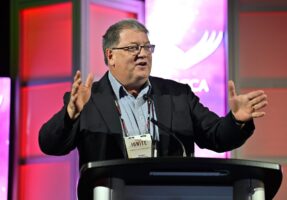
“Ag Days is really a foundational way to meet up with ministers and people in government regarding the specific things that agriculture has near to its heart,” says greenhouse grower Stan Vander Waal, chair of the BCAC. “I think we’ve made some very good connections in that way and, overall, the meetings went exceptionally well – I heard that from both the industry side as well as the government side.”

Appropriately for agriculture, land was a fundamental element in the conversations.

“It’s something that’s always being discussed: how do we better utilize land?” Vander Waal says.

While government’s promise to consult on appropriate uses within the Agricultural Land Reserve didn’t figure into the conversations, initiatives to keep farmland affordable and limit speculation did.

Any intervention in the market that limits the price of farmland doesn’t sit well with Vander Waal, who says the focus should be on ensuring that farm properties are used for farming. Rising farmland values aren’t necessarily bad if a farmer can leverage the value to expand a viable farm operation.

Government’s role is to ensure legitimate farms are using the properties in the first place.

“We’re looking to increase land usefulness, but also to make sure that the benefits are not extended to non-ag uses of farmland,” Vander Waal says.

While the federal agriculture census counts anyone who grows food for sale as a farmer, BC Assessment grants farm status to owners of agricultural properties generating revenue of least $2,500 a year. Vander Waal wants government to review that threshold.

“We don’t think $2,500 is viable. No one can make a living off $2,500,” Vander Waal says. “We think it’s something that needs to have a solid review.”

Tenure is another hot topic that cropped up, which Vander Waal said would be a bellwether for how the NDP might handle other files impacting agriculture, such as new agricultural waste regulations and the high-profile issue of aquifer contamination in the Hullcar Valley.

Access to labour, particularly skilled labour, was another key issue farm organizations raised in Victoria. The cost of labour  also figured into the discussions, particularly since agriculture wasn’t included in the Fair Wage Commission the government established in October to explore ways to boost BC’s minimum wage to $15.

“We were a little disappointed to find agriculture didn’t have a seat at the table,” Vander Waal says. “It’s not so much the $15 an hour that’s really the issue, it’s the ripple effect throughout your full staff when you actually have the minimum wage going up. The expectation in general is, ‘Hey, what about me?’”

The ongoing challenge of finding skilled workers was high on the agenda of Nova Woodbury, executive director of the BC Association of Abattoirs, who travelled to Victoria with her board to raise the concerns her sector faces, which have an impact on livestock producers.

Association members met with the BC Ministry of Jobs, Trade and Technology to discuss the need for abattoir workers and skilled meat cutters in the province.

The meetings on BC Agriculture Day – last held in 2015 – seldom bear immediate fruit, but Vander Waal is optimistic.  

“We’ve been very happy with the engagement so far with the government, but we have no results to really show at this point,” he says. “We need to see where the rubber is going to meet the road here.”

All content on this website is copyrighted, and cannot be republished or reproduced without permission.
Related Posts

You may be interested in these posts from the same category.

Task force presents blueprint for growth

Ag Days foregrounds sector priorities

BCAC holds AGM

Ag leaders honoured at gala

BC farm income plummets

Budget recognizes climate risks

Orchardists seek frost assistance

BCAC lobbying event positive

Federal minister visits BC

Foreign worker consultation planned

Province funds climate readiness

BCAC plans benefits program

Previous Post: « Cattlemen speak out about groundwater licensing debacle
Next Post: Body cams are out »

© 2026 COUNTRY LIFE IN BC - ALL RIGHTS RESERVED