• Menu
  • Skip to primary navigation
  • Skip to main content
  • Skip to primary sidebar

Country Life In BC Logo

The agricultural news source in British Columbia since 1915

  • Headlines
  • Calendar
  • Subscribe
  • Advertise
  • About
  • Archives
  • Contact
  • Search
  • Headlines
  • Calendar
  • Subscribe
  • Advertise
  • About
  • Archives
  • Contact
  • Search

Primary Sidebar

Originally published:

AUGUST 2023
Vol. 109 Issue 8

Subscribe Now!

Sign up for free weekly FARM NEWS UPDATES

Select list(s) to subscribe to


By submitting this form, you are consenting to receive marketing emails from: Country Life in BC. You can revoke your consent to receive emails at any time by using the SafeUnsubscribe® link, found at the bottom of every email. Emails are serviced by Constant Contact
Your information will not be
shared or sold ever

Stories In This Edition

Lettuce Grow!

Turning off the taps

Drought threatens feed supply

Fire, drought and now grasshoppers

Editorial: Public service

Back 40: Food democracy will decide relavance of ALR

Viewpoint: Reconciliation is more than just a land deal

Peace Region land-sharing proposal nixed

Sinkholes blamed on Fraser Valley pipeline work

Ag Briefs: BC Ferries steps up protocols for hay shipments

Ag Briefs: Bird processing goes mobile

Ag Briefs: Penticton agriculture committee fails

Huge cherry crop sparks dumping allegations

Soil, leaf testing key to gauging nutrient needs

Drought prompts cattle sell0ff

Urban farm almost shut down by noise complaint

Watchdog call for overhaul of fire management

CYL semi-finalists share positive outlook

Grain producers share experience during field day

Range management showcased on tour

Prescribed burns improve range health

Sheep breeders flock to BC for national show

Farmers look to fill wool processing gap

Smart tools point a way to more efficient weeding

Farm Story: Doing the “right” thing comes at a price

Island couple future-proof new farm operation

Instrumental insemination boosts bee vigour

Growing opportunities for fellow farms

Partnerships underpin success of Langley stewardship program

Woodshed Chronicles: Gladdie reminisces about long-ago truth or dare

Christmas tree growers look to scale up local

Jude’s Kitchen: Patio fare for the lazy days of summer

More Headlines

Follow us on Facebook

Comments Box SVG iconsUsed for the like, share, comment, and reaction icons

2 weeks ago

FarmFolk CItyFolk is hosting its biennial BC Seed Gathering in Harrison Hot Springs November 27 and 28. Farmers, gardeners and seed advocates are invited to learn more about seed through topics like growing perennial vegetables for seed, advances in seed breeding for crop resilience, seed production as a whole and much more. David Catzel, BC Seed Security program manager with FF/CF will talk about how the Citizen Seed Trail program is helping advance seed development in BC. Expect newcomers, experts and seed-curious individuals to talk about how seed saving is a necessity for food security. ... See MoreSee Less

Link thumbnail

BC Seed Gathering - FarmFolk CityFolk

farmfolkcityfolk.ca

Save the date for our upcoming 2023 BC Seed Gathering happening this November 3rd and 4th at the Richmond Kwantlen Polytechnic University campus.
View Comments
  • Likes: 1
  • Shares: 0
  • Comments: 0

Comment on Facebook

4 weeks ago

BC has reported its first case of highly pathogenic avian influenza (HPAI) in the eighth wave of the disease since 2021. Canadian Food Inspection Agency officials confirmed October 13 that a premises in Abbotsford tested positive for the disease, the first infected premise in BC during this fall's migration. The farm is the 240th premises infected in BC since the current national outbreak began four years ago with a detection in Newfoundla#BCAg#BCAg ... See MoreSee Less

BC has reported its first case of highly pathogenic avian influenza (HPAI) in the eighth wave of the disease since 2021. Canadian Food Inspection Agency officials confirmed October 13 that a premises in Abbotsford tested positive for the disease, the first infected premise in BC during this falls migration. The farm is the 240th premises infected in BC since the current national outbreak began four years ago with a detection in Newfoundland.

#BCAg
View Comments
  • Likes: 50
  • Shares: 195
  • Comments: 444

Comment on Facebook

But the ostrich’s have the cure ….

I don't believe anything the CfIA says, like saying ostriches are chickens so that's why everything has to get culled.

Who in BC has reported this, not a word in the news. Why are you spreading fear propaganda? If you cannot add a source do not post this crap! It appears your page knows absolutely nothing about COUNTRY LIFE IN BC OR ELSEWHERE!

Just put one-way arrows on the floor of the chicken coop, keep them 6ft apart from each other and stock up on toiletpaper for them. 😉

Source? I can't find anything to corroborate this story.

Perhaps if they had allowed the ostrich to be tested and discovered how they developed antibodies we could quit culling our food supplies. Yes I know ostrich are not chickens

This only made the news to confuse those interested in the ostrich farm, relax, has nothing to do with the ostriches

How convenient that carney has a pocket in this đŸ€”

The ostriches eggs can save your flock

Weird how it only affects birds we eat. Kinda like how no homeless people got convid.

How convenient. Now it's off to the ostrich farm, right?

Have you went chicken catching for 8 hours all night 36000 birds

My advice take your chickens and run!

Have none of you guys ever seen the hundreds of birds falling from the sky? Ya me nether

Brainwashing if you ask me

just like on people- that mask looks like its doing a lot of nothing on that rooster!

Is it as deadly as monkey pox?? đŸ”

Quick kill all the food! Perhaps we should study the ostriches...

Ostriches not chicken and not reproduced for human consumption

The condom is too small for the CO?K

I don't know how you do it, but invest in egg futures RIGHT NOW. The price will be skyrocketing.

So is it the first or the 240th?

240th. So how many birds culled is that now? The stamping out policy is working so well, isn’t it? Maybe cramming millions of stressed birds, receiving no sunlight, into facilities, all within a few kilometres apart (talk about having all your eggs in one basket) is not the brightest idea. Maybe we should scrap the Quito system, allow regular folks to have more than 100 birds and supply their neighbourhoods with meat and eggs. Maybe we should raise more robust birds with better immune systems. Maybe we shouldn’t give birds sunlight, less crowded conditions, and give them a full 24 hours to lay an egg, instead of artificially giving them shorter days, trying to squeeze more eggs out of them. Maybe, without the quota system, instead of a few mega farms, egg producers would again dot the entire province.

Lol are they going to blaim the ostriches

You mean to tell us all, THE CULL isn’t working, maybe, just maybe we should try something just a bit more humanly and have maybe a slight hint of scientific evidence!!!

View more comments

1 month ago

Here we go again!

With no immediate end in sight for the Canada Post strike, we have uploaded the October edition of Country Life in BC to our website. While it's not the preferred way to view the paper for most of our subscribers, we're grateful to have a digital option to share with them during the strike. The October paper is printed and will be mailed soon as CP gets back to work! In the meantime, enjoy!

... See MoreSee Less

Link thumbnail

CLBC October 2025

news.countrylifeinbc.com

CLBC October 2025
View Comments
  • Likes: 7
  • Shares: 4
  • Comments: 2

Comment on Facebook

The 1 person in Canada who contracted avian flu speaks to Rebel.news

STOP SPREADING LIES ABOUT AVIAN FLU NO BIRD GETS THIS

1 month ago

... See MoreSee Less

View Comments
  • Likes: 8
  • Shares: 0
  • Comments: 0

Comment on Facebook

1 month ago

... See MoreSee Less

View Comments
  • Likes: 6
  • Shares: 0
  • Comments: 0

Comment on Facebook

Subscribe | Advertise

The agricultural news source in British Columbia since 1915
  • Email
  • Facebook

Watchdog calls for overhaul of fire management

Ranchers say too much fuel is left on forest floor after logging

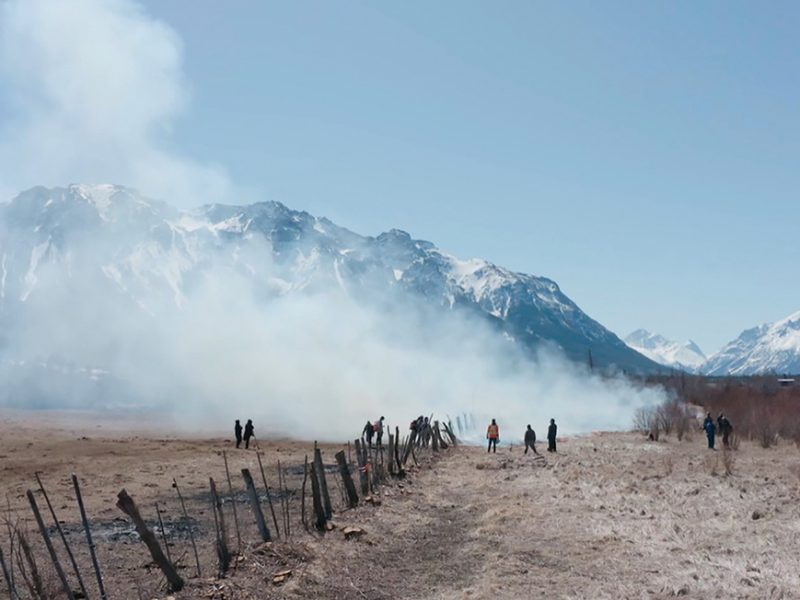
For generations, the Tsilhqot’in used controlled burning to prevent catastrophic summer wildfires. Once banned, these practices are slowly being integrated into how the province manages the risk of wildfire. SUBMITTED

August 2, 2023 byKate Ayers

VICTORIA – On June 29, the province’s independent watchdog for forest and range practices released a report citing urgent action as 45% of public land is at high or extreme threat of wildfire.

“Fire prevention and suppression policies over the past century have led to a buildup of fuel in our forests and have contributed to the loss of natural firebreaks in some areas,” Forest Practices Board chair Keith Atkinson said in releasing the report. “These shifts, combined with forestry policies and climate-change effects greatly increase the risk of catastrophic wildfire. We’re already seeing the consequences this year with its unusually early start and record-setting wildfires.”

Montney rancher and Peace River Regional Cattlemen’s Association president Dave Harris has experienced the result of fuel build-uo more than once.

“When [the Siphon Creek] fire went through [in 2016], it consumed and burned a lot of standing timber. Logging companies came in and logged what they thought was salvageable and left the rest,” Harris says. “They also leave a considerable amount of coarse woody debris laying on the forest floor, which is their new practice.”

In July 2021, a windstorm knocked down whatever standing dead wood remained from the fire five years earlier. The wildfire and wind combination left a 30-mile-long swath of burnable material, Harris says.

As a result, he discussed his concerns and the need to clean up the debris with the Peace River Regional District, the BC Ministry of Forests, and Canfor, the company that owns the logging rights in most of the affected area.

“Canfor was the most honest about it because they said there wasn’t enough profit for them to do that,” Harris says, noting that the province was more reticent given its obligations to First Nations.

Fast forward to this spring when the wildfire season arrived in May due in part to warm temperatures and a severe drought that began in the fall.

The Stoddard Creek fire encroached on Harris’s property but, thankfully, the only significant loss was fencing. Harris, along with other area ranchers, is certain this year’s historic wildfire season in the Peace could have been prevented with better landscape maintenance.

“There was a tremendous fuel load that was left here. And it was almost criminal negligence to do this because it wasn’t only my ranch, but there’s other ranches and farms east of me that could have been impacted if it wasn’t stopped on our property,” Harris says. “And this was all part and parcel of this material that was left lying and they had two years to do something about it. It would have cost the government money or somebody money, but to leave a potential hazard like that is actually appalling.”

Harris had spent quite a bit of time and money cleaning up the debris on his property following the storm but with the fuel left on Crown land, the Stoddard Creek fire was all-consuming and burning hot by the time it reached Harris’s ranch.

The FPB report says that bold and immediate action are required by the province to align policies and programs across all levels of government to achieve landscape resilience. Landscape fire management addresses forest fuel build-up, improves landscape resilience and reduces wildfire risk, including creating fuel breaks, increasing the diversity of tree species and ages, decreasing forest density and using cultural and prescribed burning.

While fire is at the centre of the board’s concerns, proponents believe it can also be part of the solution.

“You can look at archaeological evidence, and you don’t see the scale of massive wildfires that you do on the landscape as you do today,” says UBC assistant forestry professor and Gathering Voices Society executive director William Nikolakis. “We contend that’s because we built these unhealthy landscapes. It’s not just climate change.”

Gathering Voices focuses on advancing environmental stewardship programs for First Nations across Canada. Nikolakis works with First Nations communities to revitalize knowledge, connect people to landscapes and apply fire in a strategic way.

“What we’re proposing is not a silver bullet. It’s to have Indigenous peoples and other communities restore the land by working with Indigenous knowledge,” Nikolakis says. “Putting fire on the land is one of those tools to help build resilient landscapes. What we propose is a practice that’s been used for millennia. And that’s to apply fire twice a year: in the spring, while snow is still on the ground, and during the late fall, which helps clear up debris from the landscape.”

These practices would require a paradigm shift in how the province manages fire, which supports the board’s recommendations.

“Indigenous fire management is a unique thing. It’s a very different practice from what a bureaucracy does,” Nikolakis says. “We don’t use drip torches because if the land is not ready to burn, it’s not ready to burn. If you’re working for the wildfire service, you’ve got timelines and deadlines and schedules. 
 That can actually have a negative impact on the land base.”

As a result, Nikolakis would like to see Indigenous fire management operate independent of the province.

The Forest Practices Board’s recommendations follow other provincial investments in wildfire mitigation programs, including $98 million for BC Wildfire Service wildfire prevention work and projects, $100 million to expand the FireSmart program, $25 million for the Forest Enhancement Society of BC for wildfire risk reduction activities in communities adjacent to high-risk Crown land, and increasing the annual budget of the Crown Land Wildfire Risk Reduction program to $40 million.

The initiatives align with the recommendations of the latest report, says BC forests minister Bruce Ralston in a statement to Country Life in BC.

“The Forest Practices Board report reinforces that we need to keep working with our partners and taking critical steps to strengthen and expand wildfire planning, preparedness and response,” he says.

As of July 21, 1,452 fires had burned 1.5 million hectares in BC.


Related Posts

You may be interested in these posts from the same category.

Crown land conflicts reveal policy gaps

Rangeland forage allocation studied

Ranches, province fail rangelands

Previous Post: « Wildfires rip through Southern Interior
Next Post: International exports climb »

Copyright © 2025 Country Life in BC · All Rights Reserved