
• Menu
  • Skip to primary navigation
  • Skip to main content
  • Skip to primary sidebar

Country Life In BC Logo

The agricultural news source in British Columbia since 1915

  • Headlines
  • Calendar
  • Subscribe
  • Advertise
  • About
  • Archives
  • Contact
  • Search
  • Headlines
  • Calendar
  • Subscribe
  • Advertise
  • About
  • Archives
  • Contact
  • Search

Primary Sidebar

Originally published:

JANUARY 2024
Vol. 110 Issue 1

Subscribe Now!

Sign up for free weekly FARM NEWS UPDATES

Loading form…

Your information will not be
shared or sold ever

Stories In This Edition

Water plans kick off

For a good cause

AI case count slowing

BC agriculture loses a champion

Editorial: Yes, yes, Yes!

Back 40: Glaring observations about (barn) cats

Viewpoint: Site C’s long-term costs are becoming clear

Erosion claims dozens of acres of farmland

Finances trigger relocation plans for nursery group

Ag Briefs: Rangeland forage allocation studied

Ag Briefs: Wise water management funded

Ag Briefs: Mushroom harvester commercialized

Hopcotts win OYF Canada with sustainable practices

Remuneration to increase for dairy directors

Dairy achievement is built on resilience

Dairy producers discuss concerns at conference

Road rage in Peace

Sidebar: Rural road coalition out of commission

Diverse weather, shared hopes unite Peace

Five swans a-grazing

Ag Show Preview: Winter shows support knowledge, tech transfer

Making connections helps hort forum off to strong start

Gathering momentum

Blueberries and more

Beyond the Lower Mainland

Collaboration at record levels in fruit sector

BC growers weigh trade complaint against US cherries

Meat, veg prices rise sharply as inflation slows

Spallumcheen cuts, wraps deal for butcher hub

Cattle theft non-existent despite high prices

Water continues to be top issue for OK ranchers

Challenges, opportunities ahead for farmers institutes

Producers struggle to talk about mental health

Sidebar: How to help

Sweet rewards for Chilcotin rancher

Farm Story: Give me a break; let it snow

Vegans won’t save world from climate change

Woodshed: Kenneth faces the truth or suffers the consequences

PNE fundraiser supports youth in agriculture

Jude’s Kitchen: Comfort food makes families happy

All content on this website is copyrighted, and cannot be republished or reproduced without permission.

More Headlines

Follow us on Facebook

Comments Box SVG iconsUsed for the like, share, comment, and reaction icons

23 hours ago

According to the BC River Forecast Centre, the Okanagan snowpack stood at just 58% of normal on April 1 — the lowest reading since measurements began in 1980 — raising concerns about drought conditions in the region this summer. The rest of the province sits at 92% of normal.

#BCAg
... See MoreSee Less

According to the BC River Forecast Centre, the Okanagan snowpack stood at just 58% of normal on April 1 — the lowest reading since measurements began in 1980 — raising concerns about drought conditions in the region this summer. The rest of the province sits at 92% of normal.

#BCAg
View Comments
  • Likes: 3
  • Shares: 0
  • Comments: 0

Comment on Facebook

2 days ago

At her first AGM as executive director of BC Meats, held Saturday in Abbotsford, Jennifer Busmann spoke about her strong ties to agriculture and her optimism for the organization's future. Busmann has cattle of her own and came to the role with existing relationships with members and the board of directors that helped her feel integrated from the start. She stepped into the position in Februa#BCAg#BCAg ... See MoreSee Less

At her first AGM as executive director of BC Meats, held Saturday in Abbotsford, Jennifer Busmann spoke about her strong ties to agriculture and her optimism for the organizations future. Busmann has cattle of her own and came to the role with existing relationships with members and the board of directors that helped her feel integrated from the start. She stepped into the position in February.

#BCAg
View Comments
  • Likes: 6
  • Shares: 0
  • Comments: 0

Comment on Facebook

4 days ago

Shannon Wiggins of Headwind Farm in North Saanich is this year's Mary Forstbauer Grant recipient from the BC Association of Farmers Markets. The $500 grant will help Wiggins expand her plot at Sandown Centre for Regenerative Agriculture, growing more storage crops to extend her harvest season. Wiggins credits farmers markets with inspiring her own farming journey and commitment to building community through food. Congratulations!

tinyurl.com/45bdd#BCAg#BCAg
... See MoreSee Less

Shannon Wiggins of Headwind Farm in North Saanich is this years Mary Forstbauer Grant recipient from the BC Association of Farmers Markets. The $500 grant will help Wiggins expand her plot at Sandown Centre for Regenerative Agriculture, growing more storage crops to extend her harvest season. Wiggins credits farmers markets with inspiring her own farming journey and commitment to building community through food. Congratulations!

https://tinyurl.com/45bddtw8

#BCAg
View Comments
  • Likes: 46
  • Shares: 2
  • Comments: 3

Comment on Facebook

Wahoo! Congrats Shannon! I love your produce. Can’t wait for the radishes 🫜

Congratulations!

Well done!! 🩷🩷🩷

5 days ago

New farmers can avoid costly mistakes by learning from those who've been there. At a Young Agrarians mixer in Penticton, five BC farmers shared hard-won lessons on pricing, pivoting, relationships and burnout. From coyote losses to business burnout, their message was clear: set prices that reflect true costs, make decisions quickly and don't let farming define your worth. Myrna Stark Leader's story appears in our April e-edition, now available to view online at: tinyurl#BCAg2uw53vvm

#BCAg
... See MoreSee Less

New farmers can avoid costly mistakes by learning from those whove been there. At a Young Agrarians mixer in Penticton, five BC farmers shared hard-won lessons on pricing, pivoting, relationships and burnout. From coyote losses to business burnout, their message was clear: set prices that reflect true costs, make decisions quickly and dont let farming define your worth. Myrna Stark Leaders story appears in our April e-edition, now available to view online at: https://tinyurl.com/2uw53vvm

#BCAg
View Comments
  • Likes: 15
  • Shares: 0
  • Comments: 0

Comment on Facebook

7 days ago

War in the Middle East is delivering a generational shock to BC farm input costs, with nitrogen fertilizer prices already 60% above pre-pandemic levels and rising fast. Okanagan Fertilizer president Ken Clancy says supply shortfalls are expected as Strait of Hormuz shipping disruptions tighten global supplies and demand surges. BCAC says it's monitoring the situation and ready to advocate for government relief measur#BCAg#BCAg ... See MoreSee Less

Link thumbnail

Fertilizer, fuel costs soar amid Iran conflict

www.countrylifeinbc.com

ENDERBY – War in the Middle East has delivered a generational shock to energy prices, meaning BC farmers can expect a prolonged period of higher costs, not just for fuel but also for fertilizer.
View Comments
  • Likes: 1
  • Shares: 1
  • Comments: 0

Comment on Facebook

Subscribe | Advertise

The agricultural news source in British Columbia since 1915
  • Email
  • Facebook

Water plans kick off

Farmers want action

January 1, 2024 byTom Walker & Peter Mitham

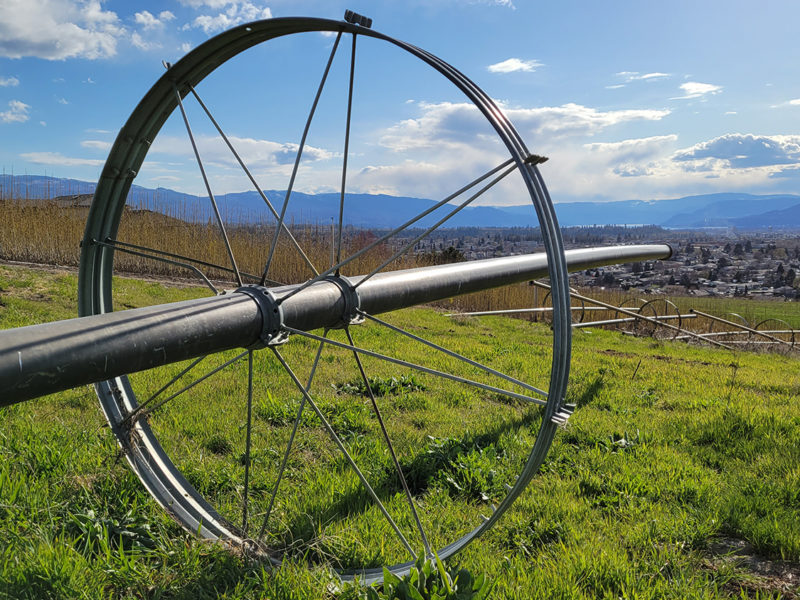
DUNCAN – BC signed an historic watershed planning agreement with the Cowichan Tribes last May that set the stage for the province’s first water sustainability plan, but local farmers say the pressures on the region’s farms can’t wait.

Beginning in the mountains southwest of Duncan and flowing 44 km northeast towards the city, the Koksilah River eventually joins the Cowichan River just before it empties into Cowichan Bay. According to a 2020 study, 30% of land use and 65% of water use within the watershed is for agriculture.

But agricultural water users have been cut off three times in the past five years when late summer flows in the Koksilah dropped to levels the province said endangered fish populations.

“It has resulted in a major crop loss for us,” says Duncan dairy farmer Ben Vanden Dungen.

Vanden Dungen and other local farmers banded together in 2020 to develop an irrigation schedule that aimed to limit their impact on the river, and with the new planning process he was invited to join the collaborative community advisory table (CCAT) that will advise on the Koksilah plan’s development.

But the province says the plan’s development will take three years, a long time for farmers who are running out of water today.

“I appreciate that these things take time, but three years for a business of our size could be hugely detrimental,” he says. “While we are setting things up for the future, we need to figure out ways to support the people who need it now.”

The table’s initial meeting took place November 6. Vanden Dungen is optimistic that it will make a difference, but remains concerned about the near-term, given the failure to implement past studies and plans.

“Why aren’t we doing things now when we have this research and examples from other streams as well?” he asks.

Katy Ehrlich of Alderlea Farms, which was hit with fines last summer after the province couldn’t find a record of its groundwater licence application, shares Vanden Dungen’s concerns given the entrenched attitudes among provincial staff.

Alderlea is fighting a cease-use order issued against its water use, and Ehrlich is worried about what this summer will bring for other growers if the province continues to shut down users in a watershed that a lack of provincial regulation allowed to become over-allocated in the first place.

“I really have hope that WLRS is in the process of developing an interim policy and hitting a reset on the licences,” she says, referring to the BC Ministry of Water, Land and Resource Stewardship handed responsibility for water management in November after years of being part of Forests.

Solutions may be forthcoming, according to the BC Cattlemen’s Association.

“We have been told by inside sources that Premier Eby has told his staff that he does not want any curtailments in 2024,” says BC Cattlemen’s vice-president Werner Stump. “How that plays out, we are not sure.”

Streamflows are not a new issue in the province. Reports stretching back to the 1970s show concern with the need to manage water levels in streams across the province for the good of society and wildlife.

“Just like the wildfire hazard situation, streamflows are problem that has been building for years,” says Stump.

But the province’s pledge to “co-manage the watersheds in BC” with First Nations, leaving only a marginal role for the agriculture industry, means agriculture isn’t likely to have much direct input into the planning process despite “Indigenous and local food security” being one objective.

Moreover, agriculture accounts for about half the province’s water demand and has been the industry most impacted by fish protection orders. A government estimate based on 2019 data of a 60-day curtailment order for users in the Koksilah watershed pegged crop losses at $500,000.

Angela Boss, the BC Ministry of Agriculture and Food’s representative to the Koksilah planning process, said farmers were invited to sit at the community advisory table. Seven of the table’s 19 members are farmers, representing the dairy, horticulture and winery sectors.

“That table helps to assist with the planning process. At least seven of them identify as farmers out of the 19, which is a pretty substantial number of folks,” Boss claims. “They will be working alongside of the planning table to review the recommendations, the pieces that come forward in the plan.”

However, government documents indicate that the advisory tables have no role in actually developing water sustainability plans. Instead, the planning team comprises members from the province, the Cowichan Tribes as well as the Cowichan Watershed Board, working under an executive director.

“This is a government-to-government process,” Boss confirms.

Even so, there is no representation from the federal Department of Fisheries and Oceans, despite the fact that provincial curtailment orders were issued to protect spawning chum salmon, Coho and steelhead.

“No one in the room identified as being from DFO,” Boss says of the November 6 meeting, which was closed to media.

DFO’s absence doesn’t make any sense to BC Cattlemen’s general manager Kevin Boon.

“When I met with federal agriculture minister MacAulay [in October], I made it clear to him that the fish protection orders that the province invokes are at the insistence of the federal government and that the federal government must get involved in planning to support the fish,” Boon says.

All content on this website is copyrighted, and cannot be republished or reproduced without permission.

Related Posts

You may be interested in these posts from the same category.

Previous Post: « Country Life in BC writer recognized
Next Post: No relief from high costs in 2024 »

© 2026 COUNTRY LIFE IN BC - ALL RIGHTS RESERVED