
• Menu
  • Skip to primary navigation
  • Skip to main content
  • Skip to primary sidebar

Country Life In BC Logo

The agricultural news source in British Columbia since 1915

  • Headlines
  • Calendar
  • Subscribe
  • Advertise
  • About
  • Archives
  • Contact
  • Search
  • Headlines
  • Calendar
  • Subscribe
  • Advertise
  • About
  • Archives
  • Contact
  • Search

Primary Sidebar

Originally published:

FEBRUARY 2021
Vol. 107 Issue 2

Subscribe Now!

Sign up for free weekly FARM NEWS UPDATES

Select list(s) to subscribe to


By submitting this form, you are consenting to receive marketing emails from: Country Life in BC. You can revoke your consent to receive emails at any time by using the SafeUnsubscribe® link, found at the bottom of every email. Emails are serviced by Constant Contact
Your information will not be
shared or sold ever

Stories In This Edition

CPR on ALR Track

Sea of greens

Farm properties rising

Genomics lab expands service to local growers

Editorial: Put farmers first

Back 40: Knowing when to pull back on extensions

Viewpoint: A watershed moment for BC farms

Egg producer questions support for local eggs

Milk consumption up among young minorities

Nutrient recovery system in third phase

North Saanich approves Sandown proprosal

Tsartlip acquire Woodwyn Farm with provincial help

Woodwynn Farm was first known as Mawuec

Pandemic was profitable for nursery growers

Researcher brings experience to sweet role

Consultant delivered practical advice

Tributes pour in for Island farmer Colin Springford

On-farm abattoir approved for Alberni Valley

Plans for a provincial weather network move forward

Feedlots under pressure with kill instability

If you go out in the woods today …

Round bale bounty

CFIA services get a funding boost

Help available for farm business succession

Sidebar: Considering all the options

Diversification helps farms prepare for challenges

Creston advocacy group continues push for food hub

Frind matches his love of data with grape production

Greenhouse sets example for others to follow

On-farm food networks wire farms for success

OK irrigation systems have a long history

Pemberton family farms beer with deep roots

When life gives you lemons

Personal money strategy as important as farm stragegy

Farm Story: Winter brings the distractions of technology

Well-designed vegetable coolers make for hot sales

Woodshed: Janice Newberry sets the record straight

Research: Plants can recognize attacking herbivores

Jude’s Kitchen: Super simple

More Headlines

Follow us on Facebook

Comments Box SVG iconsUsed for the like, share, comment, and reaction icons

6 days ago

... See MoreSee Less

View Comments
  • Likes: 4
  • Shares: 0
  • Comments: 0

Comment on Facebook

6 days ago

On the last day of the BC Organic Conference, Thursday, Molly Thurston of Pearl Agricultural Consulting helped growers learn how to manage bugs such as codling moth, wireworm, and rootworm in organic growing systems. Her talk alongside Renee Prasad included hands-on activities in which participants checked out various traps and examined pests under microscopes. Be sure to look for more upcoming ag events on our online calendar at www.countrylifeinbc.com/calendar/

#BCAg
... See MoreSee Less

On the last day of the BC Organic Conference, Thursday, Molly Thurston of Pearl Agricultural Consulting helped growers learn how to manage bugs such as codling moth, wireworm, and rootworm in organic growing systems. Her talk alongside Renee Prasad included hands-on activities in which participants checked out various traps and examined pests under microscopes. Be sure to look for more upcoming ag events on our online calendar at www.countrylifeinbc.com/calendar/

#BCAg
View Comments
  • Likes: 15
  • Shares: 0
  • Comments: 0

Comment on Facebook

1 week ago

Well-known organic farmer and podcaster Jordan Marr gets interviewed by Country Life in BC’s own columnist and potato mavin Anna Helmer during the opening session of the BC Organic Conference at Harrison Hot Springs yesterday. Sessions run today (Wednesday) and Thursday and include organic and regenerative growing practices and expanding and advocating for the organic sector, all under the background of the newly launched Organic BC banner.

#BCAg
... See MoreSee Less

Well-known organic farmer and podcaster Jordan Marr gets interviewed by Country Life in BC’s own columnist and potato mavin Anna Helmer during the opening session of the BC Organic Conference at Harrison Hot Springs yesterday. Sessions run today (Wednesday) and Thursday and include organic and regenerative growing practices and expanding and advocating for the organic sector, all under the background of the newly launched Organic BC banner.

#BCAg
View Comments
  • Likes: 37
  • Shares: 2
  • Comments: 1

Comment on Facebook

Interested in finding out more about this

3 weeks ago

Today, we remember those who sacrificed their lives or their well-being for our freedom. Lest we forget. ... See MoreSee Less

Today, we remember those who sacrificed their lives or their well-being for our freedom. Lest we forget.
View Comments
  • Likes: 8
  • Shares: 0
  • Comments: 0

Comment on Facebook

1 month ago

FarmFolk CItyFolk is hosting its biennial BC Seed Gathering in Harrison Hot Springs November 27 and 28. Farmers, gardeners and seed advocates are invited to learn more about seed through topics like growing perennial vegetables for seed, advances in seed breeding for crop resilience, seed production as a whole and much more. David Catzel, BC Seed Security program manager with FF/CF will talk about how the Citizen Seed Trail program is helping advance seed development in BC. Expect newcomers, experts and seed-curious individuals to talk about how seed saving is a necessity for food security. ... See MoreSee Less

Link thumbnail

BC Seed Gathering - FarmFolk CityFolk

farmfolkcityfolk.ca

Save the date for our upcoming 2023 BC Seed Gathering happening this November 3rd and 4th at the Richmond Kwantlen Polytechnic University campus.
View Comments
  • Likes: 1
  • Shares: 0
  • Comments: 0

Comment on Facebook

Subscribe | Advertise

The agricultural news source in British Columbia since 1915
  • Email
  • Facebook

Well-designed vegetable coolers make for hot sales

Cold storage for small farms doesn’t have to be high-tech

February 2, 2021 byRonda Payne

MARA – It’s a feat to grow outstanding vegetables, but without proper storage all that goodness can be lost.

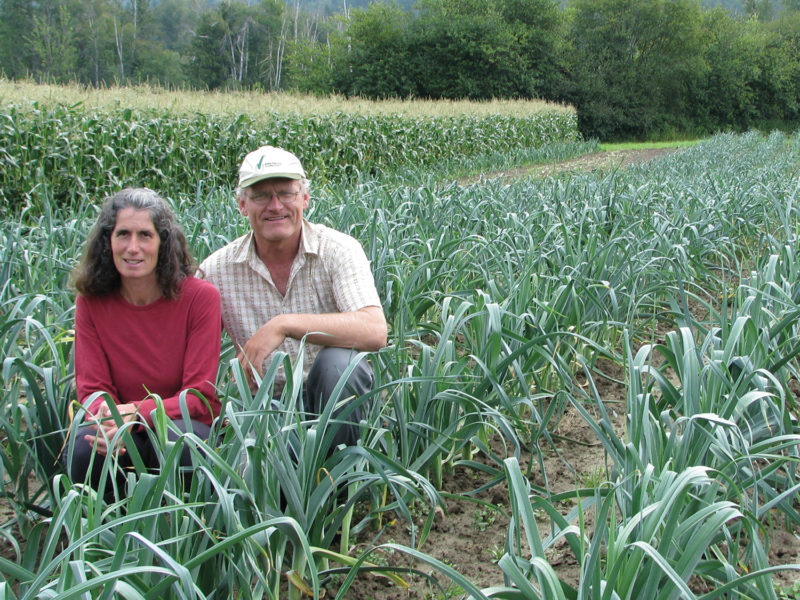
In 28 years of farming, Hermann Bruns and wife Louise, owners of Mara-based Wild Flight Farm, have learned a thing or two about how to keep produce in the kind of condition that delivers profits to them and pleasure to customers.

Kootenay & Boundary Farm Advisors hosted a virtual farm tour on December 8 where Bruns outlined his five distinct storage areas and how they keep vegetables at their best. The organic farm grows a wide range of field vegetables on about 12 acres each year including potatoes, cabbage, squashes, onions, garlic and carrots. Wild Flight sells through farmers markets and a few wholesale customers.

“Each [vegetable] group has their own requirements for storage temperature and humidity,” he explains.

The building was custom built in 2001 and expanded in 2012. The walls, ceiling and concrete floors are insulated according to the needs of each of the five coolers. The facility wasn’t cheap, but it was the most efficient route for the variety of crops Bruns stores.

The first cooler is for squash, which are kept stem up on wooden shelves. The shelves are built four-high on top of pallets, which can be easily moved with a pallet jack. A thermostat at the far end of the room connects to a fan that blows outside air in, keeping the temperature between seven and 10° C. A ceiling fan promotes air circulation.

“They want it dry,” says Bruns. “One way to keep it dry is to keep the air moving all the time.”

Squash can be problematic and Bruns says even when everything is done correctly, they may not store well. He feels the region’s cooler temperatures prevent the squash from fully ripening.

Squash, other than acorn or pumpkins, are left to cure at 30° C for a week before entering storage. This allows them to keep until February or March. Pumpkins and acorn squash don’t keep past December.

“We throw out way too many squash in my opinion,” he says. “There’s lots of room for improvement on the squash storage front.”

The second cooler is the main vegetable storage. Bruns keeps his cabbage here in unlined apple bins with plastic on top. Bagged carrots and parsnips are also kept in apple bins as are loose beets with a plastic liner. Temperatures are kept as close to zero as possible with active refrigeration, which is monitored using a small dish of water. A skim of ice is good, solid ice means it’s too cold.

The plastic liners and bags help to manage humidity and prevent drying out.

“We don’t add moisture. On a small scale, it’s a little too complicated to do that,” he says. “There are definitely larger-scale coolers that do that.”

The third cooler is designated for apples and pears brought in from other farms. While these also like to be kept close to zero degrees and have active refrigeration, the fruits emit ethylene that impacts the flavour and storage quality of vegetables, so they get their own cooler.

“We don’t want to have the apples together with the carrots, for example, because ethylene makes the carrots taste bitter,” he says. “If the carrots are sprouting, it’s not cold enough.”

The fourth cooler is kept at about 5° C using outdoor air. Bruns stores his potatoes here in sacks. They’re unwashed until it’s time to sell them, to keep the humidity low and prevent disease.

Keeping potatoes too cool will cause them to convert their starches into sugars, impacting flavour and texture.

The fifth cooler is for onions and garlic and ranges from zero to 15° C with constant air movement to keep the produce dry. Bruns allows this room to get warmer because the demand for onions and garlic exceeds his supply so long-term storage isn’t the goal.

“They like to be close to zero as well, but what’s really important to them is that they are dry,” he says.

All coolers are checked daily to ensure temperature, humidity and air flow are in the right ranges.

Other elements that are important to consider when building a vegetable storage facility include smooth concrete so bins on rollers can be moved easily, a capacity greater than currently needed (and enough room to move around), coolers that maintain an even temperature, six-foot door frames for ease of movement and establishment of efficient flow of product and workers.

“You really want to pay attention to things and how much you need to move them around,” he says. “You really want to reduce the amount of times you have to lift and move a box of produce.”


Related Posts

You may be interested in these posts from the same category.

Previous Post: « Premises ID to be mandatory
Next Post: BC residents the least likely to buy local »

Copyright © 2025 Country Life in BC · All Rights Reserved