
• Menu
  • Skip to primary navigation
  • Skip to main content
  • Skip to primary sidebar

Country Life In BC Logo

The agricultural news source in British Columbia since 1915

  • Headlines
  • Calendar
  • Subscribe
  • Advertise
  • About
  • Archives
  • Contact
  • Search
  • Headlines
  • Calendar
  • Subscribe
  • Advertise
  • About
  • Archives
  • Contact
  • Search

Primary Sidebar

Originally published:

JULY 2023
Vol. 109 Issue 7

Subscribe Now!

Sign up for free weekly FARM NEWS UPDATES

Loading form…

Your information will not be
shared or sold ever

Stories In This Edition

Pick of the crop

Water blitz in FV

Berries feel the heat

Grape growers seek federal assistance

Editorial: Water security

Back 40: We’re all in this together

Viewpoint: Disasters bring closures and opportunities

Kamloops decommissions farm irrigation

Sidebar: Compensation outlined

Greenhouses pitch marketing commission

Ready to roll

Ag Briefs: Delta cannabis venture smoked by losses

Ag Briefs: BC Milk, Dairy grow closer

Ag Briefs: Foreign worker consultation planned

Ag Briefs: BC Tree breaks ground

Cowichan Bay project set to swamp famrland

Peace ranchers battle wildfire fallout

World’s best vermouth from Vancouver Island

Robust event brings ranchers together

Cattlemen review past successes, future challenges

Crystal Lake Ranch honoured for sustainability

Paradigm shift required for intensive grazing

Going nuts

Farm Story: The crop looks great but …

Field day focuses on getting vines on track

Couple revive winery with ambitious plans

Revelstoke farm shines light on food insecurity

Sidebar: Revelstoke revisits its agricultural potential

Chamber tour puts spotlight on flood recovery

Island farmers hit hard by tent caterpillars

Sidebar: Aerial spraying for spongy moth concludes for 2023

Industry has mixed reactions to new CFIA rules

Woodshed: Ashley and Gladdie become acquainted

BC welcomes international farm writers

BC’s summer bounty inspires meal ideas

More Headlines

Follow us on Facebook

Comments Box SVG iconsUsed for the like, share, comment, and reaction icons

6 days ago

A BC Forest Practices Board investigation has found overgrazing has damaged grasslands in the Coutlee Range Unit near Merritt — and the range-use plan meant to prevent it was unenforceable. With complaints about overgrazing on the rise and grasslands covering just 1% of BC's land mass, the findings raise fresh questions about how the province manages one of its most vulnerable — and valuable — food-producing ecosyste#BCAg#BCAg ... See MoreSee Less

Link thumbnail

Board finds overgrazing rules unenforceable unmeasurable

www.countrylifeinbc.com

MERRITT – A BC Forest Practices Board investigation has found instances of non-compliance related to overgrazing have damaged open grasslands in the Mine pasture, part of the Coutlee Range Unit near...
View Comments
  • Likes: 6
  • Shares: 6
  • Comments: 6

Comment on Facebook

Several ranchers in recent years have gone into temporary non use on that range , so that means the grass should grow. But drought conditions/lack of rain and snow don’t allow that to happen . Dried up springs , creeks waterholes in various pastures add to over grazing where there is water , as livestock and everything else stay close to the water source . So even though less cattle are on it , over grazing appears. There is a large volume of horses on it 365 days/year which is wrong ! They pull grass right out of the ground when it’s just trying to grow ,, opens the door for weeds to grow in. That don’t help it. Aging infrastructure ( fences) laying on the ground, pipe line building , ( lack of commitment to fence maintenance) amongst all users contributes also to over grazing. Recreational atv users leaving gates open between pastures allows livestock to go back or ahead in pastures also expidites over grazing. Logging ( bcts) has no problem laying out cut locks on both sides of a fence , then it gets smashed down during logging and they don’t take responsibility to stand it back up or clean the cattle gaurds out when they are done , that happened 4 years ago on pasture 5 up there . I bet it is still not fixed . There are lots of contributing factors to the problem.

Tragedy of the commons.

I looked through the report. I saw nothing about the effects of noxious weeds on productive grasslands. This particular area is vulnerable because of the Ministry’a efforts to diversify the use of the Grasslands.

This pasture is under tremendous pressure not only from cattle but from irresponsible local residents who treat it as a landfill dumping all manner of household debris here. And don't even get me started on the mud bogging and camping in sensitive riparian areas. The feral horses are in this pasture 365 days a year just hammering it. Would sure be nice to see some enforcement action on people who are intentionally ripping up the grasslands and riparian areas. Cattle could be a valuable resource for rebuilding soils and native grasses in this area with the help of electric fencing and/or e-collars. The humans will be harder to manage.

The Forest and Range Practices Act was written by lawyers for global forest licencee shareholders. Results-based = unenforceable.

Also, can we talk about the impact of a pipeline being built through the middle of this field for multiple years?

View more comments

1 week ago

East Kootenay rancher Randy Reay is digging a new well after two natural water sources dried up on his Crown tenures. A new Living Lakes Canada assessment found 15% of mapped aquifers in the region are high-priority for monitoring, yet 80% of those go unmonitored. With over 48% of BC's provincial observation wells reporting below-normal groundwater levels, ranchers and researchers are sounding the alarm on water security. The story is in our March edition, and we've posted it to our website thi#BCAgk.

#BCAg
... See MoreSee Less

Link thumbnail

Water woes: groundwater under pressure across BC

www.countrylifeinbc.com

JAFFRAY – As a young boy growing up in the Kootenay-Boundary region, Randy Reay never expected to run out of water. But this year, in mid-February, his fields are bare. There is no snow halfway up t...
View Comments
  • Likes: 8
  • Shares: 7
  • Comments: 1

Comment on Facebook

Jaffrey is in the east Kootenays not kooteney boundary

2 weeks ago

BC farmers are bracing for prolonged higher input costs as war in the Middle East drives up fuel and fertilizer prices. Nitrogen fertilizer costs were already climbing before the Iran conflict began, with prices still roughly 60% above pre-pandemic levels. Farm Credit Canada warns that unlike 2022, strong commodity prices may not offset rising costs this time. Local suppliers expect supply challenges and further price increases ahead.

#BCAg
... See MoreSee Less

Link thumbnail

Fertilizer prices on the rise

www.countrylifeinbc.com

War in the Middle East has delivered a generational shock to energy prices, meaning BC farmers can expect a prolonged period of higher costs not just for fuel but also for fertilizer.
View Comments
  • Likes: 2
  • Shares: 1
  • Comments: 0

Comment on Facebook

2 weeks ago

... See MoreSee Less

View Comments
  • Likes: 1
  • Shares: 0
  • Comments: 0

Comment on Facebook

2 weeks ago

Cameron Stockdale is the new executive director of provincial farm safety organization AgSafeBC. Find out more in this week's Farm News Update from Country Life in B#BCAg#BCAg ... See MoreSee Less

Link thumbnail

New leadership at AgSafe BC

www.countrylifeinbc.com

Cameron Stockdale is the new executive director of provincial farm safety organization AgSafeBC, succeeding Wendy Bennett. Bennett left AgSafeBC in September 2025, following 12 years with the…
View Comments
  • Likes: 5
  • Shares: 1
  • Comments: 0

Comment on Facebook

Subscribe | Advertise

The agricultural news source in British Columbia since 1915
  • Email
  • Facebook

World’s best vermouth from Vancouver Island

Local products and experts contribute to meadery’s success

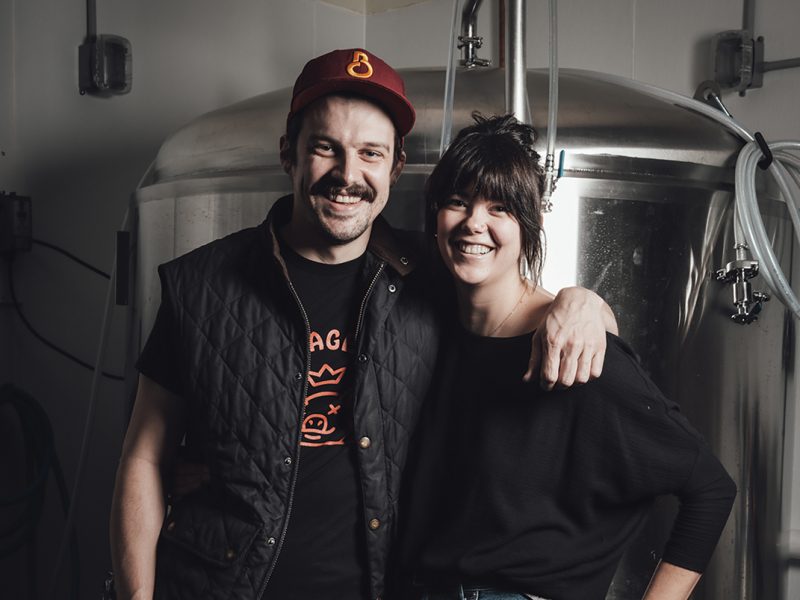
Quinn and Michela Palmer have focused on sourcing local and been rewarded with a strong local following as well as recognition as having some of the world's best vermouth. SUBMITTED

July 1, 2023 byKate Ayers

ESQUIMALT – A taste for local has won a Vancouver Island business global attention at the 2023 World Vermouth Awards in London, England.

Michela and Quinn Palmer of Esquimalt Vermouth and Apéritifs (formally Rootside Provisions Ltd.) create wines that have unique regional taste profiles thanks to growers and foragers across the province.

“We’re working with producers who are experts in their field and whose knowledge and experience really come through in the exceptional ingredients they provide. We couldn’t make what we do without incredible inputs from other local producers,” Michela Palmer says.

The couple sources honey for its wines, which start off as mead, from Paradis Apiary in Fort St. John. It’s the latest in a line of suppliers including apiaries on the Saanich Peninsula and in the Fraser Valley.

Palmer turned to the Peace because bees there produce 10 times what Island bees can make per hive, she says.

“Bees are solar-powered, meaning when the sun is up, the bees are busy. As we approach the summer solstice, the days extend to upwards of 20 hours of busy time. So, they get a lot done,” says Paradis Apiary owner Claude Paradis, who is excited to be supplying the Palmers with honey this season and their commitment to local sourcing.

The honey’s quality and taste showcases the region’s bounty.

“We just got some samples not too long ago and it’s just beautiful honey that we’re getting from up there,” Palmer says. “Depending on what the bees pollinate, it’ll taste slightly different.”

The honey adds to that sense of place – what grape wineries call terroir – that’s at the heart of what the Palmers are striving to deliver.

The couple also work with Forest for Dinner in Port Alberni.

“Ben and Celia are the ones who forage some of our local seasonal ingredients like elderflower, Sitka spruce tips, and salal berries,” Palmer says.

These ingredients allow the Palmers to venture outside of the more traditional apéritif flavours, such as sweet Italian classics that have notes of clove, cinnamon and caramel and introduce the Island’s more unique tastes.

“We’re just starting the research on it right now, but we want to do a couple different iterations of a 100% native botanicals apéritif just to kind of highlight what’s here,” Palmer says. “Salal is something that a lot of people haven’t tried, and it’s just so abundant here and really, really delicious. … You know, there’s so much good stuff here and so to be able to share it is really exciting.”

Side hustle

What started as a side hustle resulted in high-quality award-winning beverages. During the 2023 World Vermouth Awards, the Palmers won World’s Best Dry Vermouth for their Rosso (red) product and their Bianco (white) vermouth was named second-best in the semi-sweet category.

“I’m sure there are a lot of people who don’t even know what vermouth is so, hopefully, they’ll go and taste it and see it’s so easy to drink on its own,” Palmer says. “I think if the one thing we can do through this award is to encourage more people to just try it and sip on it on its own is the best thing we can ask for.”

In May 2016, the Palmers established Rootside Bitters and Mixers in Vancouver, selling non-alcoholic tonic syrups and mix concentrates to bars and restaurants. They moved to the Island in 2018 and began exploring the alcoholic beverage space, launching their Rosso sweet vermouth in July 2019 and a dry version in February 2020.

The couple weathered the pandemic storm, thanks in part to the buy-local movement among consumers.

“The community on Vancouver Island is just so incredibly supportive. It feels a little bit more, kind of like you’re not such a tiny, tiny fish in a big pond as you are on the Mainland,” Palmer says.

But like many other businesses, they have experienced supply chain issues and increased production costs.

Rising costs

“Looking back, every single year since 2019, there’s just been zero consistency year to year. It’s just kind of changed every single time,” Palmer says.

Not only has the price of honey, the meadery’s main input, increased by 30%, the cost of packaging and bottles has also risen, which impacted such business decisions as ordering custom bottles and altering bottle size.

“We really started pushing the vermouth a lot more when we received our custom bottles in May 2022 as we didn’t have to worry about sourcing our packaging any longer,” Palmer says.

“One of the biggest decisions was to order custom bottles, as buying a whole container was cheaper than the generic glass we were using. Shipping costs and supply chain issues caused our glass to double in price during the pandemic, so although we needed to make the whole purchase up front, it ended up costing us less per bottle going custom.”

The 500 ml custom bottles halve the couple’s costs and ensure that they don’t have to rely as heavily on precarious supply chains.

This year has seen costs stabilize.

“This year is looking really, really good so far,” she adds.

To further grow and regionalize their business, the couple are building their own warehouse on a six-acre property outside of Nanaimo.

“One of the really exciting things is to focus on local and native botanicals, but then actually get to be able to grow some of those on our own property,” Palmer says.

Palmer will continue to source most of their honey from Fort St. John, but would like to contribute some hyper-local product with a few beehives and create an entire field to bottle ecosystem on site.

Palmer has enjoyed working at their leased Esquimalt warehouse but is looking forward to beginning this new chapter.

“To be able to actually kind of have our own property and to be able to grow things ourselves, I think is going to be what gets us to that next level,” she says.

The commitment and passion behind small Island businesses have resulted in international recognition on multiple occasions.

Alongside Rootside Provisions, Macaloney’s Island Distillery in Victoria recently won the World’s Best Pot Still award and awards for Best Canadian Single Malt, Best Canadian Pot Still and Best Canadian Single Cask Malt. Sheringham Distillery in Langford won the World’s Best Contemporary Gin award last year with its flagship spirit Seaside Gin and Cowichan Valley’s Ampersand Distilling Co. won World’s Best Varietal Vodka in 2020, using 100% BC-grown wheat.

Related Posts

You may be interested in these posts from the same category.

Previous Post: « Land values “on solid ground”: FCC
Next Post: Langley seeks deregulation »

Copyright © 2026 Country Life in BC · All Rights Reserved