• Menu
  • Skip to primary navigation
  • Skip to main content
  • Skip to primary sidebar

Country Life In BC Logo

The agricultural news source in British Columbia since 1915

  • Headlines
  • Calendar
  • Subscribe
  • Advertise
  • About
  • Archives
  • Contact
  • Search
  • Headlines
  • Calendar
  • Subscribe
  • Advertise
  • About
  • Archives
  • Contact
  • Search

Primary Sidebar

Originally published:

JUNE 2020
Vol. 106 Issue 6

Subscribe Now!

Sign up for free weekly FARM NEWS UPDATES

Loading form…

Your information will not be
shared or sold ever

Stories In This Edition

Bracing for CUSMA

Blossoming hopes

Ottawa comes under fire

ALR complaints rise, investigations on hold

Editorial: Shifting promises

Back 40: Timing perfect to advance slaughter initiatives

Viewpoint: Finding the right balance in times of stress

Berries look good amid COVID-19 concerns

Sidebar: Pollination shapes up

Poultry and hops a winning combination

Ag Briefs: Producers mourn rising young abattoir operator

AB: BC Veg eyes strategic plan

AB: Wage hike compounds challenges

AB: Former ALC chair Erik Karlsen dies

Provincial disaster assistance ‘isn’t working’

Growers plan ahead as potatoes find markets

BCTF introduces grower incentives to boost quality

Agritourism gets creative in midst of COVID-19

Biosolids project halter following harassment

Rethinking the concept for mobile abattoirs

Ranchers brand gov’t support inadequate

Dairy reduces energy costs with solar power

Ingratte heads dairy commission

Research: Dairy housing a matter of perspective

Grower harvests near-perfect Honeyscrisps

Making the shift from table to wine grapes

Abattoir meets needs of Gulf Islands farmers

Sidebar: Community spirit

Strenthenging on-farm food safety protocols

Sidebar: On-farm practices for a pandemic

Farm News: Taking refuge in The Lab

4-H sales adapt amid COVID-19 restrictions

Leafrollers can be a potential crop contaminant

Silicon control of fungal issues trialed

Not all farmers’ markets are thriving

Woodshed: Desperate times call for chivalrous measures

Flower power

Jude’s Kitchen: Home cookin’

More Headlines

Follow us on Facebook

Comments Box SVG iconsUsed for the like, share, comment, and reaction icons

6 days ago

A BC Forest Practices Board investigation has found overgrazing has damaged grasslands in the Coutlee Range Unit near Merritt — and the range-use plan meant to prevent it was unenforceable. With complaints about overgrazing on the rise and grasslands covering just 1% of BC's land mass, the findings raise fresh questions about how the province manages one of its most vulnerable — and valuable — food-producing ecosyste#BCAg#BCAg ... See MoreSee Less

Link thumbnail

Board finds overgrazing rules unenforceable unmeasurable

www.countrylifeinbc.com

MERRITT – A BC Forest Practices Board investigation has found instances of non-compliance related to overgrazing have damaged open grasslands in the Mine pasture, part of the Coutlee Range Unit near...
View Comments
  • Likes: 6
  • Shares: 6
  • Comments: 6

Comment on Facebook

Several ranchers in recent years have gone into temporary non use on that range , so that means the grass should grow. But drought conditions/lack of rain and snow don’t allow that to happen . Dried up springs , creeks waterholes in various pastures add to over grazing where there is water , as livestock and everything else stay close to the water source . So even though less cattle are on it , over grazing appears. There is a large volume of horses on it 365 days/year which is wrong ! They pull grass right out of the ground when it’s just trying to grow ,, opens the door for weeds to grow in. That don’t help it. Aging infrastructure ( fences) laying on the ground, pipe line building , ( lack of commitment to fence maintenance) amongst all users contributes also to over grazing. Recreational atv users leaving gates open between pastures allows livestock to go back or ahead in pastures also expidites over grazing. Logging ( bcts) has no problem laying out cut locks on both sides of a fence , then it gets smashed down during logging and they don’t take responsibility to stand it back up or clean the cattle gaurds out when they are done , that happened 4 years ago on pasture 5 up there . I bet it is still not fixed . There are lots of contributing factors to the problem.

Tragedy of the commons.

I looked through the report. I saw nothing about the effects of noxious weeds on productive grasslands. This particular area is vulnerable because of the Ministry’a efforts to diversify the use of the Grasslands.

This pasture is under tremendous pressure not only from cattle but from irresponsible local residents who treat it as a landfill dumping all manner of household debris here. And don't even get me started on the mud bogging and camping in sensitive riparian areas. The feral horses are in this pasture 365 days a year just hammering it. Would sure be nice to see some enforcement action on people who are intentionally ripping up the grasslands and riparian areas. Cattle could be a valuable resource for rebuilding soils and native grasses in this area with the help of electric fencing and/or e-collars. The humans will be harder to manage.

The Forest and Range Practices Act was written by lawyers for global forest licencee shareholders. Results-based = unenforceable.

Also, can we talk about the impact of a pipeline being built through the middle of this field for multiple years?

View more comments

1 week ago

East Kootenay rancher Randy Reay is digging a new well after two natural water sources dried up on his Crown tenures. A new Living Lakes Canada assessment found 15% of mapped aquifers in the region are high-priority for monitoring, yet 80% of those go unmonitored. With over 48% of BC's provincial observation wells reporting below-normal groundwater levels, ranchers and researchers are sounding the alarm on water security. The story is in our March edition, and we've posted it to our website thi#BCAgk.

#BCAg
... See MoreSee Less

Link thumbnail

Water woes: groundwater under pressure across BC

www.countrylifeinbc.com

JAFFRAY – As a young boy growing up in the Kootenay-Boundary region, Randy Reay never expected to run out of water. But this year, in mid-February, his fields are bare. There is no snow halfway up t...
View Comments
  • Likes: 8
  • Shares: 7
  • Comments: 1

Comment on Facebook

Jaffrey is in the east Kootenays not kooteney boundary

2 weeks ago

BC farmers are bracing for prolonged higher input costs as war in the Middle East drives up fuel and fertilizer prices. Nitrogen fertilizer costs were already climbing before the Iran conflict began, with prices still roughly 60% above pre-pandemic levels. Farm Credit Canada warns that unlike 2022, strong commodity prices may not offset rising costs this time. Local suppliers expect supply challenges and further price increases ahead.

#BCAg
... See MoreSee Less

Link thumbnail

Fertilizer prices on the rise

www.countrylifeinbc.com

War in the Middle East has delivered a generational shock to energy prices, meaning BC farmers can expect a prolonged period of higher costs not just for fuel but also for fertilizer.
View Comments
  • Likes: 2
  • Shares: 1
  • Comments: 0

Comment on Facebook

2 weeks ago

... See MoreSee Less

View Comments
  • Likes: 1
  • Shares: 0
  • Comments: 0

Comment on Facebook

2 weeks ago

Cameron Stockdale is the new executive director of provincial farm safety organization AgSafeBC. Find out more in this week's Farm News Update from Country Life in B#BCAg#BCAg ... See MoreSee Less

Link thumbnail

New leadership at AgSafe BC

www.countrylifeinbc.com

Cameron Stockdale is the new executive director of provincial farm safety organization AgSafeBC, succeeding Wendy Bennett. Bennett left AgSafeBC in September 2025, following 12 years with the…
View Comments
  • Likes: 5
  • Shares: 1
  • Comments: 0

Comment on Facebook

Subscribe | Advertise

The agricultural news source in British Columbia since 1915
  • Email
  • Facebook

4-H sales adapt amid COVID-19 restrictions

Clubs explore online sales and other options

June 1, 2020 byJackie Pearase

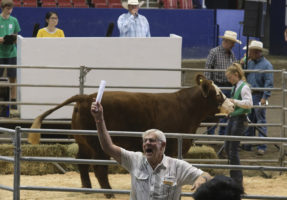
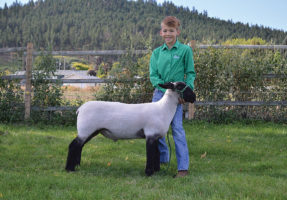
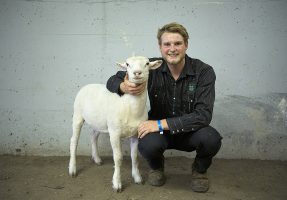
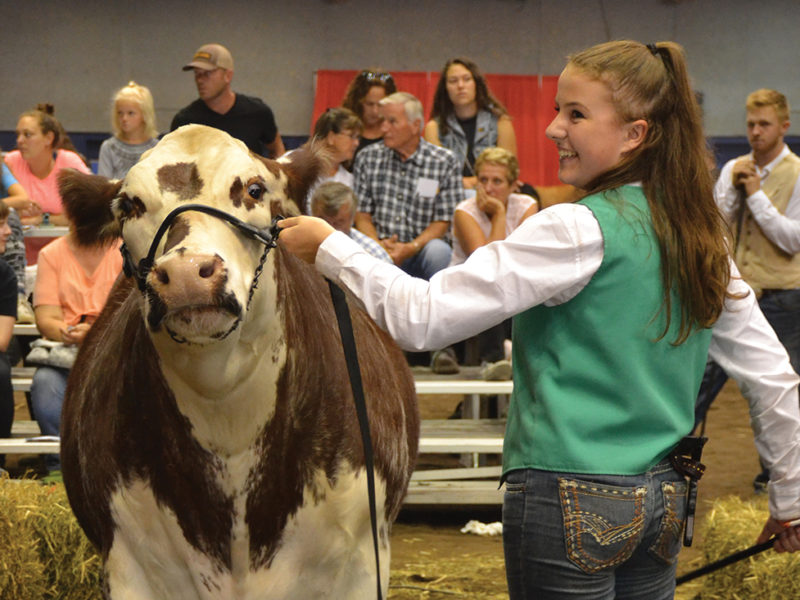
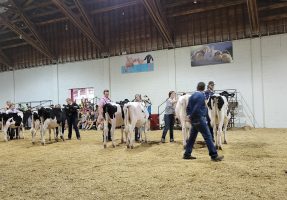
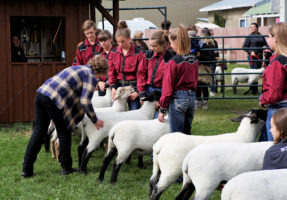
ARMSTRONG – True to their club motto, “Learn to Do by Doing,” 4-H club members across BC are finding new ways to market their animal projects when traditional means are unavailable.

Physical distancing rules in place banning events of more than 50 people and the cancellation of most fall fairs featuring 4-H auction sales have pushed 4-H leaders to think outside the box.

Organizers of the Okanagan 4-H Stock Show in Armstrong are going ahead with the planned sale date of July 11 but with an online format.

Interior Provincial Exhibition 4-H director Ted Steiger says 4-H members will create short descriptions of their animals for an online catalogue used for the week-long auction from July 4-11.

“It’s basically our only option at this point,” he notes. “Until they relax the rules somewhat … it’s our best option.”

Restrictions in place this fall will dictate the format of the 4-H sale typically held at the IPE.

“As far as the IPE sale goes, we’re still throwing some ideas out on that one,” Steiger says. “There will be some sort of an auction for those kids.”

The cancellation of the Pacific National Exhibition has Lower Mainland 4-H groups considering the online route as well.

Abbotsford 4-H key leader Heather Schmidt says not having the PNE to market animals is a reminder that creative thinking is a useful skill for farmers.

“The marketing is part of agriculture so it may be an opportunity for the kids to have to be a bit more creative in how they market their project,” Schmidt says. “In my mind, the selling of the project is the icing on the cake. The cake is really the whole year of the kids working together and learning how raise their animals well. Marketing is a part of that.”

PNE agriculture manager Christie Kerr is polling 4-H clubs in early June to determine if there is enough interest and resources to provide an online auction in lieu of the auction at the fair.

“It’s a whole new world for us. We are working to see what we can do to engage

4-H and support them in any way we can,” says Kerr. “There has never been a year that we haven’t been here to support 4-H, in particular the auction.”

She expects the auction to have fewer hogs as some swine clubs opted out of a project this year.

“Within our club, probably only half of the members were able to get hogs because of the sharing of property. A lot of pig clubs’ members have their pigs at one farm and with social distancing, they’re just not able to do that right now,” she explains.

Provincial Winter Fair organizers in Kamloops are making a final decision on their event on July 1.

“We’re definitely not going ahead with a full-scale fair,” says 4-H and open beef division representative Carole Gillis. “There is enthusiasm for some kind of an event. But there are also people who have said, ‘No matter what, we are not attending fairs this year.’”

With a 50-acre site to work with, organizers are hoping that something can be worked out with Interior Health for an outdoor event.

Any kind of on-site event would include safety measures in line with health guidelines, with the 4-H auction streamed live for telephone and electronic bidding.

Alternatively, a digital event will be offered with 4-H webinars in July and digital marketing for the sale in late September.

“Either way, we will have an auction of 4-H projects and open projects for anybody who wants to enter,” Gillis stresses. “We think it’s really important for kids not to lose the year and to have that connection to the fair.”

South End key leader Heidi Meier says the Williams Lake and District 4-H Council is currently monitoring the situation. The council hopes restrictions will be lifted in time for its annual show and sale at the Williams Lake Stockyards on August 6-10.

“If the council is unable to proceed in person, an alternate sale format will be presented,” Meier adds. “It is our greatest hope that the community members will continue to support their local 4-H members by purchasing members’ projects in whatever form is rolled out.”

Kamloops District 4-H key leader Ron McGivern says it is imperative that 4-H stock sales continue despite present circumstances.

“This has been a particularly challenging year for our 4-H members, our future leaders in agriculture,” he says. “We cannot have the challenges of this year stifle our members who really need to experience the successes of agriculture.”
Related Posts

You may be interested in these posts from the same category.

RCMP recruits 4-H youth

Sector events start growing

BC fairs await reopening

4-H members finish season at virtual Ag Expo

4-H sale saves the bacon for ranching student

Previous Post: « Rethinking the concept for mobile abattoirs
Next Post: Organic matter regulations delayed »

Copyright © 2026 Country Life in BC · All Rights Reserved