
• Menu
  • Skip to primary navigation
  • Skip to main content
  • Skip to primary sidebar

Country Life In BC Logo

The agricultural news source in British Columbia since 1915

  • Headlines
  • Calendar
  • Subscribe
  • Advertise
  • About
  • Archives
  • Contact
  • Search
  • Headlines
  • Calendar
  • Subscribe
  • Advertise
  • About
  • Archives
  • Contact
  • Search

Primary Sidebar

Originally published:

DECEMBER 2021
Vol. 107 Issue 12

Subscribe Now!

Sign up for free weekly FARM NEWS UPDATES

Loading form…

Your information will not be
shared or sold ever

Stories In This Edition

Catastrophic flooding

Wash out

Editorial: Rebuilding food security

Back 40: A farmer’s journey doesn’t always pay for itself

Viewpoint:

Dairy industry takes swift action on animal abuse

Producers urged to make emergency plans

Province sets agenda for tree fruit future

Ag Briefs: Province moves to shut down mink farms

Ag Briefs: Interior Opportunities

Ag Briefs: BCAC meetings bear fruit

Ag Briefs: Trade focus

North Okanagan ranchers brief on key issues

Sidebar: Strong retail, disappointing feeder prices

Frustration over ‘timber-centric’ range bill

Livestock protection program up for review

Honey producers get technology transfer program

Chicken squadron

Quality over quantity for blueberry pollination

New slaughter regs helpful but not enough

Sidebar: Changes welcome

Sheep producers have tough year

The old heave-ho

Grant revives Pacific field corn trials

Cannabis grower eyes mushroom production

New poinsettia varieties trialed in Abbotsford

Nursery sales stay brisk through pandemic

Job satisfaction has deep roots

Newcomers revitalize Lake Country orchard

Cariboo research looks to extend growing season

Full circle operation upcycles food waste

BC company specializes in bio control

Farm Story: Idyllic worlds have very little idleness in them

Blueberry farming is stress-busting for new chair

Research: To till or not to till? That’s actually not the question

Christmas tree growers face a grim future

Woodshed: An awkward encounter; a clever diversion

A century of dairy farming in Pitt Meadows

Jude’s Kitchen: Celebrate! Celebrate

More Headlines

Follow us on Facebook

Comments Box SVG iconsUsed for the like, share, comment, and reaction icons

6 days ago

A BC Forest Practices Board investigation has found overgrazing has damaged grasslands in the Coutlee Range Unit near Merritt — and the range-use plan meant to prevent it was unenforceable. With complaints about overgrazing on the rise and grasslands covering just 1% of BC's land mass, the findings raise fresh questions about how the province manages one of its most vulnerable — and valuable — food-producing ecosyste#BCAg#BCAg ... See MoreSee Less

Link thumbnail

Board finds overgrazing rules unenforceable unmeasurable

www.countrylifeinbc.com

MERRITT – A BC Forest Practices Board investigation has found instances of non-compliance related to overgrazing have damaged open grasslands in the Mine pasture, part of the Coutlee Range Unit near...
View Comments
  • Likes: 6
  • Shares: 6
  • Comments: 6

Comment on Facebook

Several ranchers in recent years have gone into temporary non use on that range , so that means the grass should grow. But drought conditions/lack of rain and snow don’t allow that to happen . Dried up springs , creeks waterholes in various pastures add to over grazing where there is water , as livestock and everything else stay close to the water source . So even though less cattle are on it , over grazing appears. There is a large volume of horses on it 365 days/year which is wrong ! They pull grass right out of the ground when it’s just trying to grow ,, opens the door for weeds to grow in. That don’t help it. Aging infrastructure ( fences) laying on the ground, pipe line building , ( lack of commitment to fence maintenance) amongst all users contributes also to over grazing. Recreational atv users leaving gates open between pastures allows livestock to go back or ahead in pastures also expidites over grazing. Logging ( bcts) has no problem laying out cut locks on both sides of a fence , then it gets smashed down during logging and they don’t take responsibility to stand it back up or clean the cattle gaurds out when they are done , that happened 4 years ago on pasture 5 up there . I bet it is still not fixed . There are lots of contributing factors to the problem.

Tragedy of the commons.

I looked through the report. I saw nothing about the effects of noxious weeds on productive grasslands. This particular area is vulnerable because of the Ministry’a efforts to diversify the use of the Grasslands.

This pasture is under tremendous pressure not only from cattle but from irresponsible local residents who treat it as a landfill dumping all manner of household debris here. And don't even get me started on the mud bogging and camping in sensitive riparian areas. The feral horses are in this pasture 365 days a year just hammering it. Would sure be nice to see some enforcement action on people who are intentionally ripping up the grasslands and riparian areas. Cattle could be a valuable resource for rebuilding soils and native grasses in this area with the help of electric fencing and/or e-collars. The humans will be harder to manage.

The Forest and Range Practices Act was written by lawyers for global forest licencee shareholders. Results-based = unenforceable.

Also, can we talk about the impact of a pipeline being built through the middle of this field for multiple years?

View more comments

1 week ago

East Kootenay rancher Randy Reay is digging a new well after two natural water sources dried up on his Crown tenures. A new Living Lakes Canada assessment found 15% of mapped aquifers in the region are high-priority for monitoring, yet 80% of those go unmonitored. With over 48% of BC's provincial observation wells reporting below-normal groundwater levels, ranchers and researchers are sounding the alarm on water security. The story is in our March edition, and we've posted it to our website thi#BCAgk.

#BCAg
... See MoreSee Less

Link thumbnail

Water woes: groundwater under pressure across BC

www.countrylifeinbc.com

JAFFRAY – As a young boy growing up in the Kootenay-Boundary region, Randy Reay never expected to run out of water. But this year, in mid-February, his fields are bare. There is no snow halfway up t...
View Comments
  • Likes: 8
  • Shares: 7
  • Comments: 1

Comment on Facebook

Jaffrey is in the east Kootenays not kooteney boundary

2 weeks ago

BC farmers are bracing for prolonged higher input costs as war in the Middle East drives up fuel and fertilizer prices. Nitrogen fertilizer costs were already climbing before the Iran conflict began, with prices still roughly 60% above pre-pandemic levels. Farm Credit Canada warns that unlike 2022, strong commodity prices may not offset rising costs this time. Local suppliers expect supply challenges and further price increases ahead.

#BCAg
... See MoreSee Less

Link thumbnail

Fertilizer prices on the rise

www.countrylifeinbc.com

War in the Middle East has delivered a generational shock to energy prices, meaning BC farmers can expect a prolonged period of higher costs not just for fuel but also for fertilizer.
View Comments
  • Likes: 2
  • Shares: 1
  • Comments: 0

Comment on Facebook

2 weeks ago

... See MoreSee Less

View Comments
  • Likes: 1
  • Shares: 0
  • Comments: 0

Comment on Facebook

2 weeks ago

Cameron Stockdale is the new executive director of provincial farm safety organization AgSafeBC. Find out more in this week's Farm News Update from Country Life in B#BCAg#BCAg ... See MoreSee Less

Link thumbnail

New leadership at AgSafe BC

www.countrylifeinbc.com

Cameron Stockdale is the new executive director of provincial farm safety organization AgSafeBC, succeeding Wendy Bennett. Bennett left AgSafeBC in September 2025, following 12 years with the…
View Comments
  • Likes: 5
  • Shares: 1
  • Comments: 0

Comment on Facebook

Subscribe | Advertise

The agricultural news source in British Columbia since 1915
  • Email
  • Facebook

A century of dairy farming in Pitt Meadows

The Severinski family has milked cows every single day for over 100 years

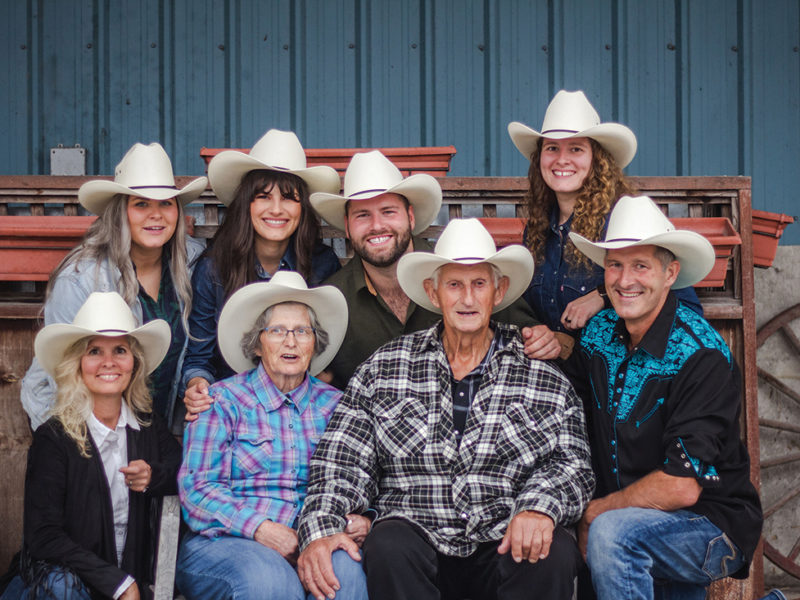
Louise and Harry Severinski sit surrounded by family, including son Kevin, far right, and grandson Brandon, the fourth-generation Severinski to work on the family’s Pitt Meadows dairy farm. Severinski Farms received a Century Farm award from the province in September. SUBMITTED

December 1, 2021 byKate Ayers

PITT MEADOWS – Severinski Farms reached a golden milestone this fall, one recognized with the province’s Century Farm and Ranch Award.

The celebration in September was attended by nearly 200 people, including friends, family and local politicians. It was a special moment for the entire family, but especially Harry and Louise Severinski, who have been a part of the operation for the lion’s share of its 100 years.

“I told my parents, so they knew (the barbeque) was happening, but we hadn’t told them we’d applied for the BC Century Farm Award and we didn’t tell them we’d invited all the local politicians,” says Kevin Severinski, Harry and Louise’s son and a third-generation farmer. “So, they were pretty shocked when they saw the mayor, councillors, the MLA and MP show up. They were pretty proud.”

The Severinski family traces its farming roots back to 1910 when Steven Severinski, Kevin’s grandfather, immigrated from what is today Croatia. Upon landing in Cloverdale, Steven bought a five-acre parcel and invited his fiancé Manda to join him. The couple married on

September 12, 1921, just a day after she arrived. They milked about a dozen cows and established Severinski Farms.

When a neighbour’s farm caught on fire in early 1922, the Severinskis joined a bucket brigade to put out the fire and save the neighbour’s house. But the strain caused Manda, who was expecting the couple’s first child, to miscarry and she wound up in hospital.

During Manda’s week-long hospital stay, Steven swapped the Cloverdale property for 40 acres in Pitt Meadows. When he picked Manda up following her treatment, they drove to their new farm just north of the Fraser River, along with all their cattle and one horse. The couple bought two more draft horses upon their arrival.

As Steven and Manda settled into their new home, they grew their land base to 80 acres and their family by 10 children.

Harry, the couple’s youngest son, bought the farm in 1965. He and his wife Louise expanded the operation to 120 acres and 60 milking cows.

In 2000, Kevin and his wife Audra took over the farm. They have since grown the operation to 145 acres of owned land and 100 acres of leased land. Kevin has worked on the farm all his life. He took an off-farm job for a year after high school, but quickly came back home because he “really enjoyed the lifestyle.”

“With dairy, it’s a lot because you have to milk every day,” he says. “(But) it’s nice to have variety – you have field work, mechanic work, a lot of construction and there’s other types of maintenance.”

The farm also provided a rich environment in which to raise their four children. So much so, that two of their children are interested in carrying the farm into its fourth generation.

Their son Brandon is the family’s full-time herdsman. Their daughter Amanda is a herd manager and works off the farm in sales.

As the family navigates the challenges of succession planning with four children, they hope the operation’s legacy will continue long into the future.

The family now milks 160 cows three times a day with a herringbone double-eight parlour.

“I always wanted to milk three times a day. I worked with my dad forever and over the last four or five years we worked together, I told him I wanted to milk three times a day,” Kevin says. “He said the day I bought the farm, I could milk as many times as I wanted. Purposefully, the day we bought the farm, we started milking three times a day and have ever since.”

The Severinskis grow grass crops for the cattle, producing silage and small square bales.

Throughout the years, the family has integrated innovative and technological advancements into their operation, such as cattle pedometers and milk meters.

“We have a computer system that keeps track of milk weights and cow activity three times a day and breeding (information) is all in there,” Kevin says.

In addition to innovation, collaboration and understanding between the generations contribute to the farm’s long-term success.

“It’s very special, the fact that I get to work with my dad every day. I think it’s even more special that my dad gets to work with his grandson,” Kevin says. Harry and Brandon clean the heifer and calf barns together three or four times a week.

“My dad drives the tractor and my son moves gates. I always think about how lucky Brandon is to have those experiences. My dad shows Brandon a lot of mechanics stuff, too, and shows him how to fix equipment. My grandfather was 90 when I was 12. He was retired by then.”

Through the family’s 100 years of farming, other operations came and went, but the Severinskis stayed true to their passion – cows – and their community.

“We’ve never switched to blueberries or cranberries,” says Kevin. “A lot of people moved around or did chickens. We’ve always just stuck with dairy for 100 years. And we love Pitt Meadows. We’re very involved in the community in a lot of local events.”

Related Posts

You may be interested in these posts from the same category.

Previous Post: « Dairy compensation fund opens
Next Post: Kootenay growers target winter deliveries »

Copyright © 2026 Country Life in BC · All Rights Reserved