• Menu
  • Skip to primary navigation
  • Skip to main content
  • Skip to primary sidebar

Country Life In BC Logo

The agricultural news source in British Columbia since 1915

  • Headlines
  • Calendar
  • Subscribe
  • Advertise
  • About
  • Archives
  • Contact
  • Search
  • Headlines
  • Calendar
  • Subscribe
  • Advertise
  • About
  • Archives
  • Contact
  • Search

Primary Sidebar

Current Issue:

JANUARY 2026
Vol. 112 Issue 1

Subscribe Now!

Sign up for free weekly FARM NEWS UPDATES

Select list(s) to subscribe to


By submitting this form, you are consenting to receive marketing emails from: Country Life in BC. You can revoke your consent to receive emails at any time by using the SafeUnsubscribe® link, found at the bottom of every email. Emails are serviced by Constant Contact
Your information will not be
shared or sold ever

Follow us on Facebook

Comments Box SVG iconsUsed for the like, share, comment, and reaction icons

6 hours ago

BC's minimum piece rates for 15 hand-harvested crops increased 2.6% on December 31. Crops include peaches, apricots, brussels sprouts, daffodils, mushrooms, apples, beans, blueberries, cherries, grapes, pears, peas, prune plums, raspberries and strawberries. Farm-worker piece rates in BC were increased by 11.5% in January 2019 and 6.9% in December 2024. BC’s current minimum wage sits at $17.85 per hour.

#BCAg
... See MoreSee Less

BCs minimum piece rates for 15 hand-harvested crops increased 2.6% on December 31. Crops include peaches, apricots, brussels sprouts, daffodils, mushrooms, apples, beans, blueberries, cherries, grapes, pears, peas, prune plums, raspberries and strawberries. Farm-worker piece rates in BC were increased by 11.5% in January 2019 and 6.9% in December 2024. BC’s current minimum wage sits at $17.85 per hour. 

#BCAg
View Comments
  • Likes: 5
  • Shares: 0
  • Comments: 1

Comment on Facebook

They deserve it, but the general public will be whining about increased prices in the stores. Will need to make more information average to the g.p.

2 days ago

... See MoreSee Less

View Comments
  • Likes: 9
  • Shares: 0
  • Comments: 0

Comment on Facebook

1 week ago

... See MoreSee Less

View Comments
  • Likes: 7
  • Shares: 0
  • Comments: 0

Comment on Facebook

3 weeks ago

Water volumes from the Nooksack River are at levels similar to 1990 and 2021, but the province says flows should peak at 10pm tonight. The shorter duration, as well as conditions in other watercourses within the watershed and performance of flood protection infrastructure should avoid a catastrophe on the scale of 2021. However, several landslides mean road closures have once again effectively isolated the Lower Mainland from the rest of the province.

#BCag
... See MoreSee Less

Water volumes from the Nooksack River are at levels similar to 1990 and 2021, but the province says flows should peak at 10pm tonight. The shorter duration, as well as conditions in other watercourses within the watershed and performance of flood protection infrastructure should avoid a catastrophe on the scale of 2021. However, several landslides mean road closures have once again effectively isolated the Lower Mainland from the rest of the province.

#BCAg
View Comments
  • Likes: 9
  • Shares: 3
  • Comments: 1

Comment on Facebook

Family living in Sumas WA say it's very much like '21. They have the same amount of water in their house as last time.

1 month ago

... See MoreSee Less

View Comments
  • Likes: 4
  • Shares: 0
  • Comments: 0

Comment on Facebook

Subscribe | Advertise

The agricultural news source in British Columbia since 1915
  • Email
  • Facebook

Balanced conditions in 2020

May 26, 2021 byPeter Mitham

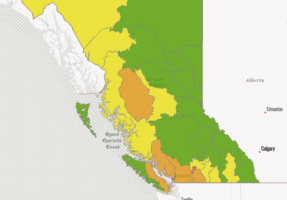
Climate variability has hit BC farmers and ranchers hard in recent years, between wildfire, flood and drought. Conditions in 2019 were such that 52 census subdivisions became eligible for the federal government’s livestock tax deferral program.

The program provides relief to farmers in areas where forage shortfalls due to excessive drought or moisture total 50% or more.

But in 2020, no regions in BC were deemed eligible for the program, a sharp shift from the dry year of 2015 that saw 123 regions declared eligible.

The shift is good news for producers in some regions, many of whom had been eligible for the program for several years running. Better weather conditions mark a pause of sorts, though livestock producers faced other challenges due to backlogs at feedlots and rising feed costs.

The tax deferral program allows livestock producers to defer a portion of sale proceeds from breeding livestock until the following tax year, reducing their tax burden and allowing them to offset sale income with the cost of replacement animals.

This year could see a return to dry conditions, however. Many regions of the southern Interior, particularly the East Kootenays, reported a below-average snowpack for this time of year on May 15.

“The combination of early snowmelt and lack of spring rainfall increases the risk for drought and low flow conditions through the summer for many areas in southern BC,” the BC River Forecast Centre reported in its regular water supply bulletin last week.

The most recent report from the federal government’s Canadian Drought Monitor goes a step further, noting that dry conditions are expanding across southern BC.

“Across the Pacific Region, abnormally dry conditions persisted and expanded, including the emergence of moderate drought conditions in the Interior,” it said.
Related Posts

You may be interested in these posts from the same category.

New year, old troubles

BC blueberry crop down 30%

Fruit growers face hard choices

Peace whipped by wild winds

Heatwave stresses livestock

Cherry Blossom

Frost nips cherry growers

Cold air hits cherries

Cherry growers see record crop losses in 2019

Agriculture ministers discuss concerns

Potato hopes mashed

Rains wash away burn bans

Citizen scientists wanted

Previous Post: « Building boom ahead
Next Post: BC fairs await reopening »

Copyright © 2026 Country Life in BC · All Rights Reserved