• Menu
  • Skip to primary navigation
  • Skip to main content
  • Skip to primary sidebar

Country Life In BC Logo

The agricultural news source in British Columbia since 1915

  • Headlines
  • Calendar
  • Subscribe
  • Advertise
  • About
  • Archives
  • Contact
  • Search
  • Headlines
  • Calendar
  • Subscribe
  • Advertise
  • About
  • Archives
  • Contact
  • Search

Primary Sidebar

Originally published:

JANUARY 2026
Vol. 112 Issue 1

Subscribe Now!

Sign up for free weekly FARM NEWS UPDATES

Loading form…

Your information will not be
shared or sold ever

Stories In This Edition

Sumas floods again

Winter blues

Biosecurity holds line against HPAI

Task force presents blueprint for growth

Soaking it up

Editorial: Next year is here

Back 40: What a difference a year can make

Viewpoint: Collaboration key to shaping the future of ag

Different year, similar flood

BC milk testers on strike over mileage

Ag Briefs: Co-op windup delayed by legal wrangling

Ag Briefs: Shuswap watershed funding available

Ag Briefs: CFIA reports low honey adulterations

Collaboration takes centre stage at dairy meetings

Lawsuits drive ranchers call for DRIPA’s repeal

Ranchers face off against BC Hydro

Monette properties on the auction block

Preview: Pacific Ag Show tackles farming challenges

Preview: Growing knowledge

Islands Ag Show builds resilience for farmers

Organic BC launches with sector conference

Sidebar: Organic industry awards

Irrigation set to play a larger role in BC

BC blueberry growers set council priorities

Farm Story: January farm planning: all talk, no change

BC women break barriers in agriculture

Proper tools enhance worker safety, well-being

Woodshed: Sparks fly as Christopher and Astrid meet

BC 4-H scores hat treick at the Royal Winter Fair

Jude’s Kitchen: Make January fun with new foods, flavours

More Headlines

Follow us on Facebook

Comments Box SVG iconsUsed for the like, share, comment, and reaction icons

3 hours ago

BC Supreme Court has blocked an attempt by remaining BC Tree Fruits Cooperative members to amend a rule that would have excluded former members from receiving their share of the co-op’s remaining assets. In her ruling, Justice Miriam Gropper called the bid to amend Rule 125, which would allow 32% of the surplus to be distributed among former members based on tonnage shipped to the co-op during its last six years of operation, “oppressive and unfairly prejudicial.” The co-op closed in July 2024, and remaining assets are estimated at between $12 and $15 million.

#BCAg
... See MoreSee Less

BC Supreme Court has blocked an attempt by remaining BC Tree Fruits Cooperative members to amend a rule that would have excluded former members from receiving their share of the co-op’s remaining assets. In her ruling, Justice Miriam Gropper called the bid to amend Rule 125, which would allow 32% of the surplus to be distributed among former members based on tonnage shipped to the co-op during its last six years of operation, “oppressive and unfairly prejudicial.” The co-op closed in July 2024, and remaining assets are estimated at between $12 and $15 million.

#BCAg
View Comments
  • Likes: 2
  • Shares: 4
  • Comments: 0

Comment on Facebook

1 day ago

From our Country Life in BC family to yours, HAPPY FAMILY DAY!

Photo by Liz Twan

#BCAg
... See MoreSee Less

From our Country Life in BC family to yours, HAPPY FAMILY DAY!

Photo by Liz Twan

#BCAg
View Comments
  • Likes: 10
  • Shares: 1
  • Comments: 1

Comment on Facebook

🥰🐮🩷

3 days ago

Full-time students employed in BC agriculture during the summer season are eligible to apply for a bursary of up to $3,000. The bursary, administered by the Investment Agriculture Foundation, aims to increase youth and domestic seasonal worker employment in the ag sector. Funding is awarded on a first-come, first-serve basis. More information is available at tinyurl.com/5ef6pe3m

#BCAg IAF
... See MoreSee Less

Full-time students employed in BC agriculture during the summer season are eligible to apply for a bursary of up to $3,000. The bursary, administered by the Investment Agriculture Foundation, aims to increase youth and domestic seasonal worker employment in the ag sector. Funding is awarded on a first-come, first-serve basis. More information is available at https://tinyurl.com/5ef6pe3m

#BCAg IAF
View Comments
  • Likes: 13
  • Shares: 11
  • Comments: 0

Comment on Facebook

4 days ago

BC fruit and vegetable farmers are being asked to share their views on farming technology in a 10-minute survey from Royal Roads University and the University of the Fraser Valley. The survey looks at how fruit and vegetable farmers are adopting emerging farming technologies -- such as digital tools, “controlled environment agriculture systems” (greenhouses) and agri-genomics (DNA analysis) -- to cope with changing climate conditions. The survey takes about 10 minutes to complete, and participants will be eligible to win an assortment of $50-$200 gift cards.

insights.kaianalytics.com/s3/PAS2026
... See MoreSee Less

BC fruit and vegetable farmers are being asked to share their views on farming technology in a 10-minute survey from Royal Roads University and the University of the Fraser Valley. The survey looks at how fruit and vegetable farmers are adopting emerging farming technologies -- such as digital tools, “controlled environment agriculture systems” (greenhouses) and agri-genomics (DNA analysis) -- to cope with changing climate conditions. The survey takes about 10 minutes to complete, and participants will be eligible to win an assortment of $50-$200 gift cards. 

https://insights.kaianalytics.com/s3/PAS2026
View Comments
  • Likes: 5
  • Shares: 1
  • Comments: 0

Comment on Facebook

4 days ago

The District of Coldstream is proposing the creation of farm property tax subclasses to distinguish between small-scale and large-scale farm operations. Currently, all farms are classified as Class 9 regardless of size or infrastructure needs. The district argues larger farms require more municipal services and should be taxed accordingly. It plans to pitch its proposal at the Southern Interior Local Government Association convention in Revelstoke at the end of April. Support there could escalate the discussion to the Union of BC Municipalities convention next September in Vancouver.

#BCAg
... See MoreSee Less

The District of Coldstream is proposing the creation of farm property tax subclasses to distinguish between small-scale and large-scale farm operations. Currently, all farms are classified as Class 9 regardless of size or infrastructure needs. The district argues larger farms require more municipal services and should be taxed accordingly. It plans to pitch its proposal at the  Southern Interior Local Government Association convention in Revelstoke at the end of April. Support there could escalate the discussion to the Union of BC Municipalities convention next September in Vancouver. 

#BCAg
View Comments
  • Likes: 12
  • Shares: 2
  • Comments: 11

Comment on Facebook

Which municipal services do they require more of? Even larger farms typically still have only one or possibly two dwellings. Most have their own well and septic, and I suppose it depends on location, but most rural properties don't have garbage pick up either. And whether 20 driveways or one join the road, the cost to plow that road is the same. I no longer live within a municipality so of course there could be costs I've overlooked that are contributing to the District's proposal.

Large farms put more back into the community too.

The larger farms are the only farms paying wages, allowing people to spend money in their communities, the beauty of a network of small business. Small farms more often then not, is a single transaction, a hobby. Large- buy feed, raise cow, calf is born, sell calf, pay wage(support livlihoods), buy fence posts, buy more feed and so forth. Feeding the community. Small- Buy feed, raise cow, kill cow, eat cow.

And this is why farmers left California. British Columbia is no different

I am not sure how to post the actual Resolution that Council Pat Cochrane put forward but here is the link to the special meeting they are holding to pass the resolution: www.coldstream.ca/government-bylaws/news-alerts/notice-special-council-meeting-3.

Why not find ways to bring in more business's and audit municipal spending and regulate short term rentals (because Coldstream has essentially zero places to stay technically, insane) instead of raising taxes arbitrarily because "bigger costs more"

Attending that meeting, they claimed that “large farms” use more municipal services, yet Cochrane consistently stated he was going after “smaller estate properties not actively farming.” This is not only contradictory but misinformed. It would take him but three door knocks before he learned that the “estate farms” not actively farming are typically leased to a larger conglomerate to maintain farm classification. “Rural living at its finest,” though it seems not a soul on council is well-versed in this wheelhouse. What’s worse is that they somehow don’t think it’s necessary to bring in a single subject expert before blindly tossing around recommendations and solutions to problems that don’t really exist—or at least not as they perceive them. Don’t get me started on their rhetoric comparing the value of class 9 properties to other residential classes, when even my 12 year old understands that the values are drastically different when one property can be subdivided, and an ALR property cannot. Forever to the left of the point.

They want to tax a large farm more? Do people realize that farmers aren't becoming rich. Also, a small or hobby farm isn't contributing much to the local economy or community. This doesn't make sense. If we don't support our farmers. We need them. We can't import all our food.

What bs. I can't do a water and sewer hook up for an agricultural building, (a farm vegie stand) on a 160 acre farm in downtown Kelowna because there is already one at the far end of the lot for the principal residence. What extra infrastructure would they be talking about. Our irrigation is by licensed ground water well put in, powered and serviced by me. Any change in tax code should be on farm estates that do bogus farm gate sales at the minimum requirement, not viable commercial farming enterprizes that employ and contribute economic benefits to so many other businesses

Instead of increasing property taxes on large farms, I think governments need to revise the threshold needed for a property to qualify for farm status. That threshold has not changed in over 20 years and many non farmers are taking advantage of the ridiculously low threshold that was intended for real farmers.

And then you tax the farmers more and wonder why food prices keep going up. Why is it that the only thing government does is find more reasons and ways to tax people?

View more comments

Subscribe | Advertise

The agricultural news source in British Columbia since 1915
  • Email
  • Facebook

BC women break barriers in agriculture

Leadership and ag-adjacent roles are opportunities for women

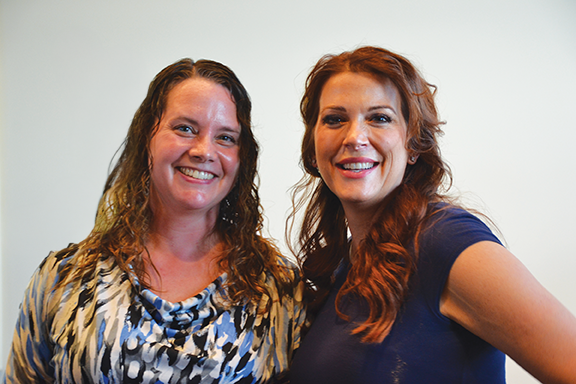
Katie Lowe, left, executive director of the BC Egg Marketing Board, and Stephanie Nelson, right, executive director of the BC Broiler Hatching Egg Commission, co-founded the BC Ag Women's Network in 2018 to support women in agriculture. Photo | Ronda Payne

January 1, 2026 byRonda Payne

ABBOTSFORD – The Canadian Agricultural Human Resource Council (CAHRC) wants to see more women assume roles in agriculture, not only to achieve gender parity throughout the industry, but also to help reduce labour and skills shortages.

The organization’s March 2025 report, From the Field to the Boardroom: Women Driving Change in Agriculture, cites Statistics Canada data that indicates 31% of on-farm agriculture workers, both farm operators and employees, were women in 2024.

BC is a leader of women in agriculture, with 46.5% of on-farm workers being female.

But national data indicates that women’s increasing share of the sector is due primarily to men leaving agriculture, rather than more women joining.

With the overall BC agricultural workforce declining 40% from 2020 to 2024, bringing more women into the industry at all levels is important.

“I think there is some intentionality in terms of women leadership,” says Stephanie Nelson, executive director of the BC Broiler Hatching Egg Commission (BCBHC) and chair of the BC Cranberry Marketing Commission.

Nelson is also a co-founder of the BC Ag Women’s Network, established in 2018. The network has been on hold for a little more than a year as Nelson and committee members look to determine the needs of the women who are “already busy in ag,” she says.

CAHRC’s report also mentions the National Women in Agriculture and Agri-Food Network project, which has a goal of ensuring at least 30% of leadership roles are occupied by women.

When Nelson started with BCBHC in 2008, she was the only woman executive director among the province’s poultry organizations. Today, the situation is reversed, with just one man.

“We are definitely seeing more women take part in the farming itself,” says Katie Lowe, another co-founder of BC Ag Women’s Network and executive director of BC Egg Marketing Board.

While the organization has an all-male board, it has had women members in the past, and Lowe is more concerned about the lack of women in non-primary agriculture roles such as feed sales and research.

CAHRC’s report noted that although 60% of agriculture degree holders are women, young women report more barriers than older women in areas like “breaking into the ‘old boys’ club,’” “preconceived notions of capability” and “balancing career and family.”

Its research identified these and other challenges, as well as potential solutions, and then CAHRC created an action plan that included training, networking and other events, which attracted 900 women.

Chilliwack egg producer Juschka Clarke, owner of Hazelsprings Farm, received a head start from her mother, her sole female mentor.

“This farm was passed down to me by my mom, so we have a long history of strong women in our family,” she says. “I’m excited about watching our young generation of women farmers rise to the occasion.”

Clarke’s daughter Emily now farms with her, continuing the legacy left by Clarke’s mother, who died two years ago.

Clarke believes women in agriculture create space for more women to enter the field.

“We’re actively involved in day-to-day operations,” Clarke says. “Even in families where it’s couples, women are involved in the day-to-day operations. Many of them can take over at the drop of a hat, and they do.”

While Clarke is making decisions about her commercial operation, just as her mother did as a hobby farmer, national data show that women are less likely than men to be the farm’s sole decision-maker.

Yet, compared with the rest of Canada, women in BC are twice as likely to be a sole operator as in the rest of Canada. This doesn’t mean it’s easy.

Pat Hanson of Andtbaka Farm, a 30-acre mixed farming operation in Powell River, has been farming for 46 years. She manages a market garden, three greenhouses, poultry, sheep, ducks, geese and some dairy and beef cattle.

But even with her decades of experience, Hanson has seen challenges as a female operator.

“As a woman [with one income], you kind of have to buy the second or third-hand [equipment] that someone has to fix,” she says. “I took a mechanics class, so I’m okay.”

She hopes things will be different for the next generation of women.

“I’d like to see way more women take a vested interest in agriculture,” she says. “To see more courses offered – even in the high school curriculum. I’d like to see more opportunities for young women to be exposed to it.”

In Langley, Tammy Rose sees different perspectives of agriculture in her primary business as an agent with Royal LePage Wolstencroft Realty and as operator of Green Tractor Farm, where she raises registered Babydoll sheep.

Rose sells hay, breeds and sells sheep and sells eggs with her eight-year-old son Aiden. They usually have six sheep at a time.

She doesn’t consider agriculture unique in the dominance of male operators.

“I grew up in a road construction family, so you’re kind of used to things like that,” she says. “The same as in real estate. You just need to adjust and approach it differently when you’re faced with those situations.”

Like Clarke and Hanson, she’s seeing women sharing more with each other and helping new farmers succeed, building the community and making sure the next generation is involved and “not just sitting on the sidelines.”

“In the ag industry, I think it’s really important for women to be involved in committees and the industry outside of the farm as well, as it keeps us visible and connected,” she says. “I think women can soften this industry quite a bit as well. We’re all here to help each other, in my opinion. Nobody wants to see anybody fail.”

Related Posts

You may be interested in these posts from the same category.

Farm compensation benchmarks set

Domestic labour gap grows

Industry looks to move needle on labour shortage

Farm workforce shortfall

Previous Post: « Chilliwack grower named BC-Yukon OYF
Next Post: Reclassification sparks farm definition debate »

Copyright © 2026 Country Life in BC · All Rights Reserved