
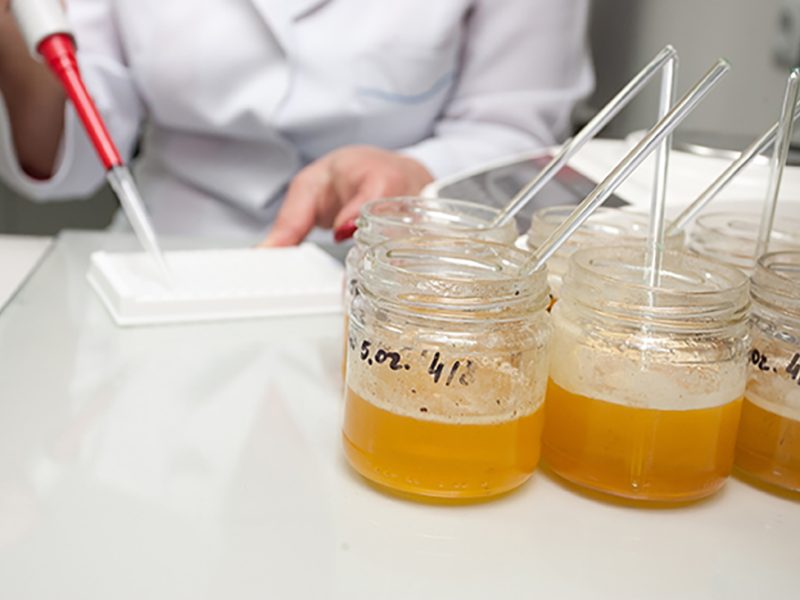
Honey ranked highly in the Canadian Food Inspection Agency’s product authenticity testing last year, with limited adulteration reported.
CFIA reported an authenticity rate of 88% across 84 honey samples tested, 12% of the more than 700 samples of products that included grated cheese, edible oils, meats, fish and fruit juices. Grated hard cheeses scored the lowest for authenticity at 55% while fruit juices scored the highest at 95%.
“We conducted sampling to detect misrepresentation of honey adulterated with foreign sugars (such as those derived from sugar cane, corn syrups or rice syrups) in both domestic and imported honey sold in Canada,” CFIA reported on December 9.
Domestic honey had the highest rate of compliance, with just one sample testing positive for adulteration, while imported honey fared worst, with nine adulterated samples.
Honey from India was the most adulterated, with two impure samples, as well as an element in an adulterated blend from several countries (including Canada).
Three honeys from the Middle East were also found to be adulterated.
All told, 10,027 kg of adulterated honey tested positive for foreign sugars.
Canada imported $57.5 million worth of honey during the survey period, primarily from New Zealand, whose honeys were free of adulteration last year, and Brazil.
India was the seventh major exporter of honey to Canada in the period, shipping $2 million worth.
During the fall meeting of the BC Honey Producers Association, apiarists noted that honey is the most-faked food on the planet and discussed opportunities to capitalize on the authenticity of domestic product versus imports.
All content on this website is copyrighted, and cannot be republished or reproduced without permission.





 Goerzen wins dairy award