
• Menu
  • Skip to primary navigation
  • Skip to main content
  • Skip to primary sidebar

Country Life In BC Logo

The agricultural news source in British Columbia since 1915

  • Headlines
  • Calendar
  • Subscribe
  • Advertise
  • About
  • Archives
  • Contact
  • Search
  • Headlines
  • Calendar
  • Subscribe
  • Advertise
  • About
  • Archives
  • Contact
  • Search

Primary Sidebar

Originally published:

SEPTEMBER 2024
Vol. 110 Issue 9

Subscribe Now!

Sign up for free weekly FARM NEWS UPDATES

Loading form…

Your information will not be
shared or sold ever

Stories In This Edition

Bottom of the bin

BC Tree Fruits for sale

Creditors a cross-section of industry

Ambrosia council winds down

Editorial: Core decisions

Back 40: It’s about time things were simple again

Viewpoint: When co-ops fail, don’t blame the concept

Co-op closure leaves growers in the lurch

Dairy industry revamps WMP initiative

Ag Briefs: Site C reservoir begins flooding farmland

Ag Briefs: Dairy NEP picks announced

Ag Briefs: Former MP Chuck Strahl dies

Ag Briefs: Pender Island FI honoured

Letters: BC Tree Fruits is a loss for all of us

In passing: Orchardists death marks the end of an era

Ag advisory committee in jeopardy

Fairs group holds the line against cash flow crunch

The low-down on phosphorus management

Sidebar: AEM Code phases in nutrient plans

Grower optimism encouraged at annual field day

Richard Cleave receives top honour

Variety a reward that works for large animal vets

Ranchers to benefit from handheld water testers

Feed available but stocks low as drought continues

Tsqescen First Nations aim to grow food security

Efficiency is king as drought levels rise across BC

Farm Story: Farm succession begins with the harvester

Courses delivery affordable ag education

Gulf Island entrepreneurs eye food security

Creston Valley crop losses hit local food hard

PNE is a family affair for 4-H members

Woodshed: Delta prepares to take Kenneth for a ride

Okanagan berry venture is a family affair

Jude’s Kitchen: Feeding fall’s new beginnings

All content on this website is copyrighted, and cannot be republished or reproduced without permission.

More Headlines

Follow us on Facebook

Comments Box SVG iconsUsed for the like, share, comment, and reaction icons

15 hours ago

A Maple Ridge dairy producer has been fined $7,512, had his licence suspended for three months, and faces quota restrictions for two years after an undercover investigation confirmed raw milk was sold directly from the farm on three separate occasions.

#BCAg
... See MoreSee Less

Link thumbnail

Maple Ridge farm fined for raw milk sales

www.countrylifeinbc.com

Raw milk remains off the table for dairy producers, with the BC Milk Marketing Board (BCMMB) taking action against a Maple Ridge producer for illicit sales. An undercover investigation of Maple Ridge...
View Comments
  • Likes: 13
  • Shares: 12
  • Comments: 24

Comment on Facebook

Unpasteurized milk is sold in Europe. It's the only milk certain cheeses can be made from.

A person can shoot up government drugs in a playground but milk is the issue. 🙄

leave him the hell alone! if someone wants to buy raw milk at their own risk, let them. At least they can see where the milk came from

Europeans used raw milk to make cheese for millenia, the farmer should sue them back on cultural grounds and a charter violation.

Some comments seem to be missing the point of the article. NO ONE was sick from the milk. It’s all about money. “By selling milk outside the regulated system, where revenues are pooled, the board claimed Stuyt had cost producers as a whole $195,185 and ordered him to repay this amount. It also ordered Stuyt to pay $33,266 to cover the cost of BCMMB’s investigation and hearings into the matter. The BC Dairy Association, which stood as an intervenor in the appeal before FIRB, said illicit raw milk sales are a direct threat to supply management.”

Yes we are NOT a capitalist economy in Canada

Rediculous

Raised my three daughters on raw milk. Made butter, yogurt, cheese. Farmer told me if they went over their quota, they were fined. They either fed it to new calf’s or had to dump it.

Government control at its finest .

🐀

Probably in the same situation as the rest of the farmers in BC too much milk can’t ship it swap too high so next option I guess is that I guess

to much government control!

Even more government control 😡 We need to remind them that they work for us!

When will people wake up to the fact that that Health Canada doesn’t care about our health? They only care about profiteering off our bad health..

Corrupt government

Good grief. Don’t inspectors have better things to do?

Wow 😒😒

Ridiculous

Why can’t we let the consumer decide the risk? Alcohol, and safe injection sites are legal. But not raw milk, they don’t want us to have it because it’s a super food.

Such bullshit. Corruption

Have you been inside a dairy barn Go lick the floor then drink the raw milk Cuz that’s what’s your doing Y’all need to give ur head a shake

What a travesty. We are Adults told by corrupt bribed morons, what we should eat or drink. But it is ok for taxpayers to pay for "safe" injection sites and killing unborn children, and child mutilation!!

How pathetic

What a waste of time and money.

View more comments

3 days ago

A draft update to the Code of Practice for the Care and Handling of Beef Cattle is now open for public comment until June 12. The code, one of 14 animal care codes developed and maintained by the National Farm Animal Care Council, is undergoing a routine 10-year review. "Your feedback will help shape the industry's guide to cattle welfare for the next decade," says Canadian Cattle Association policy manager Jessica Radau, urging producers to weigh in. For more information, visit tinyurl.com/58a3u9fz.

#BCAg
... See MoreSee Less

A draft update to the Code of Practice for the Care and Handling of Beef Cattle is now open for public comment until June 12. The code, one of 14 animal care codes developed and maintained by the National Farm Animal Care Council, is undergoing a routine 10-year review.  Your feedback will help shape the industrys guide to cattle welfare for the next decade, says Canadian Cattle Association policy manager Jessica Radau, urging producers to weigh in. For more information, visit https://tinyurl.com/58a3u9fz.

#BCAg
View Comments
  • Likes: 4
  • Shares: 2
  • Comments: 1

Comment on Facebook

I sat in the webinar yesterday by the Canadian Cattle Association. My initial concern was that this would be another "play" into the government's hands. It has been worked on by people that are actually in the Beef industry from Cow calf to feedlot. The thrust is an update of the 2013 Code of Practice which was reviewed in 2018. The changes are more a move from "left to the producers discretion" to clearer directions regarding pain management, proper transport of animals which are impaired and keeping cattle in in good condition. Much of what is recommended is what producers who care about animal husbandry already do. The important part is to GIVE THEM FEEDBACK good, bad or otherwise. The document is about 60 pages long, and I ran it through CHAT to see what had been changed. It is important to understand that the PUBLIC is invited to comment on the draft not just producers. Think about it... do you really want the public influencing how you manage your cattle. If you think that this is just one of those things, I have been following Bill 22 in Alberta which will grant the SPCA a proactive roll in entering farms and checking on animals. When I asked CHAT how the new bill relates to the Cattle Code, it came back that the Code although not a regulation will be able to be used as a guide by producers for backup in dealing with the SPCA regarding cattle conditions, sick animal handling etc. Take the time.... Go onto the Canadian Cattle Association website and speak to those parts that you wish to input.

4 days ago

According to the BC River Forecast Centre, the Okanagan snowpack stood at just 58% of normal on April 1 — the lowest reading since measurements began in 1980 — raising concerns about drought conditions in the region this summer. The rest of the province sits at 92% of normal.

#BCAg
... See MoreSee Less

According to the BC River Forecast Centre, the Okanagan snowpack stood at just 58% of normal on April 1 — the lowest reading since measurements began in 1980 — raising concerns about drought conditions in the region this summer. The rest of the province sits at 92% of normal.

#BCAg
View Comments
  • Likes: 3
  • Shares: 0
  • Comments: 0

Comment on Facebook

5 days ago

At her first AGM as executive director of BC Meats, held Saturday in Abbotsford, Jennifer Busmann spoke about her strong ties to agriculture and her optimism for the organization's future. Busmann has cattle of her own and came to the role with existing relationships with members and the board of directors that helped her feel integrated from the start. She stepped into the position in Februa#BCAg#BCAg ... See MoreSee Less

At her first AGM as executive director of BC Meats, held Saturday in Abbotsford, Jennifer Busmann spoke about her strong ties to agriculture and her optimism for the organizations future. Busmann has cattle of her own and came to the role with existing relationships with members and the board of directors that helped her feel integrated from the start. She stepped into the position in February.

#BCAg
View Comments
  • Likes: 6
  • Shares: 0
  • Comments: 0

Comment on Facebook

7 days ago

Shannon Wiggins of Headwind Farm in North Saanich is this year's Mary Forstbauer Grant recipient from the BC Association of Farmers Markets. The $500 grant will help Wiggins expand her plot at Sandown Centre for Regenerative Agriculture, growing more storage crops to extend her harvest season. Wiggins credits farmers markets with inspiring her own farming journey and commitment to building community through food. Congratulations!

tinyurl.com/45bdd#BCAg#BCAg
... See MoreSee Less

Shannon Wiggins of Headwind Farm in North Saanich is this years Mary Forstbauer Grant recipient from the BC Association of Farmers Markets. The $500 grant will help Wiggins expand her plot at Sandown Centre for Regenerative Agriculture, growing more storage crops to extend her harvest season. Wiggins credits farmers markets with inspiring her own farming journey and commitment to building community through food. Congratulations!

https://tinyurl.com/45bddtw8

#BCAg
View Comments
  • Likes: 50
  • Shares: 2
  • Comments: 3

Comment on Facebook

Wahoo! Congrats Shannon! I love your produce. Can’t wait for the radishes 🫜

Congratulations!

Well done!! 🩷🩷🩷

Subscribe | Advertise

The agricultural news source in British Columbia since 1915
  • Email
  • Facebook

Co-op closure leaves growers in the lurch

Business failure had many causes over many years

Top quality fruit can command top prices but pooling diluted grower returns. | MYRNA STARK LEADER

September 11, 2024 byTom Walker

OLIVER – On July 3, Osoyoos cherry grower Ranjit Dhillon delivered the last of his cherries to the BC Tree Fruits Co-op in Oliver.

“We were really optimistic; it was our best year yet,” Dhillon says. “We did not suffer any winter damage; we had a full crop. We shipped 108,800 lbs of cherries total.”

Three weeks later, on July 26, the co-op told Dhillon and other growers it was shutting down, leaving the fate of his fruit as well as compensation in doubt.

Cherries are perishable and although Dhillon knows that his fruit was processed, packed and sold, he doesn’t know if he’ll get paid the $220,119 court documents indicate is owing to him.

Costs to manage the crop, including fuel, sprays, pruning and picking have cost him around $50,000.

“I have a packout slip from the co-op, but I have not been paid and I really don’t know if I will ever be paid,” he says, noting he feels “hopeless.”

The co-op has told growers that CIBC, the largest of the co-op’s 11 secured creditors, will be paid first, then other creditors and finally the

co-op’s member growers.

Court filings indicate growers were owed

$4.8 million as of August 13.

“That doesn’t seem right,” says Dhillon. “The growers who grew the fruit, they should be paid first. The banks are already rich.”

Dhillon’s story is just one of many that are the result of the closure of the largest tree fruit packinghouse in the province.

The shuttering didn’t surprise anyone involved in the industry, but it is a story of many parts and no one solution.

It’s hard to say which came first — lower prices and returns for members leading to a lower quality of fruit, or lower quality fruit leading to poor returns. The average pool return for growers has been dropping steadily since 2018, with figures between 2019 to 2023 ranging from a high of 20.97 cents a pound to a low of 13.23 cents a pound. With an average cost of production across the industry of around 35 cents a pound, those returns are hardly enough to sustain growers.

With less money coming in and the cost of inputs going up, some growers cut back on sprays and thinning routines and that in turn led to a cycle of poorer quality fruit.

While co-op rules allow for poor quality fruit to be turned away, it seldom happened. The co-op effectively became the buyer of last resort for growers.

Heat events over the last several years have also impacted apple quality.

Apple trees do not thrive at temperatures above 35° C. Sunburn damage to fruit increases, apples fail to colour up and the fruit is more susceptible to decay in long-term storage.

Heat stress causes photosynthesis to shut down, leading to reduced yields of smaller, poor quality fruit. While apples do better than other tree fruits in the severe cold, they were also impacted by the extreme cold events in December 2022 and January 2024.

Even the best growers can’t escape Mother Nature. Blocks that used to produce 60 bins an acre are now only yielding 40, adding to the hard math growers are facing.

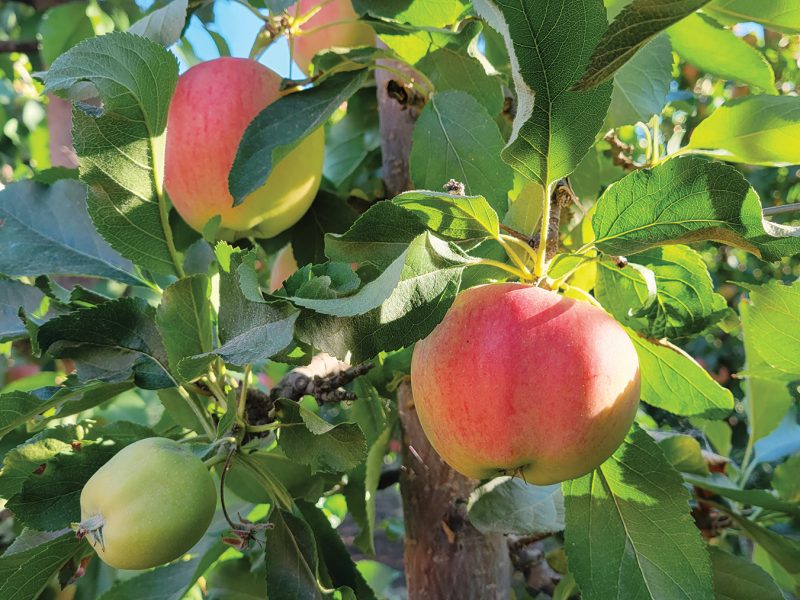
Ambrosia apples have been a success story for the BC industry, and acreage has grown rapidly in the last 10 years, helped by successful replant programs and the expiry in 2017 of the 20-year patent that limited production.

A marketing plan to increase domestic consumption and expand foreign markets for the variety was recommended by the province’s three-year-old tree fruit stabilization initiative, but none has materialized.

Poor returns led a number of the co-op’s top growers to transfer their business to the dozens of independent packinghouses that were cropping up. The past four years have seen co-op membership drop from 400 growers representing about 55% of the industry and 40% of the volume to just 176 voting members.

The departure of those growers eroded the average return to all members, as less top-quality fruit was being sold at a higher price and less fruit overall to cover operating costs.

Some member growers have also practiced high-grading, taking high-quality fruit, either from their first pick or bins from a more productive part of their orchard, and selling it directly to markets in the Lower Mainland. While limited independent sales were allowed in growers’ contracts, the

co-op wasn’t strict about enforcement.

Poor quality is a losing proposition for any business, and particularly one dealing in perishable products.

A small apple with a blemish must still be run through the line, scanned by the optical sorter and graded, but the system will handle a larger volume to fill a three-pound bag than if top-quality fruit was being processed.

While growers were charged a penalty for cull fruit, it fell short of the overhead costs incurred by less productive equipment, not to mention the cost of disposing of poor-quality fruit.

The cash flow issues were set to intensify this year, as poor weather eliminated the peaches and nectarines that generate early-season revenue. A significant drop in the cherry crop put a further damper on cash flows.

But the final nail in the co-op’s coffin came when a number of growers withheld estimates for the volume of apples they expected to deliver. Without reliable estimates of what the co-op could expect to market, it made the only reasonable decision based on the information it had and opted to shut down.

Ironically, the co-op’s failure came down to a lack of co-operation.

A north-south split, highlighted by opposition to the co-op’s decision to consolidate packing operations in Oliver, is the most obvious.

Many growers in the North Okanagan, where the majority of apple acreage lies, objected to the move despite the business case that exists for it.

Cultural and religious divisions among Indo-Canadian growers have also eroded the co-operative spirit, animating discussions at board meetings. A provincially funded governance study in 2020 concluded, “The board and membership is factionalized, often driven by personal agendas rather than business decisions.”

The divisions played out openly in two special general meetings members forced in November 2022 and February 2024. While the meetings failed to unseat the elected board, they eroded confidence in a business that has seen its revenues drop from $165 million in 2008 to less than $56 million today.

The path forward for growers is unclear.

The province says a majority of co-op members have found alternative packing houses for this fall’s harvest. But finding enough storage space – particularly controlled atmosphere storage – to replace the large facilities the co-op operated will be difficult. Packers are currently contracting with packinghouses across the border in Washington for the space they need.

While the province has pledged to protect critical infrastructure, it has stopped short of saying it will buy assets on behalf of growers. Much depends on how the court-ordered restructuring process plays out.

The co-op’s demise is a major blow to the industry, but corporate bail-outs are a thing of the past. The replant program the government launched as part of a historic investment in food security last year is of little use if growers have nowhere to sell their crop.

But if there’s any good news in the co-op’s demise, it’s that the industry as a whole is far from dead.

Many growers continue to operate successful businesses and grow top-quality fruit. Just like a fruitful tree, the co-op’s demise may be the pruning the industry needs.

All content on this website is copyrighted, and cannot be republished or reproduced without permission.

Related Posts

You may be interested in these posts from the same category.

Previous Post: « Cherry growers pan inadequate replant funding
Next Post: BC rancher brings home esteemed leadership award »

© 2026 COUNTRY LIFE IN BC - ALL RIGHTS RESERVED