
• Menu
  • Skip to primary navigation
  • Skip to main content
  • Skip to primary sidebar

Country Life In BC Logo

The agricultural news source in British Columbia since 1915

  • Headlines
  • Calendar
  • Subscribe
  • Advertise
  • About
  • Archives
  • Contact
  • Search
  • Headlines
  • Calendar
  • Subscribe
  • Advertise
  • About
  • Archives
  • Contact
  • Search

Primary Sidebar

Originally published:

May 2017
Vol. 103 Issue 5

Subscribe Now!

Sign up for free weekly FARM NEWS UPDATES

Loading form…

Your information will not be
shared or sold ever

Stories In This Edition

Wet spring sets back crops across province

Farmland values rise on expansion

Ag council welcomes fish farmers to table

Editorial: United we stand

The Back Forty: Time to haul manure, and get ready to vote

OP ED: When producers and special interest groups collide

Parties offer competing visions of ag future

Milk board embarks on FIRB-ordered quota review

Grow & Gather Farm Expo gives small ag a big venue

Delta farmers in growing battle against waterfowl

Yarn spins a sustainable future for greenhouses

BC tech solutions address farm challenges

Fully subscribed: ARDCorp

Worker housing concerns growing in Okanagan

Union busting broken

Coral Beach pairs foreign, domestic worker housing

Foundation invests millions in agriculture projects

Agriplex gathers momentum in Comox

Holsteins, Jerseys showcased at Okanagan show

Big Show, big money

Record price set at BC Holstein sale

WestGen posts multi-million dollar surplus

Grape growers hone in on water issues

Sustainability matters

BC prepares to deliver clean vines

Hot dam

Range use planning critical for OK ranchers

Predator program having positive impact

A good season for BC bull sales

Ag Briefs:

New pricing formula for chickens on hold

Etsell leaves blueberries

Workers plead guilty

Vancouver boots chickens off city farmers

Livestock tag reader funding

Big crop, bigger levy, boost raspberry council’s fortunes

Importer support needed for berry agency

Research matters

Using math to improve sheep productivity

Farmers market splits over question of “local”

Local leeway for markets

Beyond the Market program extended

Entrepreneur launches food recovery platform

Thrips in a changing climate

The pros and cons of organic agriculture

No summers off for these education assistants

Woodshed Chronicles:

Henderson is found at the end of his rope

Plow match unforrows brows about farming

4-H BC: Change at head office

FV 4-H Ambassador receives top award

Mentoring a new crop of northern farmers

Jude’s Kitchen:

Berry-full season

All content on this website is copyrighted, and cannot be republished or reproduced without permission.
More Headlines

Follow us on Facebook

Comments Box SVG iconsUsed for the like, share, comment, and reaction icons

18 hours ago

KPU researcher Naomi Robert is partnering with Oregon State University's Dry Farming Collaborative to test drought-resilient growing practices across Vancouver Island and the Gulf Islands. Working with three market gardeners, the study found tomatoes and zucchini thrived without irrigation. With droughts intensifying across the Pacific Northwest, dry farming offers BC growers practical tools to adapt to a changing climate. The full story appears in our April edition. tinyurl.com/d2fzs#BCAg#BCAg ... See MoreSee Less

KPU researcher Naomi Robert is partnering with Oregon State Universitys Dry Farming Collaborative to test drought-resilient growing practices across Vancouver Island and the Gulf Islands. Working with three market gardeners, the study found tomatoes and zucchini thrived without irrigation. With droughts intensifying across the Pacific Northwest, dry farming offers BC growers practical tools to adapt to a changing climate. The full story appears in our April edition. https://tinyurl.com/d2fzs9x6

#BCAg
View Comments
  • Likes: 11
  • Shares: 2
  • Comments: 0

Comment on Facebook

2 days ago

A Maple Ridge dairy producer has been fined $7,512, had his licence suspended for three months, and faces quota restrictions for two years after an undercover investigation confirmed raw milk was sold directly from the farm on three separate occasions.

#BCAg
... See MoreSee Less

Link thumbnail

Maple Ridge farm fined for raw milk sales

www.countrylifeinbc.com

Raw milk remains off the table for dairy producers, with the BC Milk Marketing Board (BCMMB) taking action against a Maple Ridge producer for illicit sales. An undercover investigation of Maple Ridge...
View Comments
  • Likes: 54
  • Shares: 72
  • Comments: 192

Comment on Facebook

Unpasteurized milk is sold in Europe. It's the only milk certain cheeses can be made from.

Europeans used raw milk to make cheese for millenia, the farmer should sue them back on cultural grounds and a charter violation.

A person can shoot up government drugs in a playground but milk is the issue. 🙄

Is there a go fund me?

Raised on raw milk and I wouldn’t have had it any other way. My immune system is top notch compared to all others raised on corn syrup baby formula. Make it make sense!

When i was on the farm we would drink milk right from the cow in a bottle then drink and never got sick.

Ohh the milk moffia at it again I see

So whose the rat? lol one of the ppl who bought the raw milk? 🤦🏻‍♀️

I grew up in the 60’s with raw milk, cream and butter the farm shipped cream. One day the cream was rejected do too much bacteria. It wasn’t kept cool enough. That was the first of government control I experienced. Ok so the cream went back to the farm and made the best sourdough bread, ice cream and the cats came from heavens green acres for a treat of stale bread soaked in that very cream.

leave him the hell alone! if someone wants to buy raw milk at their own risk, let them. At least they can see where the milk came from

I would love my own cow so I could get raw milk

Yet the government can supply cigarettes, alcohol, weed and hard drugs. Makes sense. 🙄

If the farmer sold shares in his farm so all these people owned part of the farm. Then it’s their milk . And don’t have to buy anything

Guy up the road sells milk raw here too

Raised on our own milk, so were my kids. Got told my kids would not be as Intelegent because of it 😂 they are adults and doing very well. The problem lays in the consumer handling of product after pick up. when milking at home its in a stainless steel pail, sifted, into glass containers, then in fridge to cool down. People picking up, put jn car drive off for an hour or more, then in fridge. This is the problem, bactia grows in the heat. Then they drink that evening when still warm, get sick, blame farm milk. Go to grocery store buy a jug, it last 2weeks after due date ...yummy. ( tested this therory) Id rather have fresh milk and properly handle it. Everything is so regulated,

I have mixed opinions here. I think that people should be able to get unpasteurized milk( I was raised on it and raised my own family with our own milk cow..) However in this day and age people are so inclined to sue for most anything it seems like the dairy farmers need some kind of protection against that? They could lose their businesses over legal procedures. Maybe that is a positive thing about the milk boards…

Free drugs good raw milk bad 🤣

Some comments seem to be missing the point of the article. NO ONE was sick from the milk. It’s all about money. “By selling milk outside the regulated system, where revenues are pooled, the board claimed Stuyt had cost producers as a whole $195,185 and ordered him to repay this amount. It also ordered Stuyt to pay $33,266 to cover the cost of BCMMB’s investigation and hearings into the matter. The BC Dairy Association, which stood as an intervenor in the appeal before FIRB, said illicit raw milk sales are a direct threat to supply management.”

Just identify as first nations and say it's a cultural thing . Then it becomes legal

To each their own. If people want to buy resh milk im sure they know the consequences involved. Maybe the people take it home, seperate the cream and pasturize it them selves. We drank milk at my aunts house off the cow but it was heated to 72’ (Pasturized )

Communist Canada. If people want raw milk they should be able to buy raw milk. It’s all about control ….

That's just sad, but drugs are fine

Best way to drink the milk! Born and raised on it.....

You mean sold real milk, unadulterated, whole milk

You can do that if you have your milk cows.

View more comments

4 days ago

A draft update to the Code of Practice for the Care and Handling of Beef Cattle is now open for public comment until June 12. The code, one of 14 animal care codes developed and maintained by the National Farm Animal Care Council, is undergoing a routine 10-year review. "Your feedback will help shape the industry's guide to cattle welfare for the next decade," says Canadian Cattle Association policy manager Jessica Radau, urging producers to weigh in. For more information, visit tinyurl.com/58a3u9fz.

#BCAg
... See MoreSee Less

A draft update to the Code of Practice for the Care and Handling of Beef Cattle is now open for public comment until June 12. The code, one of 14 animal care codes developed and maintained by the National Farm Animal Care Council, is undergoing a routine 10-year review.  Your feedback will help shape the industrys guide to cattle welfare for the next decade, says Canadian Cattle Association policy manager Jessica Radau, urging producers to weigh in. For more information, visit https://tinyurl.com/58a3u9fz.

#BCAg
View Comments
  • Likes: 4
  • Shares: 4
  • Comments: 1

Comment on Facebook

I sat in the webinar yesterday by the Canadian Cattle Association. My initial concern was that this would be another "play" into the government's hands. It has been worked on by people that are actually in the Beef industry from Cow calf to feedlot. The thrust is an update of the 2013 Code of Practice which was reviewed in 2018. The changes are more a move from "left to the producers discretion" to clearer directions regarding pain management, proper transport of animals which are impaired and keeping cattle in in good condition. Much of what is recommended is what producers who care about animal husbandry already do. The important part is to GIVE THEM FEEDBACK good, bad or otherwise. The document is about 60 pages long, and I ran it through CHAT to see what had been changed. It is important to understand that the PUBLIC is invited to comment on the draft not just producers. Think about it... do you really want the public influencing how you manage your cattle. If you think that this is just one of those things, I have been following Bill 22 in Alberta which will grant the SPCA a proactive roll in entering farms and checking on animals. When I asked CHAT how the new bill relates to the Cattle Code, it came back that the Code although not a regulation will be able to be used as a guide by producers for backup in dealing with the SPCA regarding cattle conditions, sick animal handling etc. Take the time.... Go onto the Canadian Cattle Association website and speak to those parts that you wish to input.

5 days ago

According to the BC River Forecast Centre, the Okanagan snowpack stood at just 58% of normal on April 1 — the lowest reading since measurements began in 1980 — raising concerns about drought conditions in the region this summer. The rest of the province sits at 92% of normal.

#BCAg
... See MoreSee Less

According to the BC River Forecast Centre, the Okanagan snowpack stood at just 58% of normal on April 1 — the lowest reading since measurements began in 1980 — raising concerns about drought conditions in the region this summer. The rest of the province sits at 92% of normal.

#BCAg
View Comments
  • Likes: 3
  • Shares: 0
  • Comments: 0

Comment on Facebook

6 days ago

At her first AGM as executive director of BC Meats, held Saturday in Abbotsford, Jennifer Busmann spoke about her strong ties to agriculture and her optimism for the organization's future. Busmann has cattle of her own and came to the role with existing relationships with members and the board of directors that helped her feel integrated from the start. She stepped into the position in Februa#BCAg#BCAg ... See MoreSee Less

At her first AGM as executive director of BC Meats, held Saturday in Abbotsford, Jennifer Busmann spoke about her strong ties to agriculture and her optimism for the organizations future. Busmann has cattle of her own and came to the role with existing relationships with members and the board of directors that helped her feel integrated from the start. She stepped into the position in February.

#BCAg
View Comments
  • Likes: 6
  • Shares: 0
  • Comments: 0

Comment on Facebook

Subscribe | Advertise

The agricultural news source in British Columbia since 1915
  • Email
  • Facebook

Delta farmers in growing battle against waterfowl

May 1, 2017 byPeter Mitham

The past five years have seen close to half of Metro Vancouver’s new industrial construction occur in Delta and Surrey, thanks to the South Fraser Perimeter Road opening and the availability of acreages suitable for warehouses. According to Metro Vancouver, Delta and Tsawwassen First Nation are home to14% of the region’s industrial land, up from about 11% a decade ago.

That translates to an additional 700 acres of industrial development, which has gobbled up green space and left less land for both agriculture and the birds travelling the Pacific flyway each year.

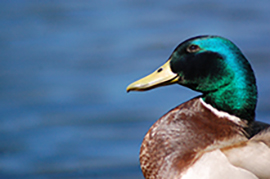
While many people feared that further development on the Fraser River delta would rob the birds of a key stopover point, they continue to stop – but they’re doing so in farmers’ fields on a scale unseen in previous years.

“This has just been an ongoing battle,” says Clarence DeBoer of Eagle View Farms Ltd., a 280-head dairy operation and cranberry producer steps from Boundary Bay. “We’ve been doing this for 25 years but in the past three or four years, it’s really taken off.”

Approximately 4.5 million square feet of industrial space has been built in Delta since the South Fraser Perimeter Road opened at the end of 2013. Meanwhile, over-wintering and migratory waterfowl populations increased between 2008 and 2012, the latest period for which comprehensive estimates exist.

DeBoer raises forage on 190 acres adjacent to Boundary Bay Industrial Park, a multiphase project with a total of 870,000 square feet of state-of-the-art warehouse space. While his cranberry bogs are dry, the laser-leveled fields seeded to forage are sodden with spring rains. The water pools on the surface, unable to sink into the earth because the webbed feet of several thousand foraging wigeon have sealed the surface like so many bricklayer’s trowels. Meanwhile, the birds have devoured the grass the water would usually nourish.

“There isn’t a field that isn’t hammered this way for us,” DeBoer says, pointing to tufts of tall fescue on a close-cropped plain.

Salad days

It’s not just DeBoer and other dairy farmers that are seeing losses.

Lydia Ryall of Cropthorne Farm woke up one morning to find that waterfowl have consumed $4,000 worth of radicchio like the proverbial thief in the night, robbing her of greens for farmers markets, retailers and local restaurants. They also devoured $8,000 worth of kale – in fact, pretty much all her greens except leeks.

Some of the waterfowl have become even more aggressive, invading the barns of producers such as Stan Van Keulen of Donia Farms Ltd. in Surrey. The birds help themselves to his dairy herd’s rations, and defecate in the rest.

“We’re talking maybe 150 ducks. Is it a significant problem? Yes,” he says. “There’s not much we can do.”

The feed bunkers are open and maintaining adequate netting around the open sides and doors of his barns – essential for passive ventilation – simply isn’t practical.

“The netting is an added expense,” he says, adding: “These ducks and geese and eagles are very adaptive to the new environments that they have.”

This is exactly why they’ve concentrated on the area’s remaining farm properties, which are tightly managed to ensure peak performance in the Lower Mainland’s competitive business environment.

“We’re not able to keep up with the impact,” DeBoer says.d with farmers to develop set-asides that provide birds with alternative forage. However, as natural foraging options diminish, demand for alternatives increases – both the set-asides as well as the forage farmers plant for their cattle. The set-asides are funded by the trust in partnership with farmers, but demands on the program mean support from other landholders is needed.

“We’re trying to put more birds on less acres and we’re at the breaking point,” DeBoer says. “There’s no value that comes back to the farmer.”The set-aside scheme is one, but there are also direct costs.

All content on this website is copyrighted, and cannot be republished or reproduced without permission.

Related Posts

You may be interested in these posts from the same category.

Previous Post: « Ag council welcomes BC fish farmers to table
Next Post: Garlic co-op pitched as supply, appetite expands »
© 2026 COUNTRY LIFE IN BC - ALL RIGHTS RESERVED