• Menu
  • Skip to primary navigation
  • Skip to main content
  • Skip to primary sidebar

Country Life In BC Logo

The agricultural news source in British Columbia since 1915

  • Headlines
  • Calendar
  • Subscribe
  • Advertise
  • About
  • Archives
  • Contact
  • Search
  • Headlines
  • Calendar
  • Subscribe
  • Advertise
  • About
  • Archives
  • Contact
  • Search

Primary Sidebar

Originally published:

June 2017
Vol. 103 Issue 6

Subscribe Now!

Sign up for free weekly FARM NEWS UPDATES

Loading form…

Your information will not be
shared or sold ever

Stories In This Edition

Vancouver tops BC in farm growth

Accident claims safety advocate

In Good Hands

Rain’s a pain, farmers say

Editorial: Fresh start

Back Forty: Census offers reality check

Viewpoint: Ranchers work ‘dam’ hard for public’s benefit

Agriculture council pledges to work with parties

Pork industry optimitic despite lean times

Vegetable commission priotizies trust, integrity

Fairs reach out-of-court settlement

Richmond sets large limit on farmhouse size

Drones promise to scare birds for berry growers

Small farm expo postponed

Ranchers resist expanding public roaming rights

Letter: Seasonal farm workers find

Canada a second home

Letter: Right to roam wrong

A national voice for greenhouse growers

Hothouse growers reduce risk with IPM strategies

Sidebar: Biocontrols cut costs

Training pregps advisors for growing demand

Hop growers hepped up about future

Controlling hop-loving pests necessary evil

YA mark five years of support small-scale ag

Wise Earth tracks numbers to plant savvy, sell smart

A wise approach to leases, labour and local

Garlic co-op pitched as supply, appetite expands

BC’s climate makes hardneck garlic a viable route

Northern athlete dives into beef marketing

Abattoirs target food safety, labour shortage

Volatile beef market raises questions, few answers

BC feedlot sector prepares cattle disease emergency plan

Drones ride a sky-high range in search of cattle

Spring fling connects sponsors with classroom outreach

Better management underpins farm improvement

Small farmers make it work in Alberni Valley

BCYF tour highlights fish and dairy management

4-H members on the quest for a future with food

Program delivery underway

Wannabe – All things big and small

Woodshed: How Henderson came to be at the end of his rope

Jude’s Kitchen: Summer patio treats

All content on this website is copyrighted, and cannot be republished or reproduced without permission.


More Headlines

Follow us on Facebook

Comments Box SVG iconsUsed for the like, share, comment, and reaction icons

16 hours ago

UBC's Wine Research Centre brought together a dozen graduate students at Tantalus Winery in Kelowna on April 30 to share their latest research on viticulture and winemaking. Topics ranged from heat and drought stress on vines to natural yeast classification and cover crop pairings. The day opened with a vineyard tour highlighting sustainable practices already underway at the wine#BCAg#BCAg ... See MoreSee Less

UBCs Wine Research Centre brought together a dozen graduate students at Tantalus Winery in Kelowna on April 30 to share their latest research on viticulture and winemaking. Topics ranged from heat and drought stress on vines to natural yeast classification and cover crop pairings. The day opened with a vineyard tour highlighting sustainable practices already underway at the winery.

#BCAg
View Comments
  • Likes: 2
  • Shares: 1
  • Comments: 0

Comment on Facebook

6 days ago

Saskatchewan's Monette Farms, with nearly $1.1 billion in liabilities, has been granted creditor protection under the CCAA while it restructures. Rapid expansion into produce and cattle dragged earnings well below projections. The farm's BC cattle operation — and a planned West Kelowna winery — hang in the b#BCAge.

#BCAg
... See MoreSee Less

Link thumbnail

Monette Farms wins creditor protection

www.countrylifeinbc.com

Monette Farms’ rapidly expanding produce business was a key factor in its decision to seek protection from creditors last week, according to court documents. Saskatchewan-based Monette Farms was…
View Comments
  • Likes: 1
  • Shares: 0
  • Comments: 0

Comment on Facebook

1 week ago

A new national beef code of practice is open for public comment until June 12. Developed by NFACC and the Canadian Cattle Association, the draft addresses pain management, weaning, nutrition, lameness and end-of-life care.

#BCAg
... See MoreSee Less

Link thumbnail

New beef practices open for comment

www.countrylifeinbc.com

A new national code of practice for beef producers is open for public comment. “The public comment period is an important opportunity for producers across Canada to review the draft code and provide...
View Comments
  • Likes: 1
  • Shares: 0
  • Comments: 0

Comment on Facebook

2 weeks ago

The BC Ministry of Health has approved $4.25 million for the BC Farmers Market Nutrition Coupon Program, administered by the BC Association of Farmers Markets, for 2026. The funding is even with last year, and follows on $12 million provided in 2022-24. The funding is a cornerstone of BCAFM, providing eligible low-income, pregnant and senior individuals with $27 a week for purchases of locally grown produce at more than 100 participating farmers markets in 92 communities across BC. Funding has increased seven-fold since the program launched in 2012.

#BCAg
... See MoreSee Less

The BC Ministry of Health has approved $4.25 million for the BC Farmers Market Nutrition Coupon Program, administered by the BC Association of Farmers Markets, for 2026. The funding is even with last year, and follows on $12 million provided in 2022-24. The funding is a cornerstone of BCAFM, providing eligible low-income, pregnant and senior individuals with $27 a week for purchases of locally grown produce at more than 100 participating farmers markets in 92 communities across BC. Funding has increased seven-fold since the program launched in 2012.

#BCAg
View Comments
  • Likes: 1052
  • Shares: 390
  • Comments: 133

Comment on Facebook

It provides for more than produce. It includes, eggs, meat and honey!

Good program. Additionally, I toured the Kelowna Food bank yesterday. They are serving about 12,000 people a month. Lots are working people.

I have seen people at the Saanichton markets asking if vendors take the coupons and being embarrassed when the vendor says no. Are there signs that are placed on the tables so people know who is part of the program and who is not?

You would have a slim choice of meat if you only get $27.00 .

“While it’s unfortunate that programs like this are necessary, I’m grateful they exist to support families and local farmers.”

Food stamps?

This should be made a little more accessible, especially for seniors

What exactly is this and how does it work? I've never heard of it before. How does this get applied to us who it's intended to help?

Christy Sakai its a week and if you to the markets you can get a small bag of carrots 5bucks, a few potatoes, usually a bag of apples are 5 bucks, and in summer you have fruit choices. Yes doesn't seem like alot but it could be stretched at the markets and remember its a week so really ypu going to use the whole bag of carrots in a week, probably not so you have something for the next week. Heads of lettuce 5 bucks. Every little bit does help when it comes to supporting local farmer and family.

This program has helped me afford local produce, as a senior. I am grateful for the assistance and eat a healthier diet.

I have been a working poor and 🙏👍for recognizing the people who deserve a bit of help as they are doing the best they can 😘👍

This sounds a little more complicated to enroll in than it needs to be. A lot of people probably never heard of it, I only did because I read this post.

It is illegal for me to grow a garden . We can all afford to eat if we can grow.

How does a senior apply?

On my smalltown the food bank puts your name in a lottery for this Seniors included in lottery

Here are the general qualifications: Income Threshold: Generally for lower-income households. Some specific, local programs have identified a threshold of $27,000 or less for a single person or under $50,000 per year for a household. Targeted Groups: Participants must be seniors/elders, pregnant individuals, or families with children under 19. Participant Requirements: In addition to income, participants must: Participate in a food literacy program (e.g., cooking, gardening, or food budgeting). Be able to travel to a participating market to shop for themselves. Allocation: Because demand is high, coupons are often prioritized for new participants each year. Important Information: Coupons are not handed out by the BC Farmers' Markets directly. You must connect with a local community partner (such as a food bank, community centre, or neighbourhood house) to apply.

Glad to see this continue. With the increase in cost of living, this program should be increasing, not staying even with last year. Our local food bank is inundated with need.

It’s a great program. Too bad they won’t extend it to Farmstands as well. Some producers can’t make it to market because of work schedules. And there is more than just vegetables out there.

Where do people apply? Thinking of those I know who need this program.

Have you got an email yet?

I wish a person on disability could get the help too :(

What cities have this

I didn’t know that the program existed

Please if you have these coupons do not be embarrassed to use them they are a good as anyone's money to a grower! I would agree it is a slippery slope to have people pay with government coupons but Remember large scale agriculture is subsidized in this country in way that dwarfs this little program. We are all in a sense are paying with coupons at the big supermarket. As a small scale grower grower I can tell you when you see the higher prices at the farmers market, no one is getting rich off you. That is the true cost of food. Yes that should scare you

Excellent work, BC Ministry of Health! 👍👍👍 An amazing program

View more comments

3 weeks ago

KPU researcher Naomi Robert is partnering with Oregon State University's Dry Farming Collaborative to test drought-resilient growing practices across Vancouver Island and the Gulf Islands. Working with three market gardeners, the study found tomatoes and zucchini thrived without irrigation. With droughts intensifying across the Pacific Northwest, dry farming offers BC growers practical tools to adapt to a changing climate. The full story appears in our April edition. tinyurl.com/d2fzs#BCAg#BCAg ... See MoreSee Less

KPU researcher Naomi Robert is partnering with Oregon State Universitys Dry Farming Collaborative to test drought-resilient growing practices across Vancouver Island and the Gulf Islands. Working with three market gardeners, the study found tomatoes and zucchini thrived without irrigation. With droughts intensifying across the Pacific Northwest, dry farming offers BC growers practical tools to adapt to a changing climate. The full story appears in our April edition. https://tinyurl.com/d2fzs9x6

#BCAg
View Comments
  • Likes: 22
  • Shares: 5
  • Comments: 0

Comment on Facebook

Subscribe | Advertise

The agricultural news source in British Columbia since 1915
  • Email
  • Facebook

Garlic co-op pitched as supply, appetite expands

June 1, 2017 byRonda Payne

LUMBY – Hardneck garlic grows superbly in BC and is different than the softneck varieties grown in hotter climates that grocery stores traditionally carry. Not only do hardneck varieties taste great, they can also be grown here organically while giving consumers a high-quality local alternative.

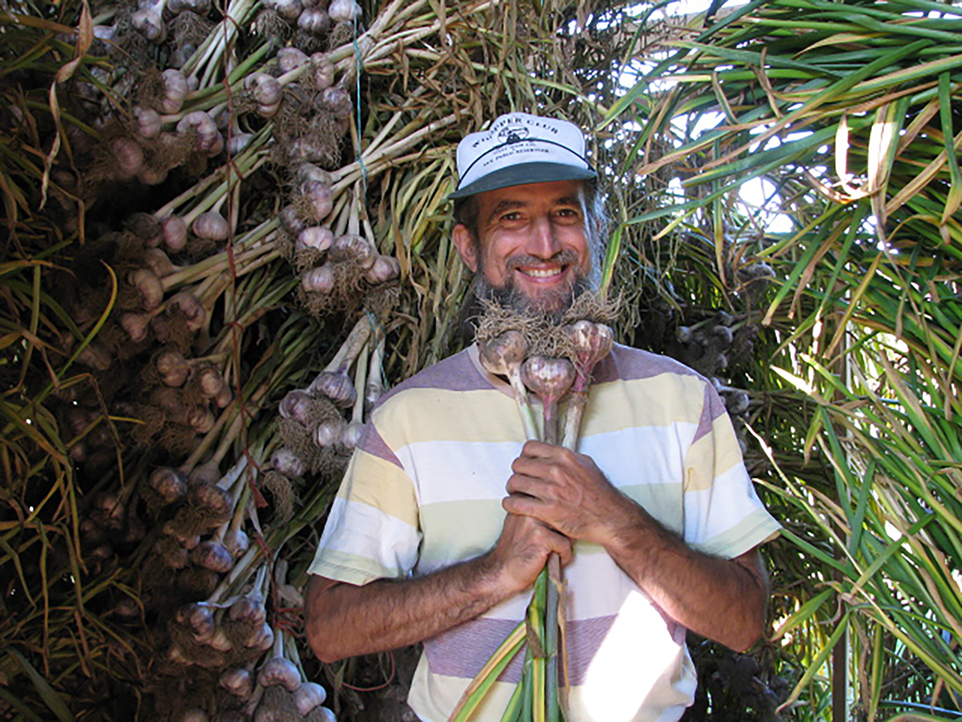
Speaking at the Pacific Agriculture Show this past winter, Jim Capellini of Rasa Creek Farm in Lumby suggested forming a garlic co-op to introduce locally grown hardneck garlic into mainstream markets.Jim Capellini

The reason local garlic is found primarily at farmers’ markets and not at large grocers comes down to supply and demand, he says.

“They don’t have the time to create relationships with these small growers,” explains Capellini.

The big retailers want to make one call or send one email to a supplier who can guarantee a large enough supply. They won’t reach out to several small growers.

“It became obvious over the years that the demand for high quality hardneck garlic is growing exponentially,” says Capellini.

Capellini’s awareness of the opportunities grew as one BC multi-store produce market requested 500 pounds of local hardneck garlic from him. Demand grew to 5,000 pounds the first year and now sits at 20,000 pounds.

The challenge is to get garlic from numerous small growers to retailers without involving a middleman taking a significant cut, reducing the profit to farmers. Capellini wants to see farmers sell directly.

“I was trying to maximize profits for the person putting blood, sweat and tears into it because I know what it’s like,” he notes. “If the farmers were able to co-ordinate, that could help.”

Capellini put his first bulbs in the ground in 2009 and now supplies seed garlic to growers across BC along with the information they need to succeed. He also knows what it’s like dealing with corporations and co-operatives that aren’t right for garlic growers.

Instead, he looks to one of his workshop participants, Abdul Majid, as an example of how a BC garlic co-op could work. Majid is the founder of BC Garlic Growers Inc., based in Abbotsford.

“All his life, he’s been involved in helping farmers,” Capellini says of Majid.

Despite being a professional architectural model builder, Majid and his family attended one of Capellini’s garlic workshops in 2015. Majid now has approximately 30 rows planted to hardneck garlic varieties, each row running 300 feet.

Majid also acquires garlic from other local growers and works as a reseller to supply retailers through BC Garlic Growers.

“He will sell directly into that level,” Capellini explains.

It isn’t a traditional co-op because Majid buys other growers’ garlic outright, but Capellini nevertheless sees the venture as an exercise in co-operation.

Growers working with Majid share knowledge, skills and other resources like equipment, “a very big price tag for garlic,” Capellini says. Growers may pay a rental fee for using the equipment.

Besides what Majid is doing, Capellini has another idea.

“I have a kind of very loose vision,” he explains. “Last year, I had this idea that there might even be a use of a nation-wide hub. At the highest level, there could be [Garlic.ca] (a URL Capellini holds) … and on garlic.ca there could be listings of local hubs. And there could be somebody like (Majid) … as an independent agent managing that hub.”

This national-level online hub could make things easier for buyers by creating a portal through which they could easily access the regional hub closest to them and instantly tap into a local garlic supply.

Capellini says other growers have been receptive to his ideas about working together, but he’d ultimately like to see others take them on and run with them. His hands are already full with his own business.

“I see a demand that is completely unsatiated for local garlic in Canada,” he says.

While the demand will eventually reach a ceiling, Capellini believes it’s important to prepare by moving sales beyond farmers’ markets and into mainstream grocery and produce providers.

All content on this website is copyrighted, and cannot be republished or reproduced without permission.

Related Posts

You may be interested in these posts from the same category.

Garlic grower cuts the mustard – and pests

Previous Post: « Accident claims safety advocate
Next Post: Small farm expo postponed »

© 2026 COUNTRY LIFE IN BC - ALL RIGHTS RESERVED