• Menu
  • Skip to primary navigation
  • Skip to main content
  • Skip to primary sidebar

Country Life In BC Logo

The agricultural news source in British Columbia since 1915

  • Headlines
  • Calendar
  • Subscribe
  • Advertise
  • About
  • Archives
  • Contact
  • Search
  • Cart
  • Checkout
  • Headlines
  • Calendar
  • Subscribe
  • Advertise
  • About
  • Archives
  • Contact
  • Search
  • Cart
  • Checkout

Primary Sidebar

Current Issue:

SEPTEMBER 2026
Vol. 112 Issue 9

Subscribe Now!

Sign up for free weekly FARM NEWS UPDATES

Loading form…

Your information will not be
shared or sold ever

Follow us on Facebook

Comments Box SVG iconsUsed for the like, share, comment, and reaction icons

7 hours ago

... See MoreSee Less

View Comments
  • Likes: 1
  • Shares: 0
  • Comments: 0

Comment on Facebook

12 hours ago

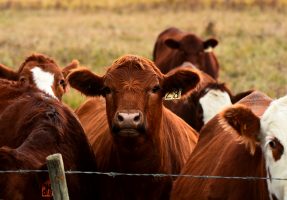
Forty-six regions in BC are eligible to participate in the federal livestock tax deferral program, announced yesterday, more than anywhere else in the country. The program allows producers who downsize their breeding herds by 15% to defer reporting the proceeds until the following year, when they buy replacement stock. But after multiple years of drought, the BC beef herd is cruising 25-year lows and some producers are calling for more support to maintain and rebuild their herds. For more, see: [www.countrylifeinbc.com/bc-leads-livestock-tax-deferrals/]

#BCAg
... See MoreSee Less

Forty-six regions in BC are eligible to participate in the federal livestock tax deferral program, announced yesterday, more than anywhere else in the country. The program allows producers who downsize their breeding herds by 15% to defer reporting the proceeds until the following year, when they buy replacement stock. But after multiple years of drought, the BC beef herd is cruising 25-year lows and some producers are calling for more support to maintain and rebuild their herds. For more, see: [https://www.countrylifeinbc.com/bc-leads-livestock-tax-deferrals/]
 
#BCAg
View Comments
  • Likes: 20
  • Shares: 7
  • Comments: 0

Comment on Facebook

4 days ago

After weeks and weeks of no moisture, there's rain in Kelowna today. While much more moisture is needed over the coming weeks and months to reduce drought conditions and the air smells of wet campfire, the slow, steady rain is very welcome for fruit grower#BCAg#BCAg ... See MoreSee Less

After weeks and weeks of no moisture, theres rain in Kelowna today. While much more moisture is needed over the coming weeks and months to reduce drought conditions and the air smells of wet campfire, the slow, steady rain is very welcome for fruit growers. 

#BCAg
View Comments
  • Likes: 7
  • Shares: 0
  • Comments: 0

Comment on Facebook

5 days ago

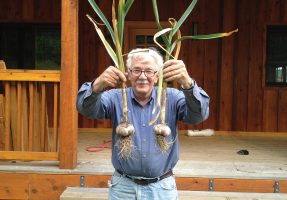
The first Delta Farmland and Wildlife Trust Grassland Set-aside Variety Trial Field Day was held at Delta's family-owned Tecarte Farms, August 27. Co-owner Bill Bates and DFWT executive director Christine Schmalz welcomed more than 35 people to view seven acres planted to different grassland blends specifically chosen to rejuvenate the soil and support the farm's blueberries. For the Bates family, it was time to try something different following the decline of the field's blueberry bushes over the past several years. "We tried everything, and nothing worked," says Bates. The blueberries were removed in May and the grassland crops planted about a week later.

#BCAg
... See MoreSee Less

The first Delta Farmland and Wildlife Trust Grassland Set-aside Variety Trial Field Day was held at Deltas family-owned Tecarte Farms, August 27. Co-owner Bill Bates and DFWT executive director Christine Schmalz welcomed more than 35 people to view seven acres planted to different grassland blends specifically chosen to rejuvenate the soil and support the farms blueberries. For the Bates family, it was time to try something different following the decline of the fields blueberry bushes over the past several years. We tried everything, and nothing worked, says Bates. The blueberries were removed in May and the grassland crops planted about a week later.

#BCAgImage attachmentImage attachment
View Comments
  • Likes: 17
  • Shares: 1
  • Comments: 0

Comment on Facebook

5 days ago

Bessette Creek is the latest watershed hit with a temporary fish protection order this year as the province moves to protect returning Chinook salmon. A total of 131 surface and groundwater users must cease drawing water immediately, with forage producers, greenhouses and nurseries impacted. "Declining flows in Bessette Creek reached record lows in early July 2026 and have remained below the minimum level required to support fish population survival," says the province. Bessette producers have embraced voluntary cutbacks, scheduled irrigation and other measures to reduce water use, and are also waiting on funding to boost water storage infrastructure. They're the second group of producers hit with a provincial order this year. Salmon River irrigators were told to top watering earlier this month following a reprieve to address wildfire risk. Growers in both the Salmon River and Bessette watersheds are urging the province to support new water storage infrastructure in advance of next year.

#BCAg
... See MoreSee Less

Bessette Creek is the latest watershed hit with a temporary fish protection order this year as the province moves to protect returning Chinook salmon. A total of 131 surface and groundwater users must cease drawing water immediately, with forage producers, greenhouses and nurseries impacted. Declining flows in Bessette Creek reached record lows in early July 2026 and have remained below the minimum level required to support fish population survival, says the province. Bessette producers have embraced voluntary cutbacks, scheduled irrigation and other measures to reduce water use, and are also waiting on funding to boost water storage infrastructure. Theyre the second group of producers hit with a provincial order this year. Salmon River irrigators were told to top watering earlier this month following a reprieve to address wildfire risk. Growers in both the Salmon River and Bessette watersheds are urging the province to support new water storage infrastructure in advance of next year.

#BCAg
View Comments
  • Likes: 7
  • Shares: 1
  • Comments: 3

Comment on Facebook

There is a problem... having lived in the salmon river ( silver creek ) area, I remember a fish biologist telling family members that salmon only "survive" in high iron content creeks, they do not "thrive".... salmon river ( silver creek ) is a very high iron content, would stain clothes brown when i would use bleach... So don't expect high salmon numbers off of that creek , even in ideal situations...

I just wish they would take an interest in CHASE CREEK....went bone dry...100% of trout abd other species died...smell was terrible from rotting fish. Understand this has happened many times in the past. Chase Irrigation District totally responsible for this disaster. Now fishermen are complaining about major drop in water levels at Pillar Lake.

They could not mismanage things worse than they have. It's impossible for them to. The fact that farmers that we need for our animals are now suffering the consequences our governments have not protected us from, is absolutely fucking wild.

Subscribe | Advertise

The agricultural news source in British Columbia since 1915
  • Email
  • Facebook

Government funding under discussion

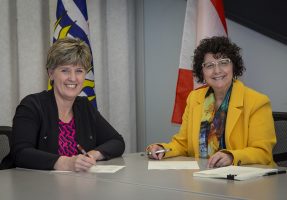
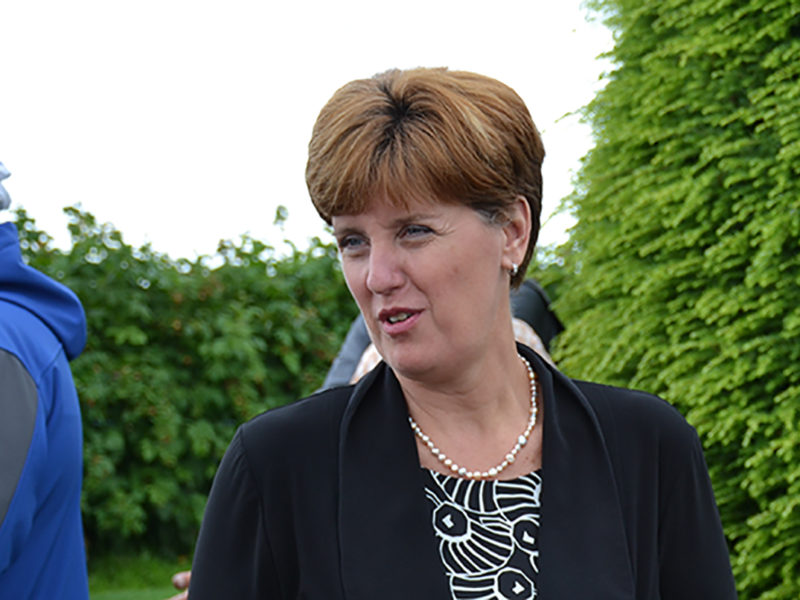
Agriculture and Agri-Food Canada minister Marie-Claude Bibeau

May 4, 2022 byPeter Mitham

Reducing greenhouse gas emissions will be the focal point of the next agricultural policy framework when the five-year Canadian Agricultural Partnership ends in 2023.

Provincial and territorial ministers met with their federal counterpart Marie-Claude Bibeau this week to check in prior to the annual in-person conference scheduled for Saskatoon in July.

Bibeau told Country Life in BC that she expects the new policy framework to be signed in July.

“A significant part of the programming will have a direct impact on emission reduction,” she says.

She said it’s still too early to pin a value on the policy framework. The current framework set forth programming worth approximately $3 billion.

“We’re still working on the dollar figure,” she says, noting that the key goal right now is agreeing on common objectives for emission reductions. “It’s too early to share anything regarding the framework.”

This week’s meeting also discussed ongoing issues, including progress towards a retail code of conduct, also expected to be finalized in July, and avian influenza.

Bibeau also said supply-managed sectors can expect firm word on compensation for market access concessions granted under CUSMA, which replaced NAFTA in 2020, in October as part of the fall economic update.

While acknowledging that the announcement won’t fall within the first year of the current Liberal mandate, as promised during the 2019 election, Bibeau said dairy farmers – who have expressed concern – know that money is coming.

“This is what has been written clearly in the last budget. You will see the compensation for dairy, poultry and eggs in the fall economic statement,” she says.


All content on this website is copyrighted, and cannot be republished or reproduced without permission.


Related Posts

You may be interested in these posts from the same category.

New federal minister

Livestock health in spotlight

Cattle

Province files AgriRecovery request

Bilateral agreement signed

National celebration of agriculture

Ministers discuss avian influenza

CUSMA compensation announced

Historic relief package delivered

Flood recovery will take time

Produce drives BC exports

New year, new era

No new concessions

Previous Post: « Province backs off compensation
Next Post: Weevil monitoring begins »

© 2026 COUNTRY LIFE IN BC - ALL RIGHTS RESERVED