
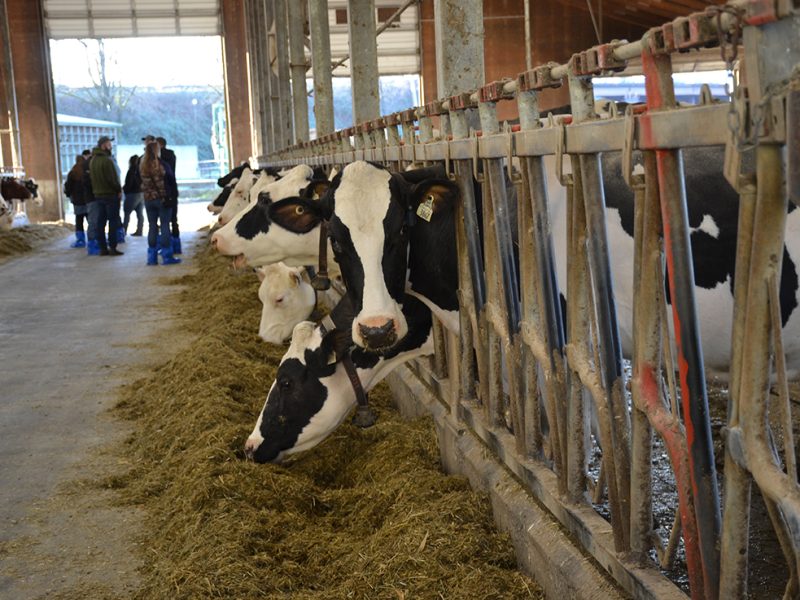
The BC Milk Marketing Board fielded interest from a greater number of candidates interested in entering the sector.
BC Milk received 33 completed New Entrant Program (NEP) applications by the February 9 deadline, and five completed applications for the organic stream (NEPO).
This compares to 29 NEP applications last year and seven NEPO applications.
Ten candidates were randomly drawn to move to the next phase of the NEP selection process by an online generator. The draw was carried out by the general manager of the Council of Marketing Boards and observed by both BC Milk staff and a third-party observer.
A draw was not held for NEPO applications, as all qualified applicants have been invited to attend an interview with the selection committee, provided they submit the required documentation.
All candidates must provide a business plan and other documentation by May 20. Candidates who meet the criteria will then be interviewed and chosen to enter the sector.
A minimum of three NEP candidates will be selected, while NEPO candidates are recommended based on eligibility and industry need.
“Selected NEP applicants must begin milk production by December 31, 2027, to qualify for the program,” BC Milk states. “Selected NEPO applicants will have up to three years from the time of selection to commence production.”
The uptick in interest is a positive sign as the BC industry aims to boost production in advance of the P500 plant opening in Abbotsford in the first quarter of 2028.
The industry aims to add 100 million litres of production in the year prior to opening, then 200 million in the second year. It anticipates a 2% increase to quota in July and October 2027, with regular incentive days planned thereafter.
However, ongoing profitability challenges in the sector have coincided with a drop in NEP applications over the past three years.
In 2020, 95 applications were received, falling to 66 in 2022. In 2023, 50 applications were received for both organic and conventional streams.
Since 2024, applications to both streams have been fewer than 40 annually.
All content on this website is copyrighted, and cannot be republished or reproduced without permission.



 Poultry biosecurity notches down