• Menu
  • Skip to primary navigation
  • Skip to main content
  • Skip to primary sidebar

Country Life In BC Logo

The agricultural news source in British Columbia since 1915

  • Headlines
  • Calendar
  • Subscribe
  • Advertise
  • About
  • Archives
  • Contact
  • Search
  • Headlines
  • Calendar
  • Subscribe
  • Advertise
  • About
  • Archives
  • Contact
  • Search

Primary Sidebar

Originally published:

DECEMBER 2024
Vol. 110 Issue 12

Subscribe Now!

Sign up for free weekly FARM NEWS UPDATES

Loading form…

Your information will not be
shared or sold ever

Stories In This Edition

Heading home

Avian flu response keeping pace

Popham back as ag minister

Farm equipment sales down, but not out

Winter harvest

Editorial: Goodwill wanted

Back 40: The election’s over. Now what?

Viewpoint: BC orchard sector needs more than sales

Court decision a bowl of cherries for Canada

Ag Briefs: Sturko leads apple marketing commission consultations

Ag Briefs: New BC field vegetable specialist

Ag Briefs: Slash smoke challenge planned

Ag Briefs: Mushroom farm fined

Island farmers fish for water solutions

Economic summit makes case to buy local

Cow-op urges community to buy local

Demand for milk, lower input costs good for dairy

Replant program begins accepting applications

Researchers explore ways to detect Cherry X

Trade imblance baffles honey producers

Pilot addresses gap in distribution infrastructure

Rotational grzing field day tracks progress

Cool spring challenges high-heat corn

Sidebar: It’s not all about the yield

Panel celebrates waste reduction strategies

Global sales blossom from native berry

Farm Story: Why hibernate in such a friendly valley?

Timely rains support Christmas tree supply

Sidebar: BCCTA AGM opportunity for knowledge transfer

On-farm research doesn’t have to be complicated

Woodshed: Some manners would go a long way with Delta

Young rancher honoured for leadership

Jude’s Kitchen: Much to celebrate in December

All content on this website is copyrighted, and cannot be republished or reproduced without permission.
More Headlines

Follow us on Facebook

Comments Box SVG iconsUsed for the like, share, comment, and reaction icons

11 hours ago

A draft update to the Code of Practice for the Care and Handling of Beef Cattle is now open for public comment until June 12. The code, one of 14 animal care codes developed and maintained by the National Farm Animal Care Council, is undergoing a routine 10-year review. "Your feedback will help shape the industry's guide to cattle welfare for the next decade," says Canadian Cattle Association policy manager Jessica Radau, urging producers to weigh in. For more information, visit tinyurl.com/58a3u9fz.

#BCAg
... See MoreSee Less

A draft update to the Code of Practice for the Care and Handling of Beef Cattle is now open for public comment until June 12. The code, one of 14 animal care codes developed and maintained by the National Farm Animal Care Council, is undergoing a routine 10-year review.  Your feedback will help shape the industrys guide to cattle welfare for the next decade, says Canadian Cattle Association policy manager Jessica Radau, urging producers to weigh in. For more information, visit https://tinyurl.com/58a3u9fz.

#BCAg
View Comments
  • Likes: 2
  • Shares: 0
  • Comments: 1

Comment on Facebook

I sat in the webinar yesterday by the Canadian Cattle Association. My initial concern was that this would be another "play" into the government's hands. It has been worked on by people that are actually in the Beef industry from Cow calf to feedlot. The thrust is an update of the 2013 Code of Practice which was reviewed in 2018. The changes are more a move from "left to the producers discretion" to clearer directions regarding pain management, proper transport of animals which are impaired and keeping cattle in in good condition. Much of what is recommended is what producers who care about animal husbandry already do. The important part is to GIVE THEM FEEDBACK good, bad or otherwise. The document is about 60 pages long, and I ran it through CHAT to see what had been changed. It is important to understand that the PUBLIC is invited to comment on the draft not just producers. Think about it... do you really want the public influencing how you manage your cattle. If you think that this is just one of those things, I have been following Bill 22 in Alberta which will grant the SPCA a proactive roll in entering farms and checking on animals. When I asked CHAT how the new bill relates to the Cattle Code, it came back that the Code although not a regulation will be able to be used as a guide by producers for backup in dealing with the SPCA regarding cattle conditions, sick animal handling etc. Take the time.... Go onto the Canadian Cattle Association website and speak to those parts that you wish to input.

1 day ago

According to the BC River Forecast Centre, the Okanagan snowpack stood at just 58% of normal on April 1 — the lowest reading since measurements began in 1980 — raising concerns about drought conditions in the region this summer. The rest of the province sits at 92% of normal.

#BCAg
... See MoreSee Less

According to the BC River Forecast Centre, the Okanagan snowpack stood at just 58% of normal on April 1 — the lowest reading since measurements began in 1980 — raising concerns about drought conditions in the region this summer. The rest of the province sits at 92% of normal.

#BCAg
View Comments
  • Likes: 3
  • Shares: 0
  • Comments: 0

Comment on Facebook

2 days ago

At her first AGM as executive director of BC Meats, held Saturday in Abbotsford, Jennifer Busmann spoke about her strong ties to agriculture and her optimism for the organization's future. Busmann has cattle of her own and came to the role with existing relationships with members and the board of directors that helped her feel integrated from the start. She stepped into the position in Februa#BCAg#BCAg ... See MoreSee Less

At her first AGM as executive director of BC Meats, held Saturday in Abbotsford, Jennifer Busmann spoke about her strong ties to agriculture and her optimism for the organizations future. Busmann has cattle of her own and came to the role with existing relationships with members and the board of directors that helped her feel integrated from the start. She stepped into the position in February.

#BCAg
View Comments
  • Likes: 6
  • Shares: 0
  • Comments: 0

Comment on Facebook

4 days ago

Shannon Wiggins of Headwind Farm in North Saanich is this year's Mary Forstbauer Grant recipient from the BC Association of Farmers Markets. The $500 grant will help Wiggins expand her plot at Sandown Centre for Regenerative Agriculture, growing more storage crops to extend her harvest season. Wiggins credits farmers markets with inspiring her own farming journey and commitment to building community through food. Congratulations!

tinyurl.com/45bdd#BCAg#BCAg
... See MoreSee Less

Shannon Wiggins of Headwind Farm in North Saanich is this years Mary Forstbauer Grant recipient from the BC Association of Farmers Markets. The $500 grant will help Wiggins expand her plot at Sandown Centre for Regenerative Agriculture, growing more storage crops to extend her harvest season. Wiggins credits farmers markets with inspiring her own farming journey and commitment to building community through food. Congratulations!

https://tinyurl.com/45bddtw8

#BCAg
View Comments
  • Likes: 46
  • Shares: 2
  • Comments: 3

Comment on Facebook

Wahoo! Congrats Shannon! I love your produce. Can’t wait for the radishes 🫜

Congratulations!

Well done!! 🩷🩷🩷

6 days ago

New farmers can avoid costly mistakes by learning from those who've been there. At a Young Agrarians mixer in Penticton, five BC farmers shared hard-won lessons on pricing, pivoting, relationships and burnout. From coyote losses to business burnout, their message was clear: set prices that reflect true costs, make decisions quickly and don't let farming define your worth. Myrna Stark Leader's story appears in our April e-edition, now available to view online at: tinyurl#BCAg2uw53vvm

#BCAg
... See MoreSee Less

New farmers can avoid costly mistakes by learning from those whove been there. At a Young Agrarians mixer in Penticton, five BC farmers shared hard-won lessons on pricing, pivoting, relationships and burnout. From coyote losses to business burnout, their message was clear: set prices that reflect true costs, make decisions quickly and dont let farming define your worth. Myrna Stark Leaders story appears in our April e-edition, now available to view online at: https://tinyurl.com/2uw53vvm

#BCAg
View Comments
  • Likes: 15
  • Shares: 0
  • Comments: 0

Comment on Facebook

Subscribe | Advertise

The agricultural news source in British Columbia since 1915
  • Email
  • Facebook

Demand for milk, lower input costs good for dairy

Dairy quota increase coming January 1

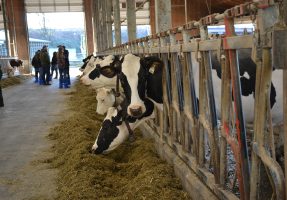
Ho! Ho! Ho! It should be a merry Christmas for dairy producers as they look forward to a quota increase in the new year, thanks to increased demand for dairy products. | FILE PHOTO

December 2, 2024 byPeter Mitham

ABBOTSFORD – A rise in demand for dairy is good news for producers, who will see margins expand in 2025 as farmgate milk prices hold steady and costs fall.

Recapping market conditions at the BC Milk Marketing Board’s fall producer meeting in Abbotsford, October 28, Kevin Mammel noted that milk utilization is up, with processors using every drop they can.

This has led to incentive days being offered to producers in BC and across the four Western Milk Pool provinces through March 2025, as farms try to boost supply to meet demand.

Moreover, the marketing boards in the four western provinces are issuing a 2% increase to continuous daily quota effective January 1 to eligible producers.

“This increase in daily quota is being issued to meet the continued strong demand in both the fluid and industrial markets that is forecasted to continue into calendar year 2025,” an announcement regarding the increase stated.

This is the third quota increase since February 2024, and comes in advance of projected demand at the new plant Vitalus Nutrition plans to begin building in spring 2025. (Supply to Vitalus will not be met solely through quota increases.)

The announcement followed the Canadian Diary Commission’s decision November 1 to leave farmgate milk prices essentially unchanged next year in view of lower production costs.

The farmgate milk price will fall by 0.02% on February 1, a marginal decrease compared to the sharp increase in the BC blend price over the past two years as fluid milk consumption has increased.

CDC reviews cost of production data annually for more than 200 farms across Canada, including 22 in BC. The data feeds into a national cost of production, weighted by province (BC’s share is 9%), working out this year to a national average of $90.36 per hectolitre (hl).

On the plus side, that’s below the current net blend price BC producers receive of $101.33 per hectolitre.

But no one wants to see a price decline.

“We were expecting this,” Mammel told producers in the run-up to the CDC’s announcement. “Your COP has gone down; it has also gone down in other parts of the country.”

The most significant drop came in the price of purchased feed, which fell $2.85 per hectolitre. This more than offset increases in labour, taxes and interest charges.

“This is an extreme year; costs have come way off from $93.09 to $90.36 this year. We would have needed a big CPI increase to see a positive increase in the blend price,” Mammel said, referencing costs from two years ago.

Sharply higher consumption of fluid milk is emerging as a good news story for producers and will help offset the impact of the national pricing announcement.

“When you put more milk into Class 1A, in fluid, you create more revenue per litre, and that puts your blend price up,” he explained.

New approach

BC Dairy Association general manager Jeremy Dunn discussed the new approach to transforming the Western Milk Pool into a truly regional body.

Rather than adopting a new governance structure, an initiative challenged by regulators in several provinces, the four western provinces are now seeking a collaborative relationship.

Recent announcements regarding incentive days and quota increases illustrate the new approach, emphasizing the role of the provincial marketing boards in the decision.

This is in keeping with a concern of the supervisory bodies in each province that the marketing boards retain decision-making authority within their respective jurisdictions.

Questions regarding the cost of the transformation initiative, now abandoned, were not answered.

All content on this website is copyrighted, and cannot be republished or reproduced without permission.
Related Posts

You may be interested in these posts from the same category.

Greater interest in dairy

Comeau reappointed to milk board

Milk board undertakes review

Milk price holds the course

Dairy quota rules change

Dairy quota increases

BC Milk caught out

BC FIRB challenges WMP plans

Dairy demand prompts quota increase

Province funds Vitalus plant expansion

Non-foaming milk continues

Ben Janzen recognized for service

Previous Post: « BC orchard sector needs more than sales
Next Post: Pilot addresses gap in distribution infrastructure »

© 2026 COUNTRY LIFE IN BC - ALL RIGHTS RESERVED