
• Menu
  • Skip to primary navigation
  • Skip to main content
  • Skip to primary sidebar

Country Life In BC Logo

The agricultural news source in British Columbia since 1915

  • Headlines
  • Calendar
  • Subscribe
  • Advertise
  • About
  • Archives
  • Contact
  • Search
  • Headlines
  • Calendar
  • Subscribe
  • Advertise
  • About
  • Archives
  • Contact
  • Search

Primary Sidebar

Originally published:

APRIL 2024
Vol. 110 Issue 4

Subscribe Now!

Sign up for free weekly FARM NEWS UPDATES

Loading form…

Your information will not be
shared or sold ever

Stories In This Edition

Land prices fall

Ready! Set! Seed!

New leadership for WALI

Province defers Land Act amendments

Editorial: A shared future

Back 40: Good intentions need tending to bear fruit

Viewpoint: BC farmers get more by giving back

Bylaws seek to silence Salt Spring roosters

Save the Roosters campaign gains traction

Ag Briefs: Province delivers massive new replant program

Ag Briefs: Northern BC faces acute vet shortage

Ag Briefs: Livestock investment shifts upwards

BC offers more money for drought

Sidebar: Province pledges flood funds

OYF gives nod to Spray Creek Ranch

Chicken pricing agreement nears completion

Turkey growers feel pressure from imports

Sidebar: Breeding better birds

Fruit growers face tought times

Outstanding!

Hort keynote offers ideas on moving forward

New hort show finds an audience

Wine sector celebrates award winners

Cherry growers face headwinds

Farmers markets explore new opportunities

Island conference prioritizes farmer issues

Haskaps hold potential for nothern growers

Farm Story: Spring, and the liner trucks are hauling potatoes

Award-winning nursery a family affair

Shifting demographics boost demand for lamb

Education day offers tips and networking

Life’s a beach

Farmers institutes need to embrace change

Getting down to business

Woodshed: Kenneth isnt going down without a fight

Students receive a lesson in sustainability

Jude’s Kitchen: Haul out the BBQ to celebrate Earth Day

All content on this website is copyrighted, and cannot be republished or reproduced without permission.
More Headlines

Follow us on Facebook

Comments Box SVG iconsUsed for the like, share, comment, and reaction icons

23 hours ago

According to the BC River Forecast Centre, the Okanagan snowpack stood at just 58% of normal on April 1 — the lowest reading since measurements began in 1980 — raising concerns about drought conditions in the region this summer. The rest of the province sits at 92% of normal.

#BCAg
... See MoreSee Less

According to the BC River Forecast Centre, the Okanagan snowpack stood at just 58% of normal on April 1 — the lowest reading since measurements began in 1980 — raising concerns about drought conditions in the region this summer. The rest of the province sits at 92% of normal.

#BCAg
View Comments
  • Likes: 3
  • Shares: 0
  • Comments: 0

Comment on Facebook

2 days ago

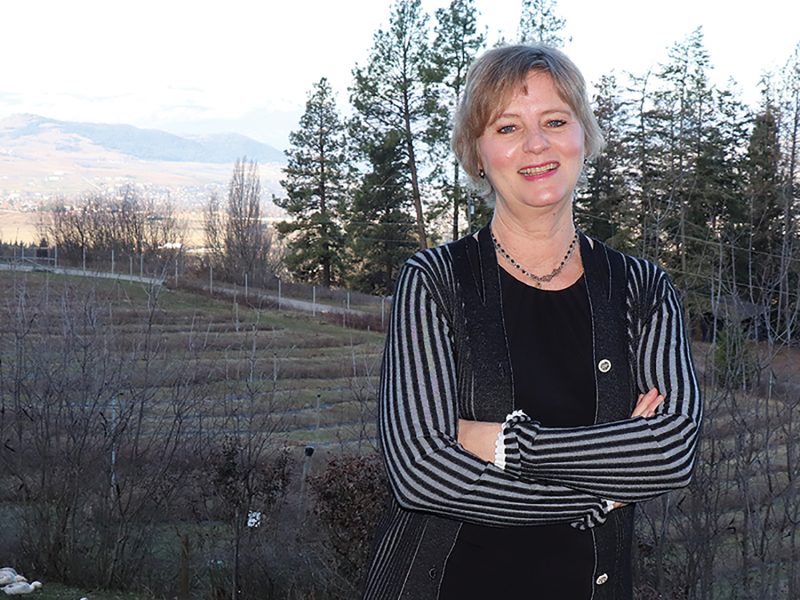
At her first AGM as executive director of BC Meats, held Saturday in Abbotsford, Jennifer Busmann spoke about her strong ties to agriculture and her optimism for the organization's future. Busmann has cattle of her own and came to the role with existing relationships with members and the board of directors that helped her feel integrated from the start. She stepped into the position in Februa#BCAg#BCAg ... See MoreSee Less

At her first AGM as executive director of BC Meats, held Saturday in Abbotsford, Jennifer Busmann spoke about her strong ties to agriculture and her optimism for the organizations future. Busmann has cattle of her own and came to the role with existing relationships with members and the board of directors that helped her feel integrated from the start. She stepped into the position in February.

#BCAg
View Comments
  • Likes: 6
  • Shares: 0
  • Comments: 0

Comment on Facebook

4 days ago

Shannon Wiggins of Headwind Farm in North Saanich is this year's Mary Forstbauer Grant recipient from the BC Association of Farmers Markets. The $500 grant will help Wiggins expand her plot at Sandown Centre for Regenerative Agriculture, growing more storage crops to extend her harvest season. Wiggins credits farmers markets with inspiring her own farming journey and commitment to building community through food. Congratulations!

tinyurl.com/45bdd#BCAg#BCAg
... See MoreSee Less

Shannon Wiggins of Headwind Farm in North Saanich is this years Mary Forstbauer Grant recipient from the BC Association of Farmers Markets. The $500 grant will help Wiggins expand her plot at Sandown Centre for Regenerative Agriculture, growing more storage crops to extend her harvest season. Wiggins credits farmers markets with inspiring her own farming journey and commitment to building community through food. Congratulations!

https://tinyurl.com/45bddtw8

#BCAg
View Comments
  • Likes: 46
  • Shares: 2
  • Comments: 3

Comment on Facebook

Wahoo! Congrats Shannon! I love your produce. Can’t wait for the radishes 🫜

Congratulations!

Well done!! 🩷🩷🩷

5 days ago

New farmers can avoid costly mistakes by learning from those who've been there. At a Young Agrarians mixer in Penticton, five BC farmers shared hard-won lessons on pricing, pivoting, relationships and burnout. From coyote losses to business burnout, their message was clear: set prices that reflect true costs, make decisions quickly and don't let farming define your worth. Myrna Stark Leader's story appears in our April e-edition, now available to view online at: tinyurl#BCAg2uw53vvm

#BCAg
... See MoreSee Less

New farmers can avoid costly mistakes by learning from those whove been there. At a Young Agrarians mixer in Penticton, five BC farmers shared hard-won lessons on pricing, pivoting, relationships and burnout. From coyote losses to business burnout, their message was clear: set prices that reflect true costs, make decisions quickly and dont let farming define your worth. Myrna Stark Leaders story appears in our April e-edition, now available to view online at: https://tinyurl.com/2uw53vvm

#BCAg
View Comments
  • Likes: 15
  • Shares: 0
  • Comments: 0

Comment on Facebook

7 days ago

War in the Middle East is delivering a generational shock to BC farm input costs, with nitrogen fertilizer prices already 60% above pre-pandemic levels and rising fast. Okanagan Fertilizer president Ken Clancy says supply shortfalls are expected as Strait of Hormuz shipping disruptions tighten global supplies and demand surges. BCAC says it's monitoring the situation and ready to advocate for government relief measur#BCAg#BCAg ... See MoreSee Less

Link thumbnail

Fertilizer, fuel costs soar amid Iran conflict

www.countrylifeinbc.com

ENDERBY – War in the Middle East has delivered a generational shock to energy prices, meaning BC farmers can expect a prolonged period of higher costs, not just for fuel but also for fertilizer.
View Comments
  • Likes: 1
  • Shares: 1
  • Comments: 0

Comment on Facebook

Subscribe | Advertise

The agricultural news source in British Columbia since 1915
  • Email
  • Facebook

Haskaps hold potential for northern growers

Growers must process products, build niche markets

Amber Stamm’ler of Indigo Valley Farm in Vernon, is looking forward to a new season growing haskaps that she'll sell online and at farmers markets. Photo | CATHY GLOVER

April 3, 2024 byKate Ayers

VERNON – With limited provincial resources, haskap berry producers must forge their own paths toward business viability and success through value-added products and direct-to-consumer marketing.

“I didn’t want to make a mistake and pick something that’s really hard, which is kind of ironic because I ended up with something really hard,” says Indigo Valley Farm owner Amber Stamm’ler. “It was supposed to be my part-time job … but it quickly turned out to be not at all what I had expected. It is like a full-time job plus more.”

Haskaps grow wild in most provinces, excluding BC, but the wild fruit is not suitable for consumption or harvest. Commercial cultivation in Canada began in Alberta in the 1950s.

In 2007, the University of Saskatchewan released commercial varieties that are much sweeter, easier to grow and more suitable for harvest than their wild counterparts.

In BC, most haskaps were planted in 2015 or later, according to a BC Haskap Association survey of growers in 2019. The association has since dissolved.

Haskaps ripen in mid June and taste like a mixture of blueberry and raspberry. The berries can be consumed fresh, frozen or in a wide range of processed products, including juice, wine, candies and jams.

Stamm’ler is a first-generation farmer with previous experience bringing fruit spreads to market. When the opportunity arose to pivot from processing to growing, she took it.

In 2014, she and her family moved from Ontario to Vernon and bought a property with three acres of horse pasture. After extensive research, she identified haskaps as the easiest fruit to establish and maintain. Coincidentally, a local grower held a haskap seminar in nearby Salmon Arm around that same time.

To Stamm’ler’s surprise, when she finally had a crop of haskaps in 2018, it turned out she needed to do all her own processing and marketing. When a retailer deal fell through, she froze and began processing the berries in her home kitchen to make such products as sauce, jam, juice, tea and chocolate.

Even with farming experience, Kristin Atherton of Chetwynd’s Hasberry Farms says the crop requires some trial and error.

“It was partly experimentation, partly hopeful, partly educated guess,” Atherton says of how her family started growing haskaps.

Atherton, along with her brother and parents, bought acreage and planted their first crop of haskaps in 2018. A few years earlier, a local school had a haskap berry research project that the family supported. Through this project, they discovered the hardiness of the fruit and its ability to thrive in the northern environment so began their own research into potential markets and business viability. One of the larger haskap farms in BC, Hasberry Farms has 30 acres of berries which equals roughly 30,000 plants, and six varieties.

400 acres in cultivation

The BC Haskap Association survey indicated approximately 400 acres of haskaps in BC in 2018.

“In 2018, the BC Haskap Association had 34 grower members including a handful of large-scale producers in the Okanagan and Peace Region, each with [between] 15 and 30 acres,” it reported, adding that many BC haskap producers have less than 10 acres.

Atherton has relied on provincial agronomists, local business organizations, social media and YouTube to grow the family operation.

“It has been very difficult [determining] how to learn, who to learn from and trying to find the right people to get support in the right areas,” Atherton says. “There are not a lot of people that are growing haskaps. There are a few people that are ahead of us … and so you know you can make connections but then we’re all kind of struggling to figure it out.”

Indeed, Stamm’ler and Atherton faced the reality of developing their own products and building their own markets.

“We realized that especially being in the north and being a small community, logistics are hard for shipping frozen, especially getting started in small quantities; it’s just not financially viable,” Atherton says. “That’s why we really wanted to do processed products.”

Family support and collaboration make a difference as well as scale and mechanization.

Atherton’s father modified a bush berry harvester to mechanically harvest the haskaps, her mother contributes to product development and market research and her brother tends to the plants. Atherton completes paperwork and helps wherever she can on the farm.

Stamm’ler has done everything by hand and largely on her own, which has resulted in large time, labour and financial investments.

Atherton and her family have been able to expand their product reach throughout Hudson Hope, Fort St. John, Dawson Creek, Prince George and Chetwynd.

“U-pick is good. We’ve sold a lot through U-pick. … But it’s not enough for long term viability,” Atherton says. “We really needed a way that was feasible to get started on a smaller scale and then be able to expand as we were able to scale up. We needed to be able to process smaller quantities and keep our profit margin so that we can be sustainable long term.”

Since 2018, the family have processed the berries at a local commercial kitchen. In November, they received a $50,000 boost from the BC Hydro Peace Agricultural Compensation Fund to build an on-farm processing centre.

“It should help us increase our production dramatically from what we’re doing right now,” Atherton says. The family’s main products are juice and jam. Their goal is to have the facility ready by April before farming operations begin for the year.

“I’m really proud of the innovation that we’ve done. And starting something totally new in the Peace Region on a larger scale and sticking to it. It’s been a long road so far,” Atherton says.

Looking ahead, Atherton hopes the family can expand their haskap acreage and reach stores beyond the Peace.

“That will come with being able to process more,” she says.

Stamm’ler hopes to turn a profit this year after investing in plants, netting, deer fencing and irrigation infrastructure. She sells her products online and at farmers markets.

“It was the customers that kept me going because they were so enthusiastic and appreciative of the products that I’m making and the berries I was providing. They were telling me to keep going,” Stamm’ler says.

For those considering growing haskaps, “think 100 times before you actually do this,” Stamm’ler explains.

“Know who you’re going to be selling to and all that before you even do anything, because otherwise you’re going to end up with a bunch of berries and nobody to sell to,” she says. “Have a plan [with] everything thought out.”

All content on this website is copyrighted, and cannot be republished or reproduced without permission.

Related Posts

You may be interested in these posts from the same category.

Site C compensation funds awarded

Perseverance, ingenuity aid haskap harvest

Previous Post: « Province to oversee livestock welfare
Next Post: Bylaws seek to silence Salt Spring roosters »
© 2026 COUNTRY LIFE IN BC - ALL RIGHTS RESERVED