
• Menu
  • Skip to primary navigation
  • Skip to main content
  • Skip to primary sidebar

Country Life In BC Logo

The agricultural news source in British Columbia since 1915

  • Headlines
  • Calendar
  • Subscribe
  • Advertise
  • About
  • Archives
  • Contact
  • Search
  • Headlines
  • Calendar
  • Subscribe
  • Advertise
  • About
  • Archives
  • Contact
  • Search

Primary Sidebar

Current Issue:

MAY 2026
Vol. 112 Issue 5

Subscribe Now!

Sign up for free weekly FARM NEWS UPDATES

Loading form…

Your information will not be
shared or sold ever

Follow us on Facebook

Comments Box SVG iconsUsed for the like, share, comment, and reaction icons

7 hours ago

UBC's Wine Research Centre brought together a dozen graduate students at Tantalus Winery in Kelowna on April 30 to share their latest research on viticulture and winemaking. Topics ranged from heat and drought stress on vines to natural yeast classification and cover crop pairings. The day opened with a vineyard tour highlighting sustainable practices already underway at the wine#BCAg#BCAg ... See MoreSee Less

UBCs Wine Research Centre brought together a dozen graduate students at Tantalus Winery in Kelowna on April 30 to share their latest research on viticulture and winemaking. Topics ranged from heat and drought stress on vines to natural yeast classification and cover crop pairings. The day opened with a vineyard tour highlighting sustainable practices already underway at the winery.

#BCAg
View Comments
  • Likes: 1
  • Shares: 1
  • Comments: 0

Comment on Facebook

5 days ago

Saskatchewan's Monette Farms, with nearly $1.1 billion in liabilities, has been granted creditor protection under the CCAA while it restructures. Rapid expansion into produce and cattle dragged earnings well below projections. The farm's BC cattle operation — and a planned West Kelowna winery — hang in the b#BCAge.

#BCAg
... See MoreSee Less

Link thumbnail

Monette Farms wins creditor protection

www.countrylifeinbc.com

Monette Farms’ rapidly expanding produce business was a key factor in its decision to seek protection from creditors last week, according to court documents. Saskatchewan-based Monette Farms was…
View Comments
  • Likes: 1
  • Shares: 0
  • Comments: 0

Comment on Facebook

1 week ago

A new national beef code of practice is open for public comment until June 12. Developed by NFACC and the Canadian Cattle Association, the draft addresses pain management, weaning, nutrition, lameness and end-of-life care.

#BCAg
... See MoreSee Less

Link thumbnail

New beef practices open for comment

www.countrylifeinbc.com

A new national code of practice for beef producers is open for public comment. “The public comment period is an important opportunity for producers across Canada to review the draft code and provide...
View Comments
  • Likes: 1
  • Shares: 0
  • Comments: 0

Comment on Facebook

2 weeks ago

The BC Ministry of Health has approved $4.25 million for the BC Farmers Market Nutrition Coupon Program, administered by the BC Association of Farmers Markets, for 2026. The funding is even with last year, and follows on $12 million provided in 2022-24. The funding is a cornerstone of BCAFM, providing eligible low-income, pregnant and senior individuals with $27 a week for purchases of locally grown produce at more than 100 participating farmers markets in 92 communities across BC. Funding has increased seven-fold since the program launched in 2012.

#BCAg
... See MoreSee Less

The BC Ministry of Health has approved $4.25 million for the BC Farmers Market Nutrition Coupon Program, administered by the BC Association of Farmers Markets, for 2026. The funding is even with last year, and follows on $12 million provided in 2022-24. The funding is a cornerstone of BCAFM, providing eligible low-income, pregnant and senior individuals with $27 a week for purchases of locally grown produce at more than 100 participating farmers markets in 92 communities across BC. Funding has increased seven-fold since the program launched in 2012.

#BCAg
View Comments
  • Likes: 1052
  • Shares: 390
  • Comments: 133

Comment on Facebook

It provides for more than produce. It includes, eggs, meat and honey!

Good program. Additionally, I toured the Kelowna Food bank yesterday. They are serving about 12,000 people a month. Lots are working people.

I have seen people at the Saanichton markets asking if vendors take the coupons and being embarrassed when the vendor says no. Are there signs that are placed on the tables so people know who is part of the program and who is not?

You would have a slim choice of meat if you only get $27.00 .

“While it’s unfortunate that programs like this are necessary, I’m grateful they exist to support families and local farmers.”

Food stamps?

This should be made a little more accessible, especially for seniors

What exactly is this and how does it work? I've never heard of it before. How does this get applied to us who it's intended to help?

Christy Sakai its a week and if you to the markets you can get a small bag of carrots 5bucks, a few potatoes, usually a bag of apples are 5 bucks, and in summer you have fruit choices. Yes doesn't seem like alot but it could be stretched at the markets and remember its a week so really ypu going to use the whole bag of carrots in a week, probably not so you have something for the next week. Heads of lettuce 5 bucks. Every little bit does help when it comes to supporting local farmer and family.

This program has helped me afford local produce, as a senior. I am grateful for the assistance and eat a healthier diet.

I have been a working poor and 🙏👍for recognizing the people who deserve a bit of help as they are doing the best they can 😘👍

This sounds a little more complicated to enroll in than it needs to be. A lot of people probably never heard of it, I only did because I read this post.

It is illegal for me to grow a garden . We can all afford to eat if we can grow.

How does a senior apply?

On my smalltown the food bank puts your name in a lottery for this Seniors included in lottery

Here are the general qualifications: Income Threshold: Generally for lower-income households. Some specific, local programs have identified a threshold of $27,000 or less for a single person or under $50,000 per year for a household. Targeted Groups: Participants must be seniors/elders, pregnant individuals, or families with children under 19. Participant Requirements: In addition to income, participants must: Participate in a food literacy program (e.g., cooking, gardening, or food budgeting). Be able to travel to a participating market to shop for themselves. Allocation: Because demand is high, coupons are often prioritized for new participants each year. Important Information: Coupons are not handed out by the BC Farmers' Markets directly. You must connect with a local community partner (such as a food bank, community centre, or neighbourhood house) to apply.

Glad to see this continue. With the increase in cost of living, this program should be increasing, not staying even with last year. Our local food bank is inundated with need.

It’s a great program. Too bad they won’t extend it to Farmstands as well. Some producers can’t make it to market because of work schedules. And there is more than just vegetables out there.

Where do people apply? Thinking of those I know who need this program.

Have you got an email yet?

I wish a person on disability could get the help too :(

What cities have this

I didn’t know that the program existed

Please if you have these coupons do not be embarrassed to use them they are a good as anyone's money to a grower! I would agree it is a slippery slope to have people pay with government coupons but Remember large scale agriculture is subsidized in this country in way that dwarfs this little program. We are all in a sense are paying with coupons at the big supermarket. As a small scale grower grower I can tell you when you see the higher prices at the farmers market, no one is getting rich off you. That is the true cost of food. Yes that should scare you

Excellent work, BC Ministry of Health! 👍👍👍 An amazing program

View more comments

2 weeks ago

KPU researcher Naomi Robert is partnering with Oregon State University's Dry Farming Collaborative to test drought-resilient growing practices across Vancouver Island and the Gulf Islands. Working with three market gardeners, the study found tomatoes and zucchini thrived without irrigation. With droughts intensifying across the Pacific Northwest, dry farming offers BC growers practical tools to adapt to a changing climate. The full story appears in our April edition. tinyurl.com/d2fzs#BCAg#BCAg ... See MoreSee Less

KPU researcher Naomi Robert is partnering with Oregon State Universitys Dry Farming Collaborative to test drought-resilient growing practices across Vancouver Island and the Gulf Islands. Working with three market gardeners, the study found tomatoes and zucchini thrived without irrigation. With droughts intensifying across the Pacific Northwest, dry farming offers BC growers practical tools to adapt to a changing climate. The full story appears in our April edition. https://tinyurl.com/d2fzs9x6

#BCAg
View Comments
  • Likes: 22
  • Shares: 5
  • Comments: 0

Comment on Facebook

Subscribe | Advertise

The agricultural news source in British Columbia since 1915
  • Email
  • Facebook

Metro Vancouver a food gateway

June 24, 2020 byPeter Mitham

A report to Metro Vancouver’s regional planning committee on June 12 highlights just how much food moves through the Lower Mainland.

Perhaps not surprising, given that Vancouver is a port city, is the dominant position of international food exports – close to 28 million tonnes. Cereal grains and oil seeds dominate the shipments, at nearly 22 million tonnes. Vegetables are a distant third at just 4 million tonnes. By contrast, total food imports through the port totaled a mere 1.3 million tonnes, dominated by a mix of prepared foodstuffs.

The region receives nearly twice as much from the US via the Pacific Highway border crossing as it ships south. Total imports of 1.2 million tonnes are primarily composed of fresh fruits and vegetables, which together total approximately 700,000 tonnes. That’s as much as the region sends south, half of which is made up of animal and vegetable fats, milling products and cereals.

All told, the region exports 29.3 million tonnes to the rest of BC, Canada and international trading partners including the US. The region’s total food demand is 4.4 million tonnes, of which 500,000 tonnes come from the rest of BC and 400,000 is produced in the region.

The report, prepared by Philip Davies of Davies Transportation Consulting Inc. of Vancouver, is based on data for 2018.

All content on this website is copyrighted, and cannot be republished or reproduced without permission.

Related Posts

You may be interested in these posts from the same category.

Grain sector receive funding

Hello, status quo

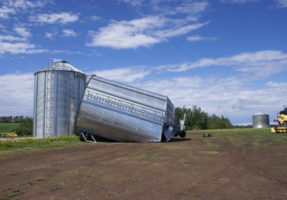
Peace whipped by wild winds

Poultry sector receives $86.8 million

Blueberry growers dodge US complaint

New year, new era

No new concessions

Ingratta heads dairy commission

Dairy producers payout

Shout-out for vegetables

BC agrifood exports rise

Tomato virus targeted

Previous Post: « Mexico sticks with BC
Next Post: Cherries face the pits »

© 2026 COUNTRY LIFE IN BC - ALL RIGHTS RESERVED