
• Menu
  • Skip to primary navigation
  • Skip to main content
  • Skip to primary sidebar

Country Life In BC Logo

The agricultural news source in British Columbia since 1915

  • Headlines
  • Calendar
  • Subscribe
  • Advertise
  • About
  • Archives
  • Contact
  • Search
  • Headlines
  • Calendar
  • Subscribe
  • Advertise
  • About
  • Archives
  • Contact
  • Search

Primary Sidebar

Originally published:

MARCH 2024
Vol. 110 Issue 3

Subscribe Now!

Sign up for free weekly FARM NEWS UPDATES

Loading form…

Your information will not be
shared or sold ever

Stories In This Edition

Crown land shakeup

Start me up!

BC Veg mandate expands

Trade show, gala celebrate the best in agriculture

Editorial: Reconciliation is never a one-way street

Back 40: We need to do better, and we can

Viewpoint: The Land Act: important context, faulty process

BC vineyards wiped out by freeze event

Sidebar: Cherries, tender fruits affected

Apple industry eyes orderly marketing plan

Ag Briefs: BC Tree Fruits members vote down hostile motions

Ag Briefs: Farmers lead protest in Duncan

BC FIRB strategic plan aims to clarify role

Two Interior farms face abuse claims

Good times!

Study shows BC farmers markets add value

Story  tellers

Berry farmer recognized for achievements

Nursery specialist appointed

Blueberries top pick amid strong demand

Awards generate buzz for BC beekeepers

Promising developments in berry breeding

Help takes stress out of Farmgate meat licences

New abattoir offers lifeline to local growers

Pest science

Cattle spark fencing debate

Thistle require innovative management

Job well done!

Pruners should focus on needs of the bush

Islands show brings community together

Farm Story: Spring is claling, but my phone is in pieces

Forecasting will improve with AI technology

Woodshed: Breakfast gives Delta time to do her research

New honeybee program in works for Cariboo

Jude’s Kitchen: Food trend points to healthier eating

More Headlines

Follow us on Facebook

Comments Box SVG iconsUsed for the like, share, comment, and reaction icons

6 days ago

A BC Forest Practices Board investigation has found overgrazing has damaged grasslands in the Coutlee Range Unit near Merritt — and the range-use plan meant to prevent it was unenforceable. With complaints about overgrazing on the rise and grasslands covering just 1% of BC's land mass, the findings raise fresh questions about how the province manages one of its most vulnerable — and valuable — food-producing ecosyste#BCAg#BCAg ... See MoreSee Less

Link thumbnail

Board finds overgrazing rules unenforceable unmeasurable

www.countrylifeinbc.com

MERRITT – A BC Forest Practices Board investigation has found instances of non-compliance related to overgrazing have damaged open grasslands in the Mine pasture, part of the Coutlee Range Unit near...
View Comments
  • Likes: 6
  • Shares: 6
  • Comments: 6

Comment on Facebook

Several ranchers in recent years have gone into temporary non use on that range , so that means the grass should grow. But drought conditions/lack of rain and snow don’t allow that to happen . Dried up springs , creeks waterholes in various pastures add to over grazing where there is water , as livestock and everything else stay close to the water source . So even though less cattle are on it , over grazing appears. There is a large volume of horses on it 365 days/year which is wrong ! They pull grass right out of the ground when it’s just trying to grow ,, opens the door for weeds to grow in. That don’t help it. Aging infrastructure ( fences) laying on the ground, pipe line building , ( lack of commitment to fence maintenance) amongst all users contributes also to over grazing. Recreational atv users leaving gates open between pastures allows livestock to go back or ahead in pastures also expidites over grazing. Logging ( bcts) has no problem laying out cut locks on both sides of a fence , then it gets smashed down during logging and they don’t take responsibility to stand it back up or clean the cattle gaurds out when they are done , that happened 4 years ago on pasture 5 up there . I bet it is still not fixed . There are lots of contributing factors to the problem.

Tragedy of the commons.

I looked through the report. I saw nothing about the effects of noxious weeds on productive grasslands. This particular area is vulnerable because of the Ministry’a efforts to diversify the use of the Grasslands.

This pasture is under tremendous pressure not only from cattle but from irresponsible local residents who treat it as a landfill dumping all manner of household debris here. And don't even get me started on the mud bogging and camping in sensitive riparian areas. The feral horses are in this pasture 365 days a year just hammering it. Would sure be nice to see some enforcement action on people who are intentionally ripping up the grasslands and riparian areas. Cattle could be a valuable resource for rebuilding soils and native grasses in this area with the help of electric fencing and/or e-collars. The humans will be harder to manage.

The Forest and Range Practices Act was written by lawyers for global forest licencee shareholders. Results-based = unenforceable.

Also, can we talk about the impact of a pipeline being built through the middle of this field for multiple years?

View more comments

1 week ago

East Kootenay rancher Randy Reay is digging a new well after two natural water sources dried up on his Crown tenures. A new Living Lakes Canada assessment found 15% of mapped aquifers in the region are high-priority for monitoring, yet 80% of those go unmonitored. With over 48% of BC's provincial observation wells reporting below-normal groundwater levels, ranchers and researchers are sounding the alarm on water security. The story is in our March edition, and we've posted it to our website thi#BCAgk.

#BCAg
... See MoreSee Less

Link thumbnail

Water woes: groundwater under pressure across BC

www.countrylifeinbc.com

JAFFRAY – As a young boy growing up in the Kootenay-Boundary region, Randy Reay never expected to run out of water. But this year, in mid-February, his fields are bare. There is no snow halfway up t...
View Comments
  • Likes: 8
  • Shares: 7
  • Comments: 1

Comment on Facebook

Jaffrey is in the east Kootenays not kooteney boundary

2 weeks ago

BC farmers are bracing for prolonged higher input costs as war in the Middle East drives up fuel and fertilizer prices. Nitrogen fertilizer costs were already climbing before the Iran conflict began, with prices still roughly 60% above pre-pandemic levels. Farm Credit Canada warns that unlike 2022, strong commodity prices may not offset rising costs this time. Local suppliers expect supply challenges and further price increases ahead.

#BCAg
... See MoreSee Less

Link thumbnail

Fertilizer prices on the rise

www.countrylifeinbc.com

War in the Middle East has delivered a generational shock to energy prices, meaning BC farmers can expect a prolonged period of higher costs not just for fuel but also for fertilizer.
View Comments
  • Likes: 2
  • Shares: 1
  • Comments: 0

Comment on Facebook

2 weeks ago

... See MoreSee Less

View Comments
  • Likes: 1
  • Shares: 0
  • Comments: 0

Comment on Facebook

2 weeks ago

Cameron Stockdale is the new executive director of provincial farm safety organization AgSafeBC. Find out more in this week's Farm News Update from Country Life in B#BCAg#BCAg ... See MoreSee Less

Link thumbnail

New leadership at AgSafe BC

www.countrylifeinbc.com

Cameron Stockdale is the new executive director of provincial farm safety organization AgSafeBC, succeeding Wendy Bennett. Bennett left AgSafeBC in September 2025, following 12 years with the…
View Comments
  • Likes: 5
  • Shares: 1
  • Comments: 0

Comment on Facebook

Subscribe | Advertise

The agricultural news source in British Columbia since 1915
  • Email
  • Facebook

New abattoir offers lifeline to local farmers

Marsden Meadows Farm fills processing gap

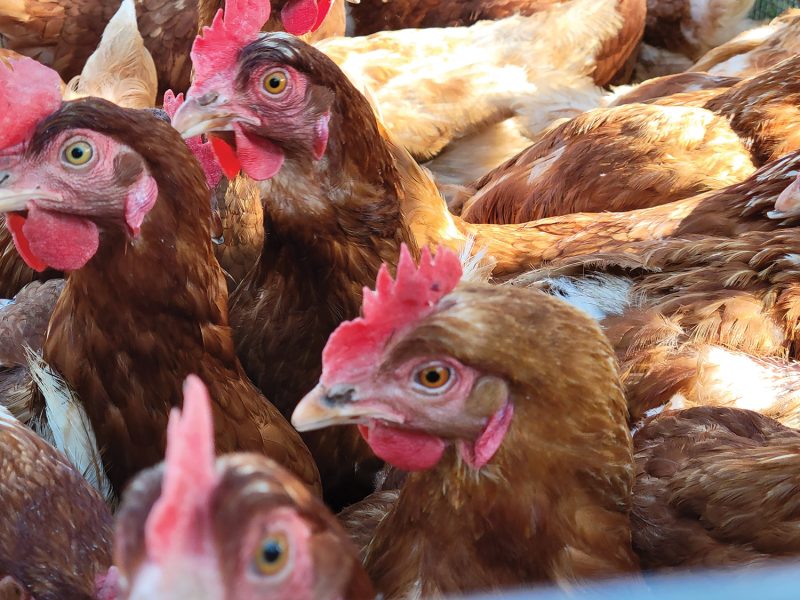
Small farm poultry producers on Vancouver Island are about to have more processing options. With support through a Small Food Processor Scale-Up grant, Marsden Meadows Farm in Courtenay has been able to upgrade their processing capabilities. Myrna Stark Leader / Photo

March 1, 2024 byKate Ayers

COURTENAY – After nearly five years in the making, Christine Mooney is excited to be finally putting the finishing touches on her federally inspected poultry abattoir, thanks to her perseverance and Investment Agriculture Foundation of BC’s Small Food Processor Scale-Up grant.

In fall 2023, Mooney was making the best of her small space and Farmgate Plus licence to help poultry producers with their processing needs in the Comox Valley. The grant’s $150,000 boost will support facility expansion and an upgrade to a federally inspected abattoir, significantly increasing capacity.

“Getting this grant made all the difference. There’s no way I would have been able to afford to do all of this on top of what I’ve already spent out of pocket getting to this point,” Mooney says. “It’s exciting. I’m hoping to allow all the people that stopped raising poultry to start again and be excited for it and have something that is easily accessible for everyone.”

Along with six staff members, Mooney will operate a semi-automated processing line two days a week to start, with the goal of processing 500 birds a day. The funding wasn’t quite enough to facilitate cut-and-wrap offerings as well, but Duane Zimmerman of Single Tree Meat Processing, a fully licensed and government-inspected provider in the valley, provides these services.

When the new and improved abattoir is up and running in May, Mooney hopes to hire a floor manager so that she can continue working as a nurse and balance her two near-full-time jobs.

While momentum is building in the right direction, Mooney worked long and hard to get to this point and faced many hurdles along the way in pursuit of helping local poultry producers stay viable.

Mooney submitted her first abattoir proposal to the Comox Valley Regional District in late 2019 and the following three years were filled with contradictory information and neighbour pushback.

“It was hard. It was a lot of roadblocks, a lot of two steps forward, five steps backwards, two more steps forward, one step backwards,” she says. “No one was really straight-forward with their answers.”

Having spent 15 years developing her dream farm in the Comox Valley, Mooney needed to find a new location that met the regional district’s and Canadian Food Inspection Agency’s regulations if she wanted to keep her aspirations of running an abattoir alive.

“We looked at probably about 80 different farms between Campbell River and Nanaimo,” Mooney says. “We needed certain setbacks from waterways and lot lines. I wanted it to be on city water as well water requires testing that is expensive. I also needed three-phase electrical, plus a house that would fit our family on the same property.”

Also, the property needed to be in the Agricultural Land Reserve and the Agricultural Land Commission needed to grant permission for building permits, zoning and bringing in fill for the abattoir.

“The regional districts have exclusions on every type of property and an abattoir is not allowed on any property except ALR,” Mooney says.

Fortunately, after an arduous process, Mooney found a suitable property and received approvals 200 days after initiating the process. However, banks and insurance companies didn’t want anything to do with the venture.

“Financing for an abattoir was almost impossible,” Mooney says. Despite working with a bank for over five months to secure funding for the construction of a new abattoir, nothing was approved.

So, Mooney pivoted to the Farmgate Plus licence, financed everything out of pocket and the regional district eventually allowed her to use a building on the property that they had previously claimed was inadequate. She found a European insurance company to cover her business.

Process too difficult

“It shouldn’t be this hard,” says Small-Scale Meat Producers Association executive director Julia Smith. “It’s great that they’re making [scale-up] funding available, but that whole process needs to be easier. … The people who need it the most do not have time to navigate the quagmire of funding paperwork. You shouldn’t have to be a superhero to get it done.”

Smith would like to see specialized support available through industry associations, including SSMPA, the BC Cattlemen’s Association and BC Sheep Federation to guide people through the funding application process. Part of the BC Ministry of Agriculture and Food’s budget could enable producer groups to have that support role on staff, she adds.

“Rather than the producer having to reinvent the wheel and learn how to write grants and keep track of all of the reporting requirements, wouldn’t it be great if there were people available to support them?” Smith asks.

Mooney first opened the doors of her abattoir in November 2023 but quickly met her 25,000 lb quota with the Farmgate Plus licence because of the high demand in the area.

“I turned so many farms away last year. I just couldn’t accommodate them with my quota,” Mooney says.

Lost income

Following the closure of The Cluck Stops Here in Whiskey Creek in 2020 and increased pressure on Paradise Meadows Poultry in Black Creek, many local producers decided to stop raising birds altogether.

“We lost just over three years of income from selling poultry and we lost a lot of our customers,” says Courtenay’s Maplesprings Farm owner Karen Eigler. Not being able to raise poultry resulted in the loss of over $15,000 during that time. “It hurt us financially. I had just retired, and we planned on farm income,” she adds.

Eigler and her husband John used to raise upwards of 625 turkeys and roaster chickens a year. The lack of available processing meant the couple didn’t raise any birds in 2021 and 2022. They raised a few birds for themselves in 2023. The prospect of Mooney’s new facility has been a game-changer.

“It’s such an open-arm welcome. It’s filling the void,” John Eigler says.

Prior to 2021, they made a three-hour round-trip on back-to-back days during the processing period to get their poultry done. Mooney’s facility is a convenient 10-minute drive away.

“Farming is in our blood. My husband was born and raised on this farm, and when we got going on it and people really liked our food, we felt really good about it and we were selling out all the time,” Karen Eigler says. “We can’t say how much we are thrilled that Christine is up and running in the valley. We wish her a very prosperous and successful business.”

The abattoir has been closed since mid-December for renovations, but Mooney has already booked in several thousand chickens for the spring. She also looks forward to boosting her own poultry numbers to about 600 chickens and 150 turkeys this year now that she has secure processing available on site.

“It’s some forward momentum at a time when we really need it,” Smith says of Mooney’s ability to wade through the bureaucracy and get her abattoir in place. “There are consumers that want to buy these products, but we’ve all been getting so discouraged lately. To see Christine stick with this and achieve this … in spite of the adversity that she’s had to overcome. She’s been able to move the industry forward a little bit.”

Related Posts

You may be interested in these posts from the same category.

Previous Post: « Province surveys producers on vet services
Next Post: Apple industry eyes orderly marketing plan »

Copyright © 2026 Country Life in BC · All Rights Reserved