• Menu
  • Skip to primary navigation
  • Skip to main content
  • Skip to primary sidebar

Country Life In BC Logo

The agricultural news source in British Columbia since 1915

  • Headlines
  • Calendar
  • Subscribe
  • Advertise
  • About
  • Archives
  • Contact
  • Search
  • Headlines
  • Calendar
  • Subscribe
  • Advertise
  • About
  • Archives
  • Contact
  • Search

Primary Sidebar

Current Issue:

DECEMBER 2025
Vol. 111 Issue 11

Subscribe Now!

Sign up for free weekly FARM NEWS UPDATES

Select list(s) to subscribe to


By submitting this form, you are consenting to receive marketing emails from: Country Life in BC. You can revoke your consent to receive emails at any time by using the SafeUnsubscribe® link, found at the bottom of every email. Emails are serviced by Constant Contact
Your information will not be
shared or sold ever

Follow us on Facebook

Comments Box SVG iconsUsed for the like, share, comment, and reaction icons

6 days ago

... See MoreSee Less

View Comments
  • Likes: 4
  • Shares: 0
  • Comments: 0

Comment on Facebook

7 days ago

On the last day of the BC Organic Conference, Thursday, Molly Thurston of Pearl Agricultural Consulting helped growers learn how to manage bugs such as codling moth, wireworm, and rootworm in organic growing systems. Her talk alongside Renee Prasad included hands-on activities in which participants checked out various traps and examined pests under microscopes. Be sure to look for more upcoming ag events on our online calendar at www.countrylifeinbc.com/calendar/

#BCAg
... See MoreSee Less

On the last day of the BC Organic Conference, Thursday, Molly Thurston of Pearl Agricultural Consulting helped growers learn how to manage bugs such as codling moth, wireworm, and rootworm in organic growing systems. Her talk alongside Renee Prasad included hands-on activities in which participants checked out various traps and examined pests under microscopes. Be sure to look for more upcoming ag events on our online calendar at www.countrylifeinbc.com/calendar/

#BCAg
View Comments
  • Likes: 15
  • Shares: 0
  • Comments: 0

Comment on Facebook

1 week ago

Well-known organic farmer and podcaster Jordan Marr gets interviewed by Country Life in BC’s own columnist and potato mavin Anna Helmer during the opening session of the BC Organic Conference at Harrison Hot Springs yesterday. Sessions run today (Wednesday) and Thursday and include organic and regenerative growing practices and expanding and advocating for the organic sector, all under the background of the newly launched Organic BC banner.

#BCAg
... See MoreSee Less

Well-known organic farmer and podcaster Jordan Marr gets interviewed by Country Life in BC’s own columnist and potato mavin Anna Helmer during the opening session of the BC Organic Conference at Harrison Hot Springs yesterday. Sessions run today (Wednesday) and Thursday and include organic and regenerative growing practices and expanding and advocating for the organic sector, all under the background of the newly launched Organic BC banner.

#BCAg
View Comments
  • Likes: 37
  • Shares: 2
  • Comments: 1

Comment on Facebook

Interested in finding out more about this

3 weeks ago

Today, we remember those who sacrificed their lives or their well-being for our freedom. Lest we forget. ... See MoreSee Less

Today, we remember those who sacrificed their lives or their well-being for our freedom. Lest we forget.
View Comments
  • Likes: 8
  • Shares: 0
  • Comments: 0

Comment on Facebook

1 month ago

FarmFolk CItyFolk is hosting its biennial BC Seed Gathering in Harrison Hot Springs November 27 and 28. Farmers, gardeners and seed advocates are invited to learn more about seed through topics like growing perennial vegetables for seed, advances in seed breeding for crop resilience, seed production as a whole and much more. David Catzel, BC Seed Security program manager with FF/CF will talk about how the Citizen Seed Trail program is helping advance seed development in BC. Expect newcomers, experts and seed-curious individuals to talk about how seed saving is a necessity for food security. ... See MoreSee Less

Link thumbnail

BC Seed Gathering - FarmFolk CityFolk

farmfolkcityfolk.ca

Save the date for our upcoming 2023 BC Seed Gathering happening this November 3rd and 4th at the Richmond Kwantlen Polytechnic University campus.
View Comments
  • Likes: 1
  • Shares: 0
  • Comments: 0

Comment on Facebook

Subscribe | Advertise

The agricultural news source in British Columbia since 1915
  • Email
  • Facebook

New licences, new inspections

September 29, 2021 byKate Ayers

The rollout of the province’s new meat licensing regime October 1 will also mean stepped-up inspections of on-farm abattoirs.

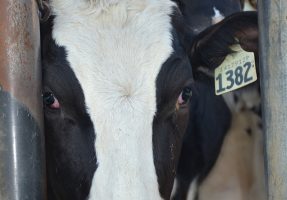
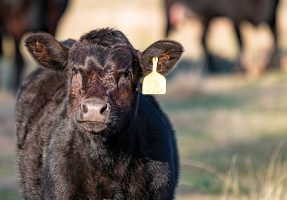
In addition to an annual inspection by the province, Farmgate Plus licensees (formerly Class D and E abattoirs) that slaughter cattle will also undergo inspection by the Canadian Food Inspection Agency.

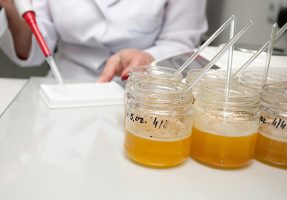
The inspections aim to preserve the negligible risk status for Bovine Spongiform Encephalopathy (BSE) Canada received in May. The inspections will ensure that producers meet the control requirements under the Health of Animals Act and Regulations for specified risk material. The work is backed by a federal investment of $162.6 million over five years to support CFIA’s work.

But the federal inspections don’t sit well with some small producers.

“It’s great to say that we have this new licencing system, but it all falls back on the producer. There are some big gaps,” says Port Alberni cattle and sheep producer and Alberni Farmers Institute president Lisa Aylard. “The government comes back saying we need security for our exports because of BSE. The CFIA money is in support of global trade, nothing domestic. So where is the support system for our local businesses?”

CFIA says inspections will include an interview and a review of documents prior to inspection while the inspection itself will assess slaughter, processing, handling of specified risk material (SRM) and record-keeping.

The inspections will coincide with scheduled slaughter dates; if no slaughter is planned for this fall, the inspection will occur at the first slaughter date following. CFIA asks that licensees provide a slaughter scheduled as soon as possible, “even if no slaughter is planned.” In future, slaughter schedules must be provided before the first week of months January, April, July and October.

“The whole idea of getting the D licence was to give producers the ability to choose when they could use it. To provide flexibility,” says Aylard, noting that slaughter is just on thing small producers do. Having the ability to change schedules on the fly is important.

“Quite often we look after our own water so if you have a blow out of a waterline and you were planning on doing a slaughter, all of a sudden (the water) becomes a priority and you have to postpone (slaughter),” she says. “More regulations impede [the] ability to conduct farm business as needed on producers’ timelines.”
Related Posts

You may be interested in these posts from the same category.

BC distanced from TB concerns

CFIA nabs Enderby abattoir

BC control zones revoked

Avian influenza grows

Federal funding for AI response

Livestock health in spotlight

Avian influenza returns

AI outbreak rivals 2004

Avian influenza spreads

Plant health centre breaks ground

Avian influenza returns

Bird flu in FV

Previous Post: « RegenBC conference emphasizes context
Next Post: Female ranchers excited for mentorship opportunities »

Copyright © 2025 Country Life in BC · All Rights Reserved