• Menu
  • Skip to primary navigation
  • Skip to main content
  • Skip to primary sidebar

Country Life In BC Logo

The agricultural news source in British Columbia since 1915

  • Headlines
  • Calendar
  • Subscribe
  • Advertise
  • About
  • Archives
  • Contact
  • Search
  • Headlines
  • Calendar
  • Subscribe
  • Advertise
  • About
  • Archives
  • Contact
  • Search

Primary Sidebar

Current Issue:

APRIL 2026
Vol. 112 Issue 4

Subscribe Now!

Sign up for free weekly FARM NEWS UPDATES

Loading form…

Your information will not be
shared or sold ever

Follow us on Facebook

Comments Box SVG iconsUsed for the like, share, comment, and reaction icons

20 hours ago

According to the BC River Forecast Centre, the Okanagan snowpack stood at just 58% of normal on April 1 — the lowest reading since measurements began in 1980 — raising concerns about drought conditions in the region this summer. The rest of the province sits at 92% of normal.

#BCAg
... See MoreSee Less

According to the BC River Forecast Centre, the Okanagan snowpack stood at just 58% of normal on April 1 — the lowest reading since measurements began in 1980 — raising concerns about drought conditions in the region this summer. The rest of the province sits at 92% of normal.

#BCAg
View Comments
  • Likes: 3
  • Shares: 0
  • Comments: 0

Comment on Facebook

2 days ago

At her first AGM as executive director of BC Meats, held Saturday in Abbotsford, Jennifer Busmann spoke about her strong ties to agriculture and her optimism for the organization's future. Busmann has cattle of her own and came to the role with existing relationships with members and the board of directors that helped her feel integrated from the start. She stepped into the position in Februa#BCAg#BCAg ... See MoreSee Less

At her first AGM as executive director of BC Meats, held Saturday in Abbotsford, Jennifer Busmann spoke about her strong ties to agriculture and her optimism for the organizations future. Busmann has cattle of her own and came to the role with existing relationships with members and the board of directors that helped her feel integrated from the start. She stepped into the position in February.

#BCAg
View Comments
  • Likes: 6
  • Shares: 0
  • Comments: 0

Comment on Facebook

4 days ago

Shannon Wiggins of Headwind Farm in North Saanich is this year's Mary Forstbauer Grant recipient from the BC Association of Farmers Markets. The $500 grant will help Wiggins expand her plot at Sandown Centre for Regenerative Agriculture, growing more storage crops to extend her harvest season. Wiggins credits farmers markets with inspiring her own farming journey and commitment to building community through food. Congratulations!

tinyurl.com/45bdd#BCAg#BCAg
... See MoreSee Less

Shannon Wiggins of Headwind Farm in North Saanich is this years Mary Forstbauer Grant recipient from the BC Association of Farmers Markets. The $500 grant will help Wiggins expand her plot at Sandown Centre for Regenerative Agriculture, growing more storage crops to extend her harvest season. Wiggins credits farmers markets with inspiring her own farming journey and commitment to building community through food. Congratulations!

https://tinyurl.com/45bddtw8

#BCAg
View Comments
  • Likes: 45
  • Shares: 2
  • Comments: 3

Comment on Facebook

Wahoo! Congrats Shannon! I love your produce. Can’t wait for the radishes 🫜

Congratulations!

Well done!! 🩷🩷🩷

5 days ago

New farmers can avoid costly mistakes by learning from those who've been there. At a Young Agrarians mixer in Penticton, five BC farmers shared hard-won lessons on pricing, pivoting, relationships and burnout. From coyote losses to business burnout, their message was clear: set prices that reflect true costs, make decisions quickly and don't let farming define your worth. Myrna Stark Leader's story appears in our April e-edition, now available to view online at: tinyurl#BCAg2uw53vvm

#BCAg
... See MoreSee Less

New farmers can avoid costly mistakes by learning from those whove been there. At a Young Agrarians mixer in Penticton, five BC farmers shared hard-won lessons on pricing, pivoting, relationships and burnout. From coyote losses to business burnout, their message was clear: set prices that reflect true costs, make decisions quickly and dont let farming define your worth. Myrna Stark Leaders story appears in our April e-edition, now available to view online at: https://tinyurl.com/2uw53vvm

#BCAg
View Comments
  • Likes: 15
  • Shares: 0
  • Comments: 0

Comment on Facebook

7 days ago

War in the Middle East is delivering a generational shock to BC farm input costs, with nitrogen fertilizer prices already 60% above pre-pandemic levels and rising fast. Okanagan Fertilizer president Ken Clancy says supply shortfalls are expected as Strait of Hormuz shipping disruptions tighten global supplies and demand surges. BCAC says it's monitoring the situation and ready to advocate for government relief measur#BCAg#BCAg ... See MoreSee Less

Link thumbnail

Fertilizer, fuel costs soar amid Iran conflict

www.countrylifeinbc.com

ENDERBY – War in the Middle East has delivered a generational shock to energy prices, meaning BC farmers can expect a prolonged period of higher costs, not just for fuel but also for fertilizer.
View Comments
  • Likes: 1
  • Shares: 1
  • Comments: 0

Comment on Facebook

Subscribe | Advertise

The agricultural news source in British Columbia since 1915
  • Email
  • Facebook

New licences, new inspections

September 29, 2021 byKate Ayers

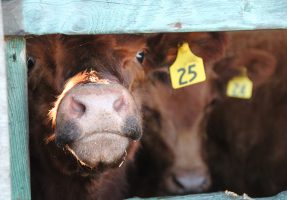
The rollout of the province’s new meat licensing regime October 1 will also mean stepped-up inspections of on-farm abattoirs.

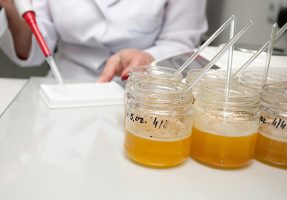
In addition to an annual inspection by the province, Farmgate Plus licensees (formerly Class D and E abattoirs) that slaughter cattle will also undergo inspection by the Canadian Food Inspection Agency.

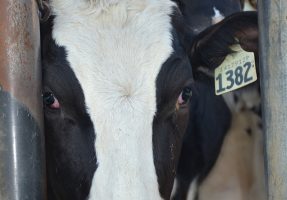
The inspections aim to preserve the negligible risk status for Bovine Spongiform Encephalopathy (BSE) Canada received in May. The inspections will ensure that producers meet the control requirements under the Health of Animals Act and Regulations for specified risk material. The work is backed by a federal investment of $162.6 million over five years to support CFIA’s work.

But the federal inspections don’t sit well with some small producers.

“It’s great to say that we have this new licencing system, but it all falls back on the producer. There are some big gaps,” says Port Alberni cattle and sheep producer and Alberni Farmers Institute president Lisa Aylard. “The government comes back saying we need security for our exports because of BSE. The CFIA money is in support of global trade, nothing domestic. So where is the support system for our local businesses?”

CFIA says inspections will include an interview and a review of documents prior to inspection while the inspection itself will assess slaughter, processing, handling of specified risk material (SRM) and record-keeping.

The inspections will coincide with scheduled slaughter dates; if no slaughter is planned for this fall, the inspection will occur at the first slaughter date following. CFIA asks that licensees provide a slaughter scheduled as soon as possible, “even if no slaughter is planned.” In future, slaughter schedules must be provided before the first week of months January, April, July and October.

“The whole idea of getting the D licence was to give producers the ability to choose when they could use it. To provide flexibility,” says Aylard, noting that slaughter is just on thing small producers do. Having the ability to change schedules on the fly is important.

“Quite often we look after our own water so if you have a blow out of a waterline and you were planning on doing a slaughter, all of a sudden (the water) becomes a priority and you have to postpone (slaughter),” she says. “More regulations impede [the] ability to conduct farm business as needed on producers’ timelines.”

All content on this website is copyrighted, and cannot be republished or reproduced without permission.
Related Posts

You may be interested in these posts from the same category.

Poultry biosecurity notches down

Traceability reprieve for livestock

CFIA reports low honey adulteration

BC distanced from TB concerns

CFIA nabs Enderby abattoir

BC control zones revoked

Avian influenza grows

Federal funding for AI response

Livestock health in spotlight

CFIA proposes traceability updates

Avian influenza returns

AI outbreak rivals 2004

Previous Post: « RegenBC conference emphasizes context
Next Post: Female ranchers excited for mentorship opportunities »

© 2026 COUNTRY LIFE IN BC - ALL RIGHTS RESERVED