• Menu
  • Skip to primary navigation
  • Skip to main content
  • Skip to primary sidebar

Country Life In BC Logo

The agricultural news source in British Columbia since 1915

  • Headlines
  • Calendar
  • Subscribe
  • Advertise
  • About
  • Archives
  • Contact
  • Search
  • Headlines
  • Calendar
  • Subscribe
  • Advertise
  • About
  • Archives
  • Contact
  • Search

Primary Sidebar

Originally published:

NOVEMBER 2019
Vol. 105 Issue 11

Subscribe Now!

Sign up for free weekly FARM NEWS UPDATES

Loading form…

Your information will not be
shared or sold ever

Stories In This Edition

ALC gets an earful

Herding Hens

Food hub funding boost

Municipalities challenge ALC over process

No bad apples

Editorial: Taking stock

Back Forty: Remembering Aunt Dolly, and others

Viewpoint: Keeping BC farms (and farmers) growing

Farm status undermined by local bylaws

Big green gourd

Heavy rains don’t wash out potato hopes

Giant hornets headline beekeepers’ concerns

Honey producers honour industry leaders

Country Life in BC wins awards at conference

Bridging the urban-rural divide

New skills needed for technology-driven agriculture

Data drives more efficient poultry farming

Ag Briefs: New CEO appointed at BC Tree Fruits

Ag Briefs: Site launched for farmers’ institutes

Ag Briefs: Child labour feedback sought

Demand underpins cheesemaker’s expansion

Cranberry growers expect lower yields

Neighbours raise stink over cannabis farms

Sheep farmers share their experiences

Lots (and lots) of pumpkins

Federation moves forward on key initiatives

Riparian assessment requirements updated

On-farm slaughter a key skill for producers

On the move

Sidebar: Better than offal

Feedback on new watering regs a concern

Market Musings: The future in beef looks like a slam dunk

Growers all ears at silage corn field day

UBC dairy centre signs five-year lease

Falkland Dairy volume buyer at Holstein Sae

Mega-dairies are the future of US farms

Research: Bacterial leaf streak lacks chemical controls

Big beef show at BC Ag Expo

Farm News: Growing prospects brighten dark autum days

BC Young Farmers look to grow north

Horse Power

Day-long 4-H event puts emphasis on safety

Woodshed: Newt schemes to rescue Kenneth’s tractor

Good gourd! Giant vegetables weigh off

Jude’s Kitchen: Late fall harvest

More Headlines

Follow us on Facebook

Comments Box SVG iconsUsed for the like, share, comment, and reaction icons

6 hours ago

The Township of Langley Farm and Ranch Exhibition Society is hosting a public open house this evening to gather input on plans to transform the historic Belmont Farm into an agricultural exhibition, education and heritage hub. Farmers, ranchers, and community members are invited to share their feedback. The open house is at the George Preston Rec Centre, 6-8 pm.

Township of Langley Farm and Ranch Exhibition Society
#BCAg
... See MoreSee Less

The Township of Langley Farm and Ranch Exhibition Society is hosting a public open house this evening to gather input on plans to transform the historic Belmont Farm into an agricultural exhibition, education and heritage hub. Farmers, ranchers, and community members are invited to share their feedback. The open house is at the George Preston Rec Centre, 6-8 pm. 

Township of Langley Farm and Ranch Exhibition Society 
#BCAg
View Comments
  • Likes: 8
  • Shares: 0
  • Comments: 0

Comment on Facebook

9 hours ago

The sold-out Southern Interior Horticulture show continues today. Education sessions range from rodent control to new tree fruit varieties, with the afternoon devoted to improving spraying techniques for orchardists and vineyard managers. When not listening to speakers, producers are checking the trade show.

#BCAg
... See MoreSee Less

The sold-out Southern Interior Horticulture show continues today. Education sessions range from rodent control to new tree fruit varieties, with the afternoon devoted to improving spraying techniques for orchardists and vineyard managers. When not listening to speakers, producers are checking the trade show.

#BCAg
View Comments
  • Likes: 6
  • Shares: 0
  • Comments: 0

Comment on Facebook

11 hours ago

The BC Poultry Association has lowered its avian flu biosecurity threat level from red to yellow, citing declining HPAI risk factors and fewer wild bird infections. Strong biosecurity practices helped BC limit cases this winter to 38 premises, down from 81 last year. For more, see today's Farm News Update from Country Life in #BCAg#BCAg ... See MoreSee Less

Link thumbnail

Poultry biosecurity notches down

www.countrylifeinbc.com

Declining risk factors for highly pathogenic avian influenza (HPAI) have prompted the BC Poultry Association to lower the industry’s biosecurity threat level from red to yellow. The decision…
View Comments
  • Likes: 11
  • Shares: 2
  • Comments: 1

Comment on Facebook

🐥💛

1 day ago

The application deadline for cost-shared funding through the Buy BC program is coming up on February 20. Up to $2 million through the Buy BC Partnership Program is available annually to BC producers and processors to support local marketing activities that increase consumer awareness of BC agriculture and BC food and beverages. For more information, visit buybcpartnershipprogram.ca/.

Buy BC

#BCAg
... See MoreSee Less

Link thumbnail

Home - Buy BC Partnership Program

buybcpartnershipprogram.ca

Buy BC Partnership Program Increase your visibility with Buy BC The Buy BC Partnership Program is a fundamental component of Buy BC that provides up to $2 million in cost-shared funding annually to lo...
View Comments
  • Likes: 3
  • Shares: 0
  • Comments: 0

Comment on Facebook

1 day ago

The Sik-E-Dakh (Glen Vowell) First Nation's Skeena Fresh hydroponic operation has doubled production capacity thanks to a $130,632 Northern Development Infrastructure Trust grant. Growing lettuce, kale, herbs and more in shipping containers, the operation uses 90% less water than traditional farming while providing 1,200 people with year-round access to fresh, locally grown greens. Their story is in the February edition of Country Life in BC, the agricultural news source for BC’s farmers and ranchers.

Northern Development Initiative Trust
#BCAg
... See MoreSee Less

The Sik-E-Dakh (Glen Vowell) First Nations Skeena Fresh hydroponic operation has doubled production capacity thanks to a $130,632 Northern Development Infrastructure Trust grant. Growing lettuce, kale, herbs and more in shipping containers, the operation uses 90% less water than traditional farming while providing 1,200 people with year-round access to fresh, locally grown greens. Their story is in the February edition of Country Life in BC, the agricultural news source for BC’s farmers and ranchers. 

Northern Development Initiative Trust 
#BCAg
View Comments
  • Likes: 15
  • Shares: 1
  • Comments: 0

Comment on Facebook

Subscribe | Advertise

The agricultural news source in British Columbia since 1915
  • Email
  • Facebook

New skills needed for technology-driven agriculture

RBC says Canada’s agricultural revenues could top $11 billion

November 1, 2019 byDavid Schmidt

ABBOTSFORD – Canadian agriculture has the potential to generate $11 billion in revenue, Royal Bank of Canada senior vice-president John Stackhouse told a select group of industry leaders at an RBC Farmer 4.0 luncheon in Abbotsford, October 10.

“The world will have to produce more food than ever before to feed people in the next 40 years,” he said. “To feed the world more sustainably is a calling for Canada.”

Stackhouse was reporting on RBC’s release of Farmer 4.0, a new report detailing the potential of Canadian agriculture and what it will take to realize it.

It was deliberately titled Farmer 4.0 as RBC believes we are now in the fourth iteration of farming. Farmer 1.0 represented the shift from subsistence agriculture to specialization; Farmer 2.0 occurred with the development of advanced machinery for agriculture and Farmer 3.0 took place as a result of the scientific revolution.

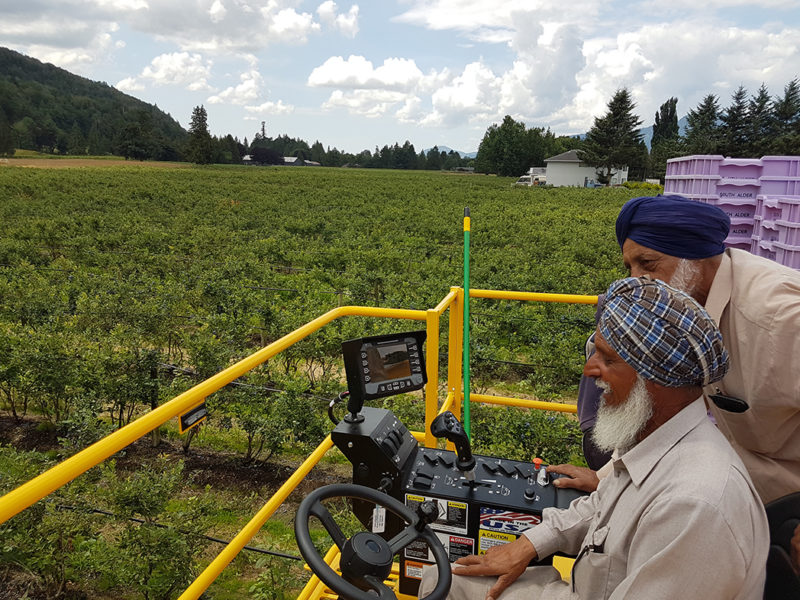
Farmer 4.0 represents a technological and data revolution, with the development of supercomputers as small as an iPhone and such smart machines as robotic milkers, robotic picking machines and autonomous tractors.

Although this will reduce agriculture’s manual labour requirements, Stackhouse insisted agriculture will need more people, not less. It’s just that those people will need different skills, in particular the ability to analyze and manage the massive amount of data being generated.

“We need to change the way we educate people,” Stackhouse said. “The federal government needs to stand up and deliver a national agricultural skills strategy. We need to connect research and development to skills development.”

Stackhouse said Canada lags well behind the Netherlands, Norway, Israel and Australia in using data and technology to increase production. The Netherlands, for example, has three times the agricultural exports Canada does despite having just 3% of the arable land of farmers in Canada.

Providing their insights into how to get agriculture to reach the potential Stackhouse identified were Rickey Yada, dean of the UBC Faculty of Land & Food Systems, Lisa Powell, associate director for research at the University of the Fraser Valley Food & Agriculture Institute and Ian Paton, agriculture co-critic for the BC Liberals.

“The key is to take an interdisciplinary approach,” Powell said. “We need to confront the challenges facing new and young producers, such as land affordability, access to capital and skilled labour.”

Yada said getting new technology into production more quickly is key.

“We need to reinforce nimbleness and change,” he said.

Paton called for more support for “big commercial farms,” saying they have the scale to feed the world. At the same time, he demanded more opportunities for on-farm markets, pumpkin patches, corn mazes and other agritourism initiatives. Despite their small size, he said they are critical to getting people onto farms and “more excited about farming.”

Once they are excited about it, Paton said, more people will be interested in becoming involved in agriculture.

Powell asked for more support for public research, noting much of today’s research is conducted by private companies which then limit access to it.

“We need access to publicly accessible research data,” she said, asking, “How do we increase dialogue between knowledge-producers and knowledge users?”
 

Related Posts

You may be interested in these posts from the same category.

Province defrays COVID-19 costs

Rules for young workers

Fruit growers seek workers

BCAC shifts to advocacy

BC minimum wage increases

Flight ban strands workers

Don Dahr

Farm injury rate falls

Foreign worker vaccination prioritized

Growers anxious about labour

New year, new openness

SAWP requirements waived

Ottawa announces new rules for foreign workers

Previous Post: « Blue country, red cities
Next Post: Giant hornets headline beekeepers’ concerns »

Copyright © 2026 Country Life in BC · All Rights Reserved