
• Menu
  • Skip to primary navigation
  • Skip to main content
  • Skip to primary sidebar

Country Life In BC Logo

The agricultural news source in British Columbia since 1915

  • Headlines
  • Calendar
  • Subscribe
  • Advertise
  • About
  • Archives
  • Contact
  • Search
  • Cart
  • Checkout
  • Headlines
  • Calendar
  • Subscribe
  • Advertise
  • About
  • Archives
  • Contact
  • Search
  • Cart
  • Checkout

Primary Sidebar

Current Issue:

AUGUST 2026
Vol. 112 Issue 8

Subscribe Now!

Sign up for free weekly FARM NEWS UPDATES

Loading form…

Your information will not be
shared or sold ever

Follow us on Facebook

Comments Box SVG iconsUsed for the like, share, comment, and reaction icons

12 hours ago

Chilco Ranch–Miller Ranches of Hanceville received the national environmental stewardship award from the Canadian Cattle Association at this week's Canadian Beef Industry Conference in Winnipeg. The fourth-generation ranch blends traditional values with modern innovation as it manages 1,000 cow-calf pairs of Hereford cattle across 170,000 acres. Rotational grazing, soil health improvement and careful land stewardship as well as advanced water-monitoring technology ensures sustainable ranch operations, while deep community involvement through 4-H and other organizations support future generations. You can read more of their story in the September issue of Country Life in BC, which goes to press next week. Photo | Facebook/Canadian Cattle Associat#BCAg#BCAg ... See MoreSee Less

Chilco Ranch–Miller Ranches of Hanceville received the national environmental stewardship award from the Canadian Cattle Association at this weeks Canadian Beef Industry Conference in Winnipeg. The fourth-generation ranch blends traditional values with modern innovation as it manages 1,000 cow-calf pairs of Hereford cattle across 170,000 acres. Rotational grazing, soil health improvement and careful land stewardship as well as advanced water-monitoring technology ensures sustainable ranch operations, while deep community involvement through 4-H and other organizations support future generations. You can read more of their story in the September issue of Country Life in BC, which goes to press next week. Photo | Facebook/Canadian Cattle Association

#BCAg
View Comments
  • Likes: 21
  • Shares: 2
  • Comments: 0

Comment on Facebook

15 hours ago

The deadline to weigh in on BC's proposed food-processing rules in the Agricultural Land Reserve has been extended to September 18. Proposed changes would open nearly 1.3 million acres of protected farmland to food processors by allowing processors to build plants on Class 5-7 soil (and Class 4, in some cases) as long as 5% of inputs are grown in BC. Currently, all processors must source at least 50% of inputs from BC. The existing 50% rule would stay in place for Class 1-3 soils. The BC Agriculture Council, which has previously raised concerns that the proposal reflects a narrow set of interests, says it's still reviewing the details with its #BCAgrs.

#BCAg
... See MoreSee Less

The deadline to weigh in on BCs proposed food-processing rules in the Agricultural Land Reserve has been extended to September 18. Proposed changes would open nearly 1.3 million acres of protected farmland to food processors by allowing processors to build plants on Class 5-7 soil (and Class 4, in some cases) as long as 5% of inputs are grown in BC. Currently, all processors must source at least 50% of inputs from BC. The existing 50% rule would stay in place for Class 1-3 soils. The BC Agriculture Council, which has previously raised concerns that the proposal reflects a narrow set of interests, says its still reviewing the details with its members.

#BCAg
View Comments
  • Likes: 5
  • Shares: 12
  • Comments: 4

Comment on Facebook

Funny how they always release these proposals in August when most farms are working overtime.

5%? Yeah, that’s a big “no” from me… the whole point of allowing processing on farmland is to make farms more economically viable by increasing the market for their product.

Where is the link for input?

This is such bs

1 day ago

The province has just issued a new temporary protection order for the Salmon River, effective immediately, restricting irrigation water for forage crops such as hay, alfalfa, and corn. A previous order was issued on July 28 and rescinded on August 8 due to wildfire risk, but low stream flows persist, threatening over 200 spawning Chinook salmon in the watershed. Affected licence holders will be contacted directly. Drought support is available to farmers through the Ministry of Agriculture and Food. The province has invested $120 million in the Agriculture Water Infrastructure Program to support farmers facing water scarcity.

#BCAg
... See MoreSee Less

The province has just issued a new temporary protection order for the Salmon River, effective immediately, restricting irrigation water for forage crops such as hay, alfalfa, and corn. A previous order was issued on July 28 and rescinded on August 8 due to wildfire risk, but low stream flows persist, threatening over 200 spawning Chinook salmon in the watershed. Affected licence holders will be contacted directly. Drought support is available to farmers through the Ministry of Agriculture and Food. The province has invested $120 million in the Agriculture Water Infrastructure Program to support farmers facing water scarcity.

#BCAg
View Comments
  • Likes: 13
  • Shares: 9
  • Comments: 4

Comment on Facebook

Can someone explain why they irrigate during the day in the blistering heat. Would it be better to water early morning and at sunset?

Time to start new methods of agriculture, ive watched our ecosystem take a beating in my lifetime, iym not against any productivity of our economic development within our structures, really its not rocket science. Its just going to cost alot to change to a better, more viable solution. Banks and your intellectuals, wanna run this country with money, then quit, wasting it on ignorance. The solutions are all easy, just how much money, do we waste, and how much are we going to spend, on actually fixing the issues.

200 fish over all the feed that grows in this valley wow that some expensive fish

Get your water off fly hills two big lakes off there Spa and author

3 days ago

Kwantlen Polytechnic University has established a one-acre research hopyard at Molson Coors' Chilliwack plant, housing 10 experimental selections and 40 heritage varieties. The multi-year partnership supports new hop variety development and breeding decisions for BC growers, building on Chilliwack's history as Canada's former largest hop-producing region. www.countrylifeinbc.com/kpu-sets-up-rese#BCAgh#kwantlenpolytechnicuniversityc#MolsonCoorsty #MolsonCoors ... See MoreSee Less

Kwantlen Polytechnic University has established a one-acre research hopyard at Molson Coors Chilliwack plant, housing 10 experimental selections and 40 heritage varieties. The multi-year partnership supports new hop variety development and breeding decisions for BC growers, building on Chilliwacks history as Canadas former largest hop-producing region. https://www.countrylifeinbc.com/kpu-sets-up-research-hopyard/

#BCAg #kwantlenpolytechnicuniversity #MolsonCoors
View Comments
  • Likes: 25
  • Shares: 2
  • Comments: 1

Comment on Facebook

What is old is new again in Chilliwack.

6 days ago

Complex, curious and compassionate, and above all a contributor to his family, his community and the dairy industry is how family, friends and colleagues remembered Dave Janssens this morning at a memorial service in Surrey following his untimely passing July 21 while cycling through the Peace region. A standing-room-only congregation attended as Janssens' life and decades of service were honoured. An elected member of both the BC Milk Marketing Board and the BC Dairy Association, Janssens represented the industry at the provincial and national level and was recognized for his clear thinking and willingness to entertain diverse perspectives. He retired last year following six years as a director of the BC Milk Marketing Board. His absence from industry discussions will be miss#BCAg##BCDairyDairy ... See MoreSee Less

Complex, curious and compassionate, and above all a contributor to his family, his community and the dairy industry is how family, friends and colleagues remembered Dave Janssens this morning at a memorial service in Surrey following his untimely passing July 21 while cycling through the Peace region. A standing-room-only congregation attended as Janssens  life and decades of service were honoured. An elected member of both the BC Milk Marketing Board and the BC Dairy Association, Janssens represented the industry at the provincial and national level and was recognized for his clear thinking and willingness to entertain diverse perspectives. He retired last year following six years as a director of the BC Milk Marketing Board. His absence from industry discussions will be missed.

#BCAg #BCDairy
View Comments
  • Likes: 27
  • Shares: 0
  • Comments: 2

Comment on Facebook

Our Sincere Condolences to the family and all who had the pleasure of knowing David, he left his mark, Rest in Peace David 🙏🏼

A significant contributor in so many ways, sorry for your loss!

Subscribe | Advertise

The agricultural news source in British Columbia since 1915
  • Email
  • Facebook

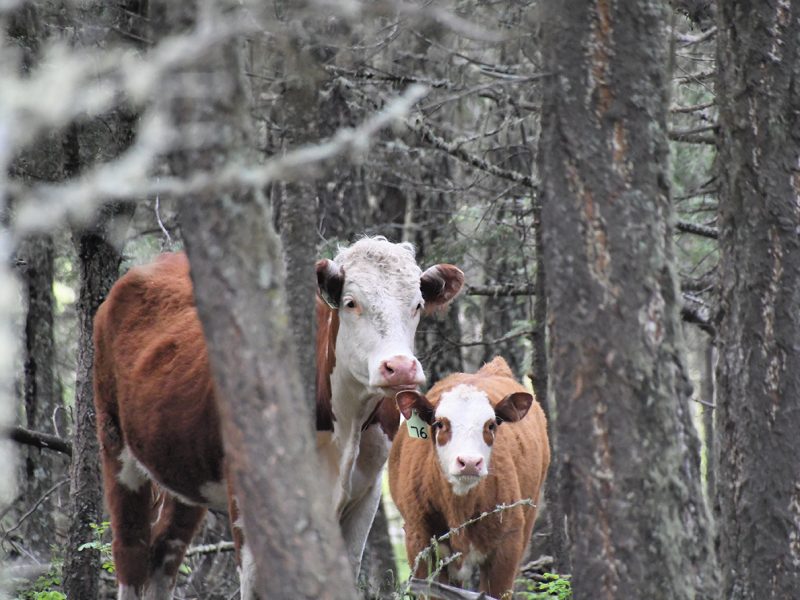
Peace heifer shot, butchered

[LIZ TWAN file photo]

September 21, 2022 byKate Ayers

The persistent problem of cattle rustling has one Peace rancher wondering why the police aren’t taking incidents more seriously.

On September 6, three days after moose season opened, rancher Walt Hedges found the remains of one of his replacement heifers at the side of an oil road crossing one of his Crown land tenures. The 700-pound animal had been shot.

“We had found a calf that had been butchered on the side of the road,” Hedges says. “They did a very clean job – cut the head off and the front feet and gutted it. They just took the whole carcass. It was on a bit of a bank, so I think they just slid it into the back of a pickup and took it.”

Hedges ranches 50 miles north of Fort St. John. He called the RCMP and the BC Fish and Wildlife Branch, but both refused to get involved. Turning to his local representative with the BC Cattlemen’s Association, Hedges contacted Cpl. Cory Lepine of the RCMP livestock section in Kamloops.

Lepine was understanding but Hedges didn’t get a helpful reply. ‘There’s nothing we can do about it,” he was told, but followed up with the detachment in Fort St. John to make a file was opened.

Fort St. John RCMP called and apologized, took Hedges’ information and created a file for the stolen animal. But no other action was taken.

“I told them, ‘So I guess it’s up to us to police this kind of stuff ourselves,’ and they said oh no, no, don’t do that,” Hedges explains.

Hedges reached out to nearby processors, including 101 Meats, to let him know if anything suspicious came through their doors.

“This is unusual, but at the same time it’s not totally unusual,” Hedges says. “In our area there’s probably two or three taken every year.”

Moving forward, Hedges plans to be more vigilant, but the geography doesn’t lend itself to easy monitoring of his 240 cows plus replacement heifers.

“It’s hard to even do that because it’s a pretty remote area,” he says.


All content on this website is copyrighted, and cannot be republished or reproduced without permission.
Related Posts

You may be interested in these posts from the same category.

RCMP recruits 4-H youth

Previous Post: « Salmon Arm abattoir closes
Next Post: Market garden makes a wise transition »

© 2026 COUNTRY LIFE IN BC - ALL RIGHTS RESERVED