• Menu
  • Skip to primary navigation
  • Skip to main content
  • Skip to primary sidebar

Country Life In BC Logo

The agricultural news source in British Columbia since 1915

  • Headlines
  • Calendar
  • Subscribe
  • Advertise
  • About
  • Archives
  • Contact
  • Search
  • Headlines
  • Calendar
  • Subscribe
  • Advertise
  • About
  • Archives
  • Contact
  • Search

Primary Sidebar

Current Issue:

DECEMBER 2025
Vol. 111 Issue 11

Subscribe Now!

Sign up for free weekly FARM NEWS UPDATES

Select list(s) to subscribe to


By submitting this form, you are consenting to receive marketing emails from: Country Life in BC. You can revoke your consent to receive emails at any time by using the SafeUnsubscribe® link, found at the bottom of every email. Emails are serviced by Constant Contact
Your information will not be
shared or sold ever

Follow us on Facebook

Comments Box SVG iconsUsed for the like, share, comment, and reaction icons

6 days ago

... See MoreSee Less

View Comments
  • Likes: 4
  • Shares: 0
  • Comments: 0

Comment on Facebook

6 days ago

On the last day of the BC Organic Conference, Thursday, Molly Thurston of Pearl Agricultural Consulting helped growers learn how to manage bugs such as codling moth, wireworm, and rootworm in organic growing systems. Her talk alongside Renee Prasad included hands-on activities in which participants checked out various traps and examined pests under microscopes. Be sure to look for more upcoming ag events on our online calendar at www.countrylifeinbc.com/calendar/

#BCAg
... See MoreSee Less

On the last day of the BC Organic Conference, Thursday, Molly Thurston of Pearl Agricultural Consulting helped growers learn how to manage bugs such as codling moth, wireworm, and rootworm in organic growing systems. Her talk alongside Renee Prasad included hands-on activities in which participants checked out various traps and examined pests under microscopes. Be sure to look for more upcoming ag events on our online calendar at www.countrylifeinbc.com/calendar/

#BCAg
View Comments
  • Likes: 15
  • Shares: 0
  • Comments: 0

Comment on Facebook

1 week ago

Well-known organic farmer and podcaster Jordan Marr gets interviewed by Country Life in BC’s own columnist and potato mavin Anna Helmer during the opening session of the BC Organic Conference at Harrison Hot Springs yesterday. Sessions run today (Wednesday) and Thursday and include organic and regenerative growing practices and expanding and advocating for the organic sector, all under the background of the newly launched Organic BC banner.

#BCAg
... See MoreSee Less

Well-known organic farmer and podcaster Jordan Marr gets interviewed by Country Life in BC’s own columnist and potato mavin Anna Helmer during the opening session of the BC Organic Conference at Harrison Hot Springs yesterday. Sessions run today (Wednesday) and Thursday and include organic and regenerative growing practices and expanding and advocating for the organic sector, all under the background of the newly launched Organic BC banner.

#BCAg
View Comments
  • Likes: 37
  • Shares: 2
  • Comments: 1

Comment on Facebook

Interested in finding out more about this

3 weeks ago

Today, we remember those who sacrificed their lives or their well-being for our freedom. Lest we forget. ... See MoreSee Less

Today, we remember those who sacrificed their lives or their well-being for our freedom. Lest we forget.
View Comments
  • Likes: 8
  • Shares: 0
  • Comments: 0

Comment on Facebook

1 month ago

FarmFolk CItyFolk is hosting its biennial BC Seed Gathering in Harrison Hot Springs November 27 and 28. Farmers, gardeners and seed advocates are invited to learn more about seed through topics like growing perennial vegetables for seed, advances in seed breeding for crop resilience, seed production as a whole and much more. David Catzel, BC Seed Security program manager with FF/CF will talk about how the Citizen Seed Trail program is helping advance seed development in BC. Expect newcomers, experts and seed-curious individuals to talk about how seed saving is a necessity for food security. ... See MoreSee Less

Link thumbnail

BC Seed Gathering - FarmFolk CityFolk

farmfolkcityfolk.ca

Save the date for our upcoming 2023 BC Seed Gathering happening this November 3rd and 4th at the Richmond Kwantlen Polytechnic University campus.
View Comments
  • Likes: 1
  • Shares: 0
  • Comments: 0

Comment on Facebook

Subscribe | Advertise

The agricultural news source in British Columbia since 1915
  • Email
  • Facebook

Province seeks dangerous jobs

April 27, 2022 byPeter Mitham

A new public engagement process hopes to identify jobs too dangerous for young workers.

“Stakeholders and the public can review and comment on a proposed framework that outlines the types of jobs that could be defined as hazardous and unsuitable for young workers,” the BC Ministry of Labour says in a statement announcing the survey, which opened April 21 and runs through June 10.

The survey results will build on work to date aimed at aligning BC’s child labour laws with those of other provinces and the international community.

Prior to new rules pass in 2019, BC was the only province in Canada where youth as young as 12 could be legally employed and their injuries covered by WorkSafe BC.

New rules that took effect last year raised the minimum working age from 12 to 16, and identified certain jobs as “light work” suitable for youth aged 14 to 15, with parental permission. This includes hand-harvesting produce on farms.

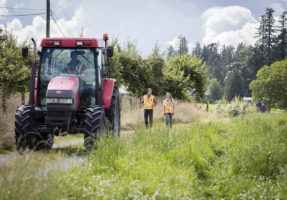
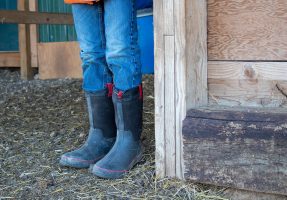
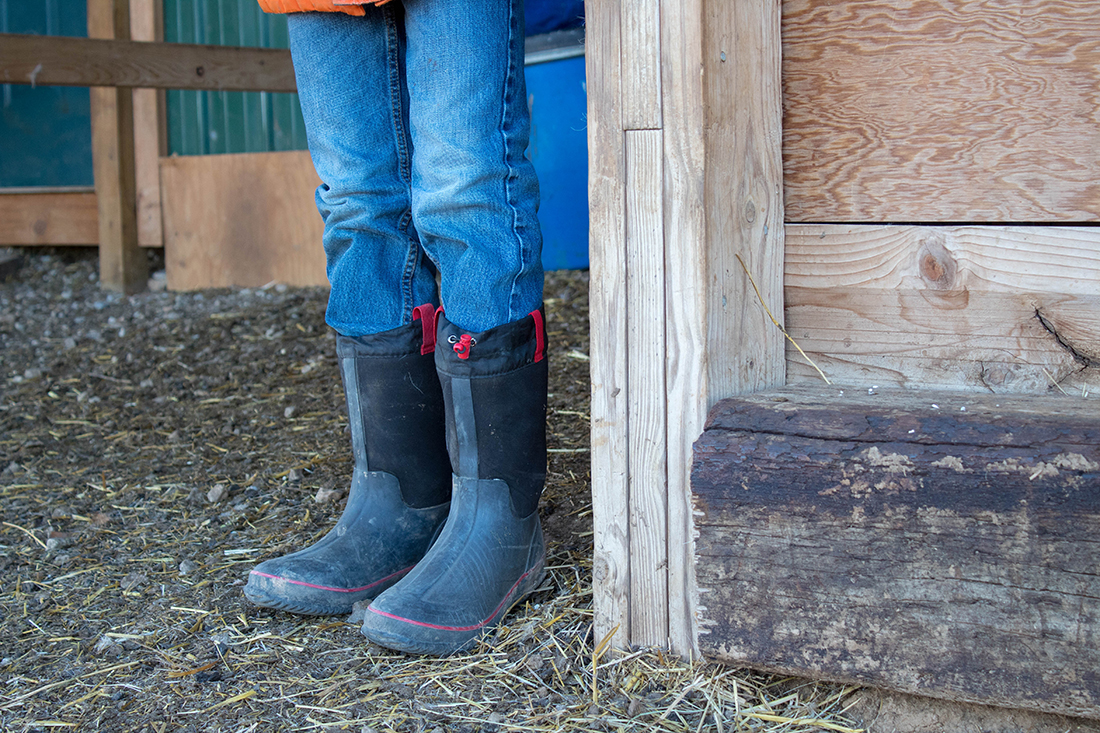
Children as young as 12 may be employed to work on a family farm or at a farm business owned by an immediate family member, according to a program expert at the BC Ministry of Labour, “provided that the work does not involve the specified elements that make the work unsafe for children.” Such elements include repairing, maintaining or operating heavy machinery; lifting, carrying or moving heavy items or animals; and using, handling or applying hazardous substances, such as pesticides.

But if youth are “simply performing a chore,” then the regulation doesn’t apply.

The current survey proposes age limits for two types of work environments often found on farms, confined spaces and abattoirs.

According to the province, abattoirs had some of the highest injury rates per 1,000 of any sector at 15.7. This was nearly as dangerous as tree-fallers at 19.9.

The survey also invites respondents to list other work of concern.

AgSafe BC recommends that farm employers refer to the Canadian Agricultural Safety Association guidelines for young workers when in doubt about the kind of work youth should be assigned.

“Younger workers are generally more at risk for workplace injury or illness, primarily because they are less experienced,” says AgSafe executive director Wendy Bennett.

When giving responsibilities or assigning tasks to a younger worker, AgSafe recommends considering their age, ability and maturity level to determine what activities are appropriate.

In addition, Occupational Health and Safety regulations require employers to give a health and safety orientation to each new and young worker before they begin work in a workplace. This orientation should also be task-specific.


Related Posts

You may be interested in these posts from the same category.

Bringing mental wellness forward

Grower wellness a priority

Confined spaces in spotlight

Producers struggle to talk about mental health

Federal funding for AI response

Farmers need to prioritize mental wellness

Tractor training highlights safety

Rules for young workers

Previous Post: « Fruit tree protocols reviewed
Next Post: Second high-path AI case »

Copyright © 2025 Country Life in BC · All Rights Reserved