
• Menu
  • Skip to primary navigation
  • Skip to main content
  • Skip to primary sidebar

Country Life In BC Logo

The agricultural news source in British Columbia since 1915

  • Headlines
  • Calendar
  • Subscribe
  • Advertise
  • About
  • Archives
  • Contact
  • Search
  • Headlines
  • Calendar
  • Subscribe
  • Advertise
  • About
  • Archives
  • Contact
  • Search

Primary Sidebar

Current Issue:

APRIL 2026
Vol. 112 Issue 4

Subscribe Now!

Sign up for free weekly FARM NEWS UPDATES

Loading form…

Your information will not be
shared or sold ever

Follow us on Facebook

Comments Box SVG iconsUsed for the like, share, comment, and reaction icons

23 hours ago

According to the BC River Forecast Centre, the Okanagan snowpack stood at just 58% of normal on April 1 — the lowest reading since measurements began in 1980 — raising concerns about drought conditions in the region this summer. The rest of the province sits at 92% of normal.

#BCAg
... See MoreSee Less

According to the BC River Forecast Centre, the Okanagan snowpack stood at just 58% of normal on April 1 — the lowest reading since measurements began in 1980 — raising concerns about drought conditions in the region this summer. The rest of the province sits at 92% of normal.

#BCAg
View Comments
  • Likes: 3
  • Shares: 0
  • Comments: 0

Comment on Facebook

2 days ago

At her first AGM as executive director of BC Meats, held Saturday in Abbotsford, Jennifer Busmann spoke about her strong ties to agriculture and her optimism for the organization's future. Busmann has cattle of her own and came to the role with existing relationships with members and the board of directors that helped her feel integrated from the start. She stepped into the position in Februa#BCAg#BCAg ... See MoreSee Less

At her first AGM as executive director of BC Meats, held Saturday in Abbotsford, Jennifer Busmann spoke about her strong ties to agriculture and her optimism for the organizations future. Busmann has cattle of her own and came to the role with existing relationships with members and the board of directors that helped her feel integrated from the start. She stepped into the position in February.

#BCAg
View Comments
  • Likes: 6
  • Shares: 0
  • Comments: 0

Comment on Facebook

4 days ago

Shannon Wiggins of Headwind Farm in North Saanich is this year's Mary Forstbauer Grant recipient from the BC Association of Farmers Markets. The $500 grant will help Wiggins expand her plot at Sandown Centre for Regenerative Agriculture, growing more storage crops to extend her harvest season. Wiggins credits farmers markets with inspiring her own farming journey and commitment to building community through food. Congratulations!

tinyurl.com/45bdd#BCAg#BCAg
... See MoreSee Less

Shannon Wiggins of Headwind Farm in North Saanich is this years Mary Forstbauer Grant recipient from the BC Association of Farmers Markets. The $500 grant will help Wiggins expand her plot at Sandown Centre for Regenerative Agriculture, growing more storage crops to extend her harvest season. Wiggins credits farmers markets with inspiring her own farming journey and commitment to building community through food. Congratulations!

https://tinyurl.com/45bddtw8

#BCAg
View Comments
  • Likes: 46
  • Shares: 2
  • Comments: 3

Comment on Facebook

Wahoo! Congrats Shannon! I love your produce. Can’t wait for the radishes 🫜

Congratulations!

Well done!! 🩷🩷🩷

5 days ago

New farmers can avoid costly mistakes by learning from those who've been there. At a Young Agrarians mixer in Penticton, five BC farmers shared hard-won lessons on pricing, pivoting, relationships and burnout. From coyote losses to business burnout, their message was clear: set prices that reflect true costs, make decisions quickly and don't let farming define your worth. Myrna Stark Leader's story appears in our April e-edition, now available to view online at: tinyurl#BCAg2uw53vvm

#BCAg
... See MoreSee Less

New farmers can avoid costly mistakes by learning from those whove been there. At a Young Agrarians mixer in Penticton, five BC farmers shared hard-won lessons on pricing, pivoting, relationships and burnout. From coyote losses to business burnout, their message was clear: set prices that reflect true costs, make decisions quickly and dont let farming define your worth. Myrna Stark Leaders story appears in our April e-edition, now available to view online at: https://tinyurl.com/2uw53vvm

#BCAg
View Comments
  • Likes: 15
  • Shares: 0
  • Comments: 0

Comment on Facebook

7 days ago

War in the Middle East is delivering a generational shock to BC farm input costs, with nitrogen fertilizer prices already 60% above pre-pandemic levels and rising fast. Okanagan Fertilizer president Ken Clancy says supply shortfalls are expected as Strait of Hormuz shipping disruptions tighten global supplies and demand surges. BCAC says it's monitoring the situation and ready to advocate for government relief measur#BCAg#BCAg ... See MoreSee Less

Link thumbnail

Fertilizer, fuel costs soar amid Iran conflict

www.countrylifeinbc.com

ENDERBY – War in the Middle East has delivered a generational shock to energy prices, meaning BC farmers can expect a prolonged period of higher costs, not just for fuel but also for fertilizer.
View Comments
  • Likes: 1
  • Shares: 1
  • Comments: 0

Comment on Facebook

Subscribe | Advertise

The agricultural news source in British Columbia since 1915
  • Email
  • Facebook

Shrinking cattle herd drives prices to record highs

Herd size has yet to hit bottom

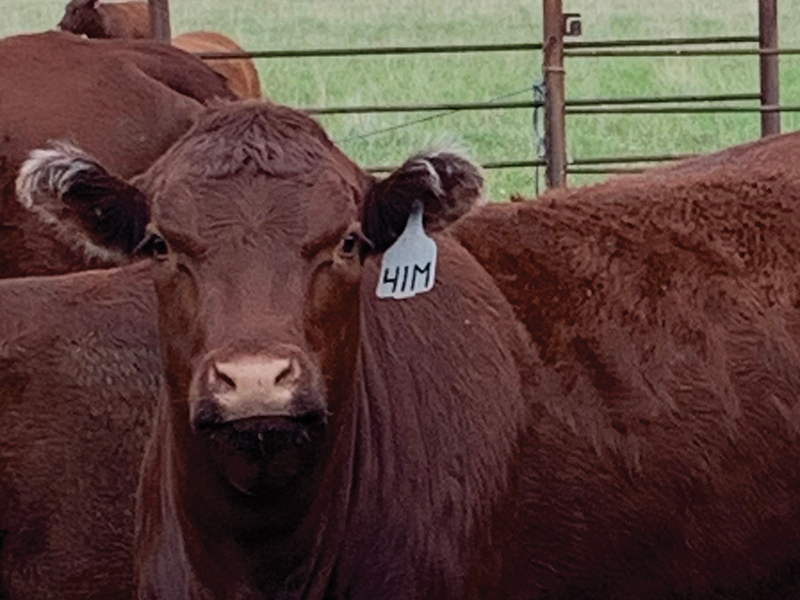
It's a good time to be in the beef business as prices for fall calves are predicted to be as high as $5.70 this fall. Photo / Tom Walker

July 7, 2025 byTom Walker

CRANBROOK – North America’s cattle markets are largely explained by simple supply and demand. When there are lots of cattle available, ranchers receive lower prices. When the herd size is smaller, prices trend higher as the market competes for a lower number of animals.

This cycle repeats every 10 to 12 years in the cattle market, Canfax executive director Brenna Grant told the BC Cattlemen’s Association annual meeting in Cranbrook, June 6-7.

The dynamic explains the current strong prices for cattle, which saw 500-pound calves command more than $5.00 a pound just after Christmas.

“I often get asked about the fundamentals that are driving this market and the prices that we currently have and are expecting for the next two years,” Grant says.

Current pricing is double the $2.25 to $2.50 calves were fetching in 2021, when the Canadian herd peaked at 3.8 million head. Producers were barely breaking even.

However, that same year, many regions of North America began experiencing hot, dry summers which led to shorter supplies and higher prices for hay and other cattle feed. Faced with expensive feed and poor prices, ranchers often chose to sell heifers rather than keep them to breed a calf. Some even liquidated portions of their main herd, fearing it would simply be too expensive to feed them.

The result has been a significantly smaller cattle herd across North America, with the Canadian herd down by approximately 9%, or 332,000 animals, to

3.3 million.

As feedlots compete for animals to fill their pens and, subsequently, packers to fill their processing lines, producers have seen higher prices for their animals.

Growing conditions for feed were better last year and grain prices have dropped, Grant points out.

This year’s corn crop is off to a good start across the continent, fuelling hopes that this year’s feed prices will again reflect long-term averages.

Producers now face the decision of whether to sell their heifer calves at a high price this fall or hold some back to breed so they will have more calves to sell next fall and possibly make even more money.

“We are now in the third year of tightening supplies, but we are not at the bottom yet,” Grant says. “We’re actually expecting to revisit the 2015 low in terms of slaughter numbers somewhere around 2027.”

The reason, she explains, is once heifer retention starts, there will be even fewer calves for sale, causing a further reduction in calves coming forward.

Grant says it is hard to pinpoint exactly when heifer retention will begin. The long-range forecast shows a hot and dry summer for most of Western Canada, and that may affect range quality and hay prices, and producers may opt to sell rather than incur the cost of feeding cows through the winter.

Also, the actual production numbers coming out of feedlots are not that low.

“We are expecting a 3.5% drop in beef production,” Grant says, explaining that feed efficiencies produce larger carcass weights in the feedlots.

But there comes a point when cattle need to go to market, and those animals are often smaller as well as being fewer in number.

Operators will also need to source more beef-on-dairy animals as well as cheaper imports to keep enough supply in the market.

“We don’t want to lose customers to pork or chicken because it’s hard to get them back once they’ve switched,” Grant says.

Yet demand for beef remains strong despite the alternatives.

“This is the highest demand level for beef since the 1980s,” Grant notes. “We are actually up in 2024. But retail prices have been increasing 7.3% a year since 2020.”

Supplies will remain tight over the next 18 to 24 months, with strong prices over the fall as feedlots compete to fill their pens.

“We are looking at average prices in the fourth quarter to be at around $5.50 to $5.70, and a number of you know that we have had sales out of BC already from $5.50 to $6.22,” Grant says. “If we do see heifer retention, we can absolutely see prices higher than that $5.60, $5.70 price range.”

Nevertheless, Grant urges producers to have risk management plans.

While the US is honouring tariff exemptions on all products under the CUSMA free trade agreement, including beef and cattle, she says the threat of tariffs creates uncertainty and prices could get “choppy.”

All content on this website is copyrighted, and cannot be republished or reproduced without permission.

Related Posts

You may be interested in these posts from the same category.

Previous Post: « Crown land conflicts reveal policy gaps
Next Post: Comeau reappointed to milk board »

© 2026 COUNTRY LIFE IN BC - ALL RIGHTS RESERVED