
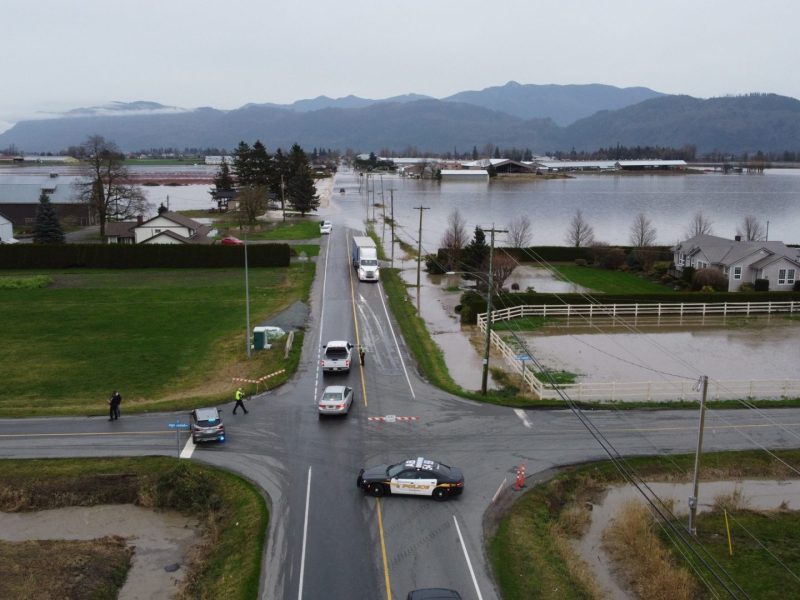
A series of atmospheric rivers once again led to flooding across Sumas Prairie this past week, renewing questions about flood mitigation measures for the region.
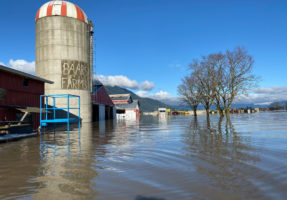
A system that moved the region last week saw the Nooksack River overtop its banks on December 10, with the water flowing north into Canada the following day. The flood breached the Vye Road dike on the afternoon of December 11. By evening, the water had reached Highway 1.
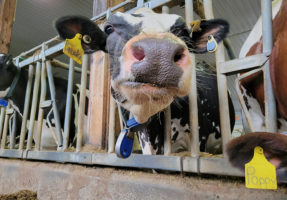
This year’s floods were less damaging than those of 2021, when water collected in the former Sumas Lake bed for weeks. Hundreds of thousands of poultry and livestock were lost, and dairy producers dumped an estimated $5.5 million worth of milk because of missed collections.
This year, a total of 68 farms were under evacuation orders, including at least two poultry barns that were flooded. Most livestock remained in the evacuation areas; a few dairies relocated their milking herds to higher ground and evacuated their heifers and non-milking cows. Some poultry and hogs were also temporarily evacuated.
But it’s safe to say the second flood event in four years – coming as it did on the heels of successive extreme weather events – has left everyone feeling vulnerable.
“The sad reality is these people have been through this a number of times,” says BC Dairy Association chair Casey Pruim, noting that “nothing’s changed as far as investments in flood mitigation.”
It’s not clear if two major floods in four years will be enough to prompt government to develop stronger flood infrastructure. International cooperation around the Nooksack River at a federal level has been elusive, despite multiple international task forces. And while the provincial government released a flood strategy in July 2024, it failed to provide any funding for the elements outlined in the plan.
The province did announce $76.6 million for upgrades to the Barrowtown pump station earlier this year, work that was in progress when the floods hit last week, but federal infrastructure dollars haven’t been forthcoming.
This has stalled Abbotsford’s own ambitious plans to improve its flood defences and improve protection for its residents, businesses and farmers.
“To say that we are disappointed and frustrated is an understatement,” Abbotsford Mayor Ross Siemens told media during a December 12 press conference. “I think we can all agree on this point, that enough is enough. We need action. And we need action now.”
All content on this website is copyrighted, and cannot be republished or reproduced without permission.







 Milk testers remain on strike